Master b2b saas lead generation with 2026 conversion benchmarks the channels that actually convert qualification frameworks and mistakes costing you pipeline.
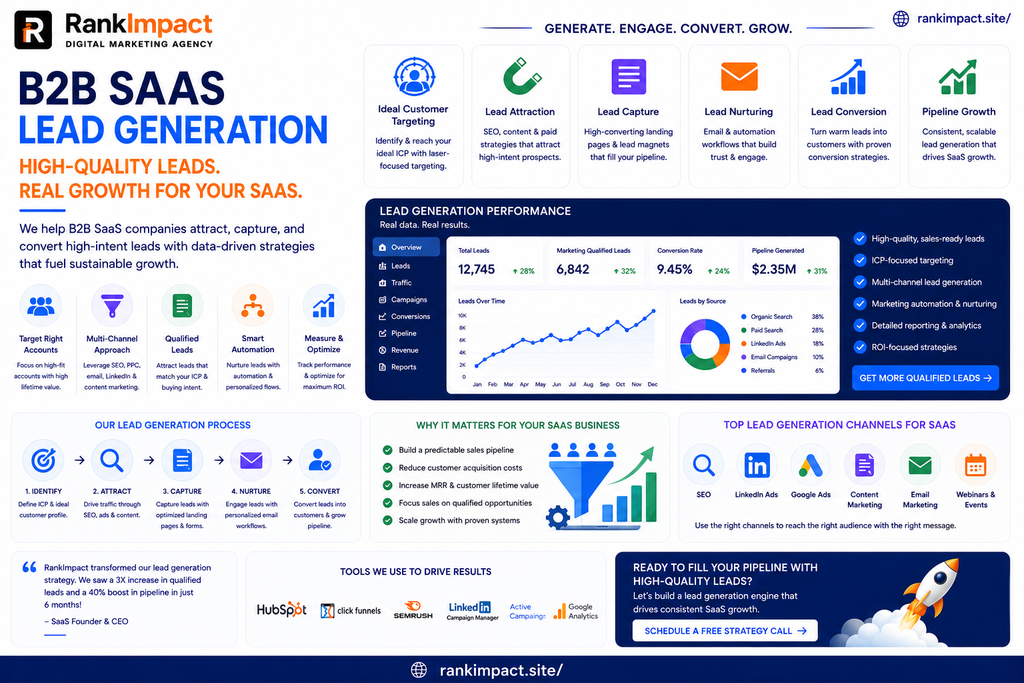
Table of Contents
B2B SaaS Lead Generation Guide
Every software company eventually hits the same wall a great product with nowhere near enough qualified people asking to see it. B2B saas lead generation is the discipline of consistently attracting and converting the right business buyers rather than chasing raw traffic that never turns into pipeline. This guide breaks down exactly how the funnel behaves in 2026 which channels actually convert current industry benchmarks you can measure yourself against and the specific mistakes quietly draining budget across most software marketing teams. If you are trying to build a repeatable system rather than one off campaigns this is the practical playbook to work from.
What B2B SaaS Lead Generation Actually Means
B2B saas lead generation is the process of identifying attracting and converting business decision makers into qualified prospects for a subscription software product. Unlike consumer lead generation where a single individual makes an impulsive purchase b2b saas lead generation has to account for buying committees longer evaluation periods and a much higher average deal size which fundamentally changes what a good lead even looks like. A qualified lead in this context is not simply someone who filled out a form it is someone who represents a genuine business need budget authority or influence and a realistic timeline to purchase.
The stakes around getting this right have never been higher. Recent research shows the average business to business purchase now involves anywhere from six to ten stakeholders and can take three to eighteen months to close which means a marketing team generating raw form fills without any qualification process is setting sales up to waste enormous amounts of time chasing dead ends. Building a genuine b2b saas lead generation engine means designing every stage of that journey deliberately rather than hoping volume alone solves the problem.
Current B2B SaaS Conversion Benchmarks You Should Know
Before optimizing anything it helps enormously to know what normal actually looks like since panicking over a number that is actually healthy wastes time that could go toward real improvements. Recent industry analysis covering more than 100 million data points across fourteen industries places the average visitor to qualified lead conversion rate at around 2.9 percent across all business categories combined. B2B saas specifically converts lower than that broader average sitting closer to 1.1 to 1.4 percent visitor to lead which is completely normal for the category rather than a sign something is broken given how much research heavy browsing happens before a saas buyer ever fills out a form.
Further down the funnel the picture actually looks encouraging for software companies with lead to marketing qualified lead rates around 31 to 41 percent and marketing qualified lead to sales qualified lead conversion sitting around 13 percent for typical b2b saas companies. Overall lead to customer conversion for small and mid sized companies tends to land around 2.7 percent while enterprise focused companies with longer sales cycles see closer to 1.3 percent. The practical takeaway is simple if your visitor to lead rate sits near 1 to 1.5 percent you are performing at industry standard and your energy is better spent improving what happens after that first conversion rather than obsessing over top of funnel volume alone.
The Channels That Actually Drive B2B SaaS Pipeline
Not every lead generation channel deserves equal investment and current data makes the gap between options remarkably clear. Search engine optimization consistently produces some of the strongest full funnel results for saas companies with organic visitors converting to marketing qualified leads at roughly 41 percent and continuing to convert well all the way through to a closed deal because these visitors arrived with genuine research intent rather than being pushed an ad. Client referrals perform even better converting to qualified opportunities at rates well above most paid channels though referrals require an existing customer base large enough to generate meaningful volume.
Cold email remains one of the only channels giving a team direct control over volume and targeting making it particularly valuable for companies that need predictable pipeline rather than waiting for organic traffic to compound over months. Paid search and paid social still play a role especially for capturing high intent bottom of funnel searches but the numbers show organic channels running roughly 40 to 50 percent cheaper per lead than paid across nearly every industry with that cost gap widening even further once you follow leads all the way through to a closed deal. Webinars sit in an interesting middle ground with lower top of funnel conversion but genuinely strong close rates once someone commits an hour of their time suggesting they carry real intent worth nurturing carefully.
Building A Lead Qualification Framework That Works
One of the most common gaps in b2b saas lead generation is treating every form fill as equally valuable when in reality most software companies need a structured qualification framework to separate genuine opportunities from casual browsers. The classic BANT framework evaluating budget authority need and timeline still holds up well as a starting point though many modern saas teams add a fifth dimension around product fit to catch prospects who technically have budget and authority but would never actually get real value from the platform.
Lead scoring built on both demographic fit and behavioral engagement gives marketing and sales a shared language for prioritization rather than relying purely on gut feeling. A prospect from a company matching your ideal customer profile who has visited your pricing page multiple times and downloaded a detailed technical resource represents a fundamentally different opportunity than someone who skimmed a single blog post from an unrelated industry. Practical tip build your initial scoring model using no more than five to seven signals since overly complex scoring systems tend to get ignored by sales reps who cannot easily interpret what a given score actually means in practical terms.
Content Strategies That Convert B2B SaaS Buyers
Content remains one of the highest leverage investments in b2b saas lead generation precisely because so much of the modern buying journey happens before a prospect ever speaks with a salesperson. Bottom of funnel content addressing specific comparison questions alternative options and detailed use cases tends to convert at a dramatically higher rate than generic top of funnel educational content because it meets buyers at the exact moment they are actively evaluating a purchase decision rather than simply researching a topic. Publishing one genuinely useful ungated piece of content per week focused on the specific problems your ideal customer actually searches for consistently outperforms a scattered content calendar chasing broad keyword volume with little commercial intent behind it.
Case studies deserve particular attention within a b2b saas content strategy because they directly address the multi stakeholder buying committee problem giving a champion inside a prospect account concrete proof to bring back to their own budget approver and technical reviewer. Interactive tools such as a free calculator or assessment tend to generate strong engagement because they provide immediate personalized value in exchange for contact information rather than asking someone to trade their email for a generic downloadable guide. A detailed resource explaining what a saas digital marketing agency actually does and how to evaluate one is a good example of content that serves a genuine informational need while naturally attracting the exact audience considering that kind of investment.
Outbound And Sales Development Best Practices
Even with a strong inbound engine most b2b saas lead generation strategies still rely on deliberate outbound effort to reach accounts that will never organically discover your content on their own. Speed genuinely matters here far more than most teams realize with research consistently showing that responding to an inbound lead within five minutes dramatically increases the odds of a meaningful conversation compared to waiting even a few hours let alone a few days. A prospect who fills out a demo request and hears nothing back for two days has often already booked time with a competitor who moved faster.
Building outbound sequences around genuine intent signals rather than blasting a generic message to an entire target list produces meaningfully better reply rates since a prospect who recently changed jobs raised funding or posted about a relevant challenge is far more receptive to a specifically tailored message than a cold introduction with no context. A typical effective sequence runs somewhere between four and seven touchpoints spread across email and other channels rather than either a single email that gets ignored or an aggressive daily barrage that damages your sender reputation and brand perception. Verifying contact data before launching outreach also matters more than most teams budget for since a high bounce rate not only wastes SDR time but can actively damage domain reputation making every future email campaign less effective.
Common Mistakes Killing B2B SaaS Lead Generation Results
Watching underperforming lead generation programs reveals the same handful of mistakes appearing repeatedly across otherwise capable marketing teams. Treating every lead the same regardless of fit or engagement level overwhelms sales teams with low quality opportunities while genuinely promising prospects get lost in the noise. Gating too much valuable content behind a form actively pushes away researchers who would have engaged deeply with an ungated resource and potentially converted later through a lower friction channel like a newsletter signup or a direct demo request once genuine interest had already built.
Ignoring the data quality problem sitting quietly underneath every lead generation program causes far more damage than most marketers realize since a significant share of contact data goes stale within months meaning outreach built on an old list wastes SDR effort chasing bounced emails and outdated job titles. Measuring success purely by raw lead volume rather than pipeline contribution or closed revenue creates a dangerous incentive where marketing looks successful on paper while sales quietly drowns in unqualified opportunities that never convert. Finally many teams chase an ever growing list of channels and tactics rather than committing seriously to the three or four approaches that actually fit their specific buyer and sales motion which spreads budget and attention too thin to make real progress anywhere.
How To Measure And Optimize Your Lead Generation Funnel
Building a genuinely effective measurement system starts with tracking conversion rate at every individual funnel stage rather than relying on a single blended number that hides exactly where prospects are actually falling out of the process. Visitor to lead lead to marketing qualified lead marketing qualified lead to sales qualified lead and opportunity to close each deserve their own tracked benchmark since a healthy overall conversion rate can mask a serious problem concentrated at just one specific stage. Reviewing these numbers monthly alongside your sales team rather than in isolation ensures marketing and sales share the same understanding of where the real bottleneck sits.
Pipeline velocity meaning how quickly leads move through each stage often reveals more actionable insight than conversion rate alone since a slow moving deal ties up sales capacity and delays revenue even when it eventually closes successfully. Attribution modeling deserves honest attention as well since a large share of b2b marketers openly admit they struggle to connect their lead generation activity to actual business outcomes which makes it genuinely difficult to justify budget or confidently double down on the channels actually producing revenue. Running quarterly channel level reviews comparing cost per lead against full funnel conversion rather than top of funnel volume alone will consistently point you toward where additional investment produces the strongest return.
Frequently Asked Questions
What is a good conversion rate for b2b saas lead generation?
A visitor to qualified lead conversion rate between 1.1 and 1.5 percent is considered normal and healthy for b2b saas companies given how much research heavy browsing happens before a software buyer typically fills out a form.
Which channel generates the best leads for b2b saas companies ?
Organic search and client referrals consistently produce the strongest full funnel results converting well beyond the initial lead stage all the way through to a closed deal compared to most paid advertising channels.
How fast should a b2b saas company respond to a new lead?
Responding within five minutes of an inbound lead submission dramatically improves your odds of a meaningful conversation since delayed follow up frequently means a prospect has already engaged a faster moving competitor.
What is the difference between an MQL and an SQL in b2b saas lead generation ?
A marketing qualified lead has shown meaningful engagement or fit signals while a sales qualified lead has been vetted by the sales team as having genuine budget authority and timeline to actually purchase.
How many touchpoints should a b2b saas outbound sequence include?
Most effective outbound sequences use between four and seven touchpoints spread across email and other channels rather than a single message or an overly aggressive daily cadence that risks damaging brand perception.
Should gated content still be used in b2b saas lead generation?
Gated content still works well for high value resources like detailed guides or tools though publishing genuinely useful ungated content consistently often produces stronger long term results by building trust before ever asking for contact information.
Why do b2b saas companies have lower conversion rates than other industries?
Software buyers typically browse extensively during early research with no immediate purchase timeline while industries like legal or home services attract visitors already actively searching to hire someone immediately which naturally produces a higher visitor to lead rate.
How important is contact data quality in b2b saas lead generation?
Extremely important since outdated or inaccurate contact data drives high bounce rates that waste sales development time and can damage email sender reputation making every future outreach campaign less effective as a result.
What metrics matter more than raw lead volume?
Pipeline contribution closed revenue and full funnel conversion rate matter far more than raw lead count since a large volume of unqualified leads simply shifts wasted effort downstream onto an already stretched sales team.
How can a growing saas company build a stronger lead generation engine ?
Many companies partner with an experienced saas digital marketing agency to combine specialized channel expertise with the consistent execution needed to build pipeline without overextending a small internal marketing team.
Conclusion
Effective b2b saas lead generation in 2026 depends far less on chasing every new tactic and far more on disciplined execution across the channels that genuinely fit how your specific buyers research and evaluate software. Understanding realistic benchmarks helps you diagnose whether a problem actually exists before spending budget trying to fix something that was never broken while a clear qualification framework ensures sales spends time on opportunities that can genuinely close. Prioritize the handful of channels proven to convert well through the entire funnel rather than every channel available invest seriously in response speed and data quality and measure success through pipeline and revenue rather than raw volume alone. Build these fundamentals into a repeatable system and your lead generation program becomes a genuine growth engine rather than a constant source of frustration for both marketing and sales.
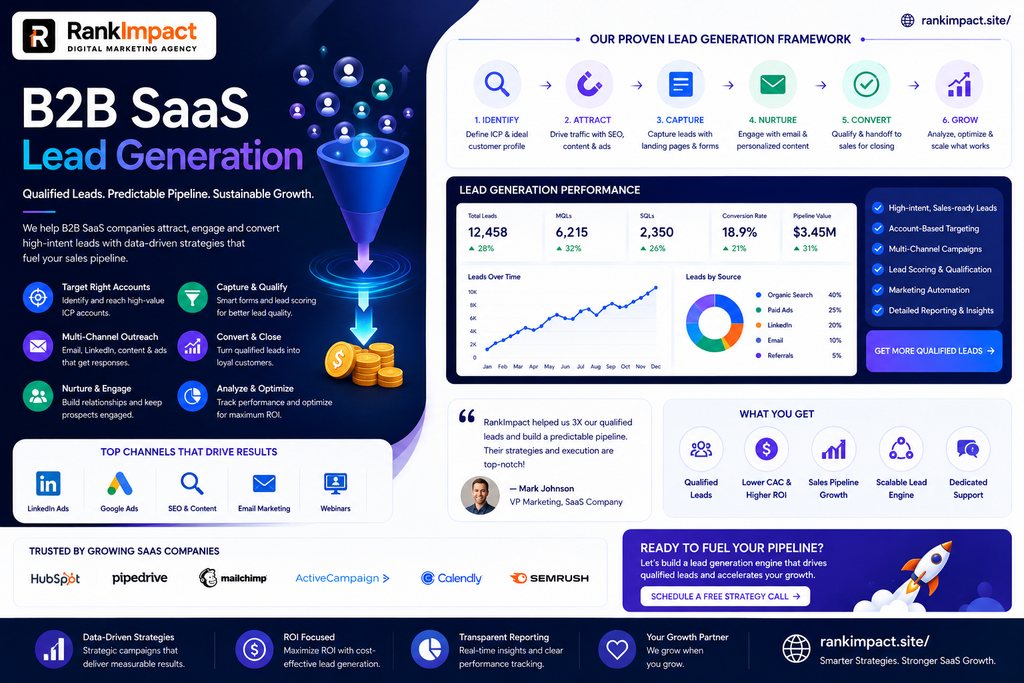
Key Takeaways
- B2B saas lead generation must account for buying committees of six to ten stakeholders and sales cycles that often stretch three to eighteen months
- Average visitor to qualified lead conversion for b2b saas sits between 1.1 and 1.5 percent which is normal for the category rather than a sign of a broken funnel
- Organic search and client referrals consistently deliver the strongest full funnel conversion and the lowest cost per lead compared to most paid channels
- Responding to inbound leads within five minutes meaningfully increases the odds of a genuine sales conversation
- A structured qualification framework using both fit and engagement signals prevents sales from wasting time on unqualified opportunities
- Outbound sequences built around genuine intent signals and run across four to seven touchpoints outperform generic mass outreach
- Measuring pipeline contribution and full funnel conversion matters far more than tracking raw lead volume alone
- Partnering with a specialized saas digital marketing agency can help growing companies build a consistent lead generation engine without overextending internal resources.