+92 318 3068833 Get Free Audit

Best CRM Software Examples for Businesses 2026

Explore the best crm software examples for 2026 including Salesforce HubSpot Zoho and Pipedrive with real business use cases and buying tips.
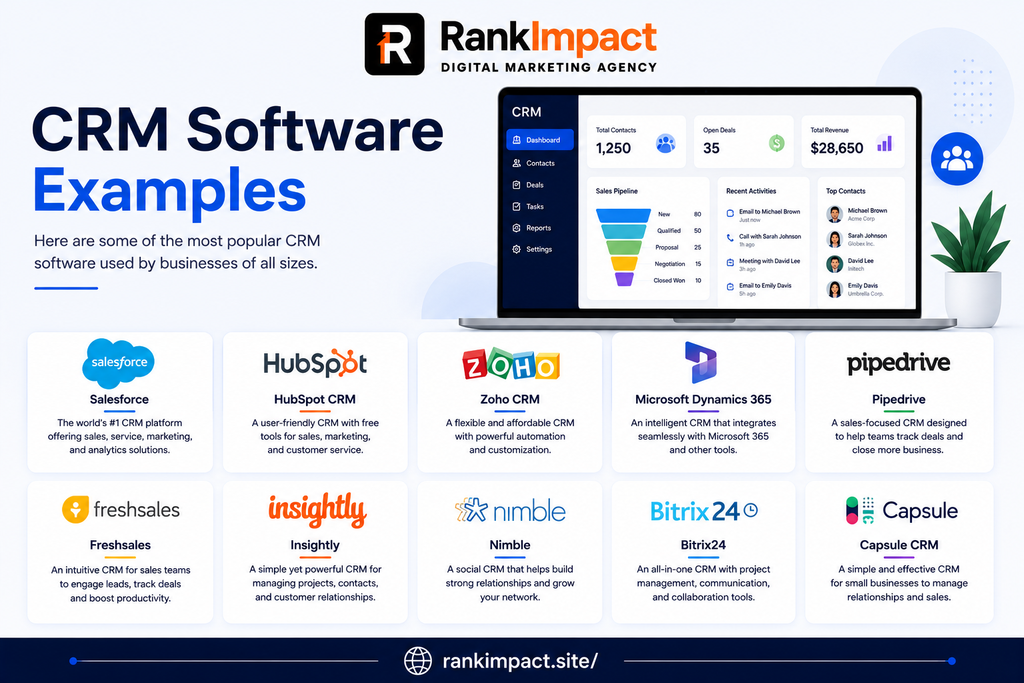
crm software examples comparison guide for businesses.

What CRM Software Actually Does For a Business

Customer relationship management software is the central system where a company stores every interaction it has with a lead or customer. That includes emails, calls, meeting notes, deal stages, support tickets, and purchase history. Instead of scattering this information across spreadsheets, inboxes, and sticky notes, a CRM pulls it into one organized record for every contact. Sales teams use it to track deals as they move through a pipeline. Marketing teams use it to see which campaigns actually turned into paying customers. Support teams use it to understand a customer full history before responding to a ticket. The real value is not the software itself but the visibility it gives every department into the same customer story, which reduces miscommunication and helps teams close deals faster and retain customers longer.

Salesforce Sales Cloud

Salesforce is the name most people think of first when they hear customer relationship management, and for good reason. It is used by companies ranging from small startups to Fortune 500 enterprises because it can be customized to fit almost any sales process imaginable. A mid sized software company might use Salesforce to build a fully automated lead scoring system that routes hot prospects straight to the right sales rep within seconds of a form submission. Larger enterprises often use it to connect dozens of internal tools through its AppExchange marketplace, creating a single hub for sales, service, and marketing data. The tradeoff is that Salesforce has a steeper learning curve and often requires a dedicated administrator or consultant to configure properly, which makes it a better fit for teams with the budget and technical resources to unlock its full potential rather than a solo founder just getting started.

HubSpot CRM

HubSpot built its reputation on offering a genuinely useful free tier, which makes it one of the most common entry points for small businesses trying their first real CRM. A three person marketing agency can start tracking every client email and deal stage without paying a cent, then gradually add HubSpot marketing or service tools as the business grows. What sets HubSpot apart in practice is how tightly its CRM integrates with content marketing, email campaigns, and website tracking, so a sales rep can see exactly which blog post or pricing page a lead visited before their last call. This makes it especially popular among SaaS companies and marketing agencies that live and breathe inbound lead generation. The downside some growing teams run into is that costs can climb quickly once you need the more advanced sales and marketing hubs, so it is worth mapping out expected usage before scaling up.

Zoho CRM

Zoho CRM has become a favorite among cost conscious small and mid sized businesses because it delivers a huge feature set at a fraction of the price of bigger competitors like Salesforce. A regional real estate brokerage might use Zoho to manage hundreds of property leads, automatically assign new inquiries to available agents, and trigger follow up reminders so no lead goes cold. Zoho also plays well with its own suite of business apps, including accounting and email marketing tools, which appeals to companies that want one vendor handling multiple operational needs instead of stitching together five different subscriptions. Some users find the interface less polished than newer competitors, but the depth of customization available at its price point keeps it firmly on the shortlist for budget conscious teams.

Pipedrive

Pipedrive was designed from day one around a simple idea, that salespeople think in visual pipelines, not spreadsheets. A boutique consulting firm running a handful of active deals at any given time can drag and drop opportunities across pipeline stages and instantly see what needs attention today. This visual first approach makes Pipedrive one of the easiest CRMs to onboard a new sales hire on, often within a single afternoon rather than a full week of training. It is particularly popular with small sales teams that want a tool built specifically for closing deals rather than a sprawling platform trying to do everything at once. Where it falls short is in marketing automation and customer service functionality, so companies that need those capabilities usually pair Pipedrive with separate specialized tools.

Microsoft Dynamics 365

Microsoft Dynamics 365 appeals strongly to enterprises already deeply invested in the Microsoft ecosystem, including Outlook, Teams, and Excel. A manufacturing company that runs its entire operation on Microsoft tools can connect Dynamics 365 directly into existing workflows, letting sales reps log calls and update deal records without ever leaving their inbox. Its strength lies in combining CRM functionality with enterprise resource planning features, giving large organizations a single platform that spans sales, finance, and supply chain data. This depth comes with real complexity though, and implementation projects for Dynamics 365 often take months and involve specialized consultants, making it a realistic option mainly for larger organizations with dedicated IT teams rather than small businesses looking for a quick setup.

Freshsales

Freshsales, built by Freshworks, has carved out a niche among businesses that want built in artificial intelligence features without paying for a separate add on. A subscription box company might use Freshsales built in lead scoring to automatically flag which trial users are most likely to convert to paying customers, based on how they interact with the product. The platform also includes built in phone and email tools, so smaller teams do not need to purchase and integrate a separate calling system just to make it functional. Freshsales tends to appeal most to teams that want a modern, clean interface and quick setup, though very large enterprises with complex multi department workflows may eventually outgrow some of its more advanced customization limits compared to platforms like Salesforce.

Monday Sales CRM

Monday Sales CRM grew out of the popular Monday work management platform, which means it brings a highly visual, flexible board style layout to customer relationship management. A creative agency managing both client projects and sales pipelines might appreciate being able to see deals, tasks, and project timelines in the same connected workspace instead of switching between separate tools. Its drag and drop customization lets teams build a CRM structure that matches their exact process rather than forcing them into a rigid predefined pipeline. Because it started as a general project management tool, some sales specific features like advanced forecasting are less mature than dedicated CRM platforms, but for teams that value flexibility and already use Monday for other work, the CRM add on removes friction between departments.

Insightly

Insightly positions itself as a strong middle ground option for small and mid sized businesses that need both CRM and basic project management in a single tool. A design studio that needs to track new client leads and then hand off won deals into an execution phase with tasks and milestones can do both inside Insightly without buying a second piece of software. This makes it especially attractive to service based businesses where the sales process and the delivery process are closely linked. Insightly also offers solid workflow automation for its price tier, letting teams automatically create follow up tasks or send internal notifications when a deal changes stage. Companies with very complex sales cycles involving many stakeholders sometimes find its reporting less robust than enterprise focused platforms.

Copper CRM

Copper was built specifically to integrate deeply with Google Workspace, which makes it a natural choice for businesses that already run their entire operation through Gmail, Google Calendar, and Google Drive. A digital marketing agency living inside Gmail all day can see and update CRM records directly from their inbox without switching tabs, which significantly reduces the friction that normally causes sales teams to neglect data entry. Copper automatically logs emails and meetings against the right contact record, cutting down on manual admin work that eats into selling time. Teams that do not use Google Workspace as their primary suite generally will not see the same seamless experience and might be better served by a more platform agnostic CRM instead.

Keap

Keap, formerly known as Infusionsoft, focuses heavily on combining CRM with marketing automation specifically for small businesses and solo entrepreneurs. A course creator or online coach can use Keap to automatically tag a new lead based on which lead magnet they downloaded, then trigger a personalized nurture email sequence without any manual follow up. This makes Keap particularly popular among small service businesses and online educators who need marketing automation firepower without hiring a dedicated marketing operations person. The tradeoff is that Keap tends to be priced higher than comparable entry level CRMs, positioning it more as an investment for businesses that are ready to lean heavily into automated sales and marketing workflows rather than those just testing the waters.

How to Choose the Right CRM for Your Business

Picking a CRM should start with an honest look at your current sales process rather than a feature checklist. A five person team closing a handful of large deals each month has completely different needs than a hundred person team processing thousands of smaller transactions, so the size and complexity of your pipeline should guide your first filter. Next, consider which tools your team already lives inside every day, because a CRM that integrates naturally with your existing email, calendar, and communication tools will get adopted far more consistently than one that requires constant tab switching. Budget matters too, but it should be evaluated against total cost of ownership rather than just the advertised monthly price, since some platforms charge extra for automation, reporting, or user seats that quickly add up. Finally, always run a real trial with your actual sales data before committing, because a demo environment full of sample records rarely reveals how a tool will feel once your genuine day to day chaos is loaded into it.

Common Mistakes Businesses Make When Choosing CRM Software

One of the most frequent mistakes companies make is choosing a CRM based purely on brand recognition rather than actual fit for their sales process, which often leads to paying for enterprise features that never get used. Another common error is skipping proper data migration planning, resulting in incomplete or duplicate contact records that make the new system feel messy from day one and quietly erode team trust in the data. Many businesses also underestimate the importance of user adoption, rolling out a powerful new CRM without adequate training, which causes sales reps to quietly revert back to spreadsheets or personal notes within a few weeks. Overcomplicating the initial setup is another trap, since teams that try to build every possible automation and custom field before ever using the system in daily practice often delay launch for months and lose momentum. The businesses that get the most value from CRM software typically start simple, get the team using it consistently, and layer in advanced automation gradually once the basics are second nature.

Best Practices for Getting the Most Out of Your CRM

Successful CRM adoption almost always starts with clean, consistent data entry standards agreed upon before the tool ever goes live, so every rep is logging deals and contacts the same way. Building automation around repetitive administrative tasks, like sending follow up reminders or updating deal stages based on specific triggers, frees up sales reps to spend more time actually talking to prospects instead of updating records. Regularly reviewing pipeline reports as a team, rather than only during quarterly reviews, helps surface bottlenecks early and keeps forecasting accurate. It also pays to periodically audit your CRM for unused fields, outdated automations, or duplicate records, since systems that accumulate clutter over time become harder to trust and slower to navigate. Finally, connecting your CRM with your marketing and support tools, even in a basic way, ensures that every department is working from the same source of truth about each customer relationship.

CRM Examples by Business Type

Startups and solo founders generally benefit most from free or low cost entry points like HubSpot CRM or Pipedrive, since these platforms let a small team get organized quickly without a steep learning curve or major financial commitment. Marketing agencies and content driven businesses often lean toward HubSpot or Copper because of how tightly these tools connect with email, content, and Google Workspace workflows they already rely on. Real estate and property based businesses frequently choose Zoho CRM or Freshsales for their strong lead management and follow up automation features suited to high volume inquiry handling. Enterprises with complex, multi department operations typically gravitate toward Salesforce or Microsoft Dynamics 365 because of their extensive customization and integration capabilities across sales, service, and finance. Service based businesses managing both sales and project delivery, such as design studios or consulting firms, often find Insightly or Monday Sales CRM particularly useful since these tools blend pipeline tracking with task and project management in one place.

Frequently Asked Questions

What is an example of CRM software used by small businesses ?

HubSpot CRM and Pipedrive are two of the most common examples used by small businesses because both offer straightforward setup, visual pipelines, and free or low cost starting plans that do not require a dedicated administrator.

What are the 4 types of CRM systems?

The four main types are operational CRM which focuses on automating sales, marketing, and service processes, analytical CRM which focuses on analyzing customer data to improve decisions, collaborative CRM which focuses on sharing customer information across departments, and strategic CRM which focuses on building long term customer relationships and loyalty.

Which CRM software is best for small business?

The best CRM for a small business usually depends on budget and process complexity, but HubSpot CRM, Zoho CRM, and Pipedrive are consistently top choices because they combine affordability with an easy learning curve and strong core sales features.

Is Salesforce a CRM software?

Yes, Salesforce is one of the largest and most widely used CRM platforms in the world, offering deep customization and a broad ecosystem of add on tools that scale from small teams up to large global enterprises.

Can I use Excel as a CRM ?

A spreadsheet can technically track basic contact and deal information for a very small business, but it lacks automation, reminders, integrations, and reporting that a dedicated CRM provides, so most growing teams quickly outgrow spreadsheets once their contact volume increases.

What is the difference between CRM and ERP software?

CRM software focuses specifically on managing customer facing relationships like sales, marketing, and support, while ERP software focuses on internal business operations such as finance, inventory, and supply chain, though some platforms like Microsoft Dynamics 365 combine elements of both.

How much does CRM software typically cost?

CRM pricing varies widely, ranging from free plans for very small teams up to more than one hundred dollars per user per month for advanced enterprise plans, with most small to mid sized businesses landing somewhere in the twenty to eighty dollar per user per month range depending on features needed.

Do freelancers need a CRM?

Freelancers managing more than a handful of active clients often benefit from a lightweight CRM to track proposals, follow ups, and past client history, since relying purely on memory or scattered notes becomes harder to manage as a client base grows.

What features should I look for in CRM software ?

Important features to evaluate include pipeline visualization, email and calendar integration, workflow automation, reporting and forecasting tools, mobile access, and how easily the platform connects with other software your team already uses.

Can CRM software help with customer retention ?

Yes, CRM software helps improve customer retention by giving support and sales teams full visibility into a customer full history, which allows for more personalized follow up, faster issue resolution, and proactive outreach before a customer considers leaving.

Conclusion

Choosing among the many crm software examples available today does not need to feel overwhelming once you understand what each platform actually does well and which type of business it fits best. Salesforce and Microsoft Dynamics 365 shine for larger enterprises with complex needs, HubSpot and Pipedrive remain excellent starting points for small and growing teams, and specialized tools like Copper, Keap, and Insightly serve very specific workflows exceptionally well. The right choice ultimately comes down to matching a platform to your actual sales process, your team size, and the tools you already use every day rather than chasing the most popular name on the market. Take the time to run a genuine trial with your real data, involve the people who will use the system daily in the decision, and start with a simple setup you can build on over time.

Key Takeaways

CRM software centralizes every customer interaction into one organized system that helps sales, marketing, and support teams work from the same information.

Salesforce and Microsoft Dynamics 365 are best suited for large enterprises needing deep customization and cross department functionality.

HubSpot CRM and Pipedrive are strong starting points for small businesses because of their ease of use and affordable entry pricing.

Zoho CRM, Freshsales, and Insightly offer a strong balance of features and cost for growing mid sized businesses.

Choosing the right CRM depends more on matching your actual sales process and existing tools than on picking the most popular brand.

Common mistakes include skipping proper data migration, underestimating user training, and overcomplicating the initial setup before the team even starts using the tool.

Clean data standards, gradual automation, and regular pipeline reviews are what separate businesses that get real value from their CRM from those that abandon it within a year.
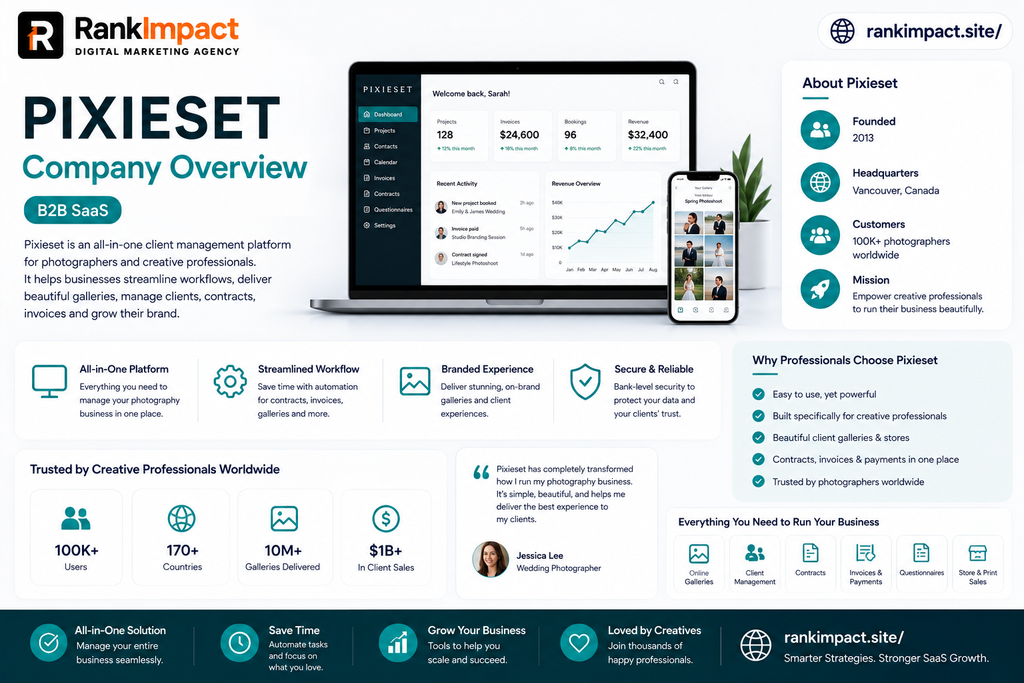
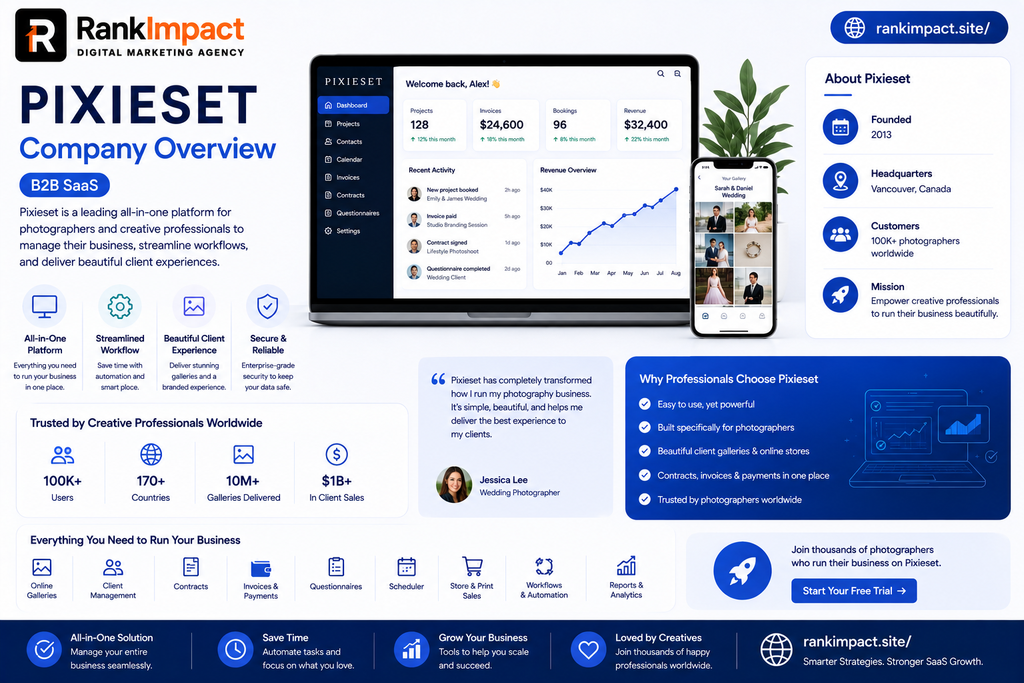
Pixieset Company Overview B2B SaaS 7 Facts For 2026

Read this pixieset company overview b2b saas guide covering products pricing revenue and 7 facts every buyer should know before choosing the platform in 2026.

pixieset company overview b2b saas platform for photographers.

What Is Pixieset A Quick Company Snapshot

Pixieset is a Vancouver based software company that built an all in one platform for photographers and creative professionals. The core idea behind the business is simple photographers needed one connected system to deliver photo galleries build a website sell prints and prints products run online stores and manage client bookings instead of stitching together five separate tools. Since launching the company has grown into a platform used by hundreds of thousands of photographers and creative business owners around the world which places it firmly in the vertical SaaS category rather than a generic horizontal tool built for every industry. This distinction matters a lot for anyone doing competitive research because vertical SaaS companies like Pixieset tend to win by depth of workflow features rather than breadth of audience.

The Origin Story Behind Pixieset Founding and Growth

Pixieset was founded in 2013 in Vancouver Canada by Phoebe Jiang and Simon Wong who set out to solve a very specific pain point in the photography industry the clunky and unprofessional way photographers were delivering finished images to their clients. Early on the founders focused on a client gallery product that let photographers upload polished password protected galleries their clients could browse download from and order prints through. That single feature became the foundation for a much larger platform. Over the following decade the company expanded into website building online stores a studio management system and payment tools turning a single utility product into a full business operating system for creatives. The company has been recognized as a leading Vancouver based software solutions provider for photographers and creative professionals and its growth story is frequently cited as an example of a bootstrapped creative tool maturing into an investor backed SaaS company.

Core Products Inside the Pixieset Platform

A useful way to understand Pixieset as a business is to look at the product suite as four connected pillars rather than one single app.

The first pillar is Client Galleries which remains the flagship product and allows photographers to deliver high resolution images through a branded gallery experience complete with proofing tools favoriting and direct print ordering. The second pillar is Websites a drag and drop website builder aimed specifically at photographers who need a portfolio that converts visitors into paying clients without hiring a developer. The third pillar is the Online Store which turns finished photos into sellable products including prints albums and digital downloads with built in fulfillment. The fourth pillar is Studio Manager which functions as the operational backbone covering client bookings contracts invoicing and payments in one dashboard. Together these four pillars mean a photographer can technically run their entire client facing business inside a single login which is exactly the kind of workflow lock in that makes vertical SaaS companies sticky and valuable.

How Pixieset Fits Into the B2B SaaS Landscape

At first glance Pixieset might look like a consumer facing photography app but the underlying business model is textbook B2B SaaS. The buyer is not a casual hobbyist it is a small business owner a working photographer or a creative studio using the software to run recurring revenue generating operations. Pixieset sells subscription access charges based on usage tiers and builds features around retention and upsell paths which are the same growth mechanics used by mainstream B2B SaaS companies in project management CRM and marketing tooling. Understanding Pixieset through this lens is useful for SaaS marketers and founders because the company demonstrates how a vertical focused tool can achieve strong retention by owning an entire workflow for a specific professional audience rather than trying to be a general purpose product for everyone.

Pixieset Pricing Plans and Business Model

Pixieset generally follows a freemium to paid subscription structure a common and proven B2B SaaS pattern. New users can start on a limited free tier to test core features such as client galleries before upgrading to paid plans that unlock storage limits custom branding advanced store features and studio management tools. This approach lowers the barrier to entry for solo photographers while creating a natural upgrade path as their business grows and their storage or feature needs increase. The layered pricing model also allows Pixieset to serve two very different customer types inside one product line the beginner photographer running a side business and the established studio managing dozens of active clients a strategy many successful SaaS companies use to expand average revenue per customer over time.

Key Company Metrics Revenue Team Size and Funding

For anyone researching Pixieset as a company rather than just a product the underlying numbers tell an important trust building story. Pixieset reached approximately 19 million dollars in revenue in 2025 with a team of around 173 people reflecting steady and disciplined growth rather than the boom and bust pattern seen at many venture backed startups. On the funding side Pixieset received a growth investment from Susquehanna Growth Equity an entrepreneur focused growth equity firm that exclusively invests in software and information services companies giving the company institutional backing and governance structure. Pixieset has also been involved in acquisition activity including a deal involving Polarr completed in May 2025 which points to a company actively expanding its product capabilities through strategic purchases rather than organic development alone. These are exactly the kinds of signals a cautious B2B buyer or partner should look for before trusting a vendor with client data and recurring payments.

Top Pixieset Competitors and How It Stands Apart

No pixieset company overview b2b saas discussion is complete without placing the company against its competitive set. Pixieset competes with platforms including PhotoShelter SmugMug and Vermilion along with a wider field of more than a hundred active competitors in the photography software space according to industry tracking data. What tends to separate Pixieset from single purpose competitors is the breadth of its connected suite. A tool that only offers galleries forces photographers to bolt on a separate website builder and a separate invoicing system while Pixieset consolidates those functions under one account and one login. For a buyer comparing options the real question is rarely which tool has the prettiest gallery design it is which platform reduces the number of separate subscriptions and logins a small creative business needs to juggle every single month.

Who Should Use Pixieset Ideal Customer Profile

Not every business needs the full Pixieset suite and understanding the ideal customer profile helps clarify whether the platform is the right fit before you invest time migrating existing systems. The strongest fit tends to be a solo photographer or a small studio with two to five team members who handles the entire client journey from booking through final image delivery and product sales. Wedding photographers portrait studios family photographers and small commercial photography businesses tend to see the fastest return because their workflow naturally moves through gallery delivery print sales and repeat bookings which lines up directly with what the platform was built to handle. On the other end of the spectrum a large enterprise studio with dozens of photographers and complex custom integration needs may eventually outgrow certain modules and look toward more customizable enterprise software though many larger studios still use Pixieset for the client facing gallery and delivery layer even after adopting separate internal tools for accounting or large scale team management.

Company Culture and the Team Behind Pixieset

A company overview is incomplete without looking at how the business actually operates internally because culture often predicts product quality and customer support consistency over the long run. Pixieset has built a reputation around a design focused engineering culture with an emphasis on clean interfaces thoughtful product decisions and a support team that understands the day to day reality of running a photography business rather than treating customers as generic software users. The company has also been recognized among the best workplaces in its home region which signals a stable internal culture that tends to translate into lower staff turnover and more consistent product development over time. For a B2B buyer this kind of operational stability is a meaningful signal because a platform with high internal turnover often struggles to maintain support quality and product roadmap consistency which are two of the biggest long term risks when adopting any SaaS vendor for a growing business.

Best Practices for Using Pixieset as a Growing Creative Business

Businesses that get the most value out of Pixieset tend to follow a few consistent habits. They set up their online store and pricing structure before their first client delivery rather than after so every gallery automatically becomes a sales opportunity. They invest time customizing gallery branding and website templates early because a polished first impression directly affects client trust and referral rates. They also treat the Studio Manager tools as a core part of daily operations rather than an afterthought since centralizing contracts bookings and payments inside one system reduces administrative overhead significantly. Finally the most successful users regularly review their storage and plan tier as their business grows to avoid last minute upgrade friction during a busy shooting season.

Common Mistakes Businesses Make When Evaluating Pixieset

The most common mistake is comparing Pixieset purely on price without factoring in the time saved by having galleries websites stores and client management in a single connected platform. A cheaper standalone tool often ends up costing more once you add the price of a separate website builder and a separate invoicing app. Another common mistake is signing up for a plan without mapping actual storage needs first which leads to unexpected upgrade costs mid year. Some businesses also underuse the platform by only adopting the gallery feature and ignoring the website and store tools that could be generating additional print and product revenue from the same client base. Avoiding these mistakes usually comes down to treating the evaluation process seriously and mapping the full workflow rather than judging the platform on a single feature in isolation.

Frequently Asked Questions

What is Pixieset used for?

Pixieset is used by photographers and creative professionals to deliver client photo galleries build portfolio websites sell prints and products through an online store and manage bookings contracts and payments through a studio management dashboard.

When was Pixieset founded?

Pixieset was founded in 2013 in Vancouver Canada by co founders Phoebe Jiang and Simon Wong who built the platform to simplify how photographers deliver finished work to clients.

Is Pixieset a B2B SaaS company?

Yes Pixieset operates as a vertical B2B SaaS company selling subscription software to small business owners specifically photographers and creative studios that need recurring workflow and client management tools which is why a pixieset company overview b2b saas analysis fits the platform naturally.

Where is Pixieset headquartered?

Pixieset is headquartered in Vancouver British Columbia Canada where its core leadership and product teams are based.

Does Pixieset have a free plan ?

Pixieset offers a free tier for new users to test core gallery features before upgrading to a paid plan with expanded storage branding and studio management tools.

Who are Pixieset main competitors?

Pixieset’s main competitors include platforms such as PhotoShelter SmugMug and other photography focused software providers along with dozens of smaller niche tools in the client gallery and studio management space.

How many people use Pixieset?

Pixieset serves hundreds of thousands of photographers and creative business owners globally making it one of the larger platforms in its specific software category.

Has Pixieset raised outside funding ?

Yes Pixieset received a growth investment from Susquehanna Growth Equity a firm that invests exclusively in software and information services companies giving the business institutional financial backing.

What makes Pixieset different from a simple gallery tool?

Pixieset combines client galleries a website builder an online store and a studio management system into one connected platform reducing the number of separate tools a creative business needs to operate.

Is Pixieset a good long term choice for a growing studio?

For studios that want to consolidate client delivery sales and operations into one login Pixieset is generally a strong long term choice because its pricing tiers and feature set are built to scale alongside a growing client base.

Conclusion

Pixieset has grown from a single client gallery tool built in 2013 into a genuine B2B SaaS company serving hundreds of thousands of photographers and creative businesses with institutional backing and steady revenue growth behind it. Understanding this pixieset company overview b2b saas picture matters whether you are choosing software for your own creative business studying the company as a competitor or researching it as a case study in vertical SaaS growth. The platform succeeds because it solves a full workflow rather than a single feature and that same lesson applies to almost any SaaS business trying to build long term retention in a crowded market.

Key Takeaways

Pixieset was founded in 2013 in Vancouver Canada by Phoebe Jiang and Simon Wong

The platform combines client galleries a website builder an online store and studio management into one connected system

Pixieset operates as a vertical B2B SaaS company using a freemium to paid subscription model

The company reported around 19 million dollars in revenue in 2025 with roughly 173 team members

Pixieset received institutional growth funding from Susquehanna Growth Equity and has made strategic acquisitions to expand its product suite

Main competitors include PhotoShelter SmugMug and other photography focused software platforms

The biggest evaluation mistake buyers make is comparing price alone instead of the full connected workflow value.

SaaS Development Company Guide 2026 Hiring Tips

Learn how to choose the right saas development company covering real costs the hiring process red flags and questions to ask before you sign a contract.

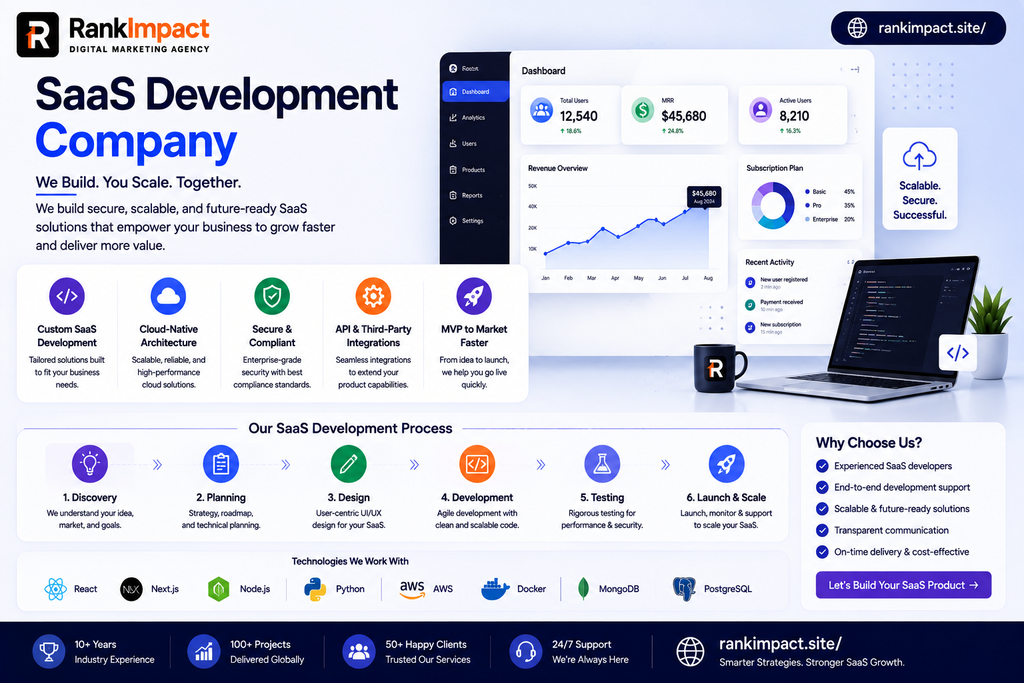
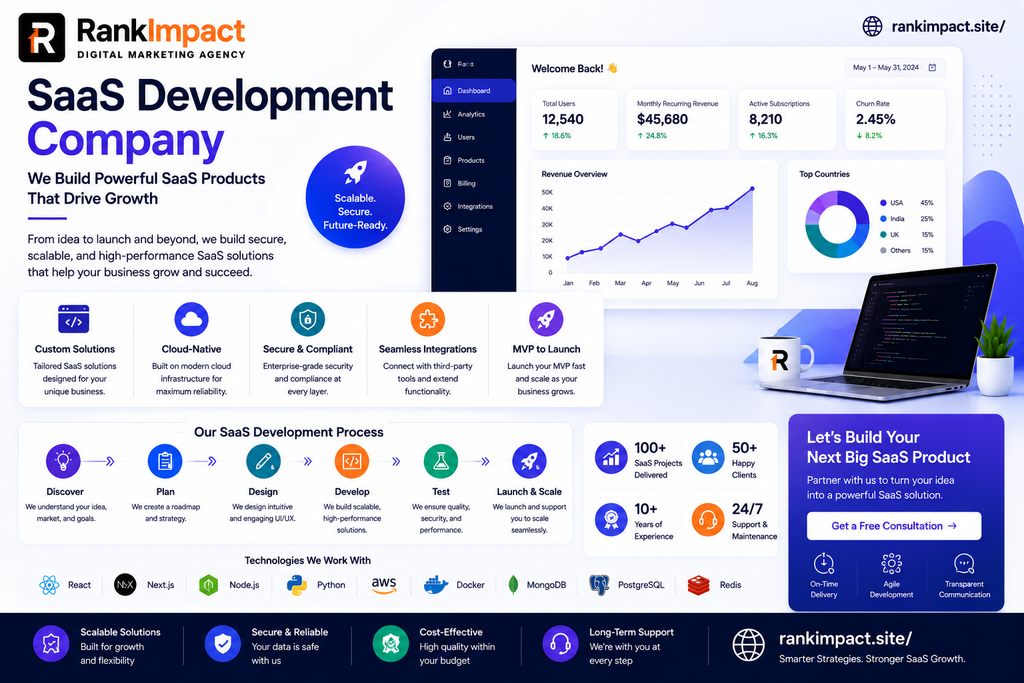
saas development company hiring guide and cost breakdown illustration.

SaaS Development Company Guide To Hiring The Right Partner

Building a software product that customers pay for month after month is one of the most rewarding ventures a founder can pursue but it is also one of the easiest places to lose time and money on the wrong partner. Choosing a saas development company is not just a technical decision it is a business decision that shapes how fast you launch how much you spend on maintenance and whether your platform can actually scale once real customers start signing up. This guide walks through everything you genuinely need to know before signing a contract including what these companies actually do how pricing works the red flags that predict a failed project and the exact questions that separate a great partner from an expensive mistake.

What A SaaS Development Company Actually Does

A saas development company specializes in building cloud hosted software that customers access through a browser or app rather than installing locally on their own machine. Unlike a general web development shop these teams understand the specific architecture patterns that make a subscription product work including multi tenant databases usage based billing systems automated onboarding flows and the security controls enterprise buyers expect before they will sign a contract. The work typically spans the full lifecycle from early product discovery and technical architecture through development quality assurance deployment and ongoing post launch support.

Global demand for this expertise keeps growing because software adoption itself keeps accelerating across every industry. Recent industry research shows worldwide IT spending is projected to exceed 6 trillion dollars in 2026 with software spending among the fastest growing categories inside that total as businesses continue shifting away from on premise systems toward cloud delivered platforms. The average company now runs well over 100 separate SaaS applications across its operations which means the market a new SaaS product enters is already crowded making the quality of your development partner one of the biggest factors separating a product that gains traction from one that quietly fails.

Core Services Offered By SaaS Development Companies

Not every saas development company offers the same scope of work so understanding the typical service breakdown helps you evaluate whether a potential partner actually covers what your project needs. Product discovery and technical consulting usually comes first where an experienced team helps translate a business idea into a concrete technical specification including database design API architecture and a realistic timeline. Custom application development follows covering both frontend interface work and backend infrastructure including the subscription billing logic that makes a SaaS business model function at all.

Cloud infrastructure setup is another core offering since nearly every modern SaaS platform runs on a provider such as AWS Azure or Google Cloud and needs proper configuration for auto scaling load balancing and disaster recovery from day one. Quality assurance and security testing deserves particular attention given that a striking share of SaaS businesses report experiencing a security incident within a twelve month period making rigorous testing a non negotiable part of any serious engagement. Finally ongoing maintenance and support keeps a platform running smoothly after launch covering bug fixes performance monitoring feature updates and the quarterly security patching that compliance frameworks increasingly require.

How Much Does A SaaS Development Company Cost

Cost is usually the first question founders ask and unfortunately also the hardest to answer with a single number because pricing depends heavily on project complexity team location and engagement model. A simple minimum viable product built by an experienced team commonly starts somewhere in the 40 thousand to 60 thousand dollar range while a more feature rich platform with complex integrations enterprise security requirements and multiple user roles can easily run into the low hundreds of thousands of dollars before launch.

Beyond the initial build ongoing maintenance is a cost many founders underestimate during budgeting. Industry benchmarks now place annual maintenance at roughly 15 to 20 percent of the original development cost covering everything from routine bug fixes to mandatory security updates. Cloud hosting itself typically runs between 200 and 2000 dollars per month depending on user volume with additional charges for any third party API usage particularly if your product integrates AI features that carry their own per use costs. When comparing quotes from different companies always ask exactly what is included in a given number since one firm’s estimate for an MVP might include a full design phase and three months of post launch support while another firm’s identical sounding number covers development hours alone.

How To Choose The Right SaaS Development Company

Selecting the right partner comes down to evaluating a handful of factors that consistently separate successful engagements from painful ones. Industry specific experience matters more than most founders initially expect since a company that has already built products for your specific vertical understands the compliance requirements user expectations and common technical pitfalls unique to that space rather than learning them at your expense. Reviewing a company’s actual portfolio and speaking directly with past clients about communication responsiveness and how the team handled scope changes reveals far more than a polished sales pitch ever will.

Technical proficiency deserves close scrutiny particularly around cloud native architecture experience with the specific technology stack your product needs and a demonstrated approach to security given how much sensitive customer data flows through a typical SaaS platform. Equally important is evaluating how a company approaches post launch support since a platform that works perfectly on launch day but has no clear maintenance plan behind it is a liability waiting to surface. Finally pay attention to communication style during the sales process itself since a team that asks sharp clarifying questions about your business model before quoting a price is signaling the same diligence they will bring to the actual project.

SaaS Development Process Explained Step By Step

Understanding the typical development process helps you set realistic expectations and spot warning signs early if a potential partner skips important steps. The process almost always begins with discovery and requirements gathering where the development team works with you to define user personas core features and technical constraints before a single line of code gets written. This is followed by architecture and design where the team maps out database structure API endpoints and user interface wireframes creating a blueprint the entire project can be measured against.

Development typically happens in iterative sprints usually spanning two weeks each with working software demonstrated at the end of every cycle rather than disappearing for months only to reveal a finished product at the very end. Quality assurance runs continuously alongside development rather than as a single phase at the end covering functional testing security testing and performance testing under realistic user load. Deployment introduces the product to a production environment often starting with a limited beta group before a full public launch and the process concludes with a defined handover period where the development team documents the codebase and trains your internal team or transitions into an ongoing support agreement.

Common Mistakes Businesses Make Hiring A SaaS Development Company

Watching failed SaaS projects unfold reveals the same handful of mistakes appearing again and again regardless of industry or company size. Choosing a development partner based purely on the lowest quoted price consistently backfires since inexperienced or under resourced teams tend to cut corners on security testing and architecture decisions that only become expensive problems after real customers depend on the platform. Failing to define clear requirements before development begins is nearly as damaging leading to constant scope creep timeline slippage and a final product that drifts away from the original business goal.

Treating the launch date as the finish line rather than the starting point of an ongoing relationship causes many founders to underbudget for maintenance leaving them scrambling when the inevitable bug or security patch appears. Skipping reference checks with a company’s past clients means missing red flags around missed deadlines or poor communication that would have been obvious with a fifteen minute phone call. One particularly costly pattern involves founders trying to save money by using purely automated AI code generation for a complex backend without any senior human architect reviewing the output leading to systems that work fine for the first few hundred users before collapsing under real load because nobody on the team can actually explain how the underlying code works.

Questions To Ask Before Signing A Contract

Asking the right questions before signing gives you far more leverage than trying to fix problems after a contract is already in place. Ask directly how the company structures pricing and what specifically triggers an additional charge beyond the initial quote since vague answers here often predict budget surprises later. Ask to see two or three examples of similar projects the team has completed along with a direct introduction to a past client rather than a curated testimonial alone.

Ask what security certifications or compliance frameworks the team has experience implementing particularly if your product will handle sensitive customer data or operate in a regulated industry such as healthcare or finance. Ask exactly what happens after launch including response time commitments for critical bugs and whether ongoing support is included in the original engagement or billed separately once the initial build concludes. Finally ask who specifically will be working on your project day to day since some companies present senior talent during the sales process only to staff the actual work with far less experienced team members once the contract is signed.

Why Development Alone Is Not Enough To Succeed

A common blind spot among founders is assuming that once a saas development company delivers a working product the hardest part is finished. In reality a technically excellent platform with no customers is simply an expensive piece of software sitting unused. Growth requires the same level of intentional strategy on the marketing and demand generation side that you applied to the technical build itself which is why many growing companies pair their development partner with a dedicated saas digital marketing agency to make sure qualified leads are flowing in by the time the product is ready for real customers.

Coordinating these two workstreams early rather than treating marketing as an afterthought once development wraps up consistently produces better outcomes. A development team focused purely on shipping features has no visibility into which messaging resonates with buyers or which onboarding friction points are actually costing you trial conversions information your marketing partner gathers constantly through customer research and campaign data. Bringing both teams into the same conversation during the discovery phase rather than sequencing them one after another can meaningfully shorten the time between launch and your first genuinely repeatable revenue.

Frequently Asked Questions

What does a saas development company typically charge for a minimum viable product ?

Most experienced teams charge somewhere between 40 thousand and 60 thousand dollars for a genuine minimum viable product though the exact figure depends heavily on feature complexity integrations and the specific technology stack chosen for the build.

How long does it take to build a SaaS product from scratch?

A focused minimum viable product typically takes twelve to sixteen weeks to reach launch while a more feature complete platform with complex integrations can take six months or longer depending on scope and team size.

Should I hire a freelancer or a full saas development company?

Freelancers can work well for very small well defined projects but a full company typically offers more reliable project management broader technical coverage and continuity if an individual team member becomes unavailable mid project.

What programming languages do most SaaS development companies use ?

Common technology choices include JavaScript and TypeScript for frontend and backend development Python for data heavy applications and cloud platforms such as AWS Azure or Google Cloud for infrastructure though the right stack depends entirely on your specific product requirements.

How do I know if a saas development company is trustworthy ?

Look for a verifiable portfolio of completed projects direct references from past clients transparent pricing structures and clear communication during the sales process itself since how a company behaves before signing a contract usually predicts how they behave afterward.

Is it cheaper to build a SaaS product overseas ?

Offshore and nearshore teams often offer lower hourly rates than local agencies though total cost depends heavily on communication overhead time zone alignment and the additional oversight often needed to maintain the same quality standard.

What ongoing costs should I expect after my SaaS product launches?

Expect annual maintenance costs of roughly 15 to 20 percent of your original development budget along with monthly cloud hosting fees that scale with your user base and any third party API costs tied to specific features.

Do SaaS development companies help with product strategy or only coding ?

Many established companies offer product discovery and strategic consulting alongside pure development work though the depth of this service varies significantly so confirm what is included before assuming strategic guidance is part of the engagement.

What security measures should a SaaS development company implement by default?

Expect encrypted data storage secure authentication protocols regular vulnerability testing and clear compliance planning for frameworks relevant to your industry such as SOC 2 or HIPAA depending on the type of data your product handles.

Can a saas development company help after the product has already launched?

Yes most reputable companies offer ongoing maintenance and feature development contracts after launch and switching to a new partner for this ongoing work is common when the original build was completed by a different team.

Conclusion

Choosing the right saas development company is one of the highest stakes decisions a founder makes because the wrong choice does not just cost money upfront it compounds into maintenance headaches security risk and a product that struggles to scale exactly when customer demand finally arrives. Focus your evaluation on relevant industry experience genuine technical depth transparent pricing and a clear plan for what happens after launch rather than choosing based on the lowest quote alone. Ask pointed questions before signing anything reference check past clients directly and remember that a technically strong build still needs a coordinated go to market plan to turn into a genuinely successful business. Get these fundamentals right and your development partnership becomes a foundation for sustainable growth rather than a recurring source of costly surprises.

Key Takeaways

  • A saas development company specializes in cloud native architecture subscription billing and the security practices a subscription software product specifically requires
  • Minimum viable product costs commonly start between 40 thousand and 60 thousand dollars while full featured platforms can run into the low hundreds of thousands
  • Annual maintenance typically runs 15 to 20 percent of the original development cost and should be budgeted from day one rather than treated as a surprise
  • The strongest partners demonstrate relevant industry experience a verifiable portfolio and a clear post launch support plan rather than competing purely on price
  • A predictable sprint based development process with continuous testing produces far more reliable outcomes than a long single phase build with no visibility until the end
  • Choosing the cheapest bid or skipping reference checks with past clients are among the most common and costly mistakes founders make
  • Asking direct questions about pricing structure team staffing and security practices before signing protects you from expensive surprises later
  • Pairing your development partner with a dedicated saas digital marketing agency helps ensure demand generation is ready the moment your product reaches launch.

B2B SaaS Marketing News 2026 Trends You Must Know

Get the latest b2b saas marketing news for 2026 covering LinkedIn reach AI agents rising CAC and the strategies smart software teams are using now.

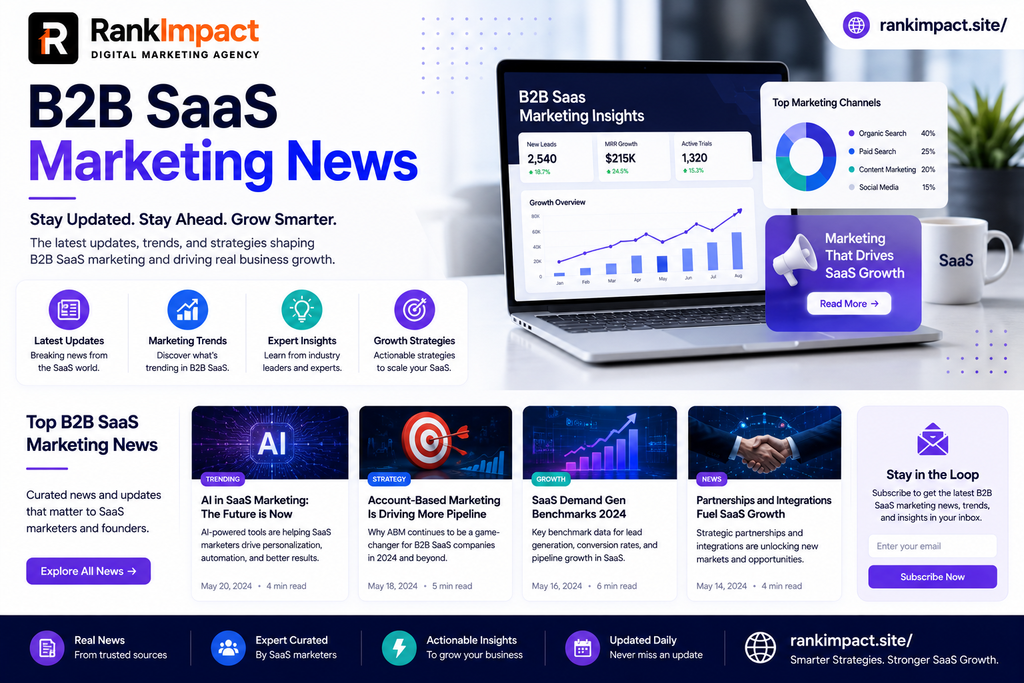
b2b saas marketing news 2026 trends and statistics illustration for software growth teams

B2B SaaS Marketing News 2026 Trends That Matter

Every week brings a fresh wave of b2b saas marketing news and most of it gets forgotten within days. A platform tweaks its algorithm. A research firm publishes a new benchmark. A well known founder posts a thread that changes how a hundred teams plan their next quarter. If you run growth demand generation or content for a software company the real challenge is not finding news it is knowing which stories actually deserve a change in strategy and which ones are just noise. This guide breaks down the biggest b2b saas marketing news stories shaping 2026 explains what they mean in practical terms and gives you a repeatable system for separating signal from distraction going forward.

Why B2B SaaS Marketing News Matters More Than Ever

Software marketing used to move slowly. A channel would work for two or three years before it needed a serious overhaul. That pace is gone. Customer acquisition costs across b2b saas have climbed sharply since 2023 with multiple industry studies placing the increase somewhere between 40 and 60 percent depending on category and competitiveness. At the same time buyer behavior has shifted just as fast. Search traffic to vendor websites has become unpredictable organic reach on social platforms has fallen and a growing share of research now happens inside AI chat tools rather than a traditional search bar.

This is exactly why staying on top of b2b saas marketing news is no longer optional. Teams that treat news as background noise end up reacting six months late after a channel has already stopped working for everyone else. Teams that treat it as a strategic input can shift budget and messaging while a trend is still an advantage rather than a requirement. The goal of this article is to help you build that second habit turning industry news into a genuine edge instead of a distraction from real work.

The Biggest B2B SaaS Marketing News Story Right Now LinkedIn Reach Collapse

If there is one story dominating b2b saas marketing news in 2026 it is the collapse of organic reach for company pages on LinkedIn. Multiple independent research sources now report a 60 to 66 percent drop in company page reach between 2024 and 2026 with some analyses showing organic company content making up as little as 2 percent of what users actually see in their feed. Meanwhile personal profiles are thriving posts from an individual employee routinely earn around eight times the engagement of the exact same content published from a brand account.

For b2b saas companies this is not a minor algorithm update it is a structural shift in how buyers discover and evaluate software. Research behavior has moved away from vendor pages and onto the feeds of founders product leaders and individual contributors who share honest opinions rather than polished announcements. The practical takeaway is straightforward. Your company page should still exist and still post consistently but it can no longer be your primary distribution engine. Founders and senior team members need to become the face of your content strategy sharing lessons data and opinions in their own voice rather than reposting brand graphics. Companies that made this shift early are already seeing the reward in pipeline while competitors still pouring budget into company page content wonder why engagement keeps sliding.

AI Agents Are Now Running Entire Marketing Workflows

A second major theme running through b2b saas marketing news this year is the move from AI as a writing assistant to AI as an operator. Two years ago most teams used AI tools to draft a blog post or suggest a subject line. In 2026 the most advanced marketing teams deploy AI agents that manage entire workflows end to end including onboarding email sequences lifecycle campaigns lead scoring and even real time ad optimization across paid channels.

This shift matters because it changes what a lean marketing team can realistically accomplish. A five person team with the right agentic workflows can now run campaigns that previously required fifteen people. It also raises the bar for quality. When every competitor has access to the same AI tools the differentiator stops being speed and becomes judgment original research and a genuine point of view. Practical example a mid sized project management SaaS company automated its lead scoring and nurture sequencing with an AI agent freeing up two full time marketers to focus entirely on original research and customer interviews. Within one quarter their demo to close rate improved because the content speaking to prospects was grounded in real customer language rather than generic templates. The lesson is simple automate the repetitive layer of your workflow so your human team can spend its time on the parts that actually require expertise.

Customer Acquisition Cost Keeps Climbing Across B2B SaaS

No roundup of b2b saas marketing news would be complete without addressing cost. Research this year shows customer acquisition cost increases ranging from roughly 60 percent over five years in competitive categories to as much as 222 percent over eight years for some segments. Paid social costs continue rising with LinkedIn ad prices up around 24 percent year over year and Google Ads costs up close to 19 percent over the same period.

The rising cost of paid acquisition is forcing a real strategic reset. Growth at all costs is no longer a viable playbook when every additional dollar of spend produces a smaller return than the year before. The companies growing fastest today are not the ones spending the most they are the ones building reusable systems retention programs and owned distribution channels that do not depend on an ad auction. Three practical moves worth prioritizing right now are investing in retention and expansion revenue from existing customers building a genuine content and community presence that compounds over time and treating every piece of paid spend as an experiment with a clear kill criteria rather than a permanent line item.

Generative Engine Optimization Is Reshaping B2B SaaS Marketing News

Perhaps the fastest moving thread in b2b saas marketing news this year is the rise of generative engine optimization often shortened to GEO. As more buyers turn to AI chat tools for early stage research the question shifts from how do we rank on Google to how do we get cited by ChatGPT Perplexity and Gemini when a buyer asks for a recommendation. Industry data shows a striking number of B2B decision makers now say they rely on AI chatbots at some stage of their research journey yet fewer than half of software companies currently track citation performance inside these tools as a real marketing metric.

Winning inside AI search requires a different kind of content than winning inside traditional search. These systems favor content that is direct well structured and easy to extract rather than content padded with SEO jargon. Clear definitions original data comparison tables and specific numbers all tend to perform better than long narrative introductions. Practical tip restructure your core pages so the most important answer appears in the first two or three sentences of each section rather than being buried under a long preamble. This single change improves both traditional SEO performance and your odds of being cited inside an AI generated answer.

Product Led Growth And Sales Led Growth Are Merging

Another consistent theme across recent b2b saas marketing news coverage is the blending of product led growth and traditional sales led motions. For years these were treated as opposing philosophies you either let the product sell itself through a free trial or you built an outbound sales team to chase enterprise deals. In 2026 the most successful companies are running both simultaneously using product usage data to identify accounts showing buying signals and then routing those accounts to a human seller at exactly the right moment.

This hybrid motion depends heavily on marketing and product teams sharing data in real time. When a free trial user hits a usage milestone that historically correlates with conversion that signal needs to reach a sales rep within hours not weeks. Companies getting this right are seeing meaningfully shorter sales cycles because the human conversation only starts once genuine intent has already been demonstrated through product behavior rather than a cold outbound email. If your organization still treats product analytics and sales enablement as separate departments closing that gap should be one of your top priorities this year.

Organic Search And Content Marketing Are Making A Quiet Comeback

While paid channels get more expensive and less predictable organic search is experiencing a genuine resurgence inside b2b saas marketing news coverage. Recent research found organic channels running roughly 40 percent cheaper than paid acquisition in b2b saas while converting more than double as well leading to strong long term returns for companies willing to invest patiently. Owned channels including organic search and content have climbed from around 22 percent of median pipeline in 2023 to roughly 27 percent today with top performing companies attributing over 40 percent of qualified pipeline to these channels combined.

The reason is intuitive even with traffic volumes down across the industry the people who do arrive through organic search and content tend to be higher intent because they found you through genuine research rather than an ad impression. For a growing saas company this means content strategy deserves a bigger seat at the leadership table not a smaller one. A genuinely useful resource like a detailed guide to choosing a saas digital marketing agency can quietly generate qualified pipeline for years after publication something no single paid campaign can replicate.

Seven Common Mistakes B2B SaaS Marketers Make Reacting To News

Even experienced teams stumble when trying to respond to fast moving b2b saas marketing news. Recognizing these patterns helps you avoid repeating them.

  1. Chasing every new platform feature instead of evaluating whether it fits your specific audience and buying cycle
  2. Abandoning a channel entirely after one disappointing month rather than testing a genuinely new approach within it
  3. Copying a competitor tactic without understanding the underlying data that made it work for their audience
  4. Treating AI generated content as a finished product instead of a first draft that still needs expert review
  5. Ignoring retention and expansion metrics while chasing new logo growth that costs far more to acquire
  6. Failing to track how buyers actually discover your product across AI search social and traditional channels
  7. Waiting for a quarterly planning cycle to react to a shift that is already reshaping buyer behavior today

Avoiding these seven traps alone will put your team ahead of a large share of competitors who are still making at least one of them right now.

Best Practices For Staying Ahead Of B2B SaaS Marketing News

Turning industry news into a genuine advantage requires a system rather than occasional attention. Start by assigning one person on your team ownership of tracking industry shifts even if that is a small part of a broader role. Build a simple weekly review where new data points get logged and discussed rather than scattered across individual inboxes. Prioritize primary research and benchmark reports from credible industry sources over secondary commentary since original data ages much better than opinion pieces.

When a genuinely significant shift appears run a small controlled test before committing meaningful budget. If personal profile content is outperforming your company page do not abandon your company page overnight instead run both for a defined period and measure the difference directly with your own data. Document what you learn in a shared playbook so institutional knowledge does not disappear when someone leaves the team. Companies that build this muscle consistently outperform those relying on a single person’s memory of what worked last year.

How To Build A Newsjacking Strategy For B2B SaaS Marketing

Newsjacking meaning creating timely content around a breaking industry story can be one of the highest leverage tactics inside b2b saas marketing news strategy when done well and one of the most embarrassing when done poorly. The goal is to add a genuine point of view to a story your audience is already discussing rather than simply repeating the headline.

A workable process looks like this. First set up alerts for the handful of publications and analysts that genuinely move your specific market rather than trying to monitor everything. Second when a relevant story breaks ask whether your company has real data or a real customer story that adds something new to the conversation. Third publish quickly through the channel where your audience already spends time whether that is a LinkedIn post from a founder or a short expert commentary piece on your blog. Speed matters here a thoughtful response within 48 hours of a major story will earn far more attention than a polished piece published two weeks later once the conversation has moved on. Fourth always tie the commentary back to something concrete you have built or learned rather than pure opinion since credibility compounds much faster than hot takes.

Tools And Resources To Track B2B SaaS Marketing News Every Week

Consistently tracking b2b saas marketing news becomes far easier with the right lightweight system in place. A simple RSS reader or newsletter aggregator covering five to eight trusted industry sources beats scrolling social media hoping to stumble onto something useful. Pair that with a shared internal document where your team logs anything that might affect strategy alongside a one line note on why it matters.

It also helps to follow a small number of specific benchmark reports published annually or quarterly by research firms and marketing platforms since these tend to carry more statistical weight than individual opinion posts. Set a recurring 30 minute team meeting every two weeks specifically to discuss what has changed in the market rather than folding this conversation into an already packed status meeting. Teams that protect this dedicated time consistently spot shifts earlier than teams that treat industry awareness as something to squeeze in whenever there happens to be spare time.

Frequently Asked Questions

What is the most important b2b saas marketing news story in 2026?

The most significant story is the collapse of organic reach for LinkedIn company pages alongside the sharp rise in engagement for personal profiles which is reshaping how software companies distribute content and build trust with buyers.

How often should a saas marketing team review industry news ?

A dedicated review every two weeks strikes a good balance between staying current and avoiding constant distraction from execution. Daily monitoring often leads to reactive decisions based on incomplete information.

Is AI replacing human marketers in b2b saas companies?

No current evidence shows AI replacing marketing roles entirely rather it is replacing repetitive execution tasks while increasing demand for strategic judgment original research and genuine subject matter expertise.

Why has customer acquisition cost risen so much in b2b saas?

Rising competition inflation in paid advertising auctions and more channels competing for the same buyer attention have combined to push acquisition costs up sharply across nearly every b2b saas category since 2023.

What is generative engine optimization and why does it matter ?

Generative engine optimization is the practice of structuring content so AI tools like ChatGPT and Perplexity are more likely to cite your brand when answering a buyer question making it an increasingly important companion to traditional search engine optimization.

Should a small saas company still invest in a company LinkedIn page ?

Yes but it should not be the primary channel. Personal profiles belonging to founders and team members should carry the bulk of organic distribution while the company page serves as a secondary amplification and credibility touchpoint.

How can a saas company measure whether a marketing trend is worth adopting?

Run a small controlled test with a clear success metric and a defined timeframe before shifting significant budget. Comparing real performance data against your current approach is far more reliable than adopting a trend purely because competitors are discussing it.

What role does content marketing play in reducing acquisition costs ?

Content marketing and organic search consistently run cheaper than paid acquisition while converting at a higher rate over time making them one of the most reliable long term levers for lowering blended customer acquisition cost.

Is product led growth replacing sales led growth in b2b saas?

Not entirely the two motions are increasingly merging with product usage data used to identify high intent accounts that are then handed to a human sales team at the right moment rather than one approach fully replacing the other.

Where can a saas company get help building a modern marketing strategy ?

Many growing companies partner with an experienced saas digital marketing agency to combine specialized industry knowledge with the execution capacity needed to act on these trends quickly.

Conclusion

B2B saas marketing news moves faster today than at any point in the past decade and the gap between companies that adapt early and those that react late continues to widen. The stories covered here from the collapse of LinkedIn organic reach to the rise of AI agents and generative engine optimization all point toward the same underlying truth marketing has shifted from a game of raw spend toward a game of genuine systems judgment and authentic distribution. Building a simple repeatable habit of tracking testing and documenting what actually works for your specific audience will matter far more over the next few years than chasing every individual headline. Start small assign ownership review consistently and let real data rather than industry noise guide where your team invests its time and budget next.

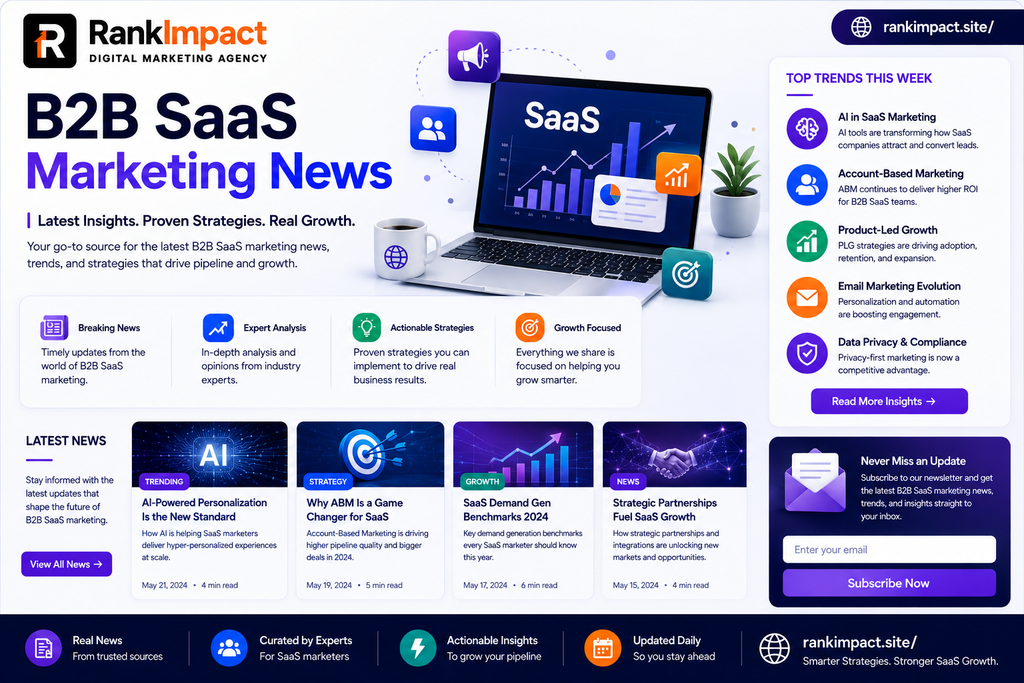
b2b saas marketing news 2026 trends and statistics illustration for software growth teams.

Key Takeaways

  • LinkedIn company page organic reach has dropped roughly 60 to 66 percent since 2024 while personal profile content earns around eight times more engagement
  • AI agents are now managing full marketing workflows from onboarding to lead scoring freeing human teams to focus on strategy and original research
  • Customer acquisition cost has risen sharply across b2b saas making retention and owned channels more valuable than ever
  • Generative engine optimization is becoming as important as traditional SEO as more buyers research software through AI chat tools
  • Organic search and content marketing convert better and cost less than paid acquisition over the long term
  • Product led growth and sales led growth are merging with usage data guiding when a human seller should step in
  • A simple biweekly review system beats reactive daily scrolling for staying genuinely ahead of industry shifts
  • Partnering with a specialized saas digital marketing agency can help smaller teams execute on these trends without overextending internal resources.

Get Your FREE SEO Audit

Enter your details below. Our team will review your website and email you a comprehensive SEO and speed report within 24 hours.