+92 318 3068833 Get Free Audit

SEO For SaaS 2026 Strategy Guide That Drives Growth

Learn seo for saas in 2026 covering content clusters programmatic seo AI search optimization technical fundamentals and mistakes costing you pipeline.
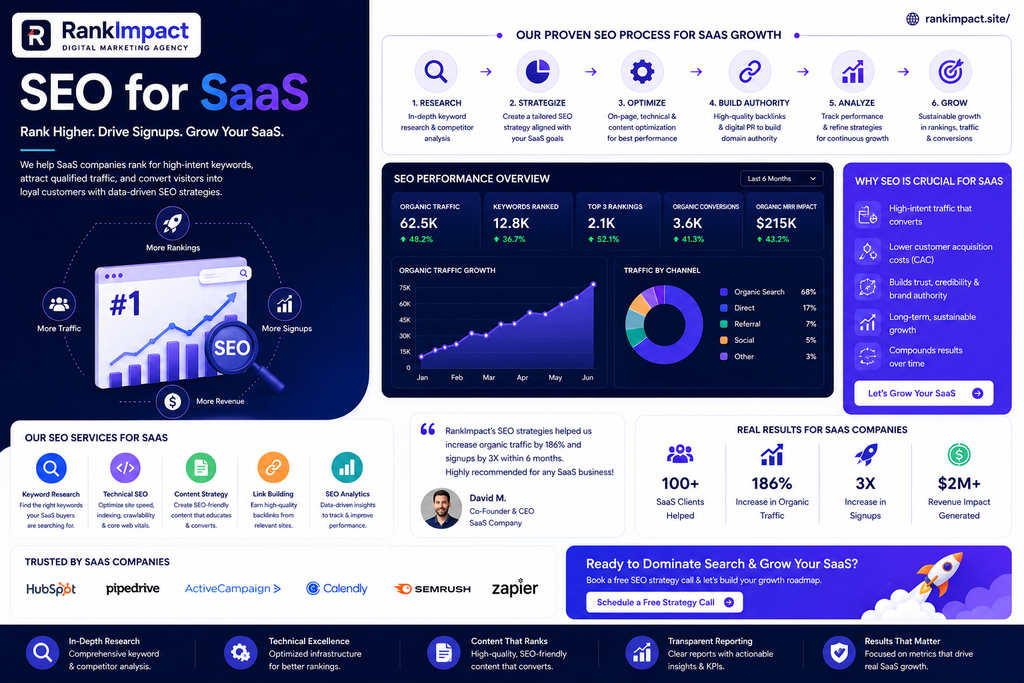
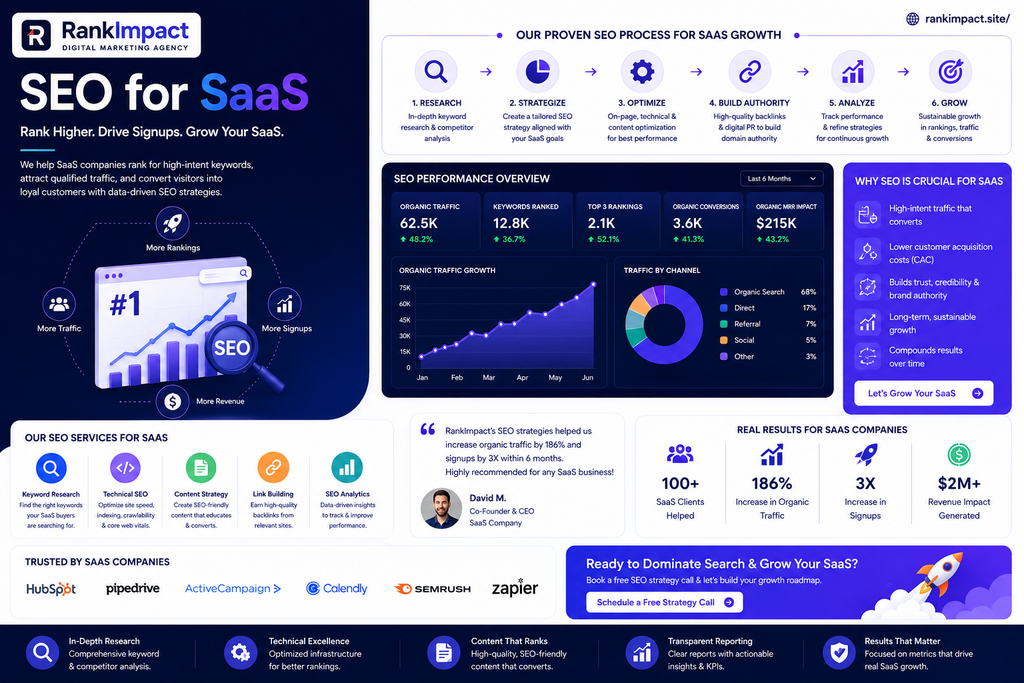
seo for saas 2026 strategy content clusters and AI search illustration.

SEO For SaaS 2026 Strategy Guide

Every software company eventually reaches the same crossroads paid acquisition costs keep climbing and leadership starts asking whether organic search could actually become a real growth channel rather than an afterthought buried in the marketing budget. Getting seo for saas right in 2026 looks meaningfully different from the tactics that worked even two years ago since buyer research now splits across traditional search and AI powered chat tools while Google itself has cracked down hard on low value scaled content. This guide walks through exactly how to build a genuine organic growth engine covering strategy content architecture technical fundamentals and the specific mistakes quietly capping results for otherwise capable marketing teams.

What SEO For SaaS Actually Means In 2026

SEO for saas is the practice of optimizing a software company’s website and content to rank for the specific queries its target buyers actually search throughout their entire evaluation journey. Unlike traditional SEO for an ecommerce store or local business seo for saas prioritizes monthly recurring revenue and pipeline contribution over raw traffic volume alone since a thousand visitors who will never buy software matters far less than a hundred visitors representing genuine purchase intent. This distinction shapes nearly every strategic decision from keyword selection through content format and even which metrics actually deserve leadership’s attention in a monthly report.

The category has also fundamentally split in a way that did not exist just a couple of years ago. A growing share of business buyers now consult an AI chat tool like ChatGPT Perplexity or Gemini at some point during their research with recent industry data placing that figure around 94 percent of business buying groups meaning a platform invisible to these tools is effectively invisible at the exact moment a deal gets shortlisted. Recent research also shows organic search programs delivering a median three year return on investment around 702 percent for saas companies that build a mature program which explains why so many companies are shifting real budget away from paid channels and toward building genuine organic authority over time.

Building Commercial Clarity Before Any Tactical Work Begins

The single biggest mistake companies make with seo for saas is jumping straight into keyword research and content production before establishing genuine clarity about who they are actually targeting. Effective strategy starts by clearly defining whether your product serves a self service motion small and medium business buyers or complex enterprise deals since this single decision shapes everything downstream including keyword selection content format and even which specific pages deserve priority investment. A self service product benefits enormously from bottom funnel comparison content and quick answer pages while an enterprise focused platform needs deeper content addressing multiple stakeholders across a much longer evaluation cycle.

Understanding the specific switch moments that bring a buyer to market matters just as much as understanding who they are. A prospect searching because their current tool just raised prices behaves very differently from one exploring options simply because their company is scaling and outgrowing a spreadsheet based process. Mapping these distinct triggers to specific content and keyword targets before writing a single article ensures your entire content investment aligns with genuine commercial outcomes rather than chasing broad search volume that never converts into demos or trials regardless of how well the resulting pages actually rank.

Content Clusters The Foundation Of Modern SaaS SEO

Topic clusters remain the structural backbone of any serious seo for saas strategy in 2026 and understanding how to build them correctly separates genuinely effective programs from scattered content calendars producing little real authority. A cluster consists of one comprehensive pillar page targeting a broad core topic surrounded by eight to twelve supporting articles each addressing a specific long tail subtopic or question with every cluster piece linking back to the pillar and the pillar linking out to each cluster in turn. This tightly interlinked structure signals genuine topical depth to search engines while also giving AI answer engines a coherent cross linked set of pages to draw from when summarizing your specific category to a buyer asking a research question.

Most teams following this approach see cluster rankings begin moving within three to four months with measurable pipeline impact typically following six to twelve months later a timeline worth setting clearly with leadership before starting rather than after when patience inevitably runs thin. A practical example for a project management software company might use a pillar page covering project management methodologies broadly supported by cluster pieces covering agile versus waterfall comparisons scrum implementation for remote teams and specific software comparison content all linking back to strengthen the central pillar’s authority. Building three or four of these clusters mapped directly to your core product use cases produces far stronger long term results than forty scattered blog posts covering unrelated tangential topics with no coherent internal linking structure tying them together.

Programmatic SEO Scaling Content Without Scaling Your Team

Programmatic seo has become one of the defining tactics separating fast growing saas companies from those relying purely on manual content production and understanding it correctly matters enormously given how much the rules around this tactic shifted during 2026. This approach generates large numbers of landing pages from a single template populated with structured data your product already possesses such as every integration your platform supports every specific use case it serves or every competitor buyers commonly compare you against. Zapier famously pioneered this exact approach building a dedicated landing page for every possible app combination while companies like HubSpot and Atlassian have applied similar templates to their own specific product ecosystems with considerable success.

The critical caveat every team needs to understand is that Google’s scaled content abuse policy enforced heavily during the March 2026 core update stripped between 50 and 80 percent of traffic from low value programmatic sites built on thin template swaps with no genuine unique value per page. Programmatic seo still works powerfully in 2026 but only when each generated page contains real data or genuine utility a prospect cannot find elsewhere rather than the same three sentences reshuffled across a thousand near identical URLs. Companies implementing this correctly are reporting 300 to 500 percent increases in organic traffic within twelve to eighteen months precisely because they treat each page as a genuine resource built on real structured data rather than a shortcut around actual content investment.

Comparison Content And Capturing High Intent Bottom Funnel Searches

Comparison and alternative focused content deserves particular priority within any seo for saas strategy because it captures searchers at the exact moment they are actively evaluating a purchase rather than simply researching a broad topic. Pages built around alternative to a specific named competitor searches consistently convert at meaningfully higher rates than generic educational content since anyone searching that specific phrase has already identified a problem with their current tool and is actively shopping for a replacement. Building these pages honestly with genuine feature comparisons pricing transparency and clear differentiation rather than thinly veiled marketing copy produces far stronger trust and conversion than an obviously biased comparison that damages credibility the moment a prospect notices the framing.

Best practice for this content type involves acknowledging genuine competitor strengths alongside your own differentiation since prospects researching alternatives are typically sophisticated buyers who can immediately spot dishonest positioning and will trust your entire site less once they catch even one exaggerated claim. Including specific pricing information migration guidance and honest use case fit guidance helps these pages serve genuine research needs which both improves conversion and increases the odds these pages get cited when a buyer asks an AI tool for a direct comparison between your product and a named competitor.

Technical SEO Foundations Every SaaS Site Needs

Strong content ultimately underperforms without a solid technical foundation supporting it and seo for saas carries several technical considerations specific to how software platforms are typically built. Core web vitals performance deserves particular attention since AI driven search crawlers increasingly factor genuine page speed and interactivity metrics into how they evaluate and summarize content meaning a slow loading site can undermine even genuinely excellent content regardless of how well researched it actually is. Many saas platforms run on complex single page application frameworks that require specific server side rendering configuration to ensure search engines and AI crawlers can actually access and index content properly rather than encountering a blank page where meaningful text should be.

Structured data markup deserves careful implementation across product pages pricing pages and content since properly formatted schema helps both traditional search engines and AI systems understand exactly what your page offers reducing ambiguity that could otherwise cause a crawler to misrepresent your product when summarizing it for a buyer. Site architecture matters just as much with a clear logical hierarchy connecting your homepage core product pages and content clusters through consistent internal linking that helps both search engines and human visitors understand how everything on your site relates to your core offering rather than presenting a disorganized collection of disconnected pages competing against each other for the same keywords.

Optimizing For AI Search Alongside Traditional Rankings

The single biggest shift reshaping seo for saas in 2026 involves treating traditional search engine optimization and generative engine optimization as one connected system rather than two separate disciplines competing for budget and attention. When a buyer asks an AI system a research question that system typically expands the original prompt into multiple related sub questions a process now commonly called query fan out meaning your content cluster needs to address every facet a buyer might explore rather than simply targeting one narrow keyword variation. Recent data shows AI overviews appearing above traditional search results now produce an average 61 percent click through decline on the queries where they appear making direct AI citation increasingly as valuable as a traditional top ranking position itself.

Structuring content with the most important direct answer appearing early in each section rather than buried under a lengthy introduction improves your odds of being cited inside an AI generated summary while also improving traditional featured snippet performance since both systems reward the same underlying clarity and directness. Building genuinely comprehensive cluster coverage around a core topic rather than a single isolated page increases the odds an AI system finds your content specifically relevant across multiple related sub questions a prospect might ask during their research rather than just one narrow phrasing that happens to match your target keyword exactly.

Common Mistakes Killing SaaS SEO Results

Watching underperforming seo for saas programs reveals the same avoidable mistakes appearing repeatedly across otherwise capable marketing teams. Publishing scattered standalone blog posts with no coherent cluster structure or internal linking strategy wastes enormous content investment since search engines struggle to identify genuine topical authority from disconnected pages covering unrelated tangential subjects. Chasing broad high volume keywords with no genuine commercial intent behind them produces impressive traffic charts that leadership eventually questions once nobody can connect that traffic to actual pipeline or closed revenue.

Treating programmatic seo as a shortcut around genuine content investment by publishing thin templated pages with no real unique value per page now carries serious risk given how aggressively Google’s 2026 scaled content policies penalize exactly this pattern. Measuring success through vanity metrics like raw traffic or keyword rankings rather than pipeline contribution and closed revenue creates a dangerous disconnect where marketing looks successful on paper while leadership quietly loses confidence in the entire program. Finally many teams ignore AI search visibility entirely treating it as a future consideration rather than a current priority which means they remain completely invisible during a growing share of buyer research happening right now through tools their own prospects are actively using.

Off page authority signals remain a meaningful ranking factor within seo for saas even as content and technical fundamentals get most of the attention in current industry discussion. Earning genuine editorial links from relevant industry publications and respected review sites continues carrying more weight than volume based link building tactics that produce low quality placements search engines increasingly discount or actively penalize. Building relationships with journalists and industry analysts covering your specific category through genuine expertise sharing and original research tends to produce far stronger long term link acquisition than direct outreach purely asking for a placement in exchange for nothing of genuine value to the publication.

Treating link building as an always on program woven into your broader content and public relations strategy rather than a separate isolated initiative produces considerably more consistent results over time. Original research and proprietary data specific to your industry or product category represents one of the most reliable ways to earn genuine editorial links since publications and other content creators consistently prefer citing primary data over simply linking to another company’s marketing page. Working with a specialized saas digital marketing agency that maintains genuine relationships across your specific industry can meaningfully accelerate this authority building process compared to building those relationships entirely from scratch with no existing network to draw from.

Measuring What Actually Matters In A SaaS SEO Program

Building a genuinely useful measurement framework for seo for saas requires moving well past surface level traffic numbers toward metrics that actually connect to business outcomes leadership cares about. Tracking pipeline contribution and closed revenue attributed to organic search alongside more traditional metrics like keyword rankings and organic sessions ensures your reporting tells the full story rather than celebrating vanity numbers that never translate into actual customers. Monitoring conversion rate at each stage from organic visitor through trial signup and eventually closed deal reveals exactly where your funnel is genuinely working and where it needs real attention rather than relying on a single blended conversion number that can mask a serious problem concentrated at just one specific stage.

Increasingly tracking AI citation frequency across major chat tools deserves a place in this measurement framework alongside traditional analytics since a growing share of your addressable buyer research happens through these systems whether or not your current reporting currently captures it. Reviewing this full picture quarterly alongside sales leadership rather than only within marketing keeps the entire organization aligned around the same understanding of what is genuinely working and ensures continued investment in organic search remains justified through real business outcomes rather than optimistic assumptions about future potential that never quite materializes into measurable results.

Frequently Asked Questions

What makes seo for saas different from regular seo?

SEO for saas prioritizes monthly recurring revenue and qualified pipeline over raw traffic volume and specifically accounts for longer buying cycles multiple stakeholders and increasingly the need to be cited accurately inside AI powered research tools rather than traditional search results alone.

How long does it take to see results from a saas seo strategy?

Most content clusters begin showing ranking movement within three to four months with measurable pipeline impact typically following six to twelve months later making patience and realistic timeline setting essential before starting any serious program.

Is programmatic seo still safe to use in 2026 ?

Yes but only when every generated page contains genuine unique data or utility since Google’s scaled content abuse policy enforced during the March 2026 core update stripped significant traffic from sites built on thin templated pages with no real value.

What is a content cluster and why does it matter for saas seo?

A content cluster combines one comprehensive pillar page with eight to twelve supporting articles addressing specific subtopics all interlinked together which signals genuine topical authority to search engines and gives AI tools a coherent set of pages to reference.

How important is AI search optimization for saas companies today?

Extremely important since roughly 94 percent of business buying groups now consult an AI chat tool during their research process meaning a platform poorly structured for these systems risks being effectively invisible during a significant share of active evaluation.

What return on investment can a saas company expect from organic search ?

Industry research shows a median three year return on investment around 702 percent for saas companies running a mature organic search program though results depend heavily on execution quality and consistency over time.

Should comparison content mention competitors by name?

Yes honest comparison content addressing named competitors directly tends to convert well since it captures buyers already actively shopping for alternatives though acknowledging genuine competitor strengths alongside your own differentiation builds far more trust than dishonest framing.

What technical factors matter most for saas seo in 2026?

Core web vitals performance proper server side rendering for complex application frameworks and clean structured data markup all matter significantly since AI driven crawlers increasingly factor these signals into how they evaluate and summarize your content.

How should a saas company measure seo success ?

Pipeline contribution and closed revenue attributed to organic search should take priority over vanity metrics like raw traffic alone with AI citation frequency increasingly deserving a place in this measurement framework alongside traditional analytics.

How can a growing saas company execute a seo strategy without a large internal team ?

Many companies partner with an experienced saas digital marketing agency to combine specialized strategic guidance with consistent execution across content technical work and link building without needing to build a large internal team from scratch.

Conclusion

Getting seo for saas right in 2026 requires treating organic search as a genuine long term growth engine built on commercial clarity coherent content clusters and technical fundamentals rather than a collection of disconnected tactics chasing whatever trend happens to be trending this quarter. Understanding your specific buyer and their switch moments before writing a single article building content that serves both traditional search engines and increasingly AI powered research tools and measuring success through pipeline rather than vanity metrics together separate programs that genuinely move the business from those that produce impressive charts nobody can connect to actual revenue. Start with clarity about who you serve build your content architecture deliberately rather than reactively and stay disciplined about measuring what actually matters and your organic search program can become one of the most durable cost effective growth channels available to your company for years to come.
Key Takeaways

  • SEO for saas prioritizes monthly recurring revenue and qualified pipeline over raw traffic volume which shapes every strategic decision from keyword selection through measurement
  • Establishing commercial clarity about your specific buyer and their switch moments before any tactical work begins prevents wasted content investment chasing irrelevant search volume
  • Content clusters combining one pillar page with eight to twelve supporting articles remain the structural foundation of effective modern saas seo programs
  • Programmatic seo still works powerfully in 2026 but only when every page delivers genuine unique value given how heavily Google now penalizes thin templated content
  • Comparison and alternative focused content captures high intent buyers actively shopping for a replacement and consistently converts better than generic educational content
  • Roughly 94 percent of business buying groups now consult an AI chat tool during research making generative engine optimization essential rather than optional
  • Technical fundamentals including core web vitals and proper structured data markup matter more than ever as AI crawlers increasingly factor these signals into their evaluation
  • Partnering with a specialized saas digital marketing agency can help growing companies execute a mature seo program without needing to build a large internal team from scratch.
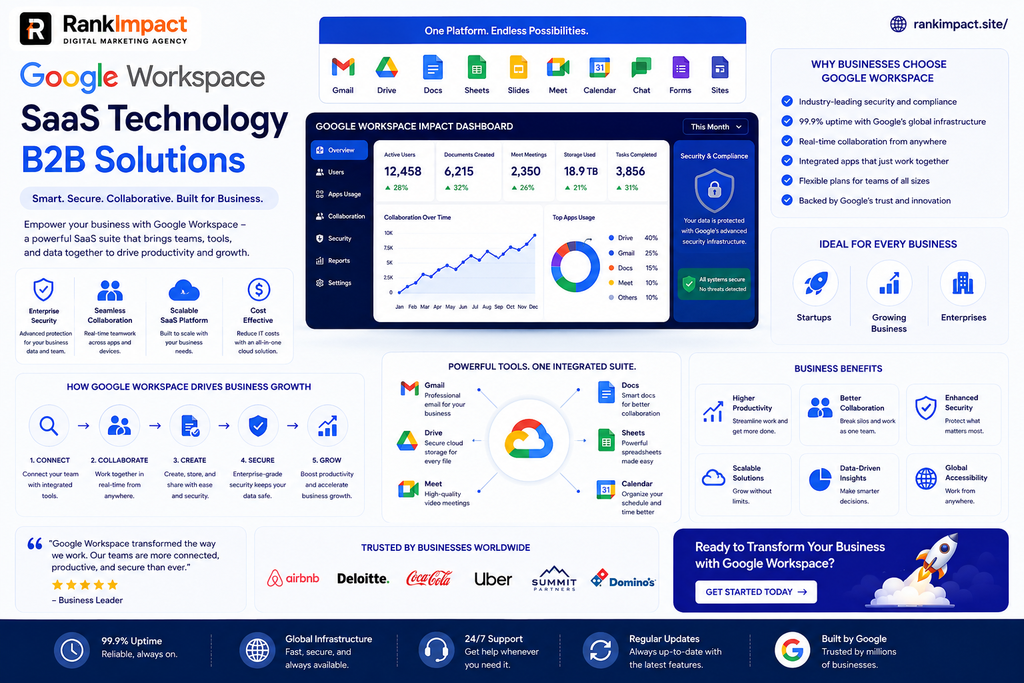
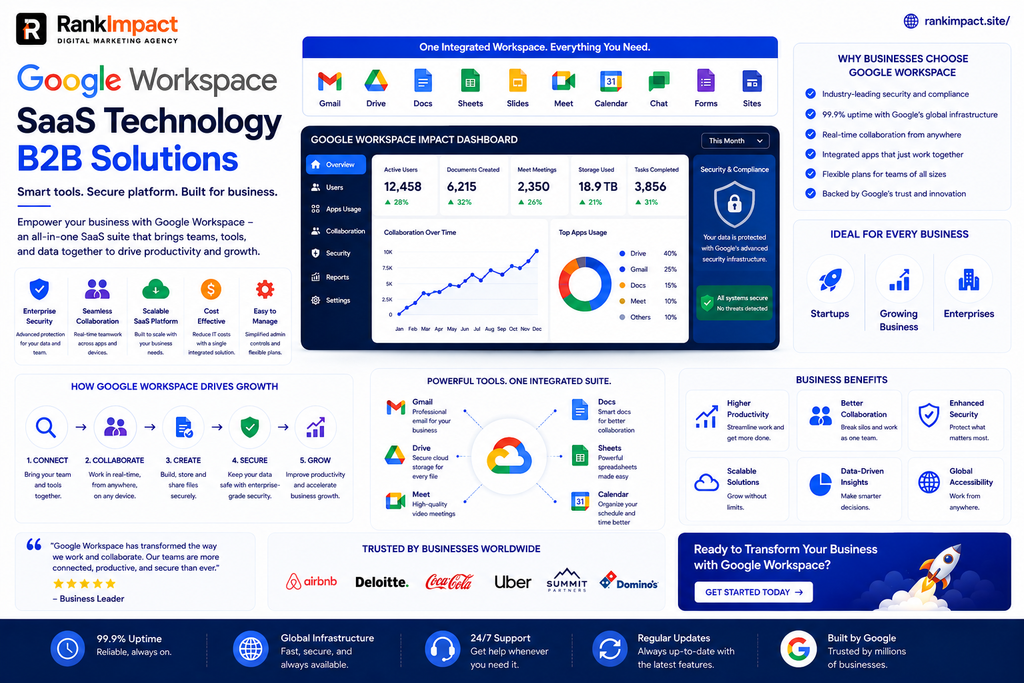
google workspace saas technology b2b solutions

Explore google workspace saas technology b2b solutions covering 2026 pricing plans features security and how it compares to Microsoft 365 for business.

google workspace saas technology b2b solutions 2026 pricing and features illustration.

Google Workspace SaaS Technology B2B Solutions 2026 Guide

Every business eventually faces the same decision how do you give a growing team the tools to communicate collaborate and store information without stitching together a dozen disconnected apps that never quite talk to each other. Google workspace saas technology b2b solutions answer this problem by putting email documents video meetings and storage inside one cloud hosted subscription built specifically for how modern companies actually operate. This guide walks through exactly what Google Workspace includes how its pricing works in 2026 how it compares to the alternatives businesses consider and the practical steps that separate a smooth rollout from a frustrating one so you can make a genuinely informed decision for your own organization.

What Google Workspace Actually Is As A B2B SaaS Platform

Google Workspace is a cloud based productivity suite delivered entirely as software as a service meaning nothing gets installed on a local server and every update rolls out automatically to every subscribed user. The platform bundles Gmail for business email Google Docs Sheets and Slides for document creation Google Drive for cloud storage Google Meet for video conferencing and Google Calendar for scheduling all under a single login and a single monthly or annual invoice. This bundled approach is exactly what makes it one of the clearest examples of google workspace saas technology b2b solutions in action since a single subscription replaces what used to require separate email hosting document software and video conferencing licenses purchased from different vendors.

The B2B nature of the product shows up clearly in how it is priced and administered rather than in the individual apps themselves. A business administrator manages every user account from a central console controlling security policies data retention rules and access permissions across the entire organization something an individual consumer account simply cannot offer. This administrative layer combined with guaranteed uptime service level agreements and dedicated business support is what genuinely separates a Workspace business subscription from someone simply using a free personal Gmail account for company communication.

Current Google Workspace Pricing Plans For 2026

Understanding actual pricing helps you budget accurately rather than guessing based on outdated information since Google has adjusted its plans multiple times in recent years. The Business Starter plan currently runs around 7 dollars per user per month when billed annually and includes 30 gigabytes of storage per user support for up to 100 participant video meetings and access to Gmail Docs Sheets Slides Meet and basic Gemini AI features. Business Standard sits at roughly 14 dollars per user per month billed annually expanding storage to 2 terabytes per user increasing meeting capacity to 150 participants and unlocking the full set of Gemini AI features across every application in the suite.

Business Plus pushes further to around 22 dollars per user per month billed annually with 5 terabytes of storage per user support for 500 participant meetings and additional security features including secure LDAP connections and Google Vault for data retention and legal discovery needs. Enterprise pricing is not published publicly and instead requires a direct conversation with a Google sales representative since enterprise contracts typically include custom security requirements dedicated support and volume based discounts negotiated individually. One important recent shift worth noting is that Google folded its Gemini AI features directly into these standard plans rather than charging a separate add on fee which previously cost an additional 20 dollars per user per month meaning most businesses are now getting considerably more value at a relatively modest price increase compared to the old pricing structure.

Core Features That Make Google Workspace Valuable For Business

Beyond the individual applications several features specifically address the needs businesses evaluating google workspace saas technology b2b solutions actually care about. Real time collaborative editing lets multiple team members work inside the same document spreadsheet or presentation simultaneously with changes appearing instantly for everyone which eliminates the version control chaos that plagued earlier generations of office software built around emailing files back and forth. Google Meet integrates directly into Calendar invitations and Gmail making it simple to schedule and join video calls without switching between separate applications or remembering a different meeting link format for every platform.

Security and compliance features have expanded significantly with built in AI powered threat detection covering phishing attempts and malware across both Gmail and Drive along with automated data classification tools that help businesses identify and protect sensitive information without manual tagging. Google Vault provides the retention search and legal hold capabilities that regulated industries and larger organizations increasingly require for compliance purposes. Shared drives allow teams to organize files under a department or project ownership rather than tying critical documents to a single departing employee’s personal account which solves a genuinely common headache during employee turnover.

How Google Workspace Compares To Microsoft 365

Nearly every business evaluating Google Workspace also considers Microsoft 365 as the other dominant option in this category and understanding the real differences helps you choose based on your team’s actual workflow rather than brand familiarity alone. Microsoft 365 Business Basic starts around 6 dollars per user per month slightly undercutting Google’s entry tier while Business Standard runs close to 12.50 dollars per user per month though desktop versions of Word Excel and PowerPoint only become available at this tier or above. Google Workspace by contrast delivers its full application suite through the browser from the entry level plan onward which suits teams comfortable working entirely in a web based environment but may frustrate users who specifically need traditional desktop software with offline editing as their primary workflow.

The practical decision often comes down to existing habits and integration needs rather than a clear universal winner between the two platforms. Organizations already standardized on Windows desktop environments with heavy dependence on advanced Excel functions or complex PowerPoint animations frequently find Microsoft 365 fits their existing workflow with less retraining required. Teams that value seamless real time collaboration a simpler browser based experience and tight integration with other Google Cloud services tend to gravitate toward Workspace particularly if the organization already uses Android devices or other Google business tools that benefit from native integration.

Common Mistakes Businesses Make Choosing SaaS Productivity Tools

Watching organizations struggle with a poorly planned rollout reveals the same avoidable mistakes appearing again and again regardless of company size or industry. Choosing a platform based purely on the lowest advertised price without accounting for storage limits per user meeting participant caps or the specific security features your industry actually requires often forces an expensive mid contract upgrade once real usage patterns emerge. Skipping a genuine pilot rollout with a small representative group of employees before committing the entire organization means discovering workflow gaps and training needs only after every employee has already been forced to switch cold turkey.

Underestimating the data migration effort required when moving away from an existing email or file storage system frequently causes far more disruption than the platform switch itself since historical emails calendar events and file structures all need careful planning to transfer without data loss or broken sharing permissions. Failing to establish clear file organization and sharing conventions before rollout tends to produce a chaotic sprawl of shared drives and permission settings within just a few months that becomes genuinely difficult to untangle later. Finally many businesses treat the built in AI features as an afterthought rather than investing time training employees on how to actually use tools like automated meeting notes and email summarization which means the organization pays for capabilities that sit largely unused.

Best Practices For Rolling Out Google Workspace Successfully

A smooth implementation depends far more on deliberate planning than on the technical capabilities of the platform itself. Starting with a genuine pilot group of 10 to 20 employees representing different departments before a full company rollout surfaces workflow questions and training gaps while the stakes remain low and feedback can still shape your broader implementation plan. Establishing clear shared drive structures and naming conventions from day one prevents the disorganized file sprawl that becomes exponentially harder to fix once hundreds of documents already exist scattered across personal drives with inconsistent naming.

Investing in structured training sessions covering not just the basic applications but the collaboration and AI features specific to your chosen plan tier significantly improves actual adoption rather than leaving employees to discover functionality accidentally or not at all. Setting clear data governance policies around sharing permissions external collaboration and retention rules before rollout rather than reactively after a security incident protects the organization while still allowing the flexibility that makes cloud collaboration genuinely useful. Designating an internal Workspace administrator or champion who stays current on new feature releases and can answer day to day questions dramatically reduces the burden on IT support while improving overall employee confidence with the platform.

Security And Compliance Considerations For B2B Buyers

Security deserves particular attention for any business evaluating google workspace saas technology b2b solutions given how much sensitive company data flows through email documents and shared drives on a daily basis. Google Workspace includes built in encryption for data both in transit and at rest along with two factor authentication options and increasingly sophisticated AI driven threat detection that flags suspicious login attempts and phishing emails before they reach an employee inbox. Higher tier plans add advanced controls including data loss prevention rules that can automatically block sensitive information such as financial data or personal identifiers from being shared externally without proper authorization.

Businesses operating in regulated industries should specifically evaluate whether their required compliance framework such as healthcare data regulations or financial services requirements is supported at their chosen plan tier since some advanced compliance features including Google Vault for legal discovery and extended retention policies are only available starting at the Business Plus tier or above. Working with an implementation partner or dedicated Google Cloud reseller can help larger organizations navigate these compliance requirements correctly from the start rather than discovering a gap during an audit or security review after the platform is already fully deployed across the company.

Why SaaS Adoption And Marketing Strategy Go Hand In Hand

Adopting the right internal tools like Google Workspace solves how your team works together but it does nothing on its own to solve how you attract and convert your own customers which is a separate strategic challenge many growing companies underestimate. Just as choosing the right google workspace saas technology b2b solutions requires careful evaluation of features pricing and fit building a genuine customer pipeline requires the same level of deliberate strategy rather than ad hoc effort. Many growing businesses find real value in pairing strong internal collaboration tools with support from a specialized saas digital marketing agency that understands how to translate operational efficiency into a genuinely effective growth engine on the customer facing side of the business.

The connection here is more practical than it might first appear since a team collaborating efficiently inside Google Workspace produces marketing content customer proposals and sales materials faster than a team fighting disorganized file sharing and version control chaos. Internal tooling and external growth strategy are ultimately two sides of the same operational excellence that separates thriving companies from those constantly firefighting basic logistics instead of focusing on the work that actually moves the business forward.

Frequently Asked Questions

What is included in google workspace saas technology b2b solutions?

A typical Google Workspace business subscription includes Gmail for custom business email Google Docs Sheets and Slides for document creation Google Drive for cloud storage Google Meet for video conferencing and centralized admin controls for managing every user account across the organization.

How much does Google Workspace cost per user in 2026 ?

Pricing starts around 7 dollars per user per month for Business Starter billed annually and increases to roughly 14 dollars for Business Standard and 22 dollars for Business Plus with custom enterprise pricing available for larger organizations with specific requirements.

Is Google Workspace better than Microsoft 365 for small business?

Neither platform is universally better since the right choice depends on whether your team prefers a fully browser based collaborative workflow which favors Google Workspace or traditional desktop applications with offline editing which favors Microsoft 365.

Does Google Workspace include AI features ?

Yes Gemini AI features including email summarization automated meeting notes and writing assistance are now bundled directly into all Business and Enterprise plans rather than requiring a separate paid add on as was previously the case.

Can Google Workspace handle enterprise level security requirements ?

Yes though advanced compliance features such as Google Vault for legal discovery and extended data retention are typically only available starting at the Business Plus tier or through a custom Enterprise agreement rather than the entry level plans.

How long does it take to migrate a business to Google Workspace ?

Migration timelines vary significantly based on company size and data volume but a small business can often complete a basic email and file migration within a few weeks while larger organizations with complex legacy systems may need several months for a full transition.

Is there a free trial available for Google Workspace ?

Yes Google offers a 14 day free trial for new business customers allowing you to test the platform with your own team before committing to a paid subscription tier.

What is the biggest mistake businesses make when adopting a new SaaS platform?

Skipping a genuine pilot rollout with a small representative group before switching the entire organization is one of the most common mistakes since it means major workflow gaps only surface after every employee has already been forced to transition.

Can Google Workspace integrate with other business software?

Yes Google Workspace supports a wide range of third party integrations through its marketplace along with API access that allows custom integrations with CRM platforms project management tools and other business software your company already relies on.

How can a business improve growth alongside adopting new SaaS tools?

Many companies pair strong internal collaboration platforms with support from a dedicated saas digital marketing agency to ensure operational improvements translate into genuine customer acquisition and revenue growth rather than efficiency gains alone.

Conclusion

Choosing the right google workspace saas technology b2b solutions comes down to understanding exactly what each pricing tier includes how the platform compares to genuine alternatives and what a thoughtful rollout actually requires beyond simply purchasing licenses for your team. Google Workspace offers a genuinely compelling combination of collaborative editing integrated AI features and centralized administration that continues to make it one of the leading choices for businesses of nearly every size in 2026. Take the time to pilot the platform with a representative group establish clear governance policies from day one and invest in real training rather than assuming employees will figure out advanced features on their own. Get these fundamentals right and Google Workspace becomes a genuine productivity foundation for your business rather than just another software subscription sitting underutilized on your monthly invoice.

Key Takeaways

  • Google Workspace delivers email documents storage and video conferencing through a single cloud hosted subscription built specifically for business administration and security needs
  • 2026 pricing starts around 7 dollars per user per month for Business Starter and climbs to roughly 22 dollars for Business Plus with custom Enterprise pricing available
  • Gemini AI features are now bundled directly into standard plans rather than requiring a separate paid add on as in previous pricing structures
  • Choosing between Google Workspace and Microsoft 365 depends primarily on whether your team prefers browser based collaboration or traditional desktop software
  • A genuine pilot rollout with a small representative group before a full company switch prevents the most common and costly implementation mistakes
  • Advanced compliance features like Google Vault typically require the Business Plus tier or a custom Enterprise agreement for regulated industries
  • Clear file organization governance policies and structured training significantly improve real world adoption beyond the platform’s technical capabilities alone
  • Pairing efficient internal tools with a dedicated saas digital marketing agency helps translate operational improvements into genuine customer growth.

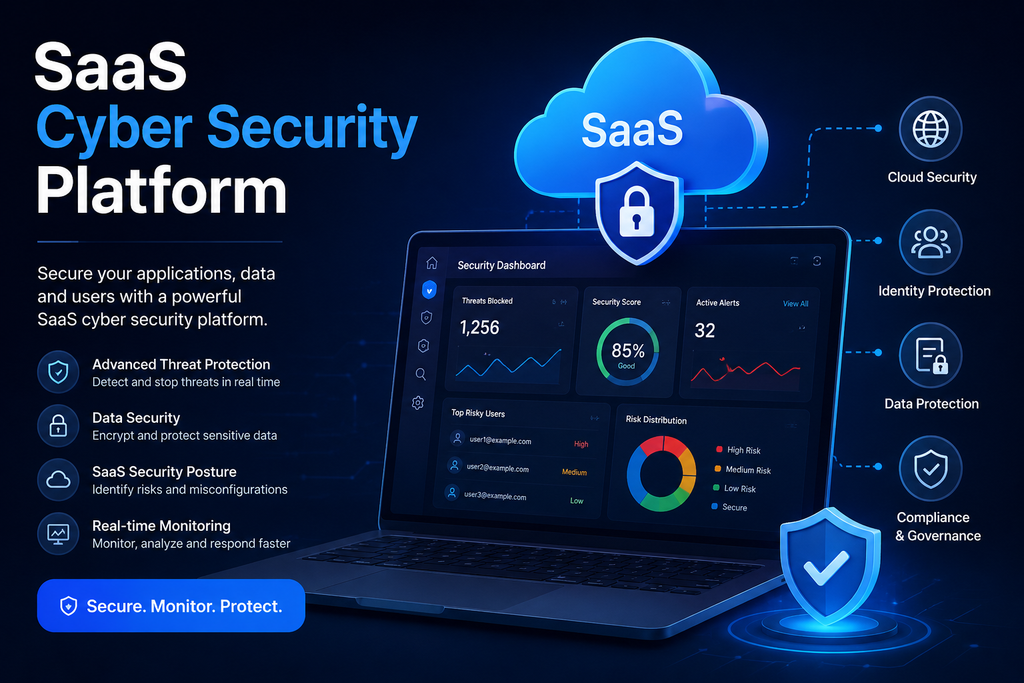
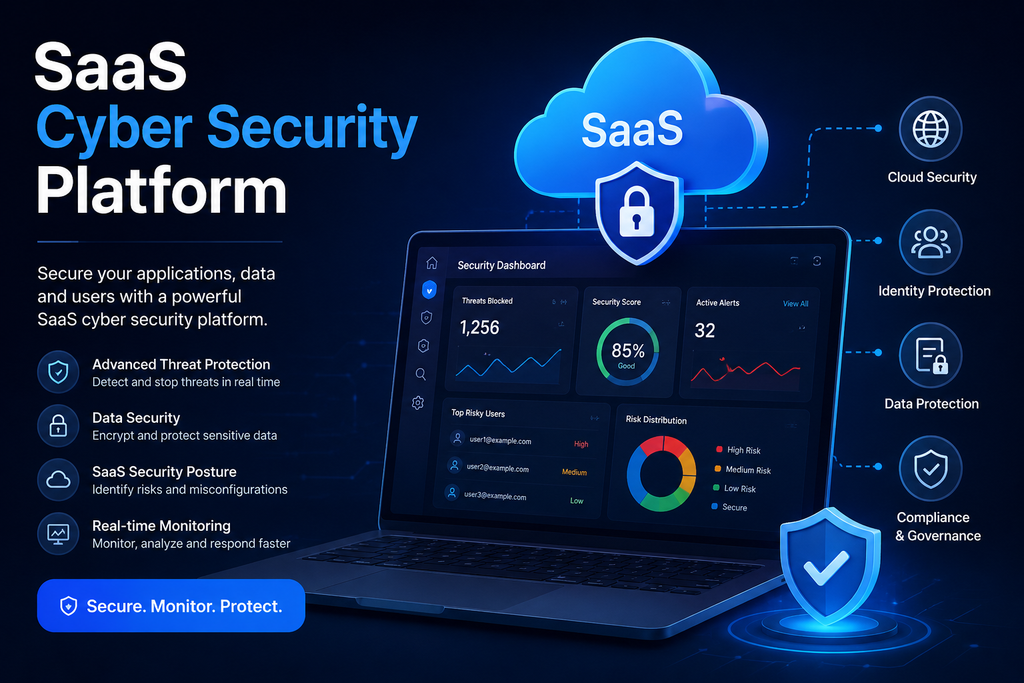
7 Ways A SaaS Cyber Security Platform Protects You

Discover how a saas cyber security platform protects your business in 2026, covering threats, key features, best practices, and how to choose one.

SaaS cyber security platform protecting cloud business data in 2026

What A SaaS Cyber Security Platform Actually Is

A saas cyber security platform is a cloud based security solution built specifically to protect the software as a service applications a business relies on every day, tools like email, file sharing, customer relationship management systems, project management software, and collaboration platforms. Unlike traditional network security tools that focus on protecting a physical perimeter or an on premise server room, a saas cyber security platform focuses on the identity, data, and configuration layer of cloud applications, because that is where most modern attacks actually happen. Every business that stores data in the cloud, runs applications through browser based tools, or relies on subscription software is already living inside a saas environment, whether that was a deliberate strategy or something that happened gradually as teams adopted new tools on their own. In 2026, with hybrid work now the default and the average mid sized company running well over one hundred saas applications, having a dedicated layer of protection for this environment is no longer optional, it is one of the most important investments a company can make to avoid breaches, compliance failures, and reputational damage.

Why Traditional Security Tools Fall Short In A SaaS World

The reason this category has grown so quickly is simple, traditional firewalls and endpoint tools were never designed to see inside a cloud application. They cannot tell you whether an employee shared a sensitive spreadsheet with an external account, whether a former contractor still has admin access to your customer database, or whether a third party integration has permissions far beyond what it actually needs. A saas cyber security platform closes that visibility gap by continuously scanning app configurations, user permissions, and data sharing settings, then flagging anything that deviates from a safe baseline. For a company operating in 2026, where saas sprawl is the norm rather than the exception, this kind of continuous oversight is what separates organizations that catch a problem in minutes from those that discover it months later during a breach investigation, often after real damage has already occurred.

How A SaaS Cyber Security Platform Works Behind The Scenes

Most saas cyber security platforms operate on a similar core model, even though individual vendors differ in depth and specialization. The process generally starts with discovery, where the platform connects to your cloud identity provider and application ecosystem to build a live inventory of every saas tool being used across the organization, including tools that were never formally approved by IT, often referred to as shadow IT. Once the inventory is built, the platform moves into continuous monitoring, checking configurations against security benchmarks, watching for risky permission changes, and tracking how data moves between applications and external parties. Many platforms also monitor user behavior, looking for signs of a compromised account such as impossible travel logins, unusual download volumes, or access attempts outside normal working hours. The third stage is response, where the platform can alert the security team, automatically revoke risky access, or in more advanced setups trigger a predefined workflow that isolates the affected account until it has been reviewed. This combination of discovery, monitoring, and automated response is what allows a lean security team to protect a sprawling saas environment without needing to manually audit every app one at a time.

Top Threats A SaaS Cyber Security Platform Helps You Prevent

Account takeover remains one of the most common entry points for attackers, usually achieved through stolen credentials, phishing, or password reuse, and a saas cyber security platform helps here by enforcing strong authentication policies and flagging login behavior that does not match a user’s normal pattern. Misconfigurations are another major risk, since it is extremely common for a well meaning employee to accidentally set a shared folder to public, or for an admin to leave a legacy integration with broader permissions than necessary, and these platforms continuously scan for exactly this kind of drift before it becomes a public exposure event. Third party app risk has grown significantly as businesses connect dozens of smaller tools into their core saas stack through OAuth permissions, and a saas cyber security platform tracks every connected application and the scope of access it holds, which matters because attackers increasingly target these smaller, less monitored integrations as a backdoor into larger systems. Insider threats and offboarding gaps also cause real damage, since when an employee leaves a company their access across dozens of saas tools needs to be revoked quickly and completely, and without automated tracking it is easy for a departed employee account to remain active in a forgotten corner of the environment for weeks or months. Data leakage through oversharing is a quieter but equally persistent problem, where files shared externally without proper restrictions or public links left active long after they were needed create exposure that a saas cyber security platform is specifically designed to catch.

Key Features Worth Prioritizing In A SaaS Cyber Security Platform

Continuous configuration monitoring should sit at the core of any serious platform, since misconfigurations are the most common cause of saas related incidents, and a strong solution checks settings against recognized security benchmarks while updating that baseline as new threats emerge. Identity and access visibility is equally important, since the platform should show exactly who has access to what across every connected application and make it easy to spot excessive or unused permissions. Shadow IT discovery is a feature that often gets overlooked but delivers enormous value, because a security team cannot protect an application it does not know exists, and a strong platform should automatically surface every saas tool in use, approved or not. Third party app risk scoring helps prioritize which connected integrations deserve the closest attention, since not every OAuth connected app carries the same level of risk to the business. Automated remediation workflows separate basic monitoring tools from truly effective platforms, since being alerted to a problem is useful, but being able to automatically revoke a risky permission or disable a compromised account without waiting for manual intervention is what actually reduces the window of exposure. Compliance mapping is another feature worth prioritizing, particularly for companies that need to demonstrate adherence to frameworks like SOC 2, ISO 27001, or industry specific regulations, since a platform that maps findings directly to these frameworks saves significant time during audits.

Best Practices And Common Mistakes When Adopting A SaaS Cyber Security Platform

Buying the right platform is only half the equation, how a company implements and maintains it determines whether it actually reduces risk. Start by building a complete inventory before configuring policies, since setting security rules before knowing what applications exist in the environment usually leads to gaps. Assign clear ownership for reviewing alerts, integrate the platform with your identity provider so offboarding is reflected automatically, and review third party app permissions on a recurring schedule rather than only at the point of initial connection. On the mistake side, one of the most frequent errors is choosing a platform based purely on the number of integrations it supports without evaluating the depth of monitoring for the applications that matter most. Another common error is treating the platform as a set and forget tool, configuring initial policies and rarely revisiting them even as the company adds new applications and users over time. Companies also frequently underestimate third party app governance, focusing heavily on core applications like email and file storage while ignoring the dozens of smaller connected tools that often carry outsized risk, and some organizations choose a platform without considering how well it maps to their compliance requirements, creating extra manual work later when audit season arrives.

How To Choose The Right SaaS Cyber Security Platform For Your Business

Choosing the right platform starts with understanding your own environment, so take stock of how many saas applications your teams actually use, including tools adopted informally by individual departments, since this shapes how much discovery capability you need from day one. Consider your compliance obligations early in the evaluation process, since a healthcare company, a financial services firm, and an early stage startup will have very different requirements, and the right platform should align closely with the frameworks relevant to your industry. Evaluate how each vendor handles automated remediation, since the speed at which a platform can act on a detected risk often matters more than the speed at which it detects the risk in the first place. Ask for a trial period that reflects your real environment rather than a demo built around a simplified sample account, because saas environments vary enormously and a platform that looks impressive in a demo may behave differently once connected to your actual stack of applications. Finally, weigh the vendor support and onboarding experience heavily, since a saas cyber security platform is only as effective as the team ability to configure it correctly and respond to what it surfaces, so strong onboarding support often determines long term success more than any single feature on a spec sheet.

Frequently Asked Questions

What is a saas cyber security platform in simple terms?

A saas cyber security platform is a cloud based tool that monitors and protects the software as a service applications a business uses, focusing on identity, data sharing, and configuration risks rather than traditional network perimeter defense.

How is a saas cyber security platform different from a traditional firewall?

A traditional firewall protects a network perimeter, while a saas cyber security platform focuses on what happens inside cloud applications themselves, including permissions, data sharing, and user behavior across dozens of connected tools.

Do small businesses need a saas cyber security platform?

Yes, small businesses often rely heavily on cloud tools with limited dedicated security staff, which makes automated monitoring especially valuable for catching misconfigurations and risky access before they become incidents.

Can a saas cyber security platform prevent phishing attacks?

It cannot stop a phishing email from arriving, but it can detect the unusual login behavior that follows a successful phishing attempt, which allows a security team to respond before real damage occurs.

How long does it take to implement a saas cyber security platform?

Initial discovery and connection to core applications typically takes a few days to a few weeks, though building out fully tuned policies and remediation workflows is usually an ongoing process over the following months.

What industries benefit most from a saas cyber security platform?

Any industry handling sensitive customer data benefits significantly, though healthcare, financial services, legal, and technology companies tend to see the fastest return due to strict compliance requirements and high value data.

Is a saas cyber security platform the same as a cloud access security broker?

They overlap in some functions, but a saas cyber security platform typically goes further by including configuration monitoring, third party app risk scoring, and automated remediation across the full saas ecosystem rather than focusing narrowly on access control.

How much does a saas cyber security platform typically cost?

Pricing varies widely based on the number of users and applications monitored, with most vendors using a per user or per application pricing model, so businesses should request a quote based on their actual environment.

Can a saas cyber security platform help with compliance audits?

Yes, many platforms map their findings directly to frameworks like SOC 2 and ISO 27001, which significantly reduces the manual work required to prepare evidence during an audit.

What is the biggest risk of not using a saas cyber security platform?

The biggest risk is losing visibility into your own environment, since without continuous monitoring, misconfigurations, excessive permissions, and risky third party apps can go unnoticed for months before they lead to a breach.

Conclusion

The rise of cloud based work has made every business a saas company in some form, whether that was intentional or not, and the security risks that come with that shift are not going away in 2026. A saas cyber security platform gives organizations the visibility and control needed to manage that risk without overwhelming a security team that is already stretched thin. From catching dangerous misconfigurations to tracking third party app permissions and automating access revocation during offboarding, these platforms address the specific gaps that traditional security tools were never built to cover. Choosing the right one comes down to understanding your own environment, prioritizing depth over feature count, and treating implementation as an ongoing process rather than a one time setup. Businesses that make this investment early put themselves in a far stronger position to prevent the kind of quiet, slow building exposure that eventually turns into a costly breach, and it is worth revisiting your saas cyber security platform strategy regularly as your application stack keeps growing.

Key Takeaways

A saas cyber security platform protects the identity, data, and configuration layer of cloud applications rather than a traditional network perimeter Common threats these platforms defend against include account takeover, misconfigurations, risky third party integrations, insider threats, and data oversharing The most valuable features include continuous configuration monitoring, identity visibility, shadow IT discovery, third party risk scoring, and automated remediation Successful implementation depends on clear ownership of alerts, regular policy review, and integration with your identity provider Choosing the right platform requires understanding your own saas footprint, your compliance obligations, and how quickly each vendor can act on detected risks, not just how many integrations it supports

Get Your FREE SEO Audit

Enter your details below. Our team will review your website and email you a comprehensive SEO and speed report within 24 hours.