+92 318 3068833 Get Free Audit

SaaS News Today Biggest Stories Shaping Software in 2026

SaaS News Today featured image showing the RankImpact website and digital marketing workspace with software industry trends in 2026.

Introduction to SaaS News

If you work anywhere near the software industry, SaaS news today isn’t just a search query it’s a daily habit. The pace of change in software as a service has become relentless. Funding rounds close within days of each other, pricing models get rewritten overnight, and acquisitions redraw entire product categories before most teams have finished their morning coffee. Keeping up isn’t optional anymore it’s a competitive requirement.

2026 has turned out to be one of the more consequential years for the SaaS industry in recent memory. The center of gravity has shifted from tools that simply support human work to AI native platforms and autonomous agents that execute tasks and own outcomes directly. That single shift is rewriting almost everything downstream of it how vendors price their products, how investors evaluate startups, how enterprises budget for software, and how buyers decide what to renew and what to cut.

In this article, we’ll walk through what’s actually happening in SaaS right now: the funding activity, the acquisitions, the pricing changes hitting real invoices, the IPO filings worth watching, and the broader trends tying it all together. Whether you’re a founder trying to benchmark your fundraising strategy, an operator managing a software stack, or simply someone who wants to stay sharp on the industry, this is your comprehensive, up to date briefing.

The Biggest SaaS Story of 2026 The Shift to AI-Native Platforms

If there’s one theme underneath nearly every other piece of SaaS news this year, it’s the industry’s transition from AI enabled software to genuinely AI native software. For more than two decades, SaaS meant building tools that helped humans do their jobs faster. In 2026, that premise is being replaced by platforms built around autonomous agents that complete work and are accountable for the outcome, not just the interface.

This distinction matters more than it might sound. AI enabled apps tools that simply bolted a chatbot or a summarization feature onto an existing product are now considered table stakes rather than a real differentiator. Nearly every vendor claims some form of AI capability today. The companies pulling ahead are the ones where AI is integrated deeply enough to change how the product actually works, not just how it looks.

This shift is also breaking the industry’s long standing pricing logic. Per seat pricing worked when software was something a human logged into and used. It works far less cleanly when an AI agent is the one taking the actions, since a single seat might now represent dozens of automated tasks per hour. As a result, usage based and outcome based pricing models are becoming more common, which introduces new budgeting headaches for finance and procurement teams that were used to predictable, flat monthly costs.

For SaaS buyers, the practical takeaway is this: when evaluating a new tool, ask not just does it have AI features, but how deeply is AI embedded in the core workflow, and what will that cost me as usage scales.

SaaS Funding News Who’s Raising Money Right Now

Venture funding in SaaS hasn’t slowed down in 2026 if anything, it’s become more concentrated around specific categories: cybersecurity, AI infrastructure, and vertical specific automation tools.

In the final days of July and first days of August alone, several notable rounds closed. A composable, AI powered security operations platform raised a $25 million Series A extension to expand its threat detection infrastructure and grow its enterprise go to market team. Days later, an AI native cybersecurity investment platform closed a $19 million Series A aimed at deepening enterprise integrations and expanding its market intelligence capabilities. A unified messaging API built for AI native enterprises raised $12 million in its own Series A to widen its carrier network and scale engineering and compliance functions.

Cloud observability also had a standout moment, with one platform closing a $100 million Series C to fund North American expansion and entry into new geographic markets a reminder that infrastructure and monitoring tools remain a magnet for large late stage checks, even as AI dominates headlines.

Interestingly, not all of the year’s biggest SaaS adjacent funding news comes from Silicon Valley archetypes. Vertical specific platforms including one applying AI to water efficient irrigation for agriculture have pulled in multi million dollar Series A rounds from strategic investors, showing that SaaS as a funding category now stretches well beyond horizontal productivity tools into deeply specialized, industry-specific software.

The pattern across nearly all of these rounds is consistent investors are rewarding companies that can show a clear go to market plan, measurable enterprise traction, and a credible AI roadmap not just an AI-flavored pitch deck.

Mergers & Acquisitions Reshaping the SaaS Market

Consolidation has been just as active as funding this year. One of the largest recent deals saw a major design and engineering software company complete a roughly $3.6 billion acquisition of a mobile first maintenance management platform, folding it into its broader operations division to connect real world maintenance data with AI driven insights across design, manufacturing, and operations workflows.

This kind of deal illustrates a broader M&A pattern in SaaS right now large, established platforms are acquiring smaller, workflow specific SaaS companies not just for their customer base, but for their data. Maintenance logs, usage patterns, and operational data feed directly into the AI models these larger platforms are racing to build. In other words, many of today’s acquisitions are as much about training data and workflow context as they are about revenue multiples.

For smaller SaaS companies, this is a meaningful signal. If your product generates a rich, structured stream of operational data even in a narrow niche you may be more strategically valuable to a larger acquirer than your ARR alone would suggest.

SaaS Pricing News Why Your Subscription Costs Keep Changing

If your software budget has crept up this year without an obvious explanation, you’re not imagining it. Several major vendors have pushed through price increases in 2026, and the pattern is worth understanding.

Enterprise tier pricing has risen across some of the most widely used platforms in the market, with list price increases landing on core sales and service editions. Messaging and collaboration tools have also nudged premium tiers upward. Meanwhile, one of the largest productivity suites in the world confirmed commercial price increases across its subscription plans, with entry-level business tiers rising several dollars per user per month, effective mid 2026.

None of these increases happened in isolation. According to recent SaaS management research, total software spend across organizations rose roughly 8% year over year, even as the total number of distinct applications in use stayed essentially flat. That combination flat app counts, rising spend tells a clear story: companies aren’t necessarily buying more tools, they’re paying more for the ones they already have, largely driven by AI feature add-ons and usage based pricing components layered on top of traditional subscriptions.

For procurement and finance teams, the practical response is to build AI usage monitoring into vendor management from day one, rather than discovering six months into a contract that AI powered features come with a variable, hard to forecast cost.

IPO Watch Which SaaS Companies Are Going Public

Public market activity in SaaS has been comparatively quieter than funding and M&A, but it isn’t dormant. An AI powered disinformation and social media intelligence platform recently filed its S-1 registration with securities regulators, signaling its intent to go public on a major U.S. exchange. Notably, the company is pursuing this listing while still operating at a relatively modest trailing revenue base, which reflects a broader willingness among newer SaaS categories particularly those tied to AI safety, trust, and security to test public markets earlier in their growth curve than the previous generation of SaaS IPOs typically did.

This is worth watching closely over the next two to three quarters. If this filing performs well, it could open the door for other AI native SaaS companies with strong technology but comparatively early revenue to pursue public listings sooner than the traditional SaaS IPO playbook would suggest.

Industry Recognition SaaS Awards and What They Signal

Beyond deals and dollars, industry awards are a useful, underrated lens for spotting where genuine innovation is happening versus where marketing is doing the heavy lifting. The 2026 SaaS Awards, run internationally, recently narrowed their shortlist to a final round of judging, with winners set to be announced in mid-August. Award organizers have been explicit that the judging bar has risen specifically because of AI: vendors are now expected to demonstrate a real, measurable positive impact from their technology rather than simply claiming an AI capability exists.

For buyers, awards shortlists like this can be a genuinely useful discovery tool not because a trophy guarantees quality, but because the judging process filters out vendors that can’t substantiate their claims with real customer outcomes.

How to Actually Stay Updated with SaaS News (Without Wasting Hours)

Given how fast this space moves, the how of staying informed matters almost as much as the what. A few practical habits make a real difference:

  • Follow dedicated SaaS and startup news outlets rather than general tech news, since they cover funding rounds and pricing changes in far more depth and far sooner.
  • Set up alerts for specific vendors you rely on, so pricing changes or acquisitions affecting your stack reach you immediately instead of showing up as a surprise invoice.
  • Track quarterly SaaS management reports from platforms that aggregate real spend and usage data these tend to reveal pricing and consolidation trends weeks before they become mainstream headlines.
  • Separate signal from noise by focusing on primary sources (funding announcements, SEC filings, official pricing pages) over secondhand commentary.

Common Mistakes People Make When Following SaaS News

Even experienced operators fall into a few recurring traps when trying to stay current:

  1. Treating every funding round as validation. A large Series A doesn’t guarantee product-market fit it guarantees investor confidence, which is a different thing entirely.
  2. Ignoring pricing news until the renewal notice arrives. Vendor price increases are usually announced months in advance; the mistake is not tracking them proactively.
  3. Confusing AI enabled with AI-native. As covered above, this distinction has real cost and capability implications, and conflating the two leads to poor vendor comparisons.
  4. Overreacting to single data points. One acquisition or one IPO filing doesn’t define a trend look for patterns across multiple, independent developments before drawing conclusions.

What This Means for SaaS Buyers and Founders

If you’re buying software, the current environment rewards a more disciplined evaluation process: understand exactly how a vendor’s AI features are priced before you scale usage, and revisit your stack regularly rather than assuming last year’s tools are still the best fit as pricing models shift underneath you.

If you’re building a SaaS company, the signal from this year’s funding and M&A activity is fairly consistent: investors and acquirers are prioritizing companies with a credible, deeply integrated AI strategy, a clear enterprise go-to-market motion, and increasingly a defensible data advantage, not just a compelling AI flavored pitch.

you may also read this blog post

SaaS Pricing News

FAQ

1. What counts as SaaS news versus general tech news?

SaaS news specifically covers developments affecting software as a service companies and products funding rounds, acquisitions, pricing changes, IPOs, and product shifts within subscription based software businesses as opposed to broader tech news covering hardware, consumer electronics, or unrelated industries.

2. Why does SaaS pricing keep increasing in 2026?

Much of the increase is tied to AI feature integration and a shift toward usage based pricing models, alongside standard list price adjustments from major vendors on enterprise tier plans.

3. What is the difference between AI enabled and AI native SaaS?

AI-enabled SaaS adds AI features on top of an existing product, while AI native SaaS is built around AI and autonomous agents as the core architecture, often changing how pricing, workflows, and outcomes are structured.

4. Are SaaS companies still raising large funding rounds in 2026?

Yes. Multiple SaaS companies, particularly in cybersecurity, observability, and AI infrastructure, have closed Series A through Series C rounds ranging from single digit millions to $100 million in recent months.

5. Which sectors are seeing the most SaaS M&A activity right now?

Operations and maintenance software, cybersecurity, and AI infrastructure are among the most active categories for SaaS acquisitions in 2026, often driven by acquirers seeking both customers and proprietary operational data.

6. Is it still a good time for SaaS companies to pursue an IPO?

Public market activity has been selective but not closed off some AI native SaaS companies are testing IPO filings earlier in their growth curve than previous generations of SaaS companies typically did, particularly in security and trust-related categories.

7. How can I track SaaS news today without spending hours reading?

Set up alerts for the specific vendors in your stack, follow dedicated SaaS and startup news sources rather than general tech outlets, and review quarterly SaaS spend/management reports for pattern level insights.

8. What should SaaS buyers watch for when evaluating new tools in 2026?

Buyers should closely evaluate how deeply AI is integrated into the core product (not just as an add on feature), how pricing scales with usage, and whether the vendor can demonstrate measurable outcomes rather than just AI capability claims.

9. Why are usage based pricing models becoming more common in SaaS?

Traditional per-seat pricing doesn’t map well to AI agents completing tasks autonomously, so vendors are shifting toward usage- and outcome-based pricing to better reflect actual value delivered and cost incurred.

10. Does a large funding round mean a SaaS startup is a safe long-term bet?

Not necessarily. A large round signals investor confidence and provides runway, but it doesn’t guarantee product market fit, profitability, or long-term customer retention those require separate evaluation

Conclusion

SaaS news today isn’t just about tracking headlines it’s about understanding the forces reshaping how software gets built, priced, bought, and sold. 2026 has made one thing unmistakably clear: the industry’s shift toward AI-native platforms is no longer a future trend to prepare for; it’s the current operating reality, actively reshaping funding decisions, M&A strategy, pricing models, and even IPO timing. Staying current on SaaS news is no longer a “nice to have” for founders, operators, and buyers it’s a practical necessity for making sound decisions in a market that’s rewriting its own rules in real time.
Key Takeaways

  • The SaaS industry’s biggest 2026 shift is the move from AI enabled tools to genuinely AI native platforms built around autonomous agents.
  • Funding remains strong in cybersecurity, observability, and AI infrastructure, with rounds ranging from single digit millions to $100 million+.
  • M&A activity is increasingly driven by acquirers seeking proprietary operational data, not just customer bases or revenue.
  • Pricing is rising industry wide, driven by both standard list price increases and new usage based AI pricing components.
  • IPO activity is selective but shows early signs of AI native SaaS companies testing public markets sooner than past norms.
  • Buyers and founders alike benefit from tracking primary sources and focusing on patterns rather than single data points.
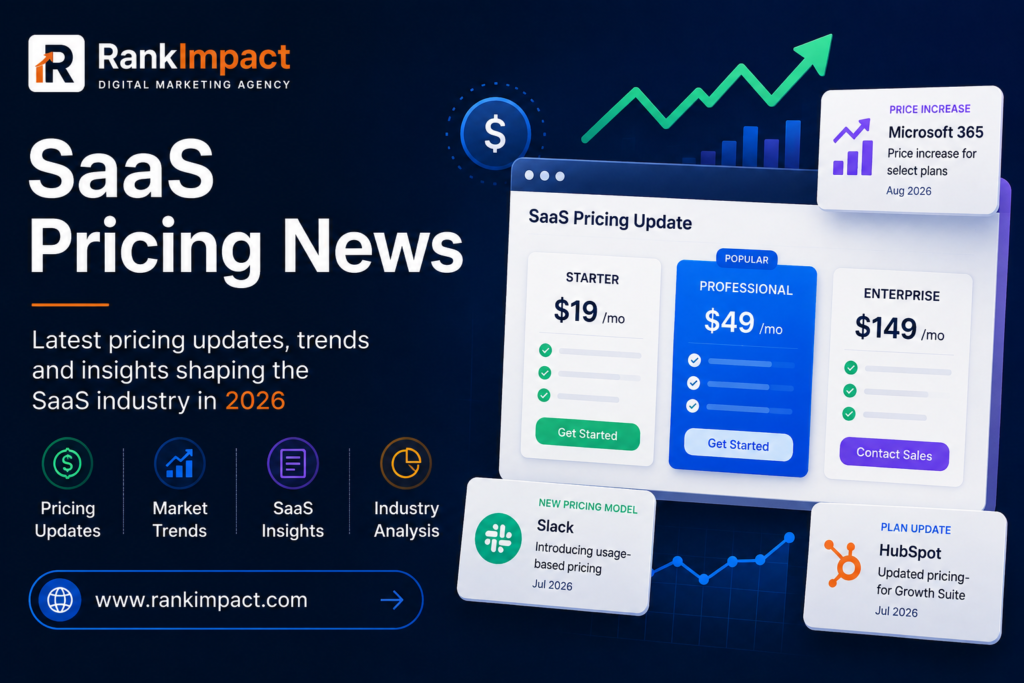
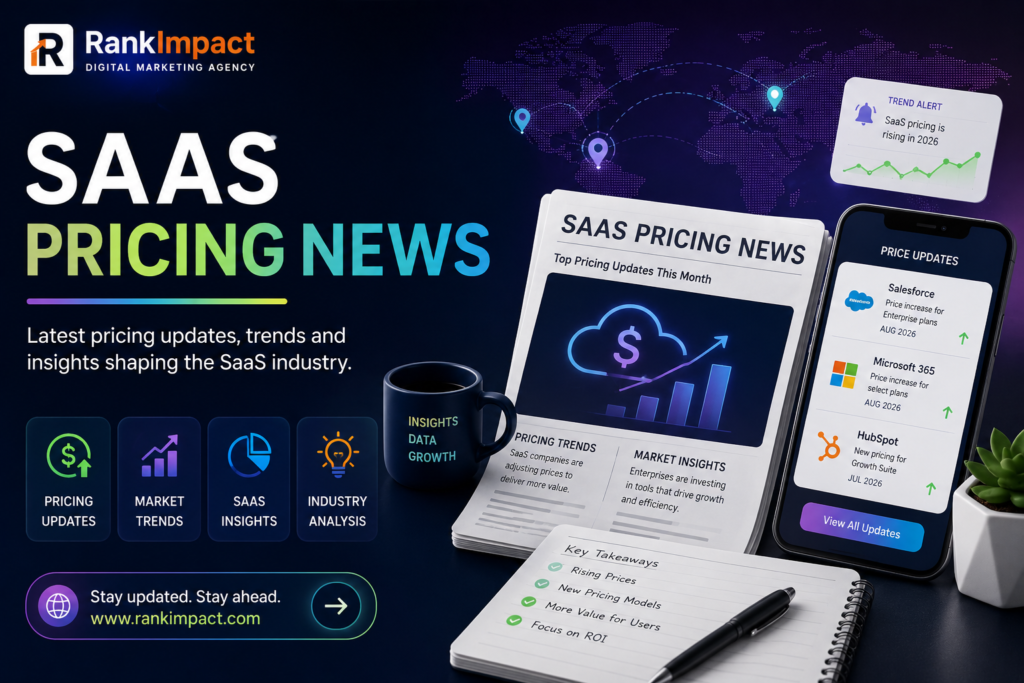
SaaS Pricing News 2026 Track Price Changes That Matter

Stay ahead with the latest SaaS pricing news, price hikes, and plan changes. Learn how to track updates, compare tools, and protect your budget in 2026.

SaaS Pricing News 2026 Track Price Changes That Matter

SaaS Pricing News Why Subscription Price Changes Matter More Than Ever

If you’ve ever opened a your subscription price is changing email and felt your stomach drop, you already understand why SaaS pricing news deserves far more attention than most businesses give it. Software-as-a-Service pricing isn’t static anymore. Vendors adjust tiers, introduce usage-based billing, bundle AI features into premium plans, or quietly retire “legacy” pricing that once felt like a permanent deal. For a company running twenty, fifty, or even a hundred SaaS subscriptions, staying on top of these changes isn’t a nice to have it’s a core part of financial planning. This guide breaks down what’s actually driving the current wave of pricing shifts, how to build a repeatable system for monitoring them, and what smart teams do differently when a price hike notice lands on their desk. Whether you’re a solo founder juggling a handful of tools or a procurement lead managing an enterprise SaaS stack, you’ll walk away with a practical, no-fluff framework you can start using today.

What Is “SaaS Pricing News” and Why It Matters Right Now

This category of coverage refers to any public update, announcement, or reported change in how a software company prices its product new tiers, per-seat cost increases, usage-based billing shifts, feature-gating changes, or the discontinuation of legacy plans. This might sound like a niche topic, but in 2026 it has become one of the most closely watched categories in B2B software commentary, largely because of how frequently pricing models are shifting. AI features are being bundled into premium tiers at a rapid pace, forcing vendors to rethink whether AI usage should be metered separately or included in a flat fee. At the same time, many SaaS companies that grew during the subscription boom of the early 2020s are now under pressure from investors to increase margins, and pricing is the fastest lever they can pull. That’s why this category of coverage has shifted from being a quiet backend detail to a headline-worthy topic that finance teams, IT buyers, and even end users actively search for and discuss.

Why Tracking SaaS Pricing News Has Become a Business-Critical Skill

A few years ago, most companies treated SaaS renewals as a rubber stamp process the tool worked, the invoice came in, someone approved it. That approach doesn’t hold up anymore. According to procurement teams across mid-market and enterprise companies, unplanned SaaS cost increases are now one of the top three drivers of budget overruns in technology spending. When a vendor quietly changes its pricing structure and a business isn’t monitoring these updates, the first sign of trouble is often a renewal invoice that’s 20% to 40% higher than expected. That’s not a hypothetical; it’s become a recurring pattern across categories like CRM, project management, and marketing automation software, where vendors have restructured plans around “AI-powered” tiers that cost significantly more than the plans they replaced. Businesses that actively track these updates can negotiate before a renewal, lock in current rates, or migrate to alternatives before a price hike takes effect. Businesses that don’t are stuck reacting after the fact, with far less leverage.

If you follow this space even casually, a handful of patterns show up again and again in what vendors announce. The first is the rise of usage-based and hybrid pricing, where vendors move away from simple per-seat billing toward models that charge based on API calls, storage, active contacts, or AI token consumption. This shift makes costs harder to predict, which is exactly why pricing news coverage around usage-based models tends to generate so much reader interest. The second major trend is AI feature bundling, where core AI capabilities that used to be optional add-ons are now folded into higher-priced tiers, effectively pushing customers toward premium plans whether they want the AI features or not. The third trend worth watching is the quiet sunsetting of legacy or “grandfathered” pricing plans — vendors that once let long-time customers keep an old, cheaper plan are increasingly forcing migrations to current pricing structures. Finally, there’s a noticeable trend toward tiered feature-gating, where basic functionality that used to be standard is now locked behind mid-tier or enterprise plans. Together, these trends explain why this space has become such a fast-moving, high-stakes category to follow.

How SaaS Companies Communicate Pricing Changes (And What to Watch For)

Understanding how vendors typically announce pricing changes makes it much easier to catch these updates before they catch you. Most companies follow a predictable pattern: a blog post or changelog entry goes up quietly, followed by an email to active account admins roughly 30 to 60 days before the change takes effect. The language in these announcements is almost always softened phrases like “pricing update,” “plan simplification,” or “enhanced value tiers” are common euphemisms for a price increase. Reading between the lines matters here. If a vendor announces a “streamlined pricing structure,” that’s often a signal that features previously included in your current plan are being moved to a higher tier. Savvy buyers who follow this kind of vendor communication closely learn to treat these announcements as negotiation triggers rather than passive updates, reaching out to account managers immediately to lock in current terms before the change takes effect.

Common SaaS Pricing Models You’ll Encounter in Pricing Updates

To make sense of saas pricing news, it helps to understand the models vendors are moving between. Flat-rate pricing, where every customer pays one price regardless of usage, is the simplest but increasingly rare for growing companies. Per-seat pricing, which charges based on the number of users, remains common but is being challenged by usage-based alternatives. Usage-based pricing charges customers according to consumption API calls, data processed, or AI tokens used and is currently the fastest-growing model showing up in pricing coverage because it directly ties cost to value delivered, but also makes budgeting harder for buyers. Tiered pricing, where features are bundled into good-better-best packages, remains the industry default and is usually where the most interesting pricing news emerges, since vendors frequently reshuffle what belongs in each tier. Finally, hybrid pricing combining a base subscription fee with usage-based overages is becoming the norm for AI-heavy products, and it’s a model every business should understand before agreeing to a new contract.

How to Build a System for Monitoring SaaS Pricing News

Reacting to a price hike email after it arrives is the least effective strategy. A better approach is building a lightweight monitoring system before you’re caught off guard. Start by maintaining a simple spreadsheet or tool inventory listing every active SaaS subscription, its current price, renewal date, and the account owner responsible for it. Next, subscribe to vendor changelogs and status pages directly, since most pricing announcements appear there before they hit mainstream tech coverage. It’s also worth setting calendar reminders 60 to 90 days ahead of each renewal date specifically to check for updates related to that vendor, rather than waiting for the invoice to arrive. Many finance and procurement teams also follow dedicated pricing-tracking newsletters, Reddit communities, and industry blogs that aggregate pricing changes across popular categories like CRM, communication tools, and analytics platforms. The goal isn’t to obsessively check every vendor daily it’s to create checkpoints tied to your actual renewal calendar so that important updates reach you with enough lead time to act.

Best Sources for Staying Updated on SaaS Pricing News

Not all sources are equally reliable when it comes to tracking pricing changes. Vendor changelogs and official pricing pages are the most authoritative source, since they reflect exactly what a company is charging today, though they rarely explain the reasoning behind a change. Independent SaaS review platforms often publish user-reported pricing changes faster than mainstream coverage, since active customers tend to flag increases in reviews almost immediately. Industry newsletters focused specifically on SaaS and software business models frequently cover pricing news with useful context and comparisons across competitors. Procurement and SaaS management platforms that track spend across your stack can also alert you automatically when a connected tool’s pricing changes, which is particularly valuable for companies managing dozens of subscriptions. Combining a couple of these sources one official, one community-driven, and one automated tends to give the most complete picture without requiring hours of manual research every week.

Common Mistakes Businesses Make When Ignoring SaaS Pricing News

The most common mistake is treating SaaS renewals as passive, automatic events rather than active negotiation opportunities. Businesses that don’t follow these updates often let auto renewal clauses kick in without reviewing whether a better plan or competitor now exists. Another frequent mistake is assuming that a grandfathered or legacy pricing plan will last indefinitely, when in reality most vendors eventually force a migration once they’ve built a strong enough case internally. Teams also tend to underestimate how usage based pricing can spiral; a marketing automation tool that seemed affordable at low contact volumes can become dramatically more expensive once a list grows, and without monitoring costs and usage trends together, that creep goes unnoticed until the invoice arrives. Finally, many companies fail to designate clear ownership for pricing monitoring when no single person or team is responsible for tracking changes across the stack, they slip through unnoticed until it’s too late to negotiate.

How SaaS Pricing News Impacts Procurement and Renewal Strategy

For procurement teams, this kind of coverage isn’t just background information it’s a direct input into renewal strategy and budget forecasting. When a vendor telegraphs an upcoming price increase through a blog post or changelog entry, that’s the ideal moment to initiate renewal conversations early, well before the official notice period begins. Teams that actively monitor these updates are also better positioned to benchmark alternatives, since a competitor’s pricing move often signals broader category-wide shifts. For example, when one major player in a software category introduces usage-based billing, competitors frequently follow within a few quarters, which means an early signal in one corner of a market can predict changes across the entire category. Building this kind of monitoring into quarterly budget reviews rather than treating it as an ad hoc activity gives finance and procurement teams a genuine strategic advantage over companies that only discover changes when the invoice lands.

Best Practices for Responding to a SaaS Pricing Change

When a pricing change notice arrives, the first step is to read the full announcement carefully rather than skimming the subject line, since the actual impact often depends on which plan and feature set you’re using. Next, calculate the real cost difference across a full contract term, not just the monthly delta, since annual commitments can make a seemingly small increase add up quickly. It’s also worth reaching out to your account manager directly; many vendors have retention budgets specifically designed to keep existing customers from churning after a price hike, even if that flexibility isn’t advertised publicly. If the new pricing genuinely no longer fits your budget or use case, use the notice period to evaluate alternatives rather than waiting until the last possible moment, since switching tools under time pressure rarely produces the best outcome. Documenting these responses over time also helps teams that keep a simple log of past changes and how they responded build institutional knowledge that makes future renewals faster and less stressful.

Frequently Asked Questions

What counts as SaaS pricing news?

It covers any publicly announced or reported change to how a software vendor prices its product, including new tiers, per seat cost increases, usage based billing shifts, bundled AI features, or the retirement of legacy pricing plans.

How often do SaaS companies change their pricing?

Most established SaaS companies revisit pricing roughly once every 12 to 18 months, though companies actively building new AI features or scaling rapidly may adjust pricing more frequently, sometimes introducing new tiers multiple times within a single year.

Why is SaaS pricing news important for small businesses?

Small businesses often operate on tight software budgets, so unexpected pricing changes can disproportionately affect cash flow. Following these updates helps smaller teams negotiate or switch tools before a renewal locks in a higher rate.

Where can I find reliable SaaS pricing news?

Reliable sources include vendor changelogs and pricing pages, independent SaaS review platforms, dedicated software industry newsletters, and SaaS spend management tools that track pricing changes automatically across your subscription stack.

How do I know if a pricing update is actually a price increase?

Vendors frequently use softened language like plan simplification or enhanced tiers to describe increases. Compare the new tier structure and feature list directly against your current plan to see whether you’re paying more for the same or fewer features.

Can I negotiate after receiving a SaaS pricing change notice?

Yes. Many vendors have retention budgets and will offer discounts, extended legacy pricing, or custom terms if you reach out proactively, especially if you’re a long term customer or have leverage such as multi year commitment potential.

What is usage based SaaS pricing and why is it becoming more common?

Usage based pricing charges customers according to actual consumption, such as API calls or AI tokens used, rather than a flat per seat fee. It’s becoming more common because it aligns vendor revenue directly with the value delivered, particularly for AI driven features.

How can businesses avoid being blindsided by SaaS pricing changes?

Businesses can avoid surprises by maintaining a subscription inventory with renewal dates, subscribing to vendor changelogs, setting reminders 60 to 90 days before renewals, and following dedicated pricing tracking sources or spend management tools.

Does SaaS pricing news affect which vendor a company chooses?

Yes. Consistent patterns of aggressive price increases or shrinking free tiers reported in the coverage often influence buyer decisions, pushing companies toward vendors with more transparent or predictable pricing histories.

Is it worth using a tool to track SaaS pricing news automatically?

For companies managing more than a handful of subscriptions, yes. Automated spend management platforms can flag pricing changes across your entire stack, saving significant manual research time compared to checking each vendor individually.

Conclusion

SaaS pricing news used to be a footnote most businesses ignored until a surprise invoice forced their attention. That’s no longer a sustainable approach. With AI features reshaping tiers, usage-based billing replacing flat rates, and legacy plans quietly disappearing, staying informed has become a genuine competitive advantage rather than an optional habit. The businesses that treat pricing monitoring as part of their regular financial rhythm not a once-a-year scramble — are the ones that negotiate better terms, avoid budget shocks, and make smarter renewal decisions. Building even a lightweight system for tracking these changes across your subscription stack will pay for itself many times over the course of a single renewal cycle.

Key Takeaways

Combining official vendor sources, independent reviews, and spend-management tools gives the most complete picture of what’s changing.

SaaS pricing news, in short, covers vendor announcements about tier changes, price increases, usage-based billing shifts, and the retirement of legacy plans.

AI feature bundling, usage-based pricing, and the sunsetting of grandfathered plans are the biggest trends currently shaping this space.

Vendors often soften price increase language with terms like “plan simplification” always compare old and new tiers directly.

A simple subscription inventory with renewal dates and calendar reminders is the most effective way to stay ahead of pricing changes.

Reaching out to vendors proactively after a pricing announcement often unlocks retention discounts that aren’t advertised publicly.

Get Your FREE SEO Audit

Enter your details below. Our team will review your website and email you a comprehensive SEO and speed report within 24 hours.