Learn how software as a service sales works with a complete guide covering funnel stages sales models common mistakes and the metrics that matter.
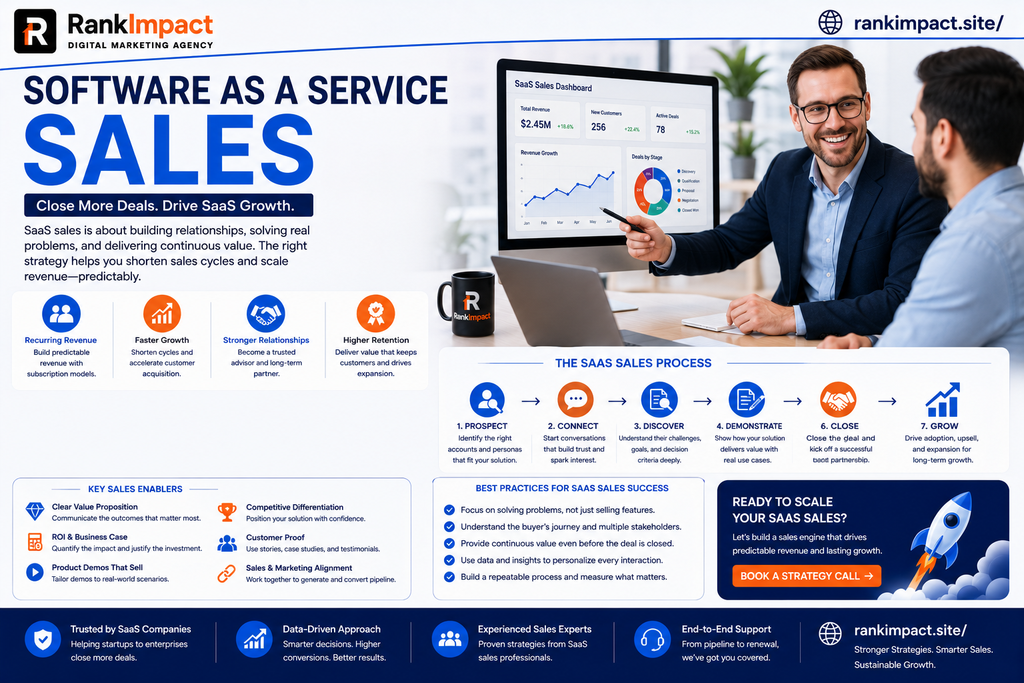
Table of Contents
1 What Software As A Service Sales Really Means
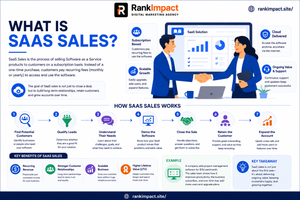
Software as a service sales is the process of guiding a prospective customer from first awareness of a problem to a signed subscription agreement, and then continuing to support that relationship so the customer renews and ideally expands their usage over time. Unlike a traditional one time sale, the transaction itself is only the beginning of the relationship rather than the end of it. A rep who closes a deal but ignores onboarding and early usage is setting up the account for churn within the first renewal cycle, which erases the value of the original sale. This is why software as a service sales teams increasingly measure success not just by closed revenue but by net revenue retention, which tracks how much recurring revenue survives and grows after the initial contract. Selling a subscription also means the buyer is evaluating ongoing value, not a one time feature set, so every conversation during the sales process needs to build confidence that the product will keep solving the problem months and years into the future, not just on day one.
2 Why Software As A Service Sales Differs From Traditional Sales
Traditional sales optimizes for a single transaction, while software as a service sales optimizes for a long term relationship built on renewals and expansion. This changes almost everything about how a deal should be structured. A traditional sales rep can walk away the moment a contract is signed, but a subscription sales rep has a strong incentive to make sure the customer actually adopts the product, because a churned customer in month four erases months of recurring revenue and often costs more to replace than it did to acquire in the first place. Pricing structure also differs significantly, since most software as a service deals involve tiered plans, seat based pricing, or usage based pricing rather than a single flat fee, which means a rep needs to understand the buyer’s growth trajectory to recommend the right plan rather than just the biggest one. Buying committees tend to be larger too, especially for mid market and enterprise deals, often including a economic buyer, a technical evaluator, and an end user champion, each of whom cares about a different aspect of the product. A rep who only pitches to one persona in this committee will consistently lose deals to a competitor who addresses all three.
3 Building A Software As A Service Sales Process That Scales
A scalable software as a service sales process starts with a clearly defined and documented set of stages that every deal moves through, typically something like qualification, discovery, demo, proposal, negotiation, and close. Without documented stages, forecasting becomes guesswork and new reps take far longer to ramp because they have no repeatable playbook to follow. Qualification deserves special attention in a subscription business, since chasing a prospect who is not a strong fit wastes not only the sales cycle but also the future support and success resources required to keep that account from churning after signing. A common qualification framework asks whether the prospect has a genuine pain point your product solves, whether they have budget and authority to buy, and whether the timeline for solving the problem aligns with your sales cycle. Discovery calls should focus on understanding the specific outcome the buyer needs to achieve rather than walking through a generic feature list, because buyers remember how well a rep understood their situation far more than they remember a list of product capabilities. As the process matures, layering in clear exit criteria for each stage, meaning specific actions that must happen before a deal can move forward, keeps the pipeline honest and prevents deals from sitting in a stage indefinitely with no real progress.
4 Key Stages Of The Software As A Service Sales Funnel
The top of a software as a service sales funnel usually starts with marketing qualified leads generated through content, paid channels, or referrals, and the job at this stage in software as a service sales is simply to confirm genuine interest and basic fit before investing sales time. The middle of the funnel is where discovery and evaluation happen, and this is typically the longest stage because the buyer is comparing your solution against alternatives, checking references, and often running a trial or pilot to validate that the product delivers on its promises. The bottom of the funnel involves proposal, pricing negotiation, and internal approval on the buyer’s side, which can move quickly for smaller deals but often stretches for weeks or months in mid market and enterprise accounts due to procurement and legal review. A stage that is frequently underestimated is the post sale onboarding period, which some teams treat as a separate customer success function but which strongly influences whether the deal actually pays off, since a customer who never reaches meaningful product usage is a customer who will not renew regardless of how smoothly the initial sale went. Mapping conversion rates at each of these stages lets a sales leader spot exactly where deals are stalling, whether that is a messaging problem at the top of the funnel or a pricing objection at the bottom.
5 Sales Models Used In Software As A Service Sales
Most software as a service sales organizations operate under one of three broad models or a hybrid of them, and choosing correctly among these software as a service sales models shapes almost every other decision a growing company makes. Sales led growth relies on a traditional rep driven process where an account executive owns the relationship from first conversation through close, which tends to work best for higher priced products with longer evaluation cycles and multiple stakeholders. Product led growth flips this structure by letting users try or use the product with minimal friction, often through a free trial or freemium tier, with sales only entering the picture once usage signals indicate a strong likelihood of conversion or expansion, which works well for lower priced or highly self serve products. A growing number of companies now run a hybrid model where product led growth handles smaller accounts and self serve conversion, while a dedicated sales team focuses on larger accounts that need a more consultative approach and custom contract terms. Choosing the right model, or the right mix, depends heavily on price point, deal complexity, and how much value a prospect can experience on their own before needing human guidance, and getting this choice wrong is one of the most expensive strategic mistakes a growing software company can make.
6 Common Mistakes That Kill Software As A Service Sales Deals
The most common mistake in software as a service sales is pitching product features instead of the outcome the buyer actually cares about, which makes even a strong product sound generic and interchangeable with competitors. Another frequent mistake is neglecting the multi threaded nature of larger deals, where a rep who only builds a relationship with a single champion loses the deal the moment that person changes roles or loses internal influence, which happens more often than most reps expect. Underpricing to win a deal quickly is another costly mistake, since a customer who negotiates an unsustainably low price in year one often churns when the price normalizes at renewal, and that churn frequently costs more than the value of winning the deal in the first place. Poor handoffs between sales and customer success also quietly damage renewal rates, since a customer who was promised something during the sales process that the product cannot actually deliver becomes frustrated and disengaged almost immediately after signing. Finally, many teams rely too heavily on discounting as the default response to price objections instead of addressing the underlying value question, which trains buyers to expect a discount on every renewal and steadily erodes margins across the entire customer base.
7 Tools And Metrics That Support Software As A Service Sales Teams
A modern software as a service sales stack typically includes a customer relationship management platform to track pipeline and deal stages, a sales engagement tool to manage outreach cadences, and a conversation intelligence tool that records and analyzes sales calls to identify what top performers in software as a service sales do differently from the rest of the team. Beyond tools, the metrics that matter most in a subscription business go well beyond traditional close rate and deal size. Net revenue retention shows whether existing customers are expanding, staying flat, or shrinking over time, and it is often considered one of the single most important health indicators for a software as a service business. Customer acquisition cost measured against customer lifetime value tells a leadership team whether the sales motion is actually sustainable, since acquiring customers who churn quickly can look fine on a monthly revenue report while quietly destroying long term profitability. Sales velocity, which combines deal count, average deal size, win rate, and sales cycle length into a single formula, helps a sales leader understand how efficiently the team is converting pipeline into closed revenue and where the biggest opportunity for improvement actually sits.
8 How AI Is Changing Software As A Service Sales
Artificial intelligence has started reshaping software as a service sales at almost every stage of the funnel, and teams that ignore this shift in software as a service sales are already falling behind. Lead scoring models now analyze behavioral signals such as product usage, email engagement, and website activity to flag which accounts are most likely to convert, which lets reps prioritize their time far more effectively than manual scoring ever allowed. Conversation intelligence tools use AI to transcribe and analyze sales calls, surfacing objection patterns and coaching opportunities that would take a sales manager weeks to identify manually across a full team. AI powered forecasting is also becoming more common, pulling from historical deal data and current pipeline activity to produce more accurate revenue predictions than the gut feel estimates many teams still rely on. None of this replaces the human relationship building that closes complex deals, but it does mean that reps who use these tools well are consistently outperforming reps who still run their pipeline entirely from memory and instinct, and that gap is likely to keep widening as these tools continue to mature.
Frequently Asked Questions
What is software as a service sales in simple terms?
Software as a service sales is the process of selling a subscription based software product, which involves not only closing the initial deal but also supporting the customer through onboarding and renewal so the recurring revenue relationship actually lasts.
How is software as a service sales different from traditional sales?
The biggest difference is that software as a service sales optimizes for renewal and expansion revenue over time rather than a single transaction, which changes pricing strategy, deal structure, and how success is measured across the entire customer relationship.
What is the typical sales cycle length for software as a service sales?
Sales cycle length varies widely by price point and buyer complexity, ranging from a few days for low cost self serve products to several months for enterprise deals involving multiple stakeholders and a formal procurement process.
Is product led growth replacing traditional software as a service sales?
Product led growth is not fully replacing sales led approaches, but rather complementing them, with many companies now running a hybrid model where self serve handles smaller accounts and a sales team focuses on larger, more complex deals.
What metrics matter most in software as a service sales?
Net revenue retention, customer acquisition cost compared to lifetime value, and sales velocity tend to matter more in software as a service sales than traditional metrics like raw close rate, since they reflect the long term health of the subscription relationship.
How do you qualify a lead in software as a service sales?
A strong qualification framework checks whether the prospect has a genuine pain point the product solves, whether they hold budget and buying authority, and whether their timeline for solving the problem realistically aligns with your sales cycle.
Why do software as a service sales deals fail after closing?
Deals often fail after closing because of a poor handoff to onboarding, unrealistic promises made during the sales process, or low product usage that prevents the customer from experiencing real value before the first renewal decision.
What tools do software as a service sales teams typically use?
Most teams rely on a customer relationship management platform for pipeline tracking, a sales engagement tool for outreach, and increasingly a conversation intelligence tool to analyze sales calls and coach reps at scale.
How important is multi threading in software as a service sales?
Multi threading is critical for larger deals, since relying on a single champion leaves a deal vulnerable to stalling or collapsing entirely if that person changes roles, loses influence, or leaves the company during the evaluation process.
Can a small software company build an effective sales process without a large team?
Yes. A small team can build an effective process by documenting clear deal stages, qualifying leads rigorously, and focusing sales time only on prospects with strong fit, which often outperforms a larger team working without a defined process.
Conclusion
Software as a service sales is fundamentally different from traditional selling because the transaction is only the starting point of a much longer customer relationship built on renewal and expansion. The companies that consistently win at software as a service sales treat qualification, discovery, and onboarding as equally important parts of the same process rather than separate functions that hand off and forget about each other. Whether you are building your first sales process or refining one that already exists, the fundamentals stay the same, understand the buyer’s real outcome, multi thread every meaningful deal, price for long term sustainability rather than short term wins, and measure success through retention and expansion, not just closed revenue. Build the process this way and software as a service sales stops being a series of one off wins and becomes a genuine growth engine for the business, one that compounds with every renewal your software as a service sales team protects.
Key Takeaways
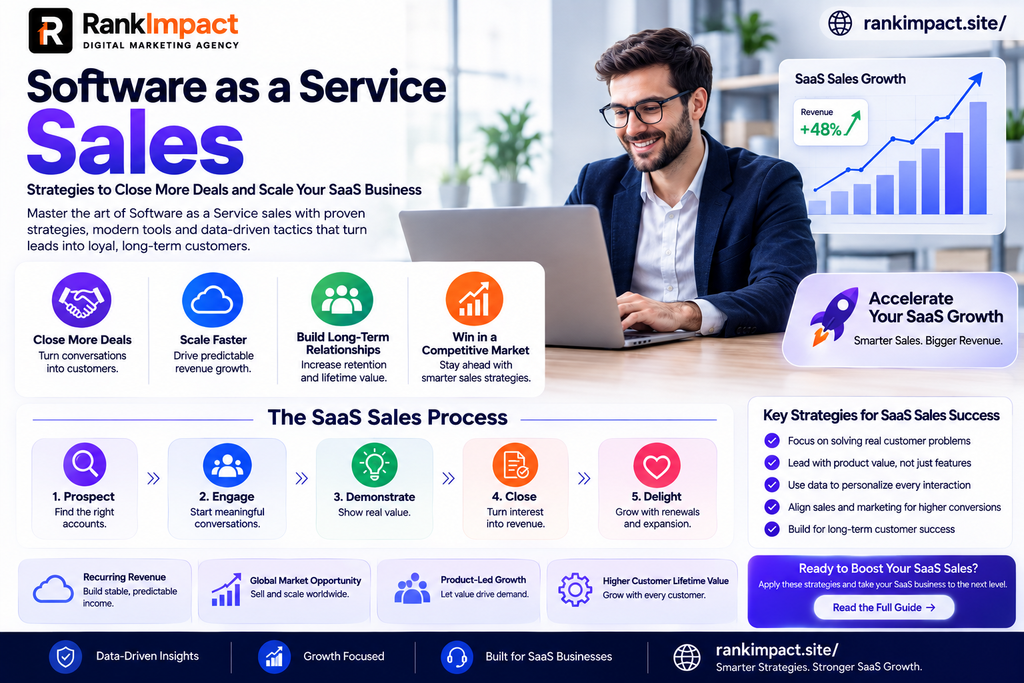
Software as a service sales optimizes for renewal and expansion revenue, not just the initial closed deal Qualification and discovery should focus on the buyer’s real outcome rather than a generic feature pitch Sales led growth, product led growth, and hybrid models each fit different price points and deal complexity Multi threading larger deals protects against losing momentum when a single champion changes roles Net revenue retention and sales velocity matter more than raw close rate in a subscription business AI powered lead scoring, conversation intelligence, and forecasting are becoming standard parts of the sales stack