Learn how saas pricing works with a complete guide covering pricing models how to choose one common mistakes and how pricing is evolving in 2026.
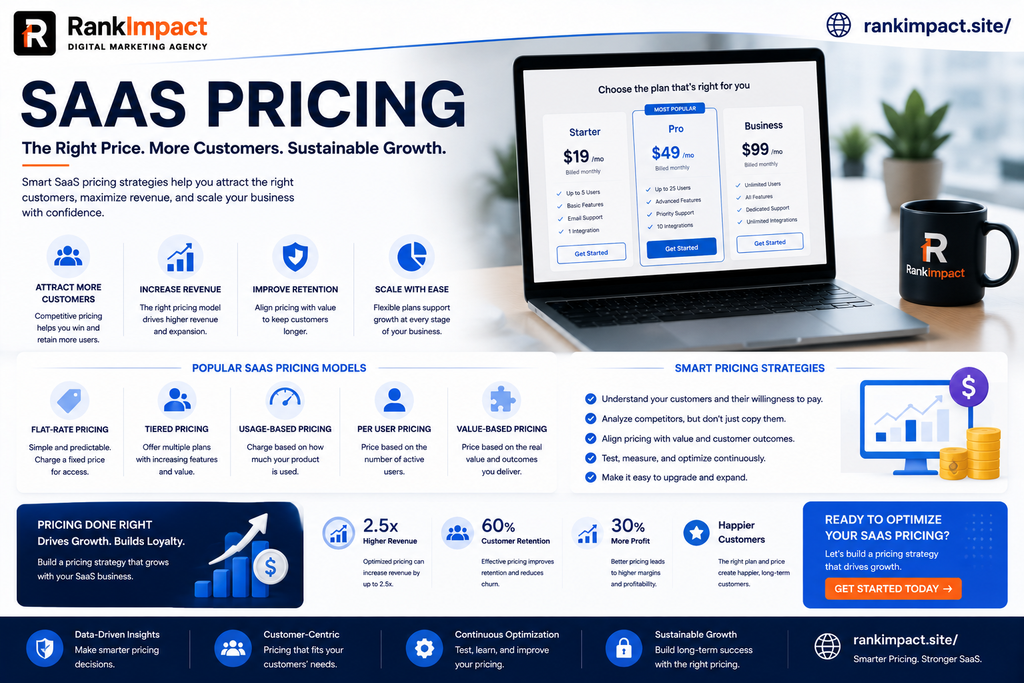
Table of Contents
1 What SaaS Pricing Actually Means
SaaS pricing refers to how a software company charges customers for access to its product, which almost always happens through a recurring subscription rather than a single upfront payment. Unlike a traditional software license that a customer buys once and owns indefinitely, a subscription model means the price a customer pays is tied to an ongoing relationship, which changes how both the buyer and the seller need to think about value. A price that feels fair in month one has to keep feeling fair in month twelve and beyond, since a customer who feels overcharged relative to the value they are receiving will simply cancel at renewal. This is why saas pricing decisions carry more long term weight than a typical one time purchase price, since getting it wrong does not just cost a single sale, it can quietly damage retention and word of mouth growth for years afterward.
2 Why Getting SaaS Pricing Right Matters So Much
Pricing sits at the intersection of revenue, growth, and customer perception in a way few other business decisions do. Set the price too high without matching value and a company loses deals to competitors or scares away smaller customers who could have grown into larger ones over time. Set it too low and the company leaves significant revenue on the table while also sending a subtle signal that the product is not worth much, which can hurt how prospects perceive quality regardless of how good the product actually is. Because subscription pricing directly affects both customer acquisition cost and lifetime value, even a small adjustment to a pricing model can meaningfully change a company’s overall growth trajectory, which is why experienced SaaS operators treat pricing as an ongoing strategic exercise rather than a decision made once at launch and left untouched for years.
3 Common SaaS Pricing Models Explained
Per user pricing charges a fixed amount for each person who accesses the software, which works well for collaboration and productivity tools where value scales naturally with team size. Tiered pricing groups features into packages such as basic, professional, and enterprise, letting a company serve very different customer segments with one product while capturing more revenue from customers who need advanced capabilities. Usage based pricing charges according to actual consumption, such as the number of API calls, emails sent, or data processed, which aligns cost directly with value delivered and has become increasingly popular for infrastructure and developer focused products. Flat rate pricing offers a single price regardless of usage or team size, which simplifies the buying decision but can leave revenue on the table with larger customers who get disproportionate value from the product. Freemium pricing offers a limited free version alongside paid tiers, which works well for products that benefit from viral or self serve adoption but requires a genuinely compelling reason for free users to eventually upgrade. Many successful companies now blend several of these approaches, for example combining a per user base fee with usage based charges for specific high value features, since a hybrid saas pricing model can capture value more precisely than any single approach used alone.
4 How To Choose The Right SaaS Pricing Model For Your Product
The right saas pricing model depends heavily on how your product delivers value and who is actually using it. If value scales clearly with the number of people using the product, such as a team communication tool, per user pricing usually makes intuitive sense to buyers and is easy to forecast. If value scales with consumption rather than headcount, such as a tool that processes data or sends transactional messages, usage based pricing typically aligns more naturally with what the customer actually experiences as valuable. Products aimed at a wide range of customer sizes, from solo freelancers to large enterprise teams, often benefit from tiered pricing, since a single price point rarely serves both ends of that spectrum well. It also helps to study how your closest competitors price their products, not to copy them directly, but to understand what pricing structure your target buyers are already used to evaluating, since introducing an unfamiliar pricing structure can create unnecessary friction during the sales process even when the underlying price is fair.
5 How To Research And Compare Pricing Across SaaS Companies
When comparing saas pricing across vendors, start by looking past the advertised price on the pricing page and identify exactly what is included at each tier, since two products with similar sticker prices can differ significantly once you account for feature access, usage limits, and support level. Pay close attention to what happens when you exceed a usage limit or need a feature that is only available on a higher tier, since overage charges and forced upgrades can meaningfully change the real cost of a product beyond what the initial quote suggests. It is also worth checking whether a vendor requires an annual commitment to access their advertised price, since many companies show a lower monthly equivalent price that only applies when paying annually upfront, which can be a significant cash flow consideration for a smaller buyer. Finally, request a trial or demo whenever possible before committing, since understanding how quickly you would actually need to upgrade to a higher tier based on real usage patterns is far more useful than any published pricing table alone.
6 Common Mistakes Companies Make With SaaS Pricing
The most common mistake in saas pricing is setting a price based purely on what competitors charge without connecting it to the actual value your product delivers, which can leave meaningful revenue on the table if your product genuinely solves a more valuable problem. Another frequent mistake is making pricing too complicated, stacking so many add ons, usage tiers, and exceptions that prospects struggle to understand what they will actually pay, which slows down the sales process and increases the chance a deal stalls during evaluation. Many companies also wait far too long to revisit pricing after launch, sticking with an initial price set before the product had real market feedback, even as the product and its value proposition evolve significantly over time. Underpricing to win early customers is another costly pattern, since raising prices later on existing customers creates friction and churn risk, while starting closer to fair value from the beginning avoids that difficult conversation altogether. Finally, some companies fail to align pricing with their actual cost to serve, particularly with usage based models, which can result in a pricing structure that technically grows revenue while actually shrinking margin as usage scales.
7 How SaaS Pricing Pages Should Be Structured
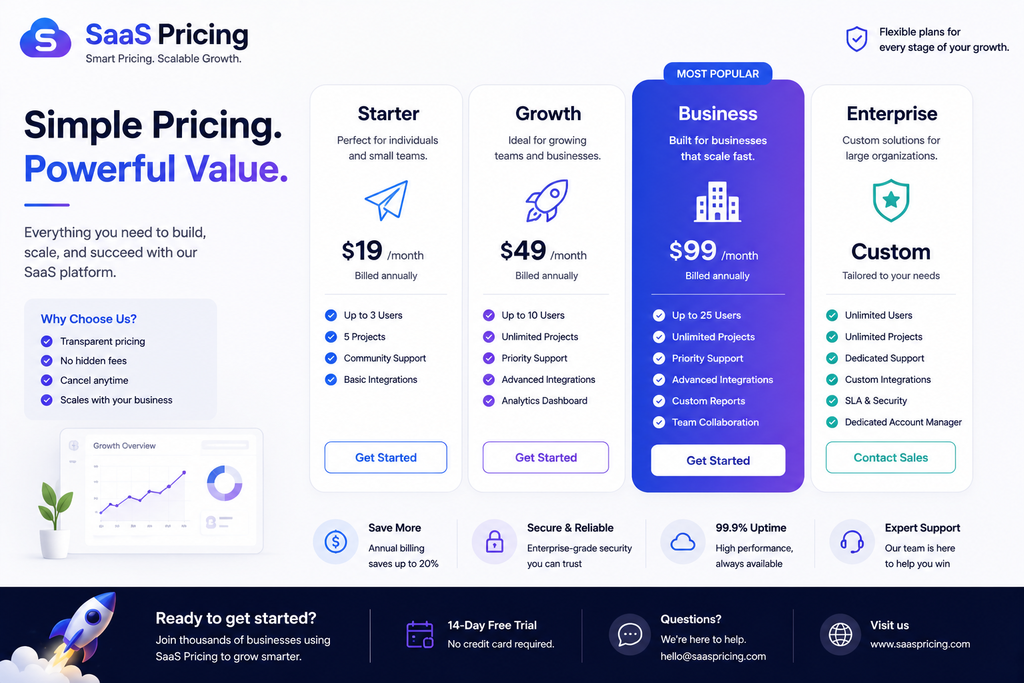
An effective saas pricing page presents options clearly, typically showing three or four tiers side by side so a prospect can compare features and price at a glance without extensive scrolling or clicking through separate pages. Highlighting a recommended or most popular tier helps guide undecided buyers toward the option that fits most customers, reducing decision fatigue during an already complex evaluation process. Clear, specific feature lists matter more than vague marketing language, since a buyer trying to justify a purchase to their own manager needs concrete details they can reference rather than abstract claims about value. Including transparent information about what happens at renewal, whether prices can change, and how easy it is to upgrade or downgrade also builds trust with a cautious buyer who has likely been burned by unclear pricing from another vendor in the past. A frequently asked questions section addressing billing cycles, cancellation policy, and enterprise custom pricing options rounds out a strong pricing page by answering the practical questions a buyer is likely to have before they are ready to commit.
8 How SaaS Pricing Is Evolving In 2026
Usage based and hybrid saas pricing models continue to gain ground as more software companies, particularly in the AI and infrastructure space, look for pricing structures that scale more precisely with the value customers actually receive rather than a flat per seat charge. Buyers have also become significantly more price sensitive and comparison savvy, often researching multiple vendors extensively and negotiating harder than they did just a few years ago, which is pushing companies toward more transparent pricing pages rather than the historical practice of hiding pricing behind a required sales call. Artificial intelligence features are increasingly priced as a separate add on or usage based line item rather than bundled silently into existing tiers, since the underlying compute cost of AI features differs meaningfully from traditional software features and companies need pricing that reflects that reality. Annual contracts remain common for larger deals, but more vendors are offering flexible monthly options at a modest premium to accommodate smaller buyers who value flexibility over the discount that comes with a longer commitment.
9 Best Practices For Communicating SaaS Pricing To Customers
Transparency in saas pricing consistently builds more trust than a hidden or negotiation heavy approach, since buyers increasingly expect to see clear pricing before engaging with a sales team, and companies that hide pricing risk losing self serve prospects who simply move on to a competitor with a visible price. Framing price in terms of the outcome or value delivered, rather than just listing features, helps a buyer understand why the price is justified rather than leaving them to guess whether it represents good value. Being upfront about limitations and what triggers an upgrade, rather than letting a customer discover overage charges after the fact, protects trust and reduces the chance of a frustrated cancellation down the line. Regularly communicating any pricing changes well in advance, along with a clear explanation of what is changing and why, also helps preserve goodwill with existing customers even when a price increase is genuinely necessary for the business.
Frequently Asked Questions
What is saas pricing in simple terms?
Saas pricing refers to how a software company charges customers for ongoing access to its product, typically through a recurring subscription rather than a one time purchase, with the price tied to factors like user count, features, or usage.
What is the most common saas pricing model?
Per user and tiered pricing remain among the most common saas pricing models, though usage based and hybrid approaches have grown significantly as more companies look to align price more closely with actual value delivered.
How do I know if my saas pricing is too low?
Signs that saas pricing is too low include very fast sales cycles with little to no pushback, customers rarely questioning the price, and a company consistently missing revenue targets despite strong customer growth and product adoption.
Should a saas company show pricing publicly or require a sales call?
Showing pricing publicly generally builds more trust and supports self serve buyers, though companies with complex enterprise deals sometimes reserve a custom quote option for larger accounts while still publishing standard tier pricing.
How often should a company review its saas pricing?
Most companies benefit from reviewing pricing at least once a year, and more frequently during periods of significant product change or market shift, since pricing that made sense at launch often no longer reflects the product’s current value.
What is usage based saas pricing?
Usage based saas pricing charges customers according to actual consumption, such as API calls or data processed, aligning cost directly with the value a customer receives rather than a flat fee regardless of how much the product is used.
Is it a mistake to copy a competitor’s saas pricing exactly?
Yes, copying a competitor’s pricing exactly ignores differences in your own product’s value, cost structure, and target customer, and can leave revenue on the table or misalign pricing with what your specific product actually delivers.
How does freemium pricing work for saas companies?
Freemium pricing offers a limited free version of the product alongside paid tiers, which works best when the free tier delivers genuine value while creating a clear and compelling reason for active users to eventually upgrade.
What should be included on a saas pricing page?
A strong saas pricing page includes clearly compared tiers, specific feature lists, transparent renewal and billing information, and a frequently asked questions section addressing common buyer concerns before they commit.
Can raising saas pricing cause customers to churn?
Yes, raising prices on existing customers without clear communication and adequate notice can increase churn risk, which is why most companies grandfather existing customers or provide advance notice and a clear rationale before any increase.
Conclusion
SaaS pricing is far more than a number on a page, it is a strategic decision that shapes how customers perceive value, how predictably a company can grow, and how sustainable that growth actually is over time. The companies that get saas pricing right treat it as an ongoing practice rather than a one time decision, regularly revisiting their model as the product, market, and customer base evolve. Whether you are setting your first price or reevaluating an existing structure, focus on aligning price with the value your product genuinely delivers, keep the structure simple enough for buyers to understand quickly, and communicate any changes with transparency and enough notice to preserve trust. Approached this way, saas pricing becomes a genuine growth lever rather than a source of confusion or lost revenue, and it is worth revisiting your saas pricing regularly as the product and market evolve.
Key Takeaways
SaaS pricing ties directly to an ongoing subscription relationship, not a one time transaction, which raises the stakes of getting it right Per user, tiered, usage based, flat rate, and freemium are the main models, and many companies now blend several together The right model depends on how your product delivers value and who your target customers actually are Common mistakes include copying competitors blindly, overcomplicating pricing, and waiting too long to revisit an outdated model Transparent pricing pages with clear tiers and honest renewal terms build more trust than hidden or negotiation heavy pricing Usage based and hybrid models, along with separately priced AI features, are shaping how saas pricing continues to evolve in 2026.