Learn how saas application development works with a complete guide covering the process technology choices costs common mistakes and security.
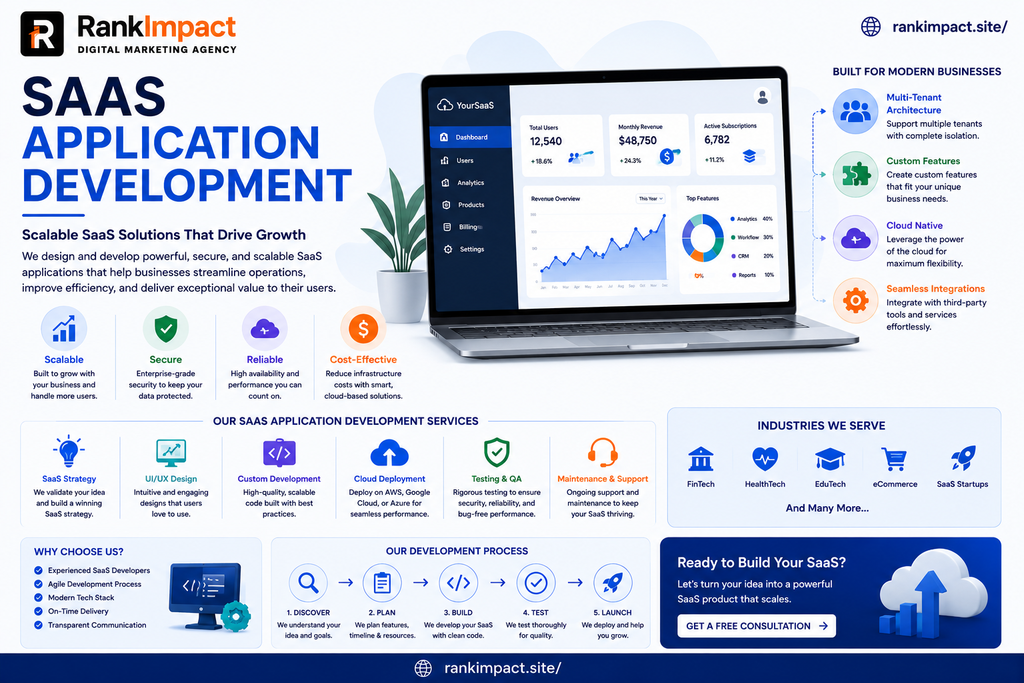
Table of Contents
What SaaS Application Development Actually Involves
SaaS application development is the process of designing, building, and maintaining software that customers access through a subscription over the internet rather than installing on their own devices or servers. This differs from traditional software development in several important ways, since the product needs to support many customers simultaneously through a shared or carefully isolated infrastructure, handle continuous updates without disrupting active users, and scale smoothly as the customer base grows over time. Unlike building a one time application that ships and remains largely static, this type of development is an ongoing process, with the product continuously evolving based on customer feedback, usage data, and competitive pressure long after the initial launch. The work spans multiple disciplines working together, including backend engineering to handle data and business logic, frontend development to build the user interface, infrastructure and security work to keep the product reliable and protected, and increasingly product management to ensure the team is building features that customers actually want rather than simply what seems technically interesting.
Why SaaS Application Development Requires A Different Approach
Traditional software projects often follow a build once, ship once mindset, while saas application development requires planning for continuous iteration from the very beginning, since a subscription product’s success depends on ongoing improvement rather than a single successful launch. Multi tenancy, meaning the technical architecture that allows many customers to use the same underlying application while keeping their data securely separated, needs to be considered early in the process, since retrofitting this capability into a product built without it in mind can require a substantial and costly rebuild later on. Scalability planning also matters more here than in many other types of software projects, since a successful subscription product can grow from a handful of early customers to thousands of active users relatively quickly, and an architecture that cannot handle that growth becomes a serious business risk rather than just a technical inconvenience. Security and compliance considerations carry more weight as well, particularly for products serving regulated industries like healthcare or finance, since a subscription business handling ongoing customer data faces different and often more stringent requirements than a product used only briefly at a single point in time.
The Core Stages Of SaaS Application Development
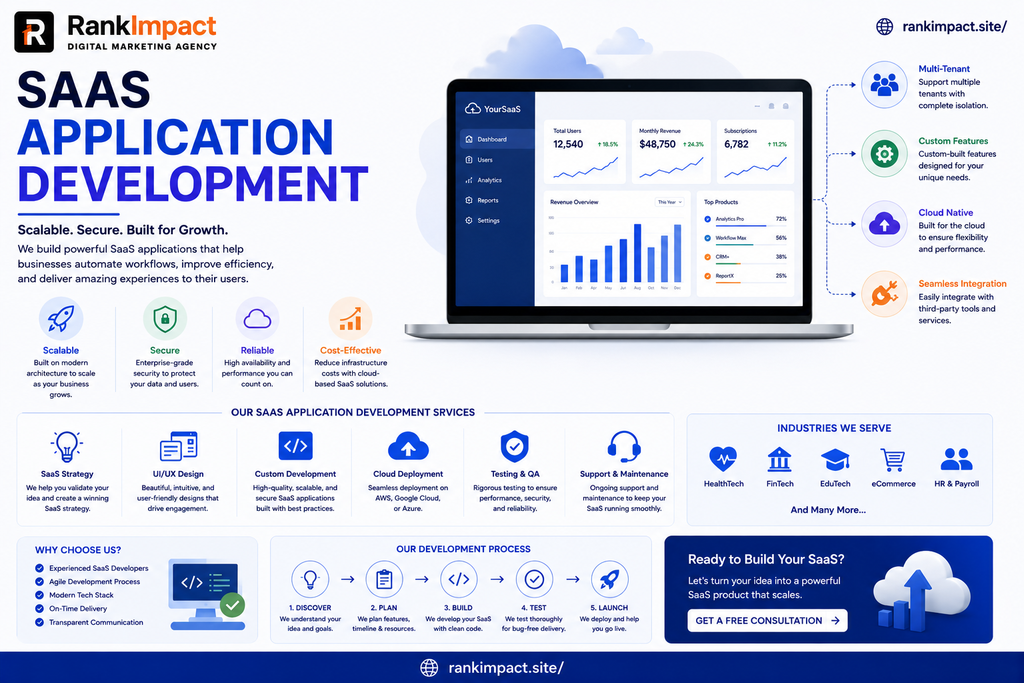
The process typically begins with discovery and planning, where the team defines the target customer, the core problem the product solves, and the minimum set of features needed to deliver genuine value before expanding scope further. Design follows, focusing on user experience and interface decisions that make the product intuitive to use, since a subscription product with a confusing interface tends to struggle with adoption and retention regardless of how powerful the underlying functionality actually is. Development itself typically happens in iterative cycles, often called sprints, allowing the team to build, test, and refine features incrementally rather than attempting to build the entire product in one long uninterrupted phase before ever showing it to real users. Testing and quality assurance run throughout this process rather than existing as a single phase at the end, since catching issues early is significantly cheaper and less disruptive than discovering them after a feature has already reached paying customers. Launch and post launch iteration close the initial cycle, though for a subscription product this is really just the beginning of an ongoing process, since customer feedback and usage data collected after launch typically shape the product roadmap for months and years to come.
Choosing The Right Technology Stack
Selecting a technology stack for saas application development should start with the specific requirements of your product rather than simply choosing whatever technology is currently popular or familiar to the founding team, since the right choice depends heavily on factors like expected scale, real time functionality needs, and the availability of developers skilled in that particular stack. Cloud infrastructure providers like AWS, Google Cloud, and Microsoft Azure have become the standard foundation for most modern products in this category, offering the scalability, reliability, and managed services that would be prohibitively expensive and complex to build and maintain independently. Database selection deserves careful consideration as well, since the right choice depends on the specific data patterns your product needs to support, with some products benefiting from traditional relational databases while others perform better with more flexible, document oriented database structures. Application programming interfaces, commonly called APIs, matter significantly too, since a well designed API allows your product to integrate with other tools customers already use, which increasingly influences purchase decisions as buyers expect new software to fit into their existing workflow rather than operating as a completely isolated system. It is worth noting that no single stack works perfectly for every product, and the strongest technical teams choose based on their specific requirements rather than following trends simply because a well known company uses a particular technology.
Building For Scale From The Start
Designing for scalability from the earliest stages of saas application development helps avoid painful and expensive rebuilds later, even though it can feel like premature optimization when a product only has a handful of early customers. This does not mean over engineering a solution for millions of users before you have proven the product works for even a few dozen, but it does mean making architectural choices, particularly around data isolation and infrastructure, that will not require a complete rewrite as the customer base grows. Monitoring and observability tools should be built in from an early stage as well, giving the team visibility into performance issues and usage patterns before they become significant problems affecting a large portion of the customer base. Automated testing becomes increasingly important as the product and team grow, since manual testing alone cannot realistically keep pace with the frequency of updates most subscription products require to stay competitive and continuously improve. Building a culture of monitoring key performance indicators, including uptime, response time, and error rates, helps a team catch and resolve issues before they meaningfully affect customer experience and, ultimately, retention.
Common Mistakes In SaaS Application Development
The most common mistake in saas application development is building too many features before validating that customers genuinely want and will pay for the core product, which wastes significant development resources on functionality that may never actually get meaningfully used. Another frequent mistake is neglecting security considerations until late in the process, when addressing vulnerabilities becomes significantly more expensive and disruptive than if they had been considered from the earliest architectural decisions. Many teams also underestimate the ongoing maintenance burden of a subscription product, focusing almost entirely on initial launch while failing to budget adequate time and resources for the continuous updates, bug fixes, and infrastructure work required to keep a live product running reliably for paying customers. Poor communication between technical and business teams causes significant friction as well, particularly when non technical stakeholders do not understand realistic development timelines, or when technical teams build features without sufficiently understanding the actual business problem those features are meant to solve. Finally, some teams choose overly complex technology stacks that are difficult to maintain and hire for, when a simpler, more well understood technology choice would have served the product’s actual needs just as effectively while being significantly easier to support and staff over time.
Understanding The Cost Of SaaS Application Development
Costs vary enormously based on complexity, team composition, and whether development happens in house or through an outsourced partner, but understanding the general cost drivers behind saas application development helps set realistic expectations before starting a project. A simple minimum viable product with core functionality only can often be built by a small team within a few months, while a more complex product involving significant integrations, advanced functionality, or strict compliance requirements can take considerably longer and cost substantially more. Ongoing costs matter just as much as the initial build, since a subscription product requires continuous investment in hosting infrastructure, maintenance, security updates, and further feature development long after the first version launches. Outsourcing development to an agency or freelance team can reduce upfront hiring costs but often comes with tradeoffs around communication overhead and institutional knowledge that stays with the outside team rather than an internal one, which is worth weighing carefully against building an internal team from the start. It generally helps to build a realistic budget that accounts for both the initial development phase and at least the first year of ongoing operational costs, since underestimating post launch expenses is one of the most common financial surprises founders encounter after their product goes live.
Security And Compliance Considerations
Data encryption, both in transit and at rest, should be considered a baseline requirement rather than an advanced feature, since customers increasingly expect this level of protection as a standard part of any product handling their business data. Access control and authentication, including support for features like multi factor authentication and single sign on, matter significantly more for business software than for many consumer applications, since companies often require these capabilities before they will even consider adopting a new tool. Regular security audits and penetration testing help identify vulnerabilities before they can be exploited, and building this practice into your development cycle from an early stage is significantly less disruptive than trying to retrofit rigorous security practices into a mature product under pressure after an incident. Compliance requirements vary considerably by industry and target market, with healthcare products needing to consider regulations like HIPAA and products serving European customers needing to address GDPR requirements around data handling and user privacy. Building compliance considerations into your saas application development process from the beginning, rather than treating it as an afterthought once a large customer specifically requests it, saves significant time, cost, and stress later in a product’s lifecycle.
The Future Of SaaS Application Development
Artificial intelligence is increasingly integrated directly into the saas application development process itself, with AI powered coding assistants helping developers write, review, and debug code significantly faster than manual processes alone, which is meaningfully changing team structure and productivity expectations across the industry. Low code and no code platforms continue to mature as well, allowing some products or internal tools to be built with less traditional custom development, though complex, highly differentiated products still generally require custom engineering to compete effectively in most established markets. Microservices architecture, which breaks a product into smaller, independently deployable services rather than one large monolithic application, continues to gain adoption for products that need to scale different components independently based on where actual demand and load concentrate. API first development, where the API is designed before the user interface, is becoming increasingly common as companies plan for a growing number of integrations and, in some cases, entirely headless product experiences built by their own customers or partners. Teams that stay current with these evolving practices while still prioritizing the fundamentals of solid architecture and genuine customer value tend to build the most durable and successful products over the long term.
Frequently Asked Questions
What is saas application development in simple terms?
Saas application development is the process of designing, building, and maintaining software that customers access through a subscription over the internet, requiring ongoing iteration and support rather than a single one time build and release.
How long does saas application development typically take?
Timeline varies significantly based on complexity, but a simple minimum viable product often takes a few months to build, while more complex saas application development projects with extensive integrations or compliance requirements can take considerably longer.
How much does saas application development cost?
Costs vary widely depending on scope, team composition, and whether saas application development work happens in house or through an outsourced partner, with simple products costing significantly less than complex products requiring advanced functionality or strict compliance.
What technology stack is best for saas application development?
There is no single best stack for saas application development, since the right choice depends on your specific product requirements, expected scale, and the skills available on your team, though cloud infrastructure providers like AWS and Google Cloud have become a common foundation.
What is multi tenancy in saas application development?
Multi tenancy refers to a technical architecture that allows many customers to share the same underlying application infrastructure while keeping their individual data securely separated, which is a foundational consideration for most modern subscription products.
Should I build my product in house or hire an outsourced development team?
This depends on budget, timeline, and long term plans, since an outsourced team can reduce upfront hiring costs but may create communication overhead and less institutional product knowledge compared to an internal team built from the start.
What is the biggest mistake companies make in saas application development?
The biggest mistake in saas application development is building too many features before validating that customers genuinely want and will pay for the core product, which wastes significant resources on functionality that may never get meaningfully used.
How important is security in saas application development?
Security is critical in saas application development and should be considered from the earliest architectural decisions rather than added later, since customers increasingly expect strong data protection as a standard requirement rather than an optional advanced feature.
How is AI changing saas application development?
AI powered coding assistants are increasingly helping developers write, review, and debug code faster, meaningfully changing team productivity and structure, while low code platforms are also expanding what can be built without extensive custom engineering.
What should I look for when evaluating a saas application development partner?
Look for relevant experience with similar products, a clear and realistic communication process, transparency around timelines and cost, and evidence they consider security and scalability from the earliest stages of a project rather than as an afterthought.
Conclusion
SaaS application development is a genuinely different discipline from traditional software projects, requiring careful planning for scalability, security, and continuous iteration from the very first architectural decisions rather than treating these considerations as optional add ons for later. The companies that build the most successful subscription products treat development as an ongoing process rather than a single project with a defined end date, continuously refining the product based on real customer feedback and usage data long after the initial launch. Whether you are planning your first product or refining an existing development process, focus on validating genuine customer demand before over building features, choosing a technology stack suited to your actual requirements, and building security and scalability considerations into your process from the beginning rather than retrofitting them later. Approached this way, saas application development becomes a sustainable, ongoing practice that supports genuine long term growth rather than a one time technical milestone.
Key Takeaways
SaaS application development requires planning for continuous iteration and multi tenancy from the earliest architectural decisions The process moves through discovery, design, iterative development, testing, and ongoing post launch refinement Technology stack choice should be based on actual product requirements rather than current trends or familiarity alone Common mistakes include over building features early, neglecting security, and underestimating ongoing maintenance costs Security and compliance considerations should be built in from the start rather than addressed only when a customer specifically requests them AI powered development tools and API first architecture are meaningfully shaping how saas application development is approached in 2026.