+92 318 3068833 Get Free Audit

SaaS Development Company Guide 2026 Hiring Tips

Learn how to choose the right saas development company covering real costs the hiring process red flags and questions to ask before you sign a contract.
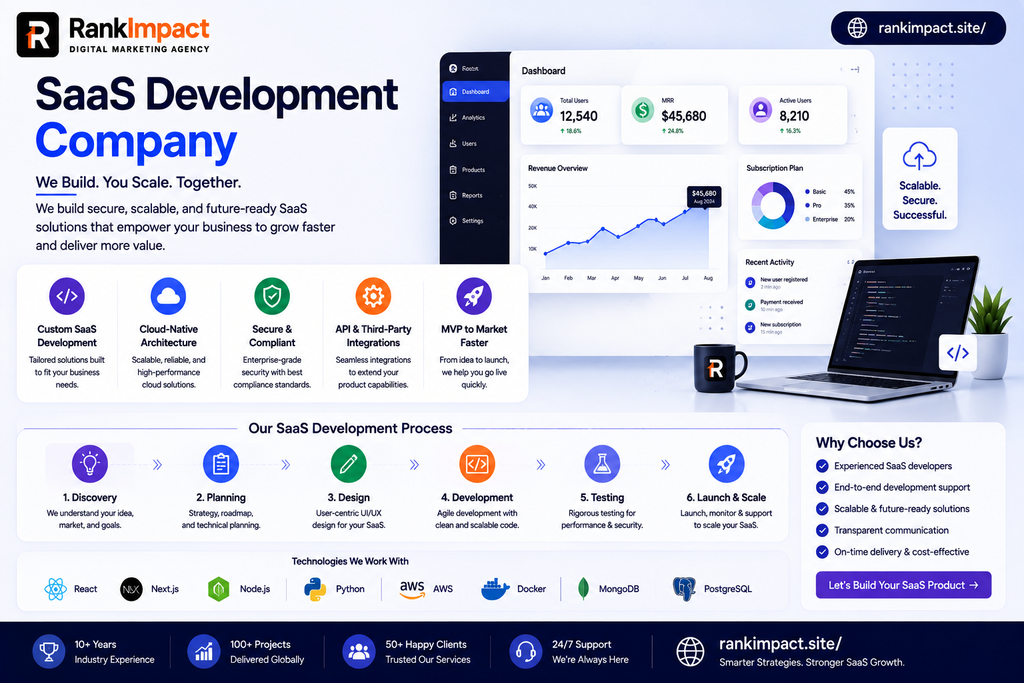
saas development company hiring guide and cost breakdown illustration.

SaaS Development Company Guide To Hiring The Right Partner

Building a software product that customers pay for month after month is one of the most rewarding ventures a founder can pursue but it is also one of the easiest places to lose time and money on the wrong partner. Choosing a saas development company is not just a technical decision it is a business decision that shapes how fast you launch how much you spend on maintenance and whether your platform can actually scale once real customers start signing up. This guide walks through everything you genuinely need to know before signing a contract including what these companies actually do how pricing works the red flags that predict a failed project and the exact questions that separate a great partner from an expensive mistake.

What A SaaS Development Company Actually Does

A saas development company specializes in building cloud hosted software that customers access through a browser or app rather than installing locally on their own machine. Unlike a general web development shop these teams understand the specific architecture patterns that make a subscription product work including multi tenant databases usage based billing systems automated onboarding flows and the security controls enterprise buyers expect before they will sign a contract. The work typically spans the full lifecycle from early product discovery and technical architecture through development quality assurance deployment and ongoing post launch support.

Global demand for this expertise keeps growing because software adoption itself keeps accelerating across every industry. Recent industry research shows worldwide IT spending is projected to exceed 6 trillion dollars in 2026 with software spending among the fastest growing categories inside that total as businesses continue shifting away from on premise systems toward cloud delivered platforms. The average company now runs well over 100 separate SaaS applications across its operations which means the market a new SaaS product enters is already crowded making the quality of your development partner one of the biggest factors separating a product that gains traction from one that quietly fails.

Core Services Offered By SaaS Development Companies

Not every saas development company offers the same scope of work so understanding the typical service breakdown helps you evaluate whether a potential partner actually covers what your project needs. Product discovery and technical consulting usually comes first where an experienced team helps translate a business idea into a concrete technical specification including database design API architecture and a realistic timeline. Custom application development follows covering both frontend interface work and backend infrastructure including the subscription billing logic that makes a SaaS business model function at all.

Cloud infrastructure setup is another core offering since nearly every modern SaaS platform runs on a provider such as AWS Azure or Google Cloud and needs proper configuration for auto scaling load balancing and disaster recovery from day one. Quality assurance and security testing deserves particular attention given that a striking share of SaaS businesses report experiencing a security incident within a twelve month period making rigorous testing a non negotiable part of any serious engagement. Finally ongoing maintenance and support keeps a platform running smoothly after launch covering bug fixes performance monitoring feature updates and the quarterly security patching that compliance frameworks increasingly require.

How Much Does A SaaS Development Company Cost

Cost is usually the first question founders ask and unfortunately also the hardest to answer with a single number because pricing depends heavily on project complexity team location and engagement model. A simple minimum viable product built by an experienced team commonly starts somewhere in the 40 thousand to 60 thousand dollar range while a more feature rich platform with complex integrations enterprise security requirements and multiple user roles can easily run into the low hundreds of thousands of dollars before launch.

Beyond the initial build ongoing maintenance is a cost many founders underestimate during budgeting. Industry benchmarks now place annual maintenance at roughly 15 to 20 percent of the original development cost covering everything from routine bug fixes to mandatory security updates. Cloud hosting itself typically runs between 200 and 2000 dollars per month depending on user volume with additional charges for any third party API usage particularly if your product integrates AI features that carry their own per use costs. When comparing quotes from different companies always ask exactly what is included in a given number since one firm’s estimate for an MVP might include a full design phase and three months of post launch support while another firm’s identical sounding number covers development hours alone.

How To Choose The Right SaaS Development Company

Selecting the right partner comes down to evaluating a handful of factors that consistently separate successful engagements from painful ones. Industry specific experience matters more than most founders initially expect since a company that has already built products for your specific vertical understands the compliance requirements user expectations and common technical pitfalls unique to that space rather than learning them at your expense. Reviewing a company’s actual portfolio and speaking directly with past clients about communication responsiveness and how the team handled scope changes reveals far more than a polished sales pitch ever will.

Technical proficiency deserves close scrutiny particularly around cloud native architecture experience with the specific technology stack your product needs and a demonstrated approach to security given how much sensitive customer data flows through a typical SaaS platform. Equally important is evaluating how a company approaches post launch support since a platform that works perfectly on launch day but has no clear maintenance plan behind it is a liability waiting to surface. Finally pay attention to communication style during the sales process itself since a team that asks sharp clarifying questions about your business model before quoting a price is signaling the same diligence they will bring to the actual project.

SaaS Development Process Explained Step By Step

Understanding the typical development process helps you set realistic expectations and spot warning signs early if a potential partner skips important steps. The process almost always begins with discovery and requirements gathering where the development team works with you to define user personas core features and technical constraints before a single line of code gets written. This is followed by architecture and design where the team maps out database structure API endpoints and user interface wireframes creating a blueprint the entire project can be measured against.

Development typically happens in iterative sprints usually spanning two weeks each with working software demonstrated at the end of every cycle rather than disappearing for months only to reveal a finished product at the very end. Quality assurance runs continuously alongside development rather than as a single phase at the end covering functional testing security testing and performance testing under realistic user load. Deployment introduces the product to a production environment often starting with a limited beta group before a full public launch and the process concludes with a defined handover period where the development team documents the codebase and trains your internal team or transitions into an ongoing support agreement.

Common Mistakes Businesses Make Hiring A SaaS Development Company

Watching failed SaaS projects unfold reveals the same handful of mistakes appearing again and again regardless of industry or company size. Choosing a development partner based purely on the lowest quoted price consistently backfires since inexperienced or under resourced teams tend to cut corners on security testing and architecture decisions that only become expensive problems after real customers depend on the platform. Failing to define clear requirements before development begins is nearly as damaging leading to constant scope creep timeline slippage and a final product that drifts away from the original business goal.

Treating the launch date as the finish line rather than the starting point of an ongoing relationship causes many founders to underbudget for maintenance leaving them scrambling when the inevitable bug or security patch appears. Skipping reference checks with a company’s past clients means missing red flags around missed deadlines or poor communication that would have been obvious with a fifteen minute phone call. One particularly costly pattern involves founders trying to save money by using purely automated AI code generation for a complex backend without any senior human architect reviewing the output leading to systems that work fine for the first few hundred users before collapsing under real load because nobody on the team can actually explain how the underlying code works.

Questions To Ask Before Signing A Contract

Asking the right questions before signing gives you far more leverage than trying to fix problems after a contract is already in place. Ask directly how the company structures pricing and what specifically triggers an additional charge beyond the initial quote since vague answers here often predict budget surprises later. Ask to see two or three examples of similar projects the team has completed along with a direct introduction to a past client rather than a curated testimonial alone.

Ask what security certifications or compliance frameworks the team has experience implementing particularly if your product will handle sensitive customer data or operate in a regulated industry such as healthcare or finance. Ask exactly what happens after launch including response time commitments for critical bugs and whether ongoing support is included in the original engagement or billed separately once the initial build concludes. Finally ask who specifically will be working on your project day to day since some companies present senior talent during the sales process only to staff the actual work with far less experienced team members once the contract is signed.

Why Development Alone Is Not Enough To Succeed

A common blind spot among founders is assuming that once a saas development company delivers a working product the hardest part is finished. In reality a technically excellent platform with no customers is simply an expensive piece of software sitting unused. Growth requires the same level of intentional strategy on the marketing and demand generation side that you applied to the technical build itself which is why many growing companies pair their development partner with a dedicated saas digital marketing agency to make sure qualified leads are flowing in by the time the product is ready for real customers.

Coordinating these two workstreams early rather than treating marketing as an afterthought once development wraps up consistently produces better outcomes. A development team focused purely on shipping features has no visibility into which messaging resonates with buyers or which onboarding friction points are actually costing you trial conversions information your marketing partner gathers constantly through customer research and campaign data. Bringing both teams into the same conversation during the discovery phase rather than sequencing them one after another can meaningfully shorten the time between launch and your first genuinely repeatable revenue.

Frequently Asked Questions

What does a saas development company typically charge for a minimum viable product ?

Most experienced teams charge somewhere between 40 thousand and 60 thousand dollars for a genuine minimum viable product though the exact figure depends heavily on feature complexity integrations and the specific technology stack chosen for the build.

How long does it take to build a SaaS product from scratch?

A focused minimum viable product typically takes twelve to sixteen weeks to reach launch while a more feature complete platform with complex integrations can take six months or longer depending on scope and team size.

Should I hire a freelancer or a full saas development company?

Freelancers can work well for very small well defined projects but a full company typically offers more reliable project management broader technical coverage and continuity if an individual team member becomes unavailable mid project.

What programming languages do most SaaS development companies use ?

Common technology choices include JavaScript and TypeScript for frontend and backend development Python for data heavy applications and cloud platforms such as AWS Azure or Google Cloud for infrastructure though the right stack depends entirely on your specific product requirements.

How do I know if a saas development company is trustworthy ?

Look for a verifiable portfolio of completed projects direct references from past clients transparent pricing structures and clear communication during the sales process itself since how a company behaves before signing a contract usually predicts how they behave afterward.

Is it cheaper to build a SaaS product overseas ?

Offshore and nearshore teams often offer lower hourly rates than local agencies though total cost depends heavily on communication overhead time zone alignment and the additional oversight often needed to maintain the same quality standard.

What ongoing costs should I expect after my SaaS product launches?

Expect annual maintenance costs of roughly 15 to 20 percent of your original development budget along with monthly cloud hosting fees that scale with your user base and any third party API costs tied to specific features.

Do SaaS development companies help with product strategy or only coding ?

Many established companies offer product discovery and strategic consulting alongside pure development work though the depth of this service varies significantly so confirm what is included before assuming strategic guidance is part of the engagement.

What security measures should a SaaS development company implement by default?

Expect encrypted data storage secure authentication protocols regular vulnerability testing and clear compliance planning for frameworks relevant to your industry such as SOC 2 or HIPAA depending on the type of data your product handles.

Can a saas development company help after the product has already launched?

Yes most reputable companies offer ongoing maintenance and feature development contracts after launch and switching to a new partner for this ongoing work is common when the original build was completed by a different team.

Conclusion

Choosing the right saas development company is one of the highest stakes decisions a founder makes because the wrong choice does not just cost money upfront it compounds into maintenance headaches security risk and a product that struggles to scale exactly when customer demand finally arrives. Focus your evaluation on relevant industry experience genuine technical depth transparent pricing and a clear plan for what happens after launch rather than choosing based on the lowest quote alone. Ask pointed questions before signing anything reference check past clients directly and remember that a technically strong build still needs a coordinated go to market plan to turn into a genuinely successful business. Get these fundamentals right and your development partnership becomes a foundation for sustainable growth rather than a recurring source of costly surprises.
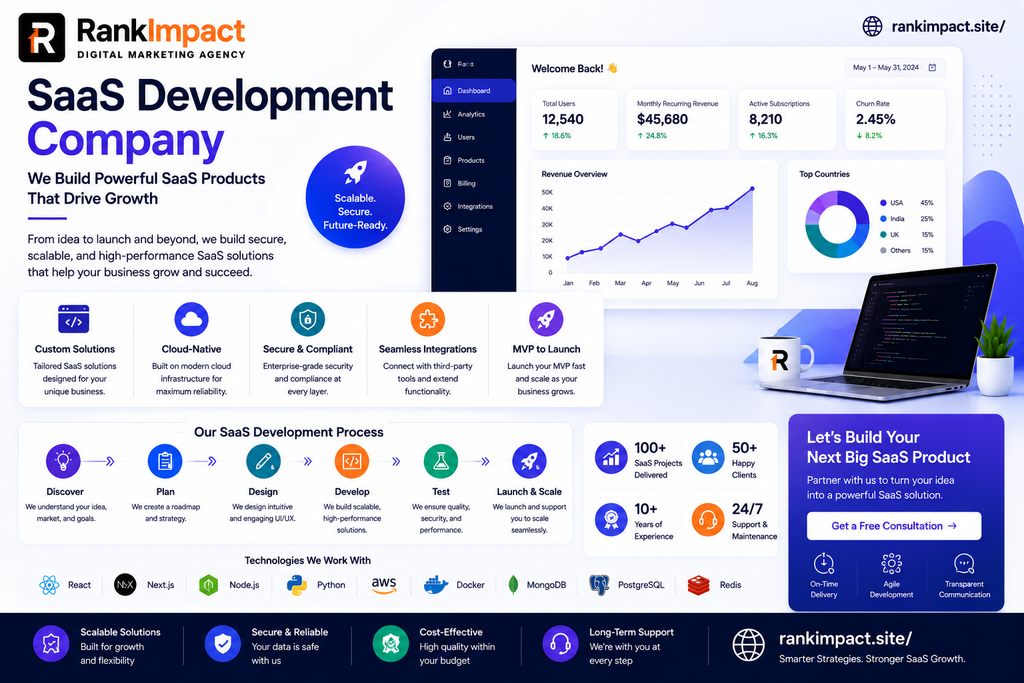
Key Takeaways

  • A saas development company specializes in cloud native architecture subscription billing and the security practices a subscription software product specifically requires
  • Minimum viable product costs commonly start between 40 thousand and 60 thousand dollars while full featured platforms can run into the low hundreds of thousands
  • Annual maintenance typically runs 15 to 20 percent of the original development cost and should be budgeted from day one rather than treated as a surprise
  • The strongest partners demonstrate relevant industry experience a verifiable portfolio and a clear post launch support plan rather than competing purely on price
  • A predictable sprint based development process with continuous testing produces far more reliable outcomes than a long single phase build with no visibility until the end
  • Choosing the cheapest bid or skipping reference checks with past clients are among the most common and costly mistakes founders make
  • Asking direct questions about pricing structure team staffing and security practices before signing protects you from expensive surprises later
  • Pairing your development partner with a dedicated saas digital marketing agency helps ensure demand generation is ready the moment your product reaches launch.
SaaS Data Security Platform 7 Things to Check in 2026

What a SaaS data security platform actually does, how it works, and what to check before buying one. A practical, no hype guide.

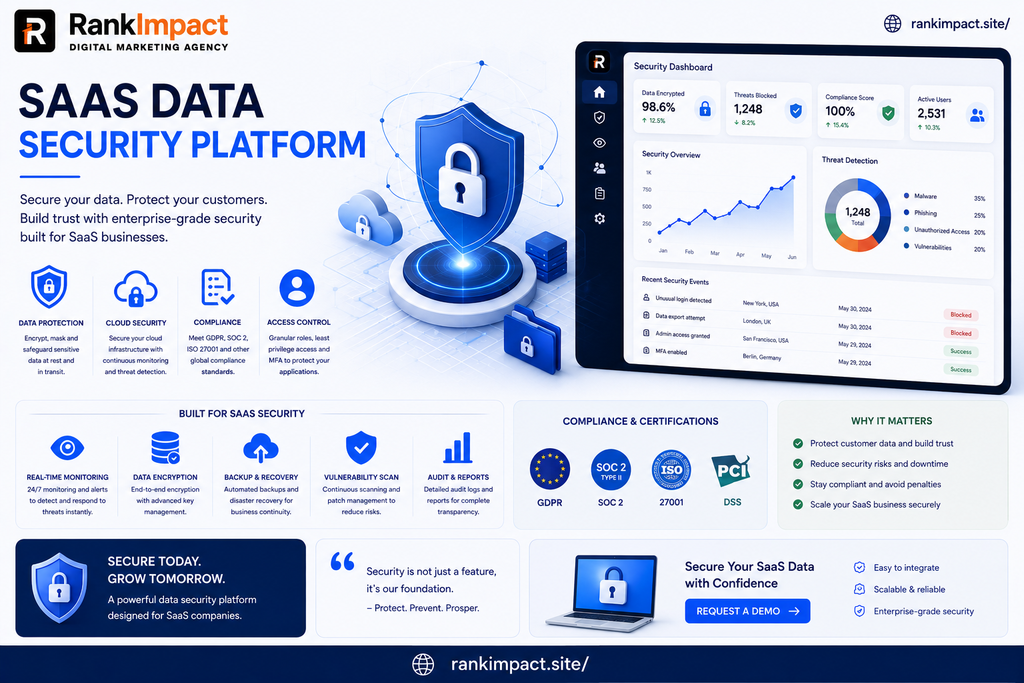
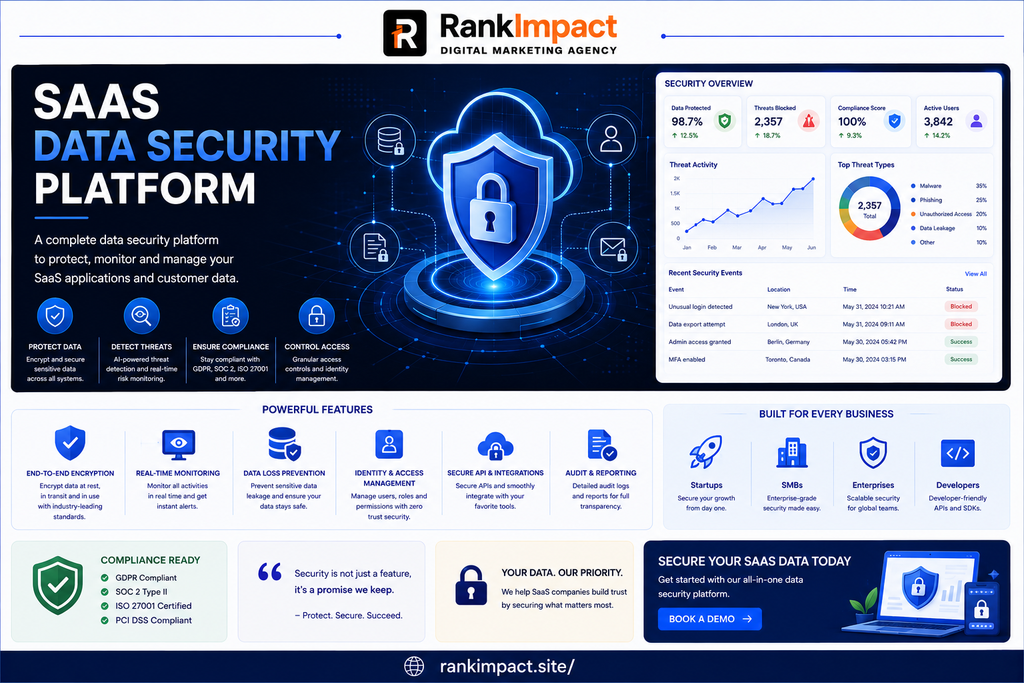
SaaS data security platform connecting multiple cloud apps to a central protected data hub.

SaaS data security platform

Most companies did not choose to scatter their sensitive data across forty different apps. It happened gradually, one signed-up tool at a time, until nobody in the security team could say with confidence where customer records, financial data, or internal documents actually lived. A SaaS data security platform exists to answer that exact question and act on it. This article explains what these platforms actually do, how they work under the hood, where they genuinely help, where they fall short, and what to check before you commit budget to one.

What a SaaS Data Security Platform Actually Is

A SaaS data security platform is a tool that discovers, classifies, and protects sensitive data across the SaaS applications a company uses, then monitors who can access that data and flags risky configurations or behavior. Instead of securing one application at a time, it connects to many SaaS tools through their APIs and gives a security team a shared view across all of them.

This is different from securing the SaaS application itself. A SaaS data security platform is not trying to patch a vendor’s software or run their infrastructure; it is watching the data that flows through the apps a company already trusts, and the permissions attached to that data.

It also sits next to, not instead of, more familiar categories:

  • CASB (Cloud Access Security Broker): focuses more on controlling access and traffic to cloud apps, often at the network layer.
  • SSPM (SaaS Security Posture Management): focuses on misconfigurations and settings inside SaaS apps themselves.
  • DLP (Data Loss Prevention): focuses on stopping sensitive data from leaving in the first place, often at the endpoint or network level.

Many current platforms blend elements of all three, which is part of why the category can be confusing to shop for.

Why This Matters More Than It Used To

A decade ago, most business data lived behind a company firewall, on servers IT controlled directly. Today, a mid sized company might run its CRM, payroll, support desk, file storage, and internal wiki on five separate SaaS vendors, each with its own admin panel, its own sharing settings, and its own third-party integrations connected through OAuth.

Every one of those connections is a door. An employee can misconfigure a shared folder without realizing it is publicly link-accessible. A former employee’s account can retain access after offboarding if it was not removed everywhere. A third-party integration approved two years ago can quietly retain broad read access to a company’s entire customer database.

None of this requires a sophisticated attacker. Misconfiguration and overly broad permissions are consistently among the most common causes of SaaS related data exposure, which is why visibility, not just prevention, is the starting point for most of these platforms.

The scale of the problem compounds quietly. Each new SaaS subscription adds its own login, its own admin console, and often its own set of default sharing settings that lean toward convenience rather than caution. Multiply that across dozens of tools and several years of gradual adoption, and even a security conscious company can end up with a sprawling, undocumented web of access it never deliberately chose to create. This is less about any single mistake and more about the natural drift that happens when nobody is assigned to watch the whole picture.

Core Components of a SaaS Data Security Platform

A working platform in this category is usually built around four connected functions rather than one single feature.

1. Discovery

The platform connects to sanctioned SaaS applications through APIs and, in more mature tools, also detects shadow SaaS, meaning apps employees signed up for on their own that IT never approved. Without discovery, everything else in the platform is working on an incomplete map.

2. Data classification

Once connected, the platform scans for sensitive data: customer PII, payment details, health information, credentials, source code, or internal financial data, depending on what the business defines as sensitive. Classification quality varies significantly between vendors, and this is one of the areas most worth testing with real data before buying.

3. Access and permission mapping

The platform maps who, and what, can reach classified data: employees, external collaborators, and connected third-party apps. This is where over-permissioned accounts, stale shares, and risky OAuth integrations usually surface.

4. Monitoring and response

The platform watches for risky changes over time, such as a sensitive file suddenly becoming externally shared, a dormant account being reactivated, or an integration requesting broader scopes than before, and either alerts a security team or, in some tools, automatically remediates the issue.

How Implementation Actually Works

Rolling one of these platforms out is rarely a single afternoon of setup, even though vendors often present it that way.

  1. Connect priority applications first. Start with the apps holding the most sensitive data, not every app the company uses. Trying to onboard everything at once usually produces alert fatigue before the team has trusted the tool.
  2. Let discovery and classification run before acting. Early results are often noisy. A first scan commonly surfaces old, forgotten shares and unused integrations that are not urgent, alongside genuinely risky ones. Sorting the two takes a review pass, not automation alone.
  3. Set alert thresholds deliberately. A tool that alerts on everything trains the team to ignore it. Start narrower, focusing on externally shared sensitive data and admin-level access changes, and widen scope once the signal-to-noise ratio is trusted.
  4. Assign clear ownership. Someone specific needs to own triage of what the platform surfaces, or findings pile up unreviewed, which defeats the purpose of buying the tool.
  5. Review integrations quarterly, not once. New OAuth connections get approved constantly as teams adopt new tools; a one-time cleanup does not stay accurate.

Example: What This Looks Like in Practice

The following is an illustrative example, not a real case study.

Imagine a 60 person company using a CRM, an HR platform, and a cloud storage tool. After connecting a SaaS data security platform, the first scan might reveal a shared folder in the storage tool that contains customer contracts and has been set to anyone with the link for over a year, plus a marketing automation integration that was granted read access to the full CRM contact list but has not been used in eight months. Neither issue involves an attacker. Both are the kind of quiet, accumulated risk this category of tool is built to surface, and both are fixable in minutes once someone actually sees them.

Best Practices When Using One of These Platforms

  • Treat the platform’s findings as a starting point for a process, not a one-time cleanup project.
  • Combine it with basic access hygiene: least-privilege permissions, regular offboarding audits, and periodic reviews of third-party app access.
  • Prioritize fixes by the sensitivity of the exposed data first, not by alert volume.
  • Involve the teams who actually use each SaaS app in remediation decisions; security teams often lack context on why a share exists.
  • Revisit classification rules periodically as the business starts using new categories of sensitive data.

Common Mistakes to Avoid

  • Buying based on the connector list alone. A platform that “supports” hundreds of apps but classifies data poorly in the ones you actually use will not help much.
  • Skipping a real-data pilot. Classification accuracy is hard to judge from a demo with sample data; test it against your own environment before committing.
  • Treating the tool as a replacement for access policy. A platform can show you that ten people have unnecessary admin rights; it cannot decide your access policy for you.
  • Ignoring shadow SaaS. A platform that only monitors already-approved apps misses a large share of real-world exposure.
  • Under-resourcing the review process. Discovery without a person acting on the findings produces a dashboard nobody looks at.

Measuring Whether It’s Working

There is no single universal metric here, but a few practical indicators are worth tracking over time: the number of sensitive files with unnecessary external sharing, the number of dormant accounts still holding active access, the average time between a risky finding and its remediation, and the number of third-party integrations with access broader than they need. A platform is earning its cost when these numbers trend down consistently, not just at initial rollout.

Limitations Worth Knowing Before You Buy

No SaaS data security platform prevents a breach on its own. It reduces the odds and shortens the time to notice a problem, but it depends entirely on someone acting on what it finds. Classification is also not perfect; even strong tools produce some false positives and miss some genuinely sensitive data, especially in unstructured formats like chat threads or free-text fields. And coverage is limited to the apps you connect; an unconnected or unapproved app remains a blind spot regardless of how good the platform is elsewhere. None of this makes the category unhelpful; it means it works best as one layer in a broader security approach, not a replacement for one.

Advanced Considerations for Larger or Regulated Companies

Companies in regulated industries such as healthcare, finance, or anywhere handling government contracts usually need a platform that supports the specific classification categories their regulations require (such as PHI or cardholder data) and produces audit-ready reporting, not just internal dashboards. Larger organizations with hundreds of SaaS apps should also weigh how well a platform handles automated remediation versus alert-only workflows, since manual triage does not scale past a certain volume of connected apps. Privacy and data residency requirements vary by jurisdiction and by industry, so any compliance claim a vendor makes should be verified directly against your specific regulatory obligations rather than taken at face value.

It is also worth considering how a platform handles multi-entity or multi-region setups, since a company operating across several countries may need data classified and reported differently depending on where it physically resides or which customers it belongs to. Vendors targeting enterprise buyers usually address this directly in their documentation; if a vendor cannot clearly explain how their tool handles this, that is a reasonable reason for caution rather than an oversight to work around later.

FAQ

1. What is a SaaS data security platform in simple terms?

It is a tool that connects to the SaaS applications a company uses, finds sensitive data inside them, and monitors who can access that data so risky exposure gets caught and fixed.

2. Is a SaaS data security platform the same as a CASB?

Not exactly. A CASB traditionally focuses on controlling access and traffic to cloud apps, while a SaaS data security platform focuses more on the data inside those apps and how it is exposed. Many current products combine both approaches.

3. Do small businesses actually need one?

It depends on how much sensitive data sits in SaaS apps and how many of them are in use. A five-person company using two apps has a very different risk profile than a fifty-person company using twenty.

4. Can this replace a firewall or antivirus software?

No. It addresses a different layer of risk, data exposure inside SaaS apps, and is meant to work alongside, not instead of, other security tools.

5. How long does implementation usually take?

Initial connection to priority apps can happen quickly, but getting classification tuned and alert thresholds set to a trustworthy level usually takes several weeks of active review.

6. What is “shadow SaaS” and why does it matter here?

Shadow SaaS refers to applications employees sign up for without IT approval. It matters because a platform that only watches sanctioned apps misses a meaningful share of where company data actually ends up.

7. Does this stop a data breach automatically?

Not on its own. It surfaces risky exposure and, in some tools, automates certain fixes, but it depends on a team acting on what it finds.

8. How is pricing usually structured?

Pricing commonly scales with the number of connected applications, users, or amount of data scanned, though exact models vary by vendor and should be confirmed directly, since pricing changes over time.

9. What should be tested before buying?

Classification accuracy against your own real data, the quality of alerting versus alert fatigue, and how well it detects apps you have not manually listed.

10. Does using one make a company automatically compliant with data protection regulations?

No. It can support compliance efforts by improving visibility and control, but compliance depends on your specific regulatory obligations, which vary by jurisdiction and should be confirmed with a qualified professional.

Key Takeaways

  • A SaaS data security platform discovers, classifies, and monitors sensitive data across the SaaS apps a company uses, rather than securing one app at a time.
  • Its four core functions are discovery, classification, access mapping, and ongoing monitoring.
  • Misconfiguration and over-permissioned access, not sophisticated attacks, are the most common source of the exposure these platforms catch.
  • It works best alongside good access hygiene and a clear owner for triage, not as a standalone fix.
  • Classification accuracy and shadow SaaS detection are worth testing with real data before buying.
  • No platform in this category prevents a breach on its own or guarantees regulatory compliance.

Conclusion

A SaaS data security platform will not make every security decision for a company, and no honest vendor should claim otherwise. What it does well is give a security team something they usually do not have without one: a real, current view of where sensitive data sits across a sprawling set of SaaS apps, and who can actually reach it. That visibility, paired with a team that acts on it consistently, is what turns the tool from a dashboard into an actual reduction in risk.

Get Your FREE SEO Audit

Enter your details below. Our team will review your website and email you a comprehensive SEO and speed report within 24 hours.