+92 318 3068833 Get Free Audit

SaaS Data Security Platform 7 Things to Check in 2026

What a SaaS data security platform actually does, how it works, and what to check before buying one. A practical, no hype guide.
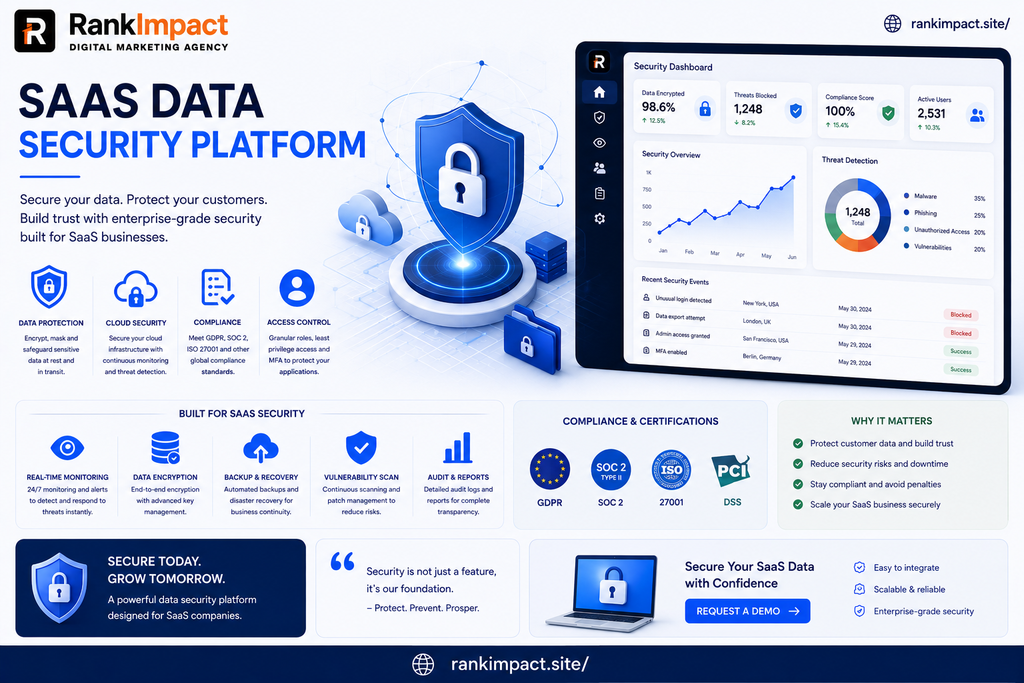
SaaS data security platform connecting multiple cloud apps to a central protected data hub.

SaaS data security platform

Most companies did not choose to scatter their sensitive data across forty different apps. It happened gradually, one signed-up tool at a time, until nobody in the security team could say with confidence where customer records, financial data, or internal documents actually lived. A SaaS data security platform exists to answer that exact question and act on it. This article explains what these platforms actually do, how they work under the hood, where they genuinely help, where they fall short, and what to check before you commit budget to one.

What a SaaS Data Security Platform Actually Is

A SaaS data security platform is a tool that discovers, classifies, and protects sensitive data across the SaaS applications a company uses, then monitors who can access that data and flags risky configurations or behavior. Instead of securing one application at a time, it connects to many SaaS tools through their APIs and gives a security team a shared view across all of them.

This is different from securing the SaaS application itself. A SaaS data security platform is not trying to patch a vendor’s software or run their infrastructure; it is watching the data that flows through the apps a company already trusts, and the permissions attached to that data.

It also sits next to, not instead of, more familiar categories:

  • CASB (Cloud Access Security Broker): focuses more on controlling access and traffic to cloud apps, often at the network layer.
  • SSPM (SaaS Security Posture Management): focuses on misconfigurations and settings inside SaaS apps themselves.
  • DLP (Data Loss Prevention): focuses on stopping sensitive data from leaving in the first place, often at the endpoint or network level.

Many current platforms blend elements of all three, which is part of why the category can be confusing to shop for.

Why This Matters More Than It Used To

A decade ago, most business data lived behind a company firewall, on servers IT controlled directly. Today, a mid sized company might run its CRM, payroll, support desk, file storage, and internal wiki on five separate SaaS vendors, each with its own admin panel, its own sharing settings, and its own third-party integrations connected through OAuth.

Every one of those connections is a door. An employee can misconfigure a shared folder without realizing it is publicly link-accessible. A former employee’s account can retain access after offboarding if it was not removed everywhere. A third-party integration approved two years ago can quietly retain broad read access to a company’s entire customer database.

None of this requires a sophisticated attacker. Misconfiguration and overly broad permissions are consistently among the most common causes of SaaS related data exposure, which is why visibility, not just prevention, is the starting point for most of these platforms.

The scale of the problem compounds quietly. Each new SaaS subscription adds its own login, its own admin console, and often its own set of default sharing settings that lean toward convenience rather than caution. Multiply that across dozens of tools and several years of gradual adoption, and even a security conscious company can end up with a sprawling, undocumented web of access it never deliberately chose to create. This is less about any single mistake and more about the natural drift that happens when nobody is assigned to watch the whole picture.

Core Components of a SaaS Data Security Platform

A working platform in this category is usually built around four connected functions rather than one single feature.

1. Discovery

The platform connects to sanctioned SaaS applications through APIs and, in more mature tools, also detects shadow SaaS, meaning apps employees signed up for on their own that IT never approved. Without discovery, everything else in the platform is working on an incomplete map.

2. Data classification

Once connected, the platform scans for sensitive data: customer PII, payment details, health information, credentials, source code, or internal financial data, depending on what the business defines as sensitive. Classification quality varies significantly between vendors, and this is one of the areas most worth testing with real data before buying.

3. Access and permission mapping

The platform maps who, and what, can reach classified data: employees, external collaborators, and connected third-party apps. This is where over-permissioned accounts, stale shares, and risky OAuth integrations usually surface.

4. Monitoring and response

The platform watches for risky changes over time, such as a sensitive file suddenly becoming externally shared, a dormant account being reactivated, or an integration requesting broader scopes than before, and either alerts a security team or, in some tools, automatically remediates the issue.

How Implementation Actually Works

Rolling one of these platforms out is rarely a single afternoon of setup, even though vendors often present it that way.

  1. Connect priority applications first. Start with the apps holding the most sensitive data, not every app the company uses. Trying to onboard everything at once usually produces alert fatigue before the team has trusted the tool.
  2. Let discovery and classification run before acting. Early results are often noisy. A first scan commonly surfaces old, forgotten shares and unused integrations that are not urgent, alongside genuinely risky ones. Sorting the two takes a review pass, not automation alone.
  3. Set alert thresholds deliberately. A tool that alerts on everything trains the team to ignore it. Start narrower, focusing on externally shared sensitive data and admin-level access changes, and widen scope once the signal-to-noise ratio is trusted.
  4. Assign clear ownership. Someone specific needs to own triage of what the platform surfaces, or findings pile up unreviewed, which defeats the purpose of buying the tool.
  5. Review integrations quarterly, not once. New OAuth connections get approved constantly as teams adopt new tools; a one-time cleanup does not stay accurate.

Example: What This Looks Like in Practice

The following is an illustrative example, not a real case study.

Imagine a 60 person company using a CRM, an HR platform, and a cloud storage tool. After connecting a SaaS data security platform, the first scan might reveal a shared folder in the storage tool that contains customer contracts and has been set to anyone with the link for over a year, plus a marketing automation integration that was granted read access to the full CRM contact list but has not been used in eight months. Neither issue involves an attacker. Both are the kind of quiet, accumulated risk this category of tool is built to surface, and both are fixable in minutes once someone actually sees them.

Best Practices When Using One of These Platforms

  • Treat the platform’s findings as a starting point for a process, not a one-time cleanup project.
  • Combine it with basic access hygiene: least-privilege permissions, regular offboarding audits, and periodic reviews of third-party app access.
  • Prioritize fixes by the sensitivity of the exposed data first, not by alert volume.
  • Involve the teams who actually use each SaaS app in remediation decisions; security teams often lack context on why a share exists.
  • Revisit classification rules periodically as the business starts using new categories of sensitive data.

Common Mistakes to Avoid

  • Buying based on the connector list alone. A platform that “supports” hundreds of apps but classifies data poorly in the ones you actually use will not help much.
  • Skipping a real-data pilot. Classification accuracy is hard to judge from a demo with sample data; test it against your own environment before committing.
  • Treating the tool as a replacement for access policy. A platform can show you that ten people have unnecessary admin rights; it cannot decide your access policy for you.
  • Ignoring shadow SaaS. A platform that only monitors already-approved apps misses a large share of real-world exposure.
  • Under-resourcing the review process. Discovery without a person acting on the findings produces a dashboard nobody looks at.

Measuring Whether It’s Working

There is no single universal metric here, but a few practical indicators are worth tracking over time: the number of sensitive files with unnecessary external sharing, the number of dormant accounts still holding active access, the average time between a risky finding and its remediation, and the number of third-party integrations with access broader than they need. A platform is earning its cost when these numbers trend down consistently, not just at initial rollout.

Limitations Worth Knowing Before You Buy

No SaaS data security platform prevents a breach on its own. It reduces the odds and shortens the time to notice a problem, but it depends entirely on someone acting on what it finds. Classification is also not perfect; even strong tools produce some false positives and miss some genuinely sensitive data, especially in unstructured formats like chat threads or free-text fields. And coverage is limited to the apps you connect; an unconnected or unapproved app remains a blind spot regardless of how good the platform is elsewhere. None of this makes the category unhelpful; it means it works best as one layer in a broader security approach, not a replacement for one.

Advanced Considerations for Larger or Regulated Companies

Companies in regulated industries such as healthcare, finance, or anywhere handling government contracts usually need a platform that supports the specific classification categories their regulations require (such as PHI or cardholder data) and produces audit-ready reporting, not just internal dashboards. Larger organizations with hundreds of SaaS apps should also weigh how well a platform handles automated remediation versus alert-only workflows, since manual triage does not scale past a certain volume of connected apps. Privacy and data residency requirements vary by jurisdiction and by industry, so any compliance claim a vendor makes should be verified directly against your specific regulatory obligations rather than taken at face value.

It is also worth considering how a platform handles multi-entity or multi-region setups, since a company operating across several countries may need data classified and reported differently depending on where it physically resides or which customers it belongs to. Vendors targeting enterprise buyers usually address this directly in their documentation; if a vendor cannot clearly explain how their tool handles this, that is a reasonable reason for caution rather than an oversight to work around later.

FAQ

1. What is a SaaS data security platform in simple terms?

It is a tool that connects to the SaaS applications a company uses, finds sensitive data inside them, and monitors who can access that data so risky exposure gets caught and fixed.

2. Is a SaaS data security platform the same as a CASB?

Not exactly. A CASB traditionally focuses on controlling access and traffic to cloud apps, while a SaaS data security platform focuses more on the data inside those apps and how it is exposed. Many current products combine both approaches.

3. Do small businesses actually need one?

It depends on how much sensitive data sits in SaaS apps and how many of them are in use. A five-person company using two apps has a very different risk profile than a fifty-person company using twenty.

4. Can this replace a firewall or antivirus software?

No. It addresses a different layer of risk, data exposure inside SaaS apps, and is meant to work alongside, not instead of, other security tools.

5. How long does implementation usually take?

Initial connection to priority apps can happen quickly, but getting classification tuned and alert thresholds set to a trustworthy level usually takes several weeks of active review.

6. What is “shadow SaaS” and why does it matter here?

Shadow SaaS refers to applications employees sign up for without IT approval. It matters because a platform that only watches sanctioned apps misses a meaningful share of where company data actually ends up.

7. Does this stop a data breach automatically?

Not on its own. It surfaces risky exposure and, in some tools, automates certain fixes, but it depends on a team acting on what it finds.

8. How is pricing usually structured?

Pricing commonly scales with the number of connected applications, users, or amount of data scanned, though exact models vary by vendor and should be confirmed directly, since pricing changes over time.

9. What should be tested before buying?

Classification accuracy against your own real data, the quality of alerting versus alert fatigue, and how well it detects apps you have not manually listed.

10. Does using one make a company automatically compliant with data protection regulations?

No. It can support compliance efforts by improving visibility and control, but compliance depends on your specific regulatory obligations, which vary by jurisdiction and should be confirmed with a qualified professional.

Key Takeaways

  • A SaaS data security platform discovers, classifies, and monitors sensitive data across the SaaS apps a company uses, rather than securing one app at a time.
  • Its four core functions are discovery, classification, access mapping, and ongoing monitoring.
  • Misconfiguration and over-permissioned access, not sophisticated attacks, are the most common source of the exposure these platforms catch.
  • It works best alongside good access hygiene and a clear owner for triage, not as a standalone fix.
  • Classification accuracy and shadow SaaS detection are worth testing with real data before buying.
  • No platform in this category prevents a breach on its own or guarantees regulatory compliance.
Conclusion

A SaaS data security platform will not make every security decision for a company, and no honest vendor should claim otherwise. What it does well is give a security team something they usually do not have without one: a real, current view of where sensitive data sits across a sprawling set of SaaS apps, and who can actually reach it. That visibility, paired with a team that acts on it consistently, is what turns the tool from a dashboard into an actual reduction in risk.
7 Ways A SaaS Cyber Security Platform Protects You

Discover how a saas cyber security platform protects your business in 2026, covering threats, key features, best practices, and how to choose one.

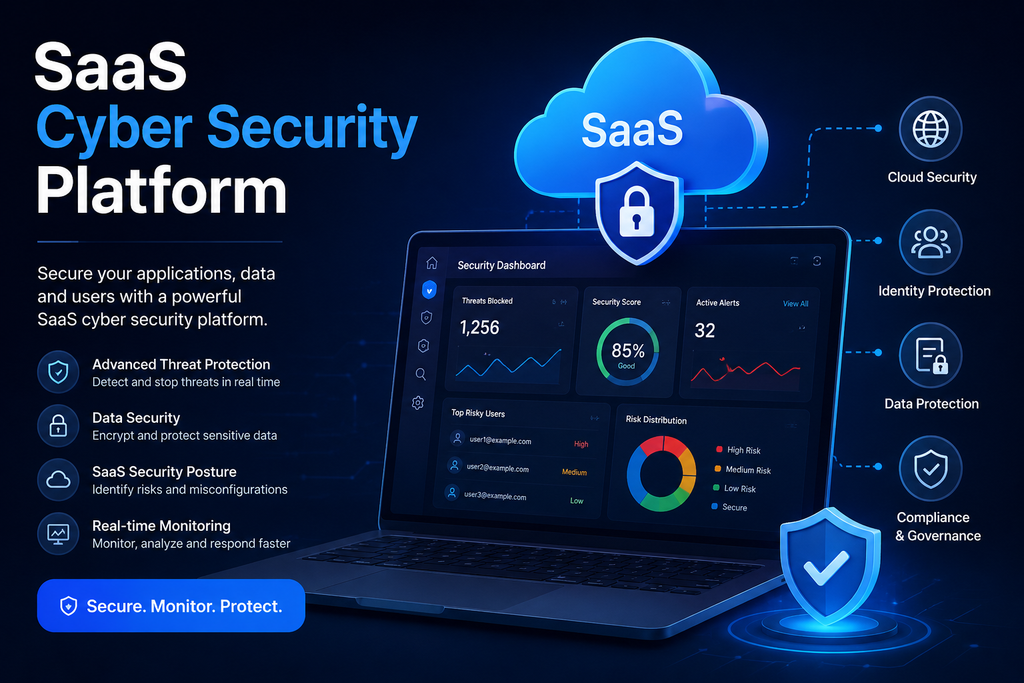
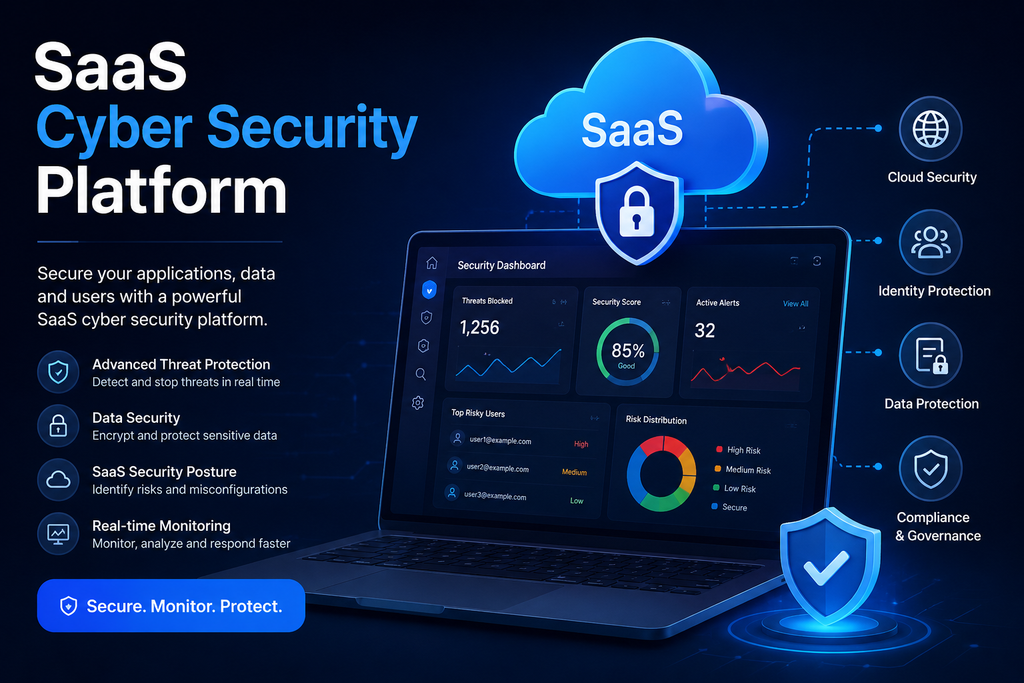
SaaS cyber security platform protecting cloud business data in 2026

What A SaaS Cyber Security Platform Actually Is

A saas cyber security platform is a cloud based security solution built specifically to protect the software as a service applications a business relies on every day, tools like email, file sharing, customer relationship management systems, project management software, and collaboration platforms. Unlike traditional network security tools that focus on protecting a physical perimeter or an on premise server room, a saas cyber security platform focuses on the identity, data, and configuration layer of cloud applications, because that is where most modern attacks actually happen. Every business that stores data in the cloud, runs applications through browser based tools, or relies on subscription software is already living inside a saas environment, whether that was a deliberate strategy or something that happened gradually as teams adopted new tools on their own. In 2026, with hybrid work now the default and the average mid sized company running well over one hundred saas applications, having a dedicated layer of protection for this environment is no longer optional, it is one of the most important investments a company can make to avoid breaches, compliance failures, and reputational damage.

Why Traditional Security Tools Fall Short In A SaaS World

The reason this category has grown so quickly is simple, traditional firewalls and endpoint tools were never designed to see inside a cloud application. They cannot tell you whether an employee shared a sensitive spreadsheet with an external account, whether a former contractor still has admin access to your customer database, or whether a third party integration has permissions far beyond what it actually needs. A saas cyber security platform closes that visibility gap by continuously scanning app configurations, user permissions, and data sharing settings, then flagging anything that deviates from a safe baseline. For a company operating in 2026, where saas sprawl is the norm rather than the exception, this kind of continuous oversight is what separates organizations that catch a problem in minutes from those that discover it months later during a breach investigation, often after real damage has already occurred.

How A SaaS Cyber Security Platform Works Behind The Scenes

Most saas cyber security platforms operate on a similar core model, even though individual vendors differ in depth and specialization. The process generally starts with discovery, where the platform connects to your cloud identity provider and application ecosystem to build a live inventory of every saas tool being used across the organization, including tools that were never formally approved by IT, often referred to as shadow IT. Once the inventory is built, the platform moves into continuous monitoring, checking configurations against security benchmarks, watching for risky permission changes, and tracking how data moves between applications and external parties. Many platforms also monitor user behavior, looking for signs of a compromised account such as impossible travel logins, unusual download volumes, or access attempts outside normal working hours. The third stage is response, where the platform can alert the security team, automatically revoke risky access, or in more advanced setups trigger a predefined workflow that isolates the affected account until it has been reviewed. This combination of discovery, monitoring, and automated response is what allows a lean security team to protect a sprawling saas environment without needing to manually audit every app one at a time.

Top Threats A SaaS Cyber Security Platform Helps You Prevent

Account takeover remains one of the most common entry points for attackers, usually achieved through stolen credentials, phishing, or password reuse, and a saas cyber security platform helps here by enforcing strong authentication policies and flagging login behavior that does not match a user’s normal pattern. Misconfigurations are another major risk, since it is extremely common for a well meaning employee to accidentally set a shared folder to public, or for an admin to leave a legacy integration with broader permissions than necessary, and these platforms continuously scan for exactly this kind of drift before it becomes a public exposure event. Third party app risk has grown significantly as businesses connect dozens of smaller tools into their core saas stack through OAuth permissions, and a saas cyber security platform tracks every connected application and the scope of access it holds, which matters because attackers increasingly target these smaller, less monitored integrations as a backdoor into larger systems. Insider threats and offboarding gaps also cause real damage, since when an employee leaves a company their access across dozens of saas tools needs to be revoked quickly and completely, and without automated tracking it is easy for a departed employee account to remain active in a forgotten corner of the environment for weeks or months. Data leakage through oversharing is a quieter but equally persistent problem, where files shared externally without proper restrictions or public links left active long after they were needed create exposure that a saas cyber security platform is specifically designed to catch.

Key Features Worth Prioritizing In A SaaS Cyber Security Platform

Continuous configuration monitoring should sit at the core of any serious platform, since misconfigurations are the most common cause of saas related incidents, and a strong solution checks settings against recognized security benchmarks while updating that baseline as new threats emerge. Identity and access visibility is equally important, since the platform should show exactly who has access to what across every connected application and make it easy to spot excessive or unused permissions. Shadow IT discovery is a feature that often gets overlooked but delivers enormous value, because a security team cannot protect an application it does not know exists, and a strong platform should automatically surface every saas tool in use, approved or not. Third party app risk scoring helps prioritize which connected integrations deserve the closest attention, since not every OAuth connected app carries the same level of risk to the business. Automated remediation workflows separate basic monitoring tools from truly effective platforms, since being alerted to a problem is useful, but being able to automatically revoke a risky permission or disable a compromised account without waiting for manual intervention is what actually reduces the window of exposure. Compliance mapping is another feature worth prioritizing, particularly for companies that need to demonstrate adherence to frameworks like SOC 2, ISO 27001, or industry specific regulations, since a platform that maps findings directly to these frameworks saves significant time during audits.

Best Practices And Common Mistakes When Adopting A SaaS Cyber Security Platform

Buying the right platform is only half the equation, how a company implements and maintains it determines whether it actually reduces risk. Start by building a complete inventory before configuring policies, since setting security rules before knowing what applications exist in the environment usually leads to gaps. Assign clear ownership for reviewing alerts, integrate the platform with your identity provider so offboarding is reflected automatically, and review third party app permissions on a recurring schedule rather than only at the point of initial connection. On the mistake side, one of the most frequent errors is choosing a platform based purely on the number of integrations it supports without evaluating the depth of monitoring for the applications that matter most. Another common error is treating the platform as a set and forget tool, configuring initial policies and rarely revisiting them even as the company adds new applications and users over time. Companies also frequently underestimate third party app governance, focusing heavily on core applications like email and file storage while ignoring the dozens of smaller connected tools that often carry outsized risk, and some organizations choose a platform without considering how well it maps to their compliance requirements, creating extra manual work later when audit season arrives.

How To Choose The Right SaaS Cyber Security Platform For Your Business

Choosing the right platform starts with understanding your own environment, so take stock of how many saas applications your teams actually use, including tools adopted informally by individual departments, since this shapes how much discovery capability you need from day one. Consider your compliance obligations early in the evaluation process, since a healthcare company, a financial services firm, and an early stage startup will have very different requirements, and the right platform should align closely with the frameworks relevant to your industry. Evaluate how each vendor handles automated remediation, since the speed at which a platform can act on a detected risk often matters more than the speed at which it detects the risk in the first place. Ask for a trial period that reflects your real environment rather than a demo built around a simplified sample account, because saas environments vary enormously and a platform that looks impressive in a demo may behave differently once connected to your actual stack of applications. Finally, weigh the vendor support and onboarding experience heavily, since a saas cyber security platform is only as effective as the team ability to configure it correctly and respond to what it surfaces, so strong onboarding support often determines long term success more than any single feature on a spec sheet.

Frequently Asked Questions

What is a saas cyber security platform in simple terms?

A saas cyber security platform is a cloud based tool that monitors and protects the software as a service applications a business uses, focusing on identity, data sharing, and configuration risks rather than traditional network perimeter defense.

How is a saas cyber security platform different from a traditional firewall?

A traditional firewall protects a network perimeter, while a saas cyber security platform focuses on what happens inside cloud applications themselves, including permissions, data sharing, and user behavior across dozens of connected tools.

Do small businesses need a saas cyber security platform?

Yes, small businesses often rely heavily on cloud tools with limited dedicated security staff, which makes automated monitoring especially valuable for catching misconfigurations and risky access before they become incidents.

Can a saas cyber security platform prevent phishing attacks?

It cannot stop a phishing email from arriving, but it can detect the unusual login behavior that follows a successful phishing attempt, which allows a security team to respond before real damage occurs.

How long does it take to implement a saas cyber security platform?

Initial discovery and connection to core applications typically takes a few days to a few weeks, though building out fully tuned policies and remediation workflows is usually an ongoing process over the following months.

What industries benefit most from a saas cyber security platform?

Any industry handling sensitive customer data benefits significantly, though healthcare, financial services, legal, and technology companies tend to see the fastest return due to strict compliance requirements and high value data.

Is a saas cyber security platform the same as a cloud access security broker?

They overlap in some functions, but a saas cyber security platform typically goes further by including configuration monitoring, third party app risk scoring, and automated remediation across the full saas ecosystem rather than focusing narrowly on access control.

How much does a saas cyber security platform typically cost?

Pricing varies widely based on the number of users and applications monitored, with most vendors using a per user or per application pricing model, so businesses should request a quote based on their actual environment.

Can a saas cyber security platform help with compliance audits?

Yes, many platforms map their findings directly to frameworks like SOC 2 and ISO 27001, which significantly reduces the manual work required to prepare evidence during an audit.

What is the biggest risk of not using a saas cyber security platform?

The biggest risk is losing visibility into your own environment, since without continuous monitoring, misconfigurations, excessive permissions, and risky third party apps can go unnoticed for months before they lead to a breach.

Conclusion

The rise of cloud based work has made every business a saas company in some form, whether that was intentional or not, and the security risks that come with that shift are not going away in 2026. A saas cyber security platform gives organizations the visibility and control needed to manage that risk without overwhelming a security team that is already stretched thin. From catching dangerous misconfigurations to tracking third party app permissions and automating access revocation during offboarding, these platforms address the specific gaps that traditional security tools were never built to cover. Choosing the right one comes down to understanding your own environment, prioritizing depth over feature count, and treating implementation as an ongoing process rather than a one time setup. Businesses that make this investment early put themselves in a far stronger position to prevent the kind of quiet, slow building exposure that eventually turns into a costly breach, and it is worth revisiting your saas cyber security platform strategy regularly as your application stack keeps growing.

Key Takeaways

A saas cyber security platform protects the identity, data, and configuration layer of cloud applications rather than a traditional network perimeter Common threats these platforms defend against include account takeover, misconfigurations, risky third party integrations, insider threats, and data oversharing The most valuable features include continuous configuration monitoring, identity visibility, shadow IT discovery, third party risk scoring, and automated remediation Successful implementation depends on clear ownership of alerts, regular policy review, and integration with your identity provider Choosing the right platform requires understanding your own saas footprint, your compliance obligations, and how quickly each vendor can act on detected risks, not just how many integrations it supports

SaaS Security A Complete Guide for 2026

Learn what SaaS security really involves, how to evaluate vendors, avoid common mistakes and build a strong security program in this complete guide.

saas security

SaaS Security A Complete Guide to Protecting Your Cloud Applications

Every SaaS company eventually reaches a point where a customer, investor, or compliance auditor asks a pointed question about how data is protected. That moment is often the first time a growing company realizes that SaaS security is not a single feature to bolt on but an ongoing discipline that touches engineering, operations, legal, and customer trust simultaneously. As more business critical workflows move to cloud based software, buyers have grown far more sophisticated about evaluating the security posture of the tools they adopt, and companies that treat security as an afterthought increasingly lose deals to competitors who can answer security questions with confidence.

This guide is written for founders, security leads, and product teams at SaaS companies who need a practical understanding of what SaaS security actually involves, not a vague overview repeating industry buzzwords. Readers researching this topic typically fall into a few groups. Some are early stage founders trying to understand what security investments matter before their first enterprise sale. Others are security or engineering leaders building out a formal program and looking for a structured checklist. And some are buyers evaluating a SaaS vendor and trying to understand what questions actually matter. This article addresses all three by covering the technical, procedural, and compliance dimensions of SaaS security in depth.

What SaaS Security Actually Covers

SaaS security refers to the practices, tools, and policies used to protect data, infrastructure, and user access within a cloud delivered software application. Unlike traditional on premise software where a company controls its own servers and network perimeter, SaaS security operates in a shared responsibility model. The cloud infrastructure provider, such as a major cloud platform, secures the underlying physical infrastructure, while the SaaS vendor is responsible for securing the application itself, its configuration, and how customer data is handled within it. Understanding where that line sits is one of the most common points of confusion for teams new to this space.

This shared model means SaaS security spans several interconnected areas including identity and access management, data encryption, application security, infrastructure configuration, incident response, and regulatory compliance. A weakness in any one of these areas can undermine the others, which is why mature SaaS security programs treat these as one integrated system rather than isolated checkboxes.

Why SaaS Security Has Become a Board Level Priority

A decade ago security was frequently treated as a cost center that companies invested in reluctantly. That has shifted dramatically as high profile breaches at well known SaaS companies demonstrated how quickly customer trust and revenue can evaporate after an incident. Enterprise buyers now routinely require a completed security questionnaire, a SOC 2 report, or evidence of specific controls before signing a contract, which means weak security posture directly blocks revenue rather than simply representing abstract risk.

Regulatory pressure has intensified this shift further. Depending on the industries a SaaS company serves, frameworks such as GDPR, HIPAA, or various state level privacy laws impose specific legal obligations around how customer data is stored, processed, and disclosed in the event of a breach. Non compliance can result in significant fines and reputational damage that far exceeds the cost of building proper controls from the start.

Investors have also grown more security conscious during due diligence, particularly at growth stage and later funding rounds, where a security assessment increasingly forms part of the standard diligence process alongside financial and legal review. Companies that can point to a documented and mature security program often move through diligence faster and with fewer downstream conditions attached to the deal.

Core Pillars of a Strong SaaS Security Program

Identity and access management sits at the foundation of most SaaS security programs because the majority of breaches originate from compromised credentials rather than sophisticated technical exploits. Implementing single sign on, enforcing multi factor authentication, and applying the principle of least privilege so that employees and integrations only access the data strictly necessary for their role dramatically reduces the attack surface available to an intruder.

Data encryption protects information both at rest and in transit. Encrypting data at rest ensures that even if underlying storage is somehow accessed inappropriately, the data itself remains unreadable without the proper decryption keys. Encrypting data in transit using current TLS standards prevents interception as data moves between a user’s browser and your servers or between internal services. Key management practices, including how encryption keys are rotated and who has access to them, deserve just as much attention as the encryption itself since poorly managed keys undermine even strong encryption algorithms.

Application security involves building security considerations directly into the software development lifecycle rather than testing for vulnerabilities only after code ships. This includes secure code review practices, automated static and dynamic application security testing, dependency scanning to catch vulnerable third party libraries, and regular penetration testing conducted by qualified external firms. Companies that treat application security as a continuous process embedded in engineering workflows consistently catch far more issues than those relying solely on periodic external audits.

Infrastructure security covers how cloud environments are configured, including network segmentation, firewall rules, and monitoring for misconfigurations that could expose data unintentionally. Cloud misconfiguration remains one of the leading causes of data exposure incidents, often stemming from a storage bucket or database left accessible without proper access controls rather than a sophisticated attack.

Incident response planning ensures a company can react quickly and effectively when something does go wrong. This includes having a documented response plan, clearly assigned roles during an incident, and a tested communication process for notifying affected customers and regulators within legally required timeframes. Companies that only think through incident response after an actual breach occurs consistently respond slower and less effectively than those with a rehearsed plan.

Common SaaS Security Mistakes Companies Make

One of the most frequent mistakes is treating security as a project with a defined end date rather than an ongoing operational discipline. Companies sometimes complete a security audit, address the findings, and then let practices lapse until the next audit cycle, creating a pattern of reactive rather than continuous improvement.

Overprivileged access is another persistent problem, particularly as companies scale and employees change roles without their access permissions being updated accordingly. Regular access reviews that verify each employee and integration only retains the permissions they currently need prevent this kind of privilege creep from accumulating unnoticed over time.

Many companies also underinvest in vendor and third party risk management. A SaaS product often integrates with numerous third party services and subprocessors, and a security weakness in any of those dependencies can expose your customers’ data even if your own systems are well protected. Maintaining an inventory of third party integrations along with periodic review of their security posture closes a gap that attackers increasingly target directly.

Delayed patching represents a surprisingly common vulnerability given how well understood the risk is. Known vulnerabilities in dependencies or infrastructure components that remain unpatched for extended periods provide an easy entry point for attackers using automated scanning tools that specifically search for outdated and exploitable software versions.

Finally, many early stage companies delay pursuing formal compliance certifications like SOC 2 until an enterprise deal specifically requires it, which often means scrambling to build controls retroactively under deadline pressure rather than establishing them as standard practice from the beginning. Starting the compliance journey earlier, even informally, tends to produce a more mature and defensible security posture over time.

How to Evaluate the Security of a SaaS Vendor

Buyers evaluating a SaaS vendor should request specific evidence rather than accepting vague assurances about security being a top priority. A current SOC 2 Type II report or equivalent independent audit provides concrete evidence that controls have been tested over time rather than simply documented on paper. Asking directly about data encryption practices, where data is physically stored, and what subprocessors have access to customer data gives buyers a clearer picture of actual data handling than marketing materials typically provide.

Understanding a vendor’s incident response history and communication practices matters as well. Asking how a vendor has handled past security incidents, even minor ones, reveals more about their operational maturity than asking whether they have ever experienced a breach. Companies with mature programs tend to be transparent about past incidents and the specific improvements made afterward.

Reviewing a vendor’s data deletion and retention policies is particularly important for companies operating under strict regulatory requirements, since understanding exactly what happens to your data if you cancel a subscription, and how quickly it is permanently deleted, prevents unpleasant surprises later.

Compliance Frameworks Relevant to SaaS Companies

SOC 2 has become something close to a baseline expectation for SaaS companies selling to enterprise customers in the United States, evaluating controls across security, availability, processing integrity, confidentiality, and privacy depending on which trust service criteria a company chooses to include in its audit scope.

ISO 27001 serves a similar purpose internationally and is often specifically requested by customers based outside the United States, providing a globally recognized framework for information security management systems.

GDPR applies to any company processing personal data of individuals within the European Union regardless of where the company itself is based, imposing specific requirements around consent, data subject rights, and breach notification timelines that differ meaningfully from United States regulatory approaches.

HIPAA compliance becomes relevant specifically for SaaS companies handling protected health information within the United States healthcare system, requiring specific technical and administrative safeguards along with signed business associate agreements with covered entities.

Choosing which frameworks to pursue should be driven directly by the industries and geographies a company sells into rather than pursuing every available certification simultaneously, since compliance work represents real ongoing resource investment that should be prioritized strategically.

Building a Security Aware Culture Across Your Company

Technical controls alone cannot fully protect a SaaS company if employees are not equally security conscious in their daily behavior. Regular security awareness training that goes beyond a single onboarding session and includes periodic phishing simulations helps employees recognize social engineering attempts, which remain one of the most common ways attackers gain initial access to otherwise well protected systems.

Making security a visible priority from leadership downward, rather than treating it purely as an engineering or IT concern, encourages employees across sales, customer support, and other departments to flag suspicious activity rather than assuming security is someone else’s responsibility entirely. Companies that successfully build this kind of shared ownership consistently detect and respond to potential issues faster than those where security remains siloed within a single team.

The Future of SaaS Security

Artificial intelligence is increasingly being used both offensively and defensively within the SaaS security landscape, with attackers using AI to craft more convincing phishing content while security teams use similar technology to detect anomalous behavior patterns across large volumes of user activity that would be impossible to review manually. Companies evaluating security tooling should expect this trend to accelerate and should ask vendors specifically how AI is being used within their own detection and monitoring systems.

Zero trust architecture continues gaining adoption as the standard approach to modern SaaS security, moving away from the older assumption that anything inside a network perimeter can be trusted by default, and instead requiring continuous verification of every user and device attempting to access resources regardless of their network location.

Frequently Asked Questions

What is SaaS security in simple terms?

SaaS security refers to the practices and tools used to protect data, user access, and infrastructure within cloud based software applications, covering areas like encryption, identity management, and compliance.

Who is responsible for security in a SaaS shared responsibility model?

Cloud infrastructure providers secure the underlying physical infrastructure, while SaaS vendors are responsible for securing the application itself, its configuration, and how customer data is handled within it.

Why do enterprise buyers require SOC 2 reports from SaaS vendors?

A SOC 2 report provides independently audited evidence that a vendor’s security controls have been tested and operate effectively over time, giving enterprise buyers confidence beyond marketing claims alone.

What is the most common cause of SaaS security breaches?

Compromised credentials and cloud misconfigurations, rather than sophisticated technical exploits, remain the most common root causes behind SaaS security incidents.

How often should a SaaS company conduct penetration testing?

Most mature SaaS companies conduct penetration testing at least annually, with additional testing after significant architectural changes or before major product launches.

Does a small SaaS startup need SOC 2 compliance immediately?

Not necessarily immediately, but beginning to build relevant controls early makes pursuing formal certification significantly easier once enterprise customers begin requiring it during sales negotiations.

What is the difference between GDPR and HIPAA compliance?

GDPR governs personal data of individuals within the European Union across all industries, while HIPAA specifically governs protected health information within the United States healthcare system.

How does multi factor authentication improve SaaS security?

Multi factor authentication requires a second verification step beyond a password, significantly reducing the risk of unauthorized access even when a password has been compromised through phishing or a data breach.

What should a company include in an incident response plan?

An effective incident response plan should include clearly assigned roles, defined escalation procedures, a communication plan for notifying affected customers and regulators, and a process for conducting a post incident review.

How can a SaaS company evaluate the security risk of third party integrations?

Companies should maintain an inventory of all third party integrations and subprocessors, review their security certifications periodically, and limit the data shared with each integration to only what is operationally necessary.

Conclusion

SaaS security is not a single product a company purchases or a checkbox completed before a compliance audit. It is an ongoing discipline spanning identity management, encryption, application development practices, infrastructure configuration, and organizational culture that must evolve continuously as a company grows and as the threat landscape shifts. Companies that treat SaaS security as a core operational function rather than a reactive afterthought consistently close enterprise deals faster, retain customer trust more effectively, and avoid the significant financial and reputational cost of a preventable security incident.

Key Takeaways

SaaS security operates under a shared responsibility model where cloud providers secure infrastructure while vendors secure their application and data handling practices. Identity and access management, encryption, and application security form the foundational pillars most SaaS companies should prioritize first. Common mistakes include treating security as a one time project, overprivileged access accumulating unnoticed, and delaying compliance work until an enterprise deal specifically demands it. Buyers evaluating vendors should request concrete evidence such as a current SOC 2 report rather than accepting general assurances. Building a security aware culture across the entire company, not just the engineering team, meaningfully improves how quickly potential issues are detected and addressed.

Get Your FREE SEO Audit

Enter your details below. Our team will review your website and email you a comprehensive SEO and speed report within 24 hours.