Learn how enterprise saas seo drives long term organic growth with technical strategy content clustering link building and revenue focused reporting.
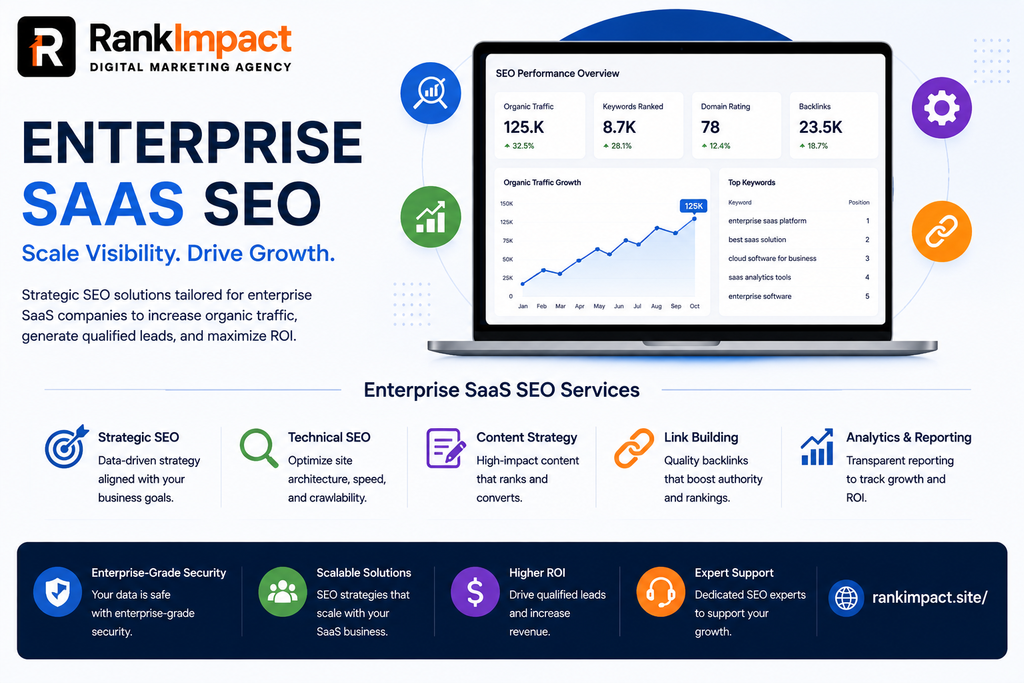
Table of Contents
What Makes Enterprise SaaS SEO Different
Enterprise SaaS SEO differs from standard SEO in several important ways that shape almost every decision a team makes. First, the scale of the website itself creates technical challenges that smaller sites never encounter, since a platform with hundreds of product pages, integration pages, and documentation sections needs careful architecture just to keep search engines crawling efficiently. Second, the buying process for enterprise software typically involves multiple stakeholders including end users, department heads, procurement teams, and executives, which means content needs to speak to several different search intents across a single buying journey rather than targeting one persona. Third, enterprise SaaS companies usually compete in crowded, well funded markets where competitors are already investing heavily in content and links, so incremental improvements rarely move the needle and a more comprehensive topical strategy becomes necessary. Finally, internal approval processes at large companies often slow down publishing and technical changes, meaning SEO teams need to build workflows and stakeholder buy in that smaller companies simply do not have to worry about.
Building a Technical SEO Foundation for Large SaaS Sites
Technical SEO becomes exponentially more important as a website grows, because small inefficiencies multiply across thousands of pages instead of staying contained to a handful. A large SaaS company with a poorly structured site architecture might have its most valuable comparison pages buried five or six clicks deep from the homepage, which makes it harder for search engines to understand their importance and harder for users to find them naturally. Fixing this typically starts with building a clear content hub structure, where core topics have a central pillar page linked to and from dozens of supporting subtopic pages, creating obvious signals about which pages matter most. Site speed also becomes a bigger factor at enterprise scale, since a slow loading product page can quietly suppress rankings across an entire section of the site if the underlying template or server configuration is not optimized properly. Crawl budget management matters too, particularly for platforms with dynamically generated pages like user generated content, filtered search results, or large documentation libraries, since search engines can waste their limited crawling resources on low value pages instead of prioritizing the ones driving real business impact. Regular technical audits covering indexation, canonical tags, structured data, and internal linking should become a recurring quarterly habit rather than a one time project.
Keyword Research for Complex Buying Journeys
Keyword research for enterprise SaaS looks very different from keyword research for a simple product or local service, mainly because a single buying journey often spans dozens of related search queries across weeks or months. A company selling enterprise data security software needs to think beyond just their product category keywords and consider the full spectrum of queries a buyer might search, starting with broad problem awareness terms like data breach prevention, moving into solution comparison terms like enterprise data security platforms, and eventually reaching very specific product evaluation terms like a direct comparison against a named competitor. Building keyword clusters around these different stages helps content teams map out what to create and when, rather than randomly targeting whatever keyword tool suggests the highest search volume. It also helps to research the specific language used by different personas involved in the buying committee, since a technical implementation lead searches very differently than a chief financial officer evaluating return on investment, and content that only speaks to one persona misses opportunities to influence the rest of the committee. Long tail, highly specific queries often deserve more attention in enterprise SaaS than in other industries, because these searches frequently indicate a buyer much closer to a purchase decision even though the search volume looks small on paper.
Content Strategy That Builds Topical Authority
Topical authority has become one of the strongest ranking signals for competitive SaaS categories, and building it requires covering a subject area with real depth rather than publishing scattered blog posts around a keyword list. An enterprise project management software company aiming to rank for topics related to workflow automation should not just publish one article on the subject, but instead build out a full content cluster covering related subtopics like automation best practices, common automation mistakes, industry specific automation use cases, and comparisons between different automation approaches. This kind of comprehensive coverage signals to search engines and to readers that the company genuinely understands the subject rather than treating it as a marketing checkbox. Case studies and customer success stories deserve special attention in enterprise SaaS content strategy, since they combine strong search intent alignment with genuine trust building, particularly for readers evaluating a significant financial and operational commitment. Comparison pages, when written honestly rather than as thinly veiled sales pitches, also tend to perform extremely well because they directly match the research behavior of buyers deep in the evaluation stage, and search engines increasingly reward content that provides a balanced, useful comparison over one that obviously favors the publisher.
Earning Authoritative Backlinks at Enterprise Scale
Link building for enterprise SaaS companies benefits enormously from existing brand assets that smaller companies do not have access to, including original research, industry data, executive thought leadership, and partnership opportunities with other established brands. Publishing original research, such as an annual industry benchmark report based on proprietary product usage data, tends to earn significant organic backlinks because journalists and other content creators need credible data sources to cite, and a well promoted original study can continue earning links for years after publication. Digital public relations focused on securing mentions in respected industry publications also performs well at enterprise scale, particularly when tied to genuine company news, product launches, or executive commentary on industry trends rather than generic pitches. Strategic partnerships between complementary SaaS companies, where each business publishes co branded content or integration guides, create natural linking opportunities that also introduce each brand to a new relevant audience. It is worth noting that link building at this level should always prioritize genuine relevance and authority over volume, since a handful of links from respected industry sources will move rankings further than dozens of low quality directory or guest post links.
Aligning SEO With the Full Customer Journey
One of the biggest opportunities in enterprise SaaS SEO comes from mapping content directly onto every stage of the customer journey rather than concentrating almost entirely on top of funnel blog content. Early stage content addressing broad industry problems helps capture demand from buyers who do not yet know a specific solution category exists, while middle stage content comparing approaches and solutions helps guide buyers as they narrow down their options. Late stage content, including detailed product pages, integration documentation, security and compliance information, and customer case studies, directly supports the final purchase decision and often gets overlooked by SEO teams who focus primarily on blog traffic. Post purchase content also deserves SEO attention in enterprise SaaS, since help documentation, onboarding guides, and best practice resources that rank well can reduce support costs while also building the kind of comprehensive site authority search engines reward. Aligning content investment across this entire journey, rather than concentrating almost exclusively on awareness stage blog posts, tends to produce a much stronger return on SEO investment for enterprise organizations.
Measuring What Actually Matters
Enterprise SaaS SEO reporting needs to move beyond simple traffic and ranking metrics toward measures that connect directly to business outcomes, particularly because executive stakeholders evaluating SEO investment want to see revenue impact rather than vanity metrics. Tracking organic traffic by funnel stage, rather than as one combined number, helps teams understand whether growth is coming from broad awareness content or from the higher intent pages that more directly influence pipeline. Assisted conversions and multi touch attribution models matter enormously in enterprise SaaS, since a typical buying journey involves multiple touchpoints across weeks or months, and crediting only the final touch before a demo request badly understates the true impact of earlier content that started the buyer research process. Tracking rankings for specific high value keyword clusters tied to revenue generating pages, rather than tracking hundreds of low value keywords, gives a clearer signal of whether SEO investment is moving the metrics that matter to the business. Building a regular reporting cadence that connects organic performance to pipeline and closed revenue, even through imperfect attribution models, is what ultimately earns SEO teams continued investment and internal support at the enterprise level.
Common Mistakes Enterprise SaaS Companies Make With SEO
A frequent mistake among enterprise SaaS companies is treating SEO as a purely content driven function while neglecting the technical foundation that determines whether that content ever gets properly indexed and ranked. Another common error is publishing content in isolated silos without building the internal linking structure that helps search engines and readers understand how topics relate to one another, which leaves genuinely strong content underperforming simply because it lacks contextual support. Many enterprise teams also fall into the trap of optimizing almost exclusively for top of funnel awareness content because it is easier to produce at scale, while neglecting the middle and bottom of funnel pages that more directly influence revenue. Slow internal approval processes represent a uniquely enterprise problem, where SEO recommendations sit in review for months, allowing competitors to capture search visibility during the delay. Finally, many organizations underinvest in technical SEO maintenance, treating it as a one time audit rather than an ongoing discipline, which allows preventable issues like broken redirects, duplicate content, and crawl budget waste to quietly accumulate and suppress performance over time.
Best Practices for Long Term Enterprise SEO Success
Enterprise SaaS companies that sustain long term organic growth typically treat SEO as a cross functional discipline rather than an isolated marketing task, involving product, engineering, and sales teams in strategy decisions that affect their areas. Building a content governance process that ensures consistency in quality, tone, and technical implementation across a large team of writers and contributors prevents the common problem of inconsistent content quality that can dilute topical authority. Investing in a strong internal linking strategy, revisited regularly as new content gets published, helps distribute authority throughout the site and ensures new pages get discovered and indexed quickly. Prioritizing update and refresh cycles for existing high performing content, rather than only focusing on new publication, protects rankings that would otherwise decay as competitors publish more current information. Finally, building genuine internal alignment between SEO goals and broader business objectives, backed by clear reporting tied to pipeline and revenue, is what ultimately secures the long term investment enterprise SEO strategies need to fully mature and compound over multiple years.
How Enterprise SaaS SEO Differs Across Business Models
Product led growth companies, where users can sign up and start using the software without talking to sales, tend to benefit most from content optimized around product education, comparison pages, and use case specific landing pages that support self service evaluation. Sales led enterprise companies, where deals require direct engagement with an account executive, typically see more value from content that supports the sales process itself, including detailed case studies, security and compliance documentation, and content addressing objections that come up during sales conversations. Companies serving multiple industry verticals often find success building industry specific content clusters, since a healthcare focused buyer and a financial services buyer search using different terminology and prioritize different concerns even when evaluating similar software categories. Platforms with a strong developer audience should not overlook technical documentation and integration guides as genuine SEO assets, since these pages often rank well for highly specific technical queries and build credibility with a technically sophisticated buying audience that heavily influences purchase decisions.
Frequently Asked Questions
What is enterprise saas seo?
Enterprise saas seo refers to the search engine optimization strategies used by larger software as a service companies to increase organic visibility across complex websites, multiple buyer personas, and longer sales cycles compared to smaller businesses.
How is enterprise SEO different from regular SEO?
Enterprise SEO differs mainly in scale and complexity, involving larger websites, more stakeholders, longer approval processes, and content strategies that need to address multiple buyer personas across a much longer decision making journey.
How long does enterprise SaaS SEO take to show results?
Most enterprise SaaS companies begin seeing measurable organic growth within six to twelve months, though competitive categories and larger technical fixes can take longer to fully compound into significant ranking and traffic improvements.
What are the most important ranking factors for enterprise SaaS websites ?
Technical site health, comprehensive topical coverage, high quality backlinks from relevant industry sources, and content that directly matches search intent across every stage of the buying journey are among the most important ranking factors.
Should enterprise SaaS companies focus on blog content or product pages?
Enterprise SaaS companies should invest in both, since blog content captures early stage research traffic while product and comparison pages more directly influence buyers closer to a purchase decision.
How important is technical SEO for large SaaS websites?
Technical SEO becomes increasingly important as a website scales, since crawl budget issues, poor site architecture, and slow page speed can suppress rankings across thousands of pages if left unaddressed.
What role does content clustering play in enterprise SaaS SEO?
Content clustering helps build topical authority by organizing related subtopics around a central pillar page, which signals depth of expertise to search engines and improves internal linking and user navigation.
How do you measure ROI from enterprise SaaS SEO?
ROI is best measured by connecting organic traffic and rankings to pipeline influence and closed revenue through multi touch attribution, rather than relying solely on traffic or keyword ranking numbers alone.
Do enterprise SaaS companies need dedicated in house SEO teams?
Many enterprise SaaS companies benefit from a combination of in house strategic ownership and specialized external support for technical audits, content production, or link building, depending on internal resource availability.
What is the biggest challenge in enterprise SaaS SEO?
The biggest challenge is usually coordinating across multiple teams and approval layers while maintaining consistent execution, since enterprise organizations often move slower than the competitive search landscape requires.
Conclusion
Enterprise saas seo demands a fundamentally different approach than the strategies that work for smaller websites, largely because of the scale, complexity, and multiple stakeholders involved in both the buying journey and the internal execution process. Building a strong technical foundation, developing keyword strategy around complex buying committees, creating genuinely comprehensive topical authority, and earning authoritative backlinks all play essential roles in sustainable organic growth at this level. Just as important is aligning SEO investment with measurable business outcomes and building the internal collaboration needed to execute consistently despite the natural friction that comes with operating at enterprise scale. Companies that treat SEO as a long term compounding investment, supported by cross functional alignment and consistent technical maintenance, are the ones that build organic growth engines capable of driving real pipeline and revenue over time.
Key Takeaways
Enterprise saas seo requires strategies built for large scale websites, complex buying committees, and longer sales cycles rather than tactics borrowed from smaller business SEO playbooks.
A strong technical foundation, including site architecture, crawl budget management, and page speed, becomes increasingly critical as a SaaS website scales in size.
Keyword research should map to every stage of a complex buying journey and account for the different personas involved in enterprise purchase decisions.
Building genuine topical authority through comprehensive content clusters outperforms scattered blog posts targeting isolated keywords.
Earning backlinks through original research, digital public relations, and strategic partnerships tends to outperform high volume, low quality link building tactics.
Measuring SEO success through pipeline and revenue impact, not just traffic and rankings, is essential for securing long term organizational investment.
The most common mistakes include neglecting technical SEO, focusing too heavily on top of funnel content, and allowing slow internal processes to delay execution while competitors move faster.