Exploring construction project manager jobs? Get real salary ranges qualifications job outlook and where the best opportunities are right now.
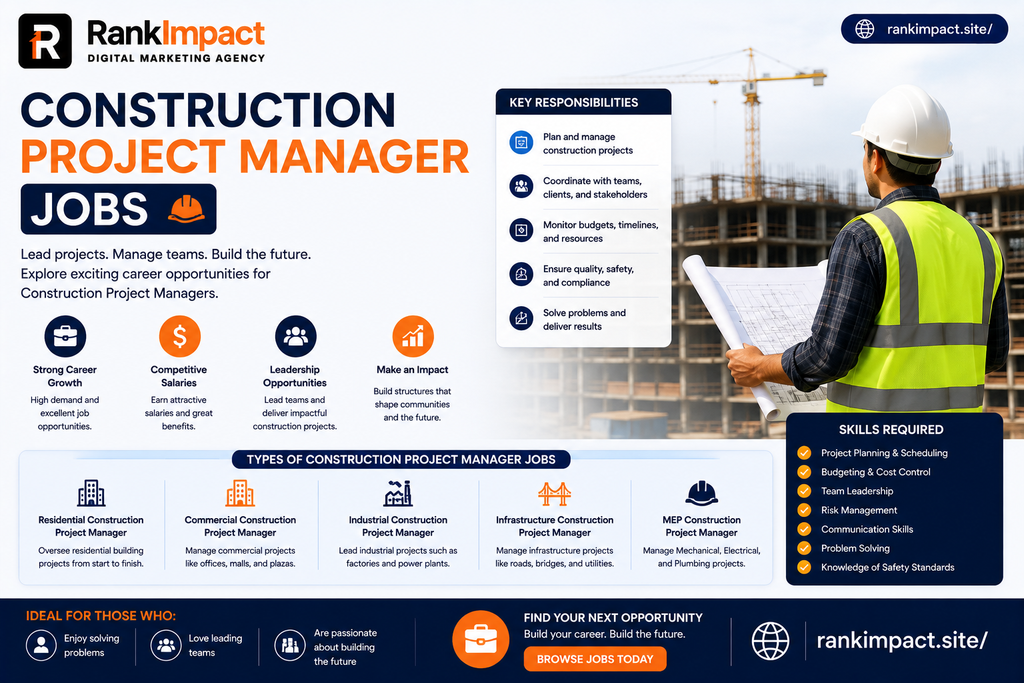
Table of Contents
What A Construction Project Manager Actually Does Day To Day
A construction project manager is the person responsible for making sure a building project gets finished on time, within budget, and up to the required quality and safety standards. This sounds simple in one sentence, but the actual job touches nearly every part of a construction site and the business behind it. On any given day, a construction project manager might review blueprints with an architect in the morning, negotiate a material delivery delay with a supplier by early afternoon, walk the job site to check progress against the schedule, and close the day reviewing budget reports to catch cost overruns before they grow into serious problems.
The role sits at the intersection of technical construction knowledge and business management skill. A good construction project manager needs to understand structural concepts well enough to catch a scheduling conflict between the electrical and plumbing crews, but also needs strong enough communication skills to explain a budget shortfall to a client without losing their confidence. This dual skill set is exactly why the role commands strong pay relative to many other management positions, since very few people are equally comfortable on a job site and in a boardroom.
How Much Construction Project Manager Jobs Actually Pay
Salary is usually the first thing people want to know, and the honest answer is that pay varies significantly depending on experience level, project size, and geography. National data clusters most consistently between 106,000 and 120,000 dollars annually for a typical construction project manager, with the Bureau of Labor Statistics reporting a median wage close to 107,000 dollars for the broader construction manager category. Entry level assistant project managers and project engineers usually start in the 55,000 to 75,000 dollar range, while experienced mid career project managers commonly earn between 95,000 and 135,000 dollars depending on the complexity of the projects they oversee.
At the senior end of the field, project managers overseeing large commercial developments, healthcare facilities, or infrastructure projects frequently earn between 135,000 and 185,000 dollars, and top performers in premium markets working on mission critical projects like data centers have reported total compensation exceeding 200,000 dollars. Geography plays a meaningful role in these numbers as well, with markets like California, New York, and major metro areas in Texas consistently paying above the national average due to higher construction costs and stronger project demand. Specialization also moves the number significantly, since commercial work tends to pay more than residential, infrastructure projects often pay a premium over standard commercial builds, and healthcare facility construction frequently commands the highest pay of all due to the specialized regulatory and technical requirements involved.
Job Outlook For Construction Project Managers
The employment outlook for this field is unusually strong compared to many management careers. The Bureau of Labor Statistics projects construction manager employment to grow around 9 percent through the early 2030s, which is considerably faster than the average growth rate across all occupations, with an estimated 45,800 openings expected each year when accounting for both new positions and retirements.
Several forces are driving this sustained demand. A wave of experienced project managers who entered the field decades ago are now retiring, leaving a real gap that newer professionals are stepping into faster than the industry can fully train replacements. Federal infrastructure investment programs have simultaneously increased the volume of large scale projects requiring experienced oversight, particularly in transportation, utilities, and broadband expansion. On top of that, entirely new categories of construction work, especially data center and healthcare facility construction, have created specialized demand for project managers comfortable working with complex technical requirements and tight regulatory compliance standards.
Qualifications And Education Needed To Get Hired
One of the more encouraging realities about construction project manager jobs is that a four year degree, while helpful, is not always a strict requirement. Many successful construction project managers worked their way up through the trades, starting as laborers or tradespeople, moving into site supervisor or foreman roles, and eventually transitioning into full project management positions after years of hands on experience. That said, a bachelor’s degree in construction management, civil engineering, or a related field does meaningfully accelerate the path for those who have access to that education, since it demonstrates formal knowledge of scheduling, cost estimation, and construction law that would otherwise take years to absorb on the job.
Certifications carry significant weight in this field regardless of educational background. The Certified Construction Manager credential and the Project Management Professional certification are both widely recognized by employers as proof of formal project management competency. For those earlier in their journey, entry level credentials focused specifically on construction fundamentals can serve as a stepping stone, providing enough foundational knowledge to land a project engineer or assistant project manager role that leads naturally into full project management responsibility after a few years of demonstrated performance.
Skills That Separate Strong Candidates From The Rest
Technical scheduling ability is table stakes for this role, but it is rarely what separates a good candidate from a great one. The professionals who consistently earn the higher end of the salary range tend to combine strong technical fundamentals with genuinely exceptional communication skills, since so much of the job involves translating problems between people who think in very different terms, including architects, tradespeople, clients, and financial stakeholders.
Proficiency with modern construction management software has also become a serious differentiator rather than a nice to have. Project managers fluent in Building Information Modeling software, digital scheduling platforms, and increasingly AI powered project forecasting tools are commanding premium pay, since these tools directly reduce costly scheduling conflicts and material waste that eat into project profitability. Risk anticipation is another underrated skill, since the project managers who consistently deliver projects on budget tend to be the ones who identify potential delays and cost overruns weeks before they become unavoidable, rather than reacting to problems only after they surface.
Where The Best Construction Project Manager Jobs Are Right Now
Geography matters more in this field than in many other management careers because construction activity is inherently tied to regional growth patterns. The Southwest and Southeast regions of the United States are currently seeing especially strong demand, driven by sustained population growth fueling large scale residential and infrastructure development. Major metro areas including New York, Los Angeles, Dallas, Houston, and Atlanta consistently post above average pay alongside high project volume, making them attractive markets for project managers willing to relocate or already based nearby.
Smaller and rural markets should not be dismissed either, since federal investment in utilities and broadband infrastructure is creating meaningful demand in areas that historically saw less construction activity. For project managers open to specialization, healthcare facility construction and data center development represent two of the fastest growing and highest paying niches in the entire field right now, often commanding a substantial premium over standard commercial or residential work due to the specialized technical and regulatory knowledge required.
Common Mistakes People Make When Pursuing This Career
A frequent mistake among career changers is underestimating how much hands on construction familiarity matters, even for a management position. Employers strongly prefer candidates who understand what actually happens on a job site, since a project manager who cannot recognize a realistic timeline for framing or electrical rough in will struggle to manage subcontractors credibly. Spending time on a job site or pursuing an entry level construction role before jumping straight into project management significantly improves long term success in the field.
Another common mistake is treating certifications as a replacement for demonstrated experience rather than a complement to it. A certification can absolutely help a resume stand out, but employers consistently favor candidates who can point to specific projects they helped deliver, even in a supporting role, over candidates with credentials alone and no practical track record.
Many aspiring project managers also underestimate the importance of software fluency, assuming that scheduling and budgeting knowledge alone is sufficient. In a field increasingly shaped by digital project management platforms and Building Information Modeling, candidates who cannot speak confidently about the tools their target employer uses are at a real disadvantage compared to those who have taken time to learn the relevant software before applying.
Finally, some candidates apply broadly without tailoring their approach to a specific project type or region, missing the reality that pay and opportunity vary enormously depending on specialization and geography. Researching which sectors are growing in a specific target market, whether that is healthcare construction in one region or infrastructure work in another, produces far better results than a generic job search approach.
Best Practices For Landing And Growing In This Career
Start by building relationships within the local construction community long before you need a job, since much of the hiring in this field still happens through referrals and reputation rather than cold applications alone. Attend local trade association events, connect with general contractors, and stay visible within your regional construction network.
Invest early in learning at least one major construction management software platform thoroughly, since this single skill consistently appears as a differentiator in job postings and interviews. Pursue a recognized certification once you have some practical experience under your belt, since certifications tend to carry more weight when paired with real project history rather than presented on their own. Track your accomplishments on every project you touch, even in a junior role, including specific budget figures, timeline improvements, or problems you personally helped solve, since these concrete details make a resume and interview far more compelling than generic descriptions of responsibility.
Finally, stay deliberately aware of which construction sectors are expanding in your region. A project manager willing to build expertise in a high growth niche like healthcare facilities or data center construction often finds themselves with significantly more leverage and higher pay than a generalist competing for standard commercial work.
Frequently Asked Questions
What qualifications do I need for construction project manager jobs?
Many employers accept significant hands on construction experience in place of a formal degree, though a bachelor’s degree in construction management or civil engineering does accelerate the path. Certifications like Certified Construction Manager or Project Management Professional are widely respected regardless of educational background.
How much do construction project manager jobs pay?
National pay typically clusters between 106,000 and 120,000 dollars annually, with entry level roles starting around 55,000 to 75,000 dollars and senior project managers on large or specialized projects earning 135,000 to 185,000 dollars or more.
Is construction project management a good career choice in 2026?
Yes, demand remains strong due to workforce retirements, federal infrastructure investment, and growth in specialized sectors like healthcare and data center construction, with employment projected to grow around 9 percent through the early 2030s.
Do construction project manager jobs require a college degree?
Not always. Many professionals advance into the role through hands on construction experience and site leadership roles, though a relevant degree can accelerate the path for those with access to it.
What is the difference between a construction project manager and a superintendent?
A project manager typically focuses on budget, scheduling, client communication, and overall project delivery, while a superintendent manages the daily on site coordination of trades and labor, though the two roles work closely together throughout a project.
What skills matter most for construction project manager jobs?
Strong scheduling and budgeting ability, clear communication across technical and non technical stakeholders, and growing fluency with construction management software including Building Information Modeling tools are among the most valued skills in this field.
Which regions have the strongest demand for construction project managers?
The Southwest and Southeast United States are seeing particularly strong demand due to population growth, while major metros like New York, Los Angeles, Dallas, Houston, and Atlanta consistently offer high pay and project volume.
Can I transition into construction project manager jobs from an unrelated career?
Yes, though building some hands on construction familiarity first, whether through an entry level role or targeted certification, significantly improves credibility with employers compared to applying with no site level exposure at all.
What industries within construction pay the most for project managers?
Healthcare facility construction and data center development are currently among the highest paying specializations, often commanding a meaningful premium over standard residential or commercial project work.
How long does it typically take to become a construction project manager?
Most professionals spend several years, often four to eight, building experience through roles like project engineer or assistant project manager before stepping into a full construction project manager position, though a strong educational background can shorten that timeline.
Conclusion
Construction project manager jobs remain one of the more reliable paths to strong pay and long term career stability in 2026, supported by real workforce shortages, sustained infrastructure investment, and steady growth across both traditional and emerging construction sectors. Whether you are coming up through the trades, finishing a construction management degree, or considering a career change from an unrelated field, the path into this role rewards a combination of hands on credibility, communication skill, and growing fluency with modern project management technology. The salary numbers alone make a compelling case, but the sustained demand behind those numbers is what makes this a genuinely strong long term career choice rather than a short term opportunity.
Key Takeaways
Construction project manager jobs typically pay between 106,000 and 120,000 dollars nationally, with senior roles on large or specialized projects reaching 135,000 to 185,000 dollars or more.
Employment in this field is projected to grow around 9 percent through the early 2030s, driven by workforce retirements and sustained infrastructure investment.
A four year degree helps but is not always required, since many professionals advance through hands on trade and site leadership experience.
Certifications like Certified Construction Manager and Project Management Professional carry real weight, especially when paired with demonstrated project experience.
Fluency with construction management software and Building Information Modeling tools has become a genuine pay differentiator in this field.
Healthcare facility construction and data center development currently represent some of the highest paying and fastest growing specializations within the industry.