Discover the best link building tools for 2026 including pricing tips common mistakes and a simple guide to choosing the right stack for your team.
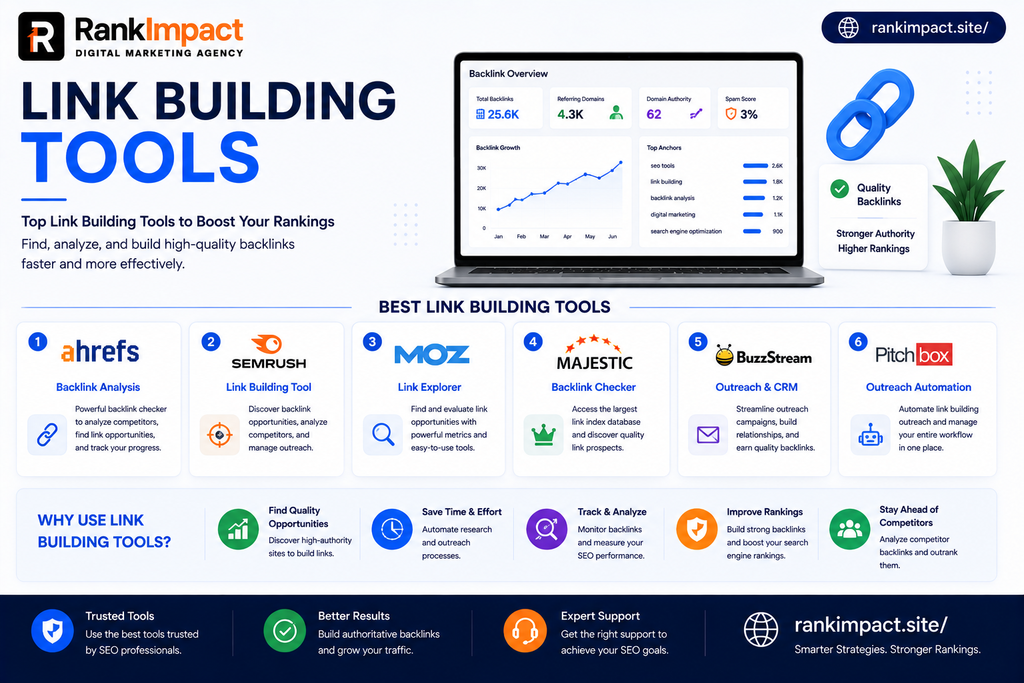
Table of Contents
Best Link Building Tools for SEO
Anyone who has tried to grow organic traffic without a real backlink strategy knows how frustrating it can be to write great content and still watch it sit on page four of Google. The truth is that content quality alone rarely moves rankings anymore. What moves rankings is a website that other trusted sites are willing to link to, and finding those opportunities manually takes far more time than most marketing teams have. This is exactly why link building tools have become one of the most searched categories in SEO software today. Whether you run a small SaaS startup or manage link acquisition for a growing agency, the right link building tools can turn a slow, guesswork heavy process into a repeatable system that brings in real referring domains month after month.
This guide breaks down what link building tools actually do, which ones are worth paying for in 2026, how to match a tool to your specific stage of growth, and the mistakes that quietly waste budget for teams that pick the wrong platform. The goal here is not to hand you another generic listicle. It is to help you understand the category well enough that you can make a confident decision and start seeing results from your outreach within the first few campaigns.
What Link Building Tools Actually Do
At the core, link building tools help with three connected jobs. They help you find link opportunities, they help you manage and automate outreach to the people who control those opportunities, and they help you track the backlinks you already have so you can measure progress and catch problems early.
A backlink research tool crawls the web and stores an index of links between websites. This lets you see who links to your competitors, which pages attract the most links, and which of your own pages are underperforming compared to similar content elsewhere. An outreach platform takes that research and turns it into action by managing email sequences, tracking replies, and organizing prospects into pipelines so nothing falls through the cracks. A monitoring tool then keeps watch over your existing link profile, alerting you when links go missing, when a toxic domain starts pointing at your site, or when a competitor picks up a placement you should be targeting too.
Understanding this three part structure matters because most beginners assume one single tool should do everything. In reality, most successful SEO teams combine two or three specialized tools rather than relying on one all in one platform, and knowing which job each tool solves will save you from buying overlapping subscriptions.
Types of Link Building Tools You Should Know
Not every tool in this space serves the same purpose, and grouping them by function makes it much easier to build a stack that fits your workflow.
Backlink analysis and research platforms are the foundation of almost every serious campaign. These tools maintain massive indexes of the web and let you study domain authority, referring domains, anchor text distribution, and competitor link gaps. Ahrefs and Semrush are the two names that dominate this category, with Moz Pro and Majestic offering strong alternatives that some teams prefer for specific metrics like Domain Authority or Trust Flow.
Outreach and relationship management tools handle the human side of link building. Once you know who to contact, these platforms help you send personalized emails at scale, track opens and replies, and manage follow up sequences without losing track of a single prospect. BuzzStream and Pitchbox are widely used here, and newer entrants like Respona combine research and outreach in a single workflow.
Contact discovery tools solve a very specific but very common problem, which is finding the right email address for a site owner or editor. Hunter.io and Snov.io both specialize in scraping and verifying emails so your outreach does not bounce or land in the wrong inbox.
Monitoring and reporting tools track your link profile over time. Linkody and Google Search Console both fall into this bucket, alerting you to lost links, new links, and shifts in your overall backlink health so you can act quickly rather than discovering a problem months later.
Digital PR and mention based platforms like HARO style services connect you with journalists actively looking for expert sources, which can produce high authority backlinks from major publications without traditional cold outreach.
Top Features to Look For in a Link Building Tool
With dozens of platforms competing for attention, it helps to know exactly which features separate a genuinely useful tool from one that looks impressive in a demo but adds little value day to day.
A large and frequently updated backlink index matters more than almost anything else. If a tool’s database is small or updates infrequently, every decision you make based on it will be built on outdated information. Look for platforms that clearly state how often their crawler refreshes data and how large their index is compared to competitors.
Competitor gap analysis is another feature worth prioritizing. This shows you which domains link to your competitors but not to you, instantly surfacing a prioritized prospect list instead of leaving you to guess where to start.
Email finding and verification built directly into the workflow saves enormous time. Switching between three or four separate tabs to research a prospect, find their email, verify it, and then log it manually is exactly the kind of friction that causes teams to abandon outreach halfway through a campaign.
Reporting and white label options matter most for agencies. If you manage client accounts, the ability to export clean reports or present dashboards under your own branding often justifies a higher price tag on its own.
Finally, look closely at how a tool defines link quality. Some platforms lean heavily on Domain Authority, others on Domain Rating, and others on custom trust metrics. None of these numbers are perfect, but understanding which one a tool uses helps you interpret its recommendations correctly instead of chasing a score that does not reflect real ranking impact.
Best Link Building Tools for Different SEO Needs
There is no single best tool because the right choice depends heavily on your budget, team size, and where you are in your link building maturity.
For solo marketers and small SaaS founders working with a limited budget, a lean stack usually works best. Ahrefs Lite or a comparable entry tier backlink tool paired with a free email finder and Google Search Console covers research, prospecting, and monitoring without a large monthly commitment. This combination is enough to run a focused campaign of ten to twenty outreach emails per week while still tracking results properly.
For growing SaaS companies and in house marketing teams, a mid tier stack tends to deliver the best return. Semrush or Ahrefs for research, paired with a dedicated outreach tool like BuzzStream, allows a small team to run consistent monthly campaigns without needing an enterprise budget. At this stage, adding a contact verification tool like Hunter.io also becomes worthwhile because outreach volume is high enough that bounce rates start to matter.
For agencies managing multiple clients, an enterprise stack built around Pitchbox or Respona for campaign automation, combined with Ahrefs for research and a white label reporting layer, is usually necessary to keep quality consistent across accounts. Agencies also benefit from tools with built in team permissions so multiple link builders can work the same account without duplicating outreach to the same prospect.
For teams focused on digital PR rather than traditional outreach, a HARO style journalist matching service combined with strong brand monitoring can produce a very different kind of backlink profile, often from higher authority news and media sites that traditional cold email rarely reaches.
How to Choose the Right Link Building Tool for Your Website
Choosing the right link building tool starts with an honest look at your current bottleneck rather than a feature checklist. Ask yourself where campaigns actually stall today. If you struggle to find enough relevant prospects, invest first in a stronger research platform. If you have plenty of prospects but outreach never gets sent consistently, the bottleneck is workflow, not data, and an outreach automation tool will help far more than another research subscription.
Budget should be evaluated against expected output rather than sticker price alone. A one hundred fifty dollar per month tool that helps your team close five quality backlinks is a far better investment than a free tool that produces none, so it helps to estimate cost per link based on your team’s realistic capacity before comparing prices.
Team size changes the calculation significantly. A solo operator rarely needs multi seat permissions or white label reporting, while a five person agency team will quickly outgrow a single seat tool and end up paying for workarounds that cost more in wasted time than a proper upgrade would have.
Finally, always test a tool with a real campaign before committing to an annual plan. Free trials exist specifically so you can validate that a platform’s index actually covers your niche and that its interface fits how your team naturally works, rather than trusting marketing copy alone.
Common Mistakes Businesses Make When Using Link Building Tools
Even with excellent software, plenty of campaigns underperform because of avoidable mistakes.
The most common mistake is treating a tool as a strategy replacement. Software can surface opportunities and automate sending, but it cannot write a genuinely compelling pitch or decide which relationships are worth nurturing over months rather than days. Teams that expect a platform to do the thinking for them consistently see lower reply rates than teams that use the tool to support a clear strategic plan.
A second frequent mistake is prioritizing volume over relevance. Sending five hundred generic emails to loosely related websites almost always performs worse than sending fifty carefully personalized emails to genuinely relevant sites. Most modern link building tools make bulk sending easy, which tempts teams into quantity focused campaigns that damage sender reputation and produce low quality, low relevance links.
Ignoring link quality metrics is another costly error. Chasing a high volume of low authority links can actually hurt rankings rather than help them, especially when those links come from spammy or unrelated domains. A single relevant link from a respected site in your industry is typically worth far more than a dozen low quality directory links.
Many teams also neglect monitoring entirely once a campaign wraps up. Links get removed, sites go offline, and toxic domains occasionally start linking without your knowledge. Without regular monitoring, months can pass before you notice a lost link that was previously driving meaningful referral traffic.
Finally, some businesses fail to align their internal linking with their external link building efforts. Earning strong backlinks to a homepage does little good if the internal structure of the site does not pass that authority through to the pages that actually need to rank, which is why internal linking strategy should always be reviewed alongside any external campaign.
Best Practices for Using Link Building Tools Effectively
Getting real value out of link building tools comes down to a handful of consistent habits rather than any single trick.
Start every campaign with a clear target list built from competitor gap analysis rather than a random prospect scrape. This ensures every outreach email goes to a site with a genuine reason to link to you, which dramatically improves reply rates.
Segment your prospects by relevance and authority before reaching out. Not every site deserves the same pitch, and personalizing based on the recipient’s content history takes only a few extra minutes but often doubles response rates compared to a generic template.
Track everything in one place rather than spreading data across spreadsheets and multiple tool dashboards. Most modern platforms allow tagging and status updates, and keeping a single source of truth prevents duplicate outreach to the same contact from different team members.
Review your backlink profile monthly rather than only at the start or end of a campaign. Catching a lost link or a spike in toxic referring domains early gives you far more room to act before it affects rankings.
Combine automated outreach with genuine relationship building wherever possible. The strongest, most durable backlinks usually come from real relationships with editors, bloggers, and journalists rather than one time transactional emails, so treat the tool as a way to scale outreach, not replace the human element entirely.
Link Building Tools Pricing and Budget Guide
Pricing across this category varies widely depending on the depth of data and the number of features bundled together. Entry level backlink research tools typically start somewhere between one hundred and one hundred fifty dollars per month for a single user license. Mid tier outreach platforms designed for small teams generally fall in a similar range, often between twenty and seventy dollars per month depending on the number of contacts and sending volume included.
Enterprise grade platforms built for agencies running high volume campaigns across multiple clients can run from one hundred fifty to several hundred dollars per month, particularly once white label reporting and multiple team seats are added. Free tools still play an important role at every budget level. Google Search Console remains one of the most valuable free resources available since it shows your actual verified backlink data directly from Google, and pairing it with a free tier email finder can support a lean early stage campaign at no cost at all.
The smartest approach is to start with the minimum viable stack that solves your current bottleneck, track how many quality links that stack produces over a ninety day period, and only upgrade to more expensive tools once you can clearly justify the cost against the results you are already seeing.
Frequently Asked Questions
What are link building tools used for?
Link building tools are used for finding backlink opportunities, managing outreach to website owners and editors, and monitoring an existing backlink profile over time. They combine research data, contact information, and outreach automation into a single workflow that would otherwise require manual searching and tracking.
Are link building tools worth paying for?
For most growing websites, yes. Free methods can work for very small campaigns, but paid link building tools save significant time through automation, larger and more accurate backlink indexes, and built in prospect management that becomes essential once outreach volume increases.
What is the best free link building tool ?
Google Search Console is widely considered the best free option since it shows verified backlink data directly from Google’s own index. Many email finder tools also offer limited free tiers that work well for small scale outreach campaigns.
How many backlinks do I need to rank on Google?
There is no fixed number since ranking depends on competition level, content quality, and overall site authority rather than backlink count alone. A smaller number of highly relevant, high authority links typically outperforms a much larger number of low quality links.
Can link building tools hurt my SEO ?
The tools themselves cannot hurt your SEO, but misusing them by sending mass generic outreach or acquiring links from irrelevant, low quality, or spammy domains can lead to a weaker or even penalized link profile.
What is the difference between Ahrefs and Semrush for link building ?
Ahrefs is generally regarded as stronger for pure backlink research thanks to its large and frequently updated index, while Semrush offers a broader all in one platform that combines link building with content and keyword research in a single subscription.
Do I need both a research tool and an outreach tool ?
Most successful campaigns use at least one research tool for finding opportunities and one outreach tool for managing communication, since combining both functions in a single lower cost platform often means sacrificing depth in one area.
How often should I monitor my backlink profile ?
Reviewing your backlink profile at least once a month is a reasonable baseline for most websites, while sites in competitive niches or those running active outreach campaigns often benefit from checking weekly.
What is a good reply rate for link building outreach?
Reply rates vary widely, but a well targeted, personalized campaign typically sees somewhere between ten and twenty percent replies, while generic bulk outreach often falls well below five percent.
Can small businesses use enterprise link building tools ?
Small businesses can use enterprise tools, but the cost is rarely justified until outreach volume and team size grow enough to need multiple seats, white label reporting, or advanced automation features that a smaller starter tool does not offer.
Conclusion
Choosing the right link building tools comes down to understanding your actual bottleneck, matching that bottleneck to the right category of software, and committing to consistent monthly habits rather than one off campaigns. The tools themselves will not build relationships or write compelling pitches for you, but they will save enormous amounts of time on research, organization, and monitoring so your team can focus energy where it matters most. Start lean, measure results honestly, and scale your stack only when the data clearly justifies the added cost.
Key Takeaways
Link building tools fall into distinct categories including research, outreach, contact discovery, and monitoring, and most successful teams combine two or three rather than relying on a single all in one platform.
The right tool depends on your specific bottleneck, whether that is a lack of prospects, inconsistent outreach, or poor visibility into your existing backlink profile.
Quality and relevance consistently outperform volume, and chasing large numbers of low authority links can do more harm than good.
Regular monitoring is essential since backlinks are lost and toxic links can appear without warning, making monthly reviews a non negotiable habit rather than an optional extra.
Budget should be evaluated against realistic output, starting with a lean stack and upgrading only once results clearly justify the added cost.