Hiring a SaaS SEO consultant? Learn exactly what they do, what to look for, pricing models, and the questions that separate real expertise from hype.
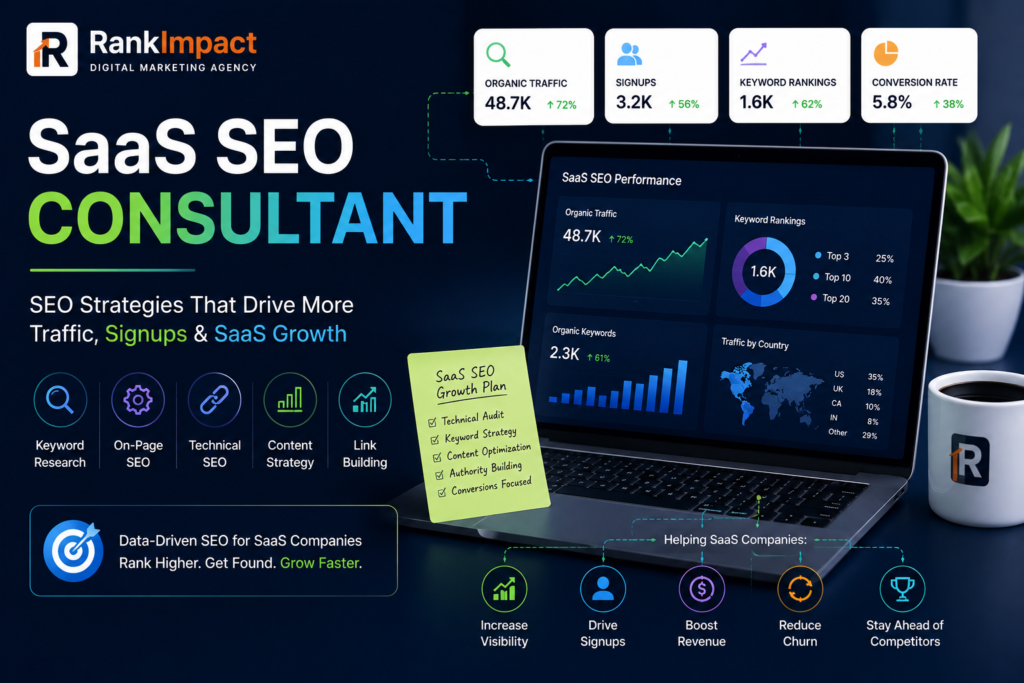
Table of Contents
SaaS SEO Consultant What They Actually Do and How to Hire the Right One
If you’ve started searching for a saas seo consultant, you’ve probably already run into the problem this role exists to solve organic search is one of the highest leverage growth channels for a subscription software business, but it’s also one of the easiest to get wrong. SaaS SEO isn’t just publishing blog posts and hoping for traffic it involves mapping content to a multi stage buyer journey, optimizing product and comparison pages that directly influence trial signups, and building topical authority in a category where competitors are often well funded and aggressive. A good consultant brings the strategic judgment and technical depth to navigate all of that, while a bad hire can waste months of budget on tactics that generate traffic without generating pipeline. This guide breaks down what the role actually covers, the signals that separate a genuinely qualified specialist from someone who’s simply rebranded generic SEO services, and the practical steps for structuring a productive engagement from the first conversation through measurable results.
What Does a SaaS SEO Consultant Actually Do
At a foundational level, this role involves developing and executing a search strategy tailored specifically to how software buyers research and purchase subscription products. That typically starts with a comprehensive audit covering technical health, existing content performance, and competitive positioning, followed by a content strategy mapped to the different stages of the buyer journey top of funnel educational content, middle of funnel comparison and alternative pages, and bottom of funnel product or pricing content. Beyond content, the work usually includes technical SEO fixing crawlability issues, improving site architecture, and ensuring app adjacent pages don’t create indexing problems along with keyword research grounded in actual search intent rather than raw volume. Many engagements also involve close collaboration with product marketing and demand generation teams, since organic search rarely operates in isolation from the rest of a SaaS company’s growth strategy. The best consultants also build measurement frameworks that connect organic traffic to trial signups and pipeline, not just rankings and sessions.
Why SaaS Companies Need a Specialized SEO Consultant
Generic SEO knowledge transfers reasonably well across industries for basic technical fixes, but SaaS presents a set of challenges that a specialized SaaS SEO consultant is far better equipped to handle. Software buyers move through unusually long, multi stakeholder consideration cycles, which means content strategy has to account for prospects at wildly different stages of awareness someone Googling how to reduce customer churn is nowhere near ready to compare vendors, while someone searching competitor alternative is actively evaluating a purchase. A specialist who understands this distinction builds content clusters that nurture prospects through the entire journey rather than chasing isolated keywords. SaaS websites also tend to have more complex technical architecture than a typical business site gated resources, in app documentation, subdomains for different product lines all of which can create SEO issues that a generalist might not recognize. Perhaps most importantly, someone with deep SaaS experience understands the metrics that actually matter to a subscription business, like customer acquisition cost and trial to paid conversion, rather than optimizing purely for traffic volume.
Core Responsibilities of a SaaS SEO Consultant
The day to day work of a SaaS SEO consultant spans several interconnected areas. Keyword and content strategy sits at the center, involving research into what prospects actually search for at each funnel stage and a plan for covering that territory comprehensively enough to build genuine topical authority. Technical SEO audits and ongoing monitoring catch issues like slow page speed, broken internal linking, duplicate content from app generated pages, and crawl budget waste that can quietly suppress rankings even on well written content. On-page optimization refining title tags, meta descriptions, header structure, and internal links ensures that individual pages are positioned to rank and convert once they’re published. Competitive analysis, including tracking competitor content gaps and monitoring how rival SaaS companies are positioning their comparison and alternative pages, informs where the biggest opportunities lie. Reporting and analytics round out the role, translating raw traffic and ranking data into insights that connect back to trial signups, pipeline, and revenue the metrics that actually justify continued investment in the channel.
How SaaS SEO Differs From Traditional SEO Consulting
The fundamentals of search engine optimization technical health, quality content, authoritative backlinks apply across every industry, but the application looks meaningfully different for software companies. A traditional e commerce SEO engagement might focus heavily on product page optimization and seasonal keyword targeting, while a SaaS focused engagement has to account for a much longer sales cycle and a funnel that includes free trials, demos, and multiple decision makers. Content strategy also diverges significantly e commerce and local business SEO often prioritize transactional, bottom of funnel keywords almost exclusively, while software companies need a much broader content ecosystem that nurtures prospects who are still educating themselves on the problem before they’re ready to evaluate solutions. Comparison and alternative pages content types that barely exist in many other industries are often among the highest converting pages on a SaaS website, and building them effectively requires an understanding of competitive positioning that a generalist consultant may not have developed. Finally, the connection between SEO and product led growth is unique to software: free trial and freemium signups sourced from organic search require a different measurement approach than a typical e commerce conversion.
Signs Your SaaS Company Needs to Hire an SEO Consultant
A few common situations tend to signal that it’s time to bring in outside expertise. If organic traffic has plateaued or declined despite consistent content publishing, that’s often a sign of underlying technical or strategic issues that an in house team without deep search expertise may struggle to diagnose. If your content calendar is driven purely by internal brainstorming rather than actual search demand and competitive gaps, a consultant can bring the research rigor needed to prioritize topics that will genuinely move the needle. Companies preparing to enter a new market segment or launch a new product line often bring in a specialist to build the topical foundation before internal teams take over ongoing execution. It’s also common for companies to hire a consultant specifically to audit and fix technical issues after a site migration, redesign, or platform change, since these events frequently introduce indexing and crawlability problems that quietly erode rankings over time. Finally, if your team simply lacks the bandwidth or specialized knowledge to execute a comprehensive strategy in-house, bringing in outside help is often more cost-effective than hiring a full time specialist before you have the budget to keep them consistently busy.
What to Look for When Hiring a SaaS SEO Consultant
The single most important qualifier is direct experience working with software companies specifically, since the strategic judgment required for SaaS content and funnel mapping doesn’t fully transfer from other industries. Ask to see case studies or examples of work with companies at a similar stage and business model to yours a consultant who’s primarily worked with enterprise SaaS may not be the right fit for a self serve, product led startup, and vice versa. Strong candidates should be able to explain their approach to connecting organic traffic with pipeline and revenue metrics, not just rankings and sessions, since that’s the distinction between a strategic partner and someone executing tactics in isolation. Technical fluency matters too even if a consultant isn’t personally writing code, they should understand how site architecture, JavaScript rendering, and crawl budget affect a SaaS website’s performance in search. Communication style is worth weighing carefully as well; the best engagements involve a consultant who can explain their reasoning clearly enough for non-SEO stakeholders like product and sales leadership to understand and buy into the strategy.
Questions to Ask Before Hiring a SaaS SEO Consultant
A short, pointed set of questions during the vetting process can save months of wasted budget. Ask directly what results they’ve driven for previous SaaS clients, and press for specifics organic traffic growth alone is a weak signal without context on whether that traffic converted into trials or pipeline. Ask how they approach keyword research and content prioritization, listening for whether their process accounts for search intent and funnel stage rather than just search volume. It’s worth asking how they measure success and how often they report on progress, since a consultant who can’t clearly articulate their measurement framework is unlikely to deliver results tied to business outcomes. Ask about their experience with technical SEO specifically, including how they’ve handled issues like site migrations, JavaScript heavy applications, or duplicate content from app generated pages, since these are common pain points for software companies. Finally, ask how they collaborate with internal teams a strategy that lives entirely in the consultant’s head, disconnected from product marketing and content production, rarely survives past the engagement’s end date.
Typical Pricing Models for a SaaS SEO Consultant
Pricing for this kind of engagement varies significantly based on scope, experience level, and company size. Hourly consulting, often used for audits or advisory engagements, typically runs from moderate to premium rates depending on the consultant’s seniority and specialization. Monthly retainers are the most common structure for ongoing strategy and execution work, with pricing scaling based on how much hands on content production, technical work, and reporting is included versus purely strategic guidance. Project based pricing tends to apply to defined deliverables like a comprehensive technical audit, a content strategy roadmap, or a site migration SEO plan, where the scope and timeline are clearly bounded from the outset. Some consultants also offer performance based or hybrid pricing tied to traffic or conversion milestones, though this structure is less common given how many variables outside pure SEO execution product quality, pricing, sales follow up influence whether organic traffic ultimately converts into revenue. Whatever the structure, it’s worth clarifying upfront exactly what’s included, since scope creep around content production and technical implementation is a common source of friction in these engagements.
In-House vs Agency vs Freelance Options
Each option comes with meaningfully different tradeoffs. A freelance consultant typically offers the most direct, hands on strategic relationship and tends to be more cost effective than an agency, but capacity is inherently limited to one person’s bandwidth, which can become a bottleneck for companies needing significant content production alongside strategy. Agencies bring more resources and can typically execute at higher volume, but the quality and consistency of the work often depends heavily on which specific team members are assigned to your account, and communication can feel less direct than working with an individual consultant. Building an in house SEO function eventually makes sense for companies with the budget and content volume to justify a dedicated hire, but many SaaS companies use an external consultant during earlier growth stages precisely because it avoids the cost and ramp up time of a full time hire before there’s enough sustained work to keep that person consistently occupied. A hybrid approach an external consultant providing strategic direction while an in house team or contractors handle content production is increasingly common and often delivers the best balance of strategic depth and execution capacity.
Common Mistakes Businesses Make When Hiring an SEO Consultant
One of the most frequent mistakes is hiring based purely on price rather than relevant experience, which often results in generic tactics that don’t account for the specific dynamics of a subscription software funnel. Another common misstep is expecting fast results; SEO is inherently a medium to long term channel, and businesses that judge a consultant’s performance within the first sixty or ninety days are often cutting the engagement before compounding results have a chance to materialize. Companies also frequently fail to provide the internal resources a consultant needs to succeed without access to a developer for technical fixes or a writer for content production, even the best strategy can stall in execution. Some businesses make the opposite mistake of treating the consultant as a fully autonomous vendor rather than a strategic partner, missing opportunities for the kind of collaboration with product and sales teams that produces the most effective content and positioning. Finally, failing to define clear success metrics upfront agreeing only to vague goals like improve rankings rather than specific traffic, trial, or pipeline targets makes it nearly impossible to evaluate whether the engagement is actually working.
How to Measure ROI From an SEO Consultant
Meaningful measurement starts well beyond surface-level metrics like keyword rankings or raw organic traffic, both of which can improve without producing any real business impact. Trial or demo signups sourced from organic search are a much stronger signal, since they connect search visibility directly to pipeline rather than stopping at a traffic number. Tracking which specific pages and content pieces are driving those signups helps identify what’s actually working, informing where to invest further content and optimization effort. For companies with longer sales cycles, assisted conversions where organic content played a role in the buyer’s journey even if it wasn’t the last touchpoint before a signup provide a more complete picture than last click attribution alone. It’s also worth tracking the compounding nature of SEO investment over time; unlike paid channels, wellbuilt organic content and technical improvements often continue generating traffic and conversions well after the initial work is complete, which means ROI calculations should account for a longer time horizon than a single quarter.
Frequently Asked Questions
What does a SaaS SEO consultant do?
A SaaS SEO consultant develops and executes search strategy tailored to subscription software businesses, covering technical SEO, content strategy mapped to the buyer journey, competitive analysis, and measurement frameworks that connect organic traffic to trial signups and pipeline.
How is SaaS SEO different from regular SEO?
It requires understanding a longer, multi stakeholder buying journey, building comparison and alternative pages that barely exist in other industries, and connecting organic traffic to subscription specific metrics like trial to paid conversion rather than one-time purchases.
How much does a SaaS SEO consultant cost?
Pricing varies by scope and experience, typically structured as hourly consulting, monthly retainers for ongoing strategy and execution, or project based fees for defined deliverables like audits or content roadmaps.
How long does it take to see results from SEO consulting?
Most SaaS companies start seeing meaningful organic traffic and ranking improvements within three to six months, with the strongest, most compounding results typically emerging after a year or more of consistent execution.
Should I hire a freelancer or an agency for SaaS SEO?
It depends on your budget and content volume needs freelancers often provide more direct strategic collaboration at lower cost, while agencies offer more execution capacity but can vary in consistency depending on team assignment.
What questions should I ask before hiring one?
Ask about their specific experience with SaaS companies at a similar stage, how they measure success beyond rankings, their approach to technical SEO, and how they collaborate with internal product and content teams.
Can a generalist SEO consultant handle SaaS SEO effectively?
A generalist can handle basic technical and on page work, but SaaS content strategy, funnel mapping, and comparison page positioning benefit significantly from someone with specific software industry experience.
What’s the biggest mistake companies make when hiring for this role?
The most common mistake is prioritizing price over relevant SaaS experience, followed closely by expecting fast results from a channel that inherently rewards sustained, compounding investment over time.
Do SaaS companies need SEO consultants if they already have product led growth?
Yes SEO and PLG work well together, since organic search often drives the trial and freemium signups that fuel a product led growth motion, making SEO expertise valuable even in self serve companies.
How do I measure ROI from a SaaS SEO consultant?
Track trial and demo signups sourced from organic search, assisted conversions across the buyer journey, and the compounding traffic value of content over time, rather than relying solely on keyword rankings.
Conclusion
Hiring a saas seo consultant is a decision that deserves more scrutiny than picking whoever ranks highest for a Google search or quotes the lowest price. The role requires a genuinely different skill set than general SEO consulting deep familiarity with subscription business metrics, multi-stage buyer journeys, and the technical realities of SaaS websites. Companies that invest the time to properly vet a candidate’s SaaS specific experience, ask sharp questions about measurement and collaboration, and set realistic expectations for the timeline tend to see organic search become one of their most efficient, compounding growth channels. Whether you choose a freelancer, an agency, or eventually build an in house function, the fundamentals covered here give you a framework for making that decision with confidence.
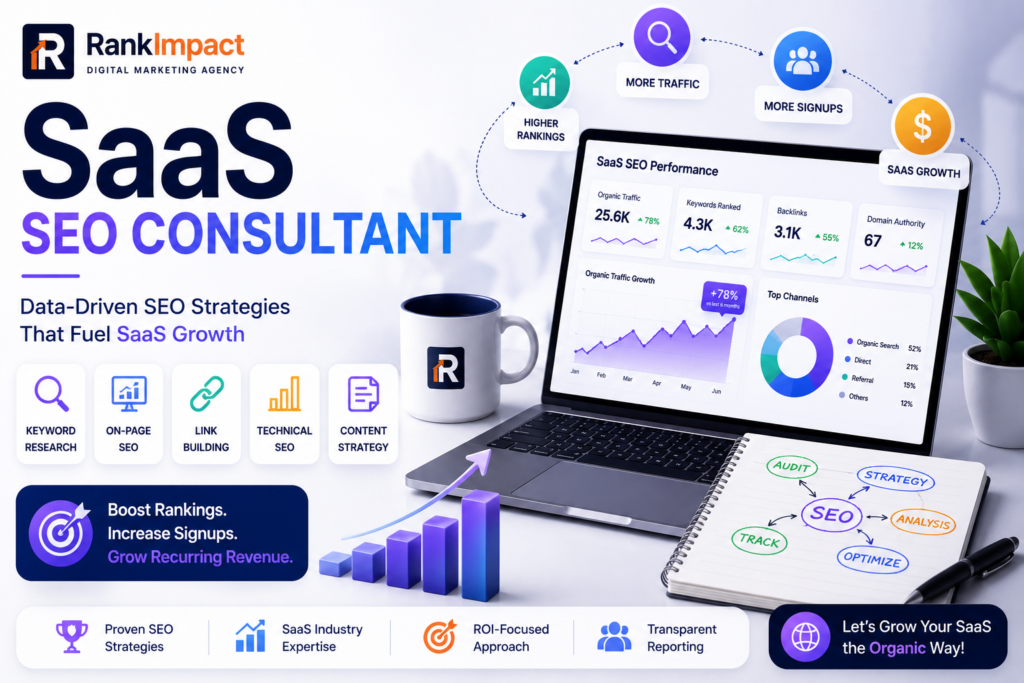
Key Takeaways
- A SaaS SEO consultant brings deep understanding of SaaS specific buyer journeys, funnel mapping, and subscription business metrics that generalist SEO consulting doesn’t fully address.
- Core responsibilities span keyword strategy, technical SEO, on-page optimization, competitive analysis, and reporting tied to pipeline rather than just rankings.
- Look for candidates with direct SaaS experience at a similar company stage, and ask pointed questions about measurement and collaboration before hiring.
- Pricing typically follows hourly, retainer, or project based models, with retainers being most common for ongoing strategy and execution.
- The most common hiring mistake is prioritizing price over relevant experience, followed by expecting results faster than SEO’s naturally compounding timeline allows.
- Measure success through trial signups and assisted conversions sourced from organic search, not just traffic and keyword rankings alone.