Generative engine optimization made simple for SaaS teams. Learn 7 clear steps to earn mentions and citations in AI answers and grow your reach today.
Table of Contents
Generative Engine Optimization Guide 7 Steps for 2026
Your Next Customer May Never Open a Search Results Page
Picture a SaaS buyer who needs a new project tool. Ten years ago she would type a phrase into Google and click through five blue links. Today she asks an AI assistant, reads one clear answer, and shortlists three brands before she visits a single website. If your brand is not named inside that answer, you are invisible at the most important moment of the buying journey. This is exactly why generative engine optimization has become a serious topic for every SaaS marketer in 2026.
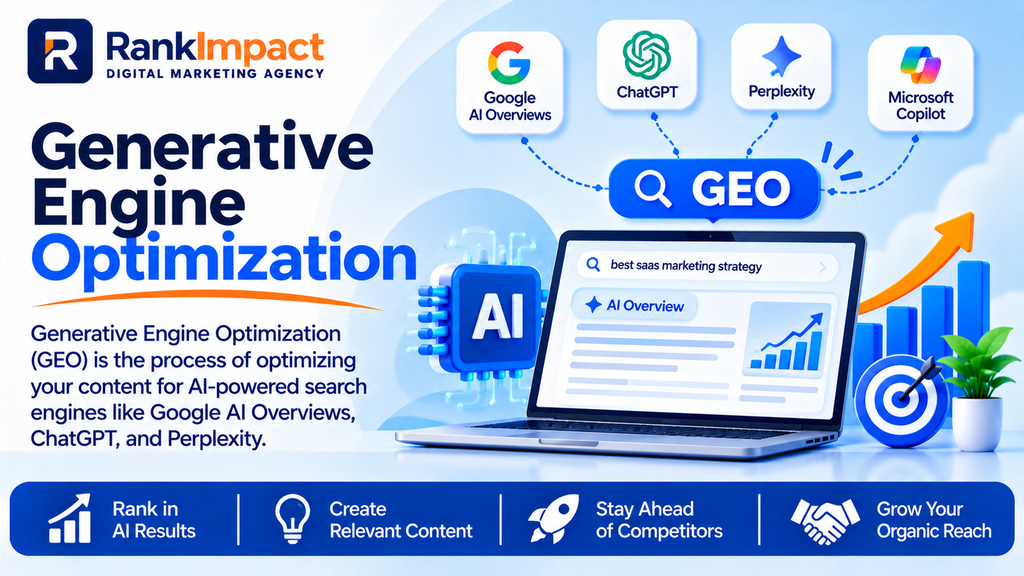
Generative engine optimization is the practice of shaping your content so that AI powered answer engines can find it, understand it, trust it, and mention it when they respond to a user. In this guide you will learn what generative engine optimization means, how it differs from classic SEO, and 7 practical steps you can apply this week. Every step is written in simple language so that you can act on it without a technical team.
What Is Generative Engine Optimization in Simple Words
Generative engine optimization, often shortened to GEO, is the work of making your website content easy for generative search tools to use as a source. A generative engine is any search product that reads many pages, combines the facts, and writes a fresh answer for the user. Google AI Overviews, Google AI Mode, ChatGPT search, Perplexity, and Microsoft Copilot all work in this way.
The term became popular after a 2023 research paper titled GEO Generative Engine Optimization by authors linked with Princeton University, IIT Delhi, Georgia Tech, and the Allen Institute for AI. The paper was later accepted to the KDD 2024 conference. It introduced the idea that content creators can improve their visibility inside generative responses by changing how their pages are written.
Think of it this way. Traditional SEO asks, how do I rank higher on the page. Generative engine optimization asks, how do I become part of the answer itself.
Why Generative Engine Optimization Matters for SaaS Brands
SaaS buying is research heavy. Buyers compare features, read about pricing, check integrations, and ask many questions before they talk to sales. Those questions are now flowing into AI tools at huge scale. In June 2026 Google shared that AI Overviews has more than 2.5 billion monthly active users and that AI Mode has passed 1 billion monthly users. Even if only a small share of those searches involve software, the volume is large enough to change how SaaS demand is discovered.
There are 3 clear reasons why generative engine optimization deserves a place in your plan.
The first reason is shortlisting. AI answers usually mention a handful of brands. Being one of them can matter more than ranking fifth on a classic results page.
The second reason is trust transfer. When an AI tool names your product as a good option, the user treats that mention as a soft recommendation.
The third reason is quality of traffic. Google has said that clicks from results pages with AI Overviews tend to be higher quality, with users more likely to spend time on the site. Fewer clicks may arrive, but the visitors who do arrive are often more ready to act.
How Generative Engine Optimization Differs From Traditional SEO
Generative engine optimization does not replace SEO. It builds on top of it. A page that cannot be crawled or indexed cannot be used by any engine, so the old basics still apply. Google itself says that to be shown as a supporting link in AI Overviews or AI Mode, a page must be indexed and eligible to appear in Search with a snippet.
The difference is in what you optimise for. Classic SEO focuses on the page, the keyword, and the ranking position. Generative engine optimization focuses on the passage, the entity, and the citation. An AI system may pull one clear paragraph from your page and ignore the rest. It may also run many related searches at the same time, a method Google calls query fan out, to gather facts from several subtopics before it writes a response.
This means a single page now competes on many small questions at once. A page that answers the main question and also covers the follow up questions has a much better chance of being used. That is a core idea behind every good generative engine optimization plan.
Step 1 Lead Every Section With a Direct Answer
Generative engines love content that gives the answer in the first sentence and then explains. Start each section with a short direct statement of 30 to 50 words, then add detail, examples, and context below it.
For a SaaS page about pricing, do not open with a long story about how pricing models evolved. Open with something like this. Usage based pricing charges customers according to how much of a product they use, which makes costs flexible but harder to predict. Then explain the pros, the cons, and the best fit.
This simple habit helps both readers and machines. Readers get value quickly. Machines find a clean passage that can be quoted without heavy editing. Apply this approach across your product pages, comparison pages, and blog posts when you practice generative engine optimization.
Step 2 Add Real Data and Named Sources
The Princeton study tested several content changes and found that methods such as adding statistics, adding quotations from credible sources, and citing sources improved visibility in generative responses. The study also found that results differ across topics, which means you should test what works for your own niche instead of copying a single formula.
For SaaS content, this means replacing vague claims with specific facts. Instead of writing that customers save a lot of time, write the actual time saved in a documented case study, and name where the number came from. Instead of saying many companies use your category of tool, point to a respected industry report.
One warning is important. Never invent numbers, reviews, or quotes. Fake data harms trust, can trigger penalties, and will eventually be caught. Real data, even a small amount, is better than impressive but unverifiable claims.
Step 3 Build Topical Depth Around Your Main Topics
Because AI systems break one question into many smaller ones, your site needs depth, not only a single strong page. If you sell customer success software, you should cover onboarding, churn, health scores, renewals, integrations, pricing, and comparisons, and you should link those pages together.
Create a pillar page for each main topic and surround it with supporting articles that answer specific questions. Link them using clear descriptive anchor text so that both users and crawlers understand how the pages connect. Google also notes that making content easy to find through internal links remains a useful best practice for AI features.
Strong topical depth is one of the most reliable foundations of generative engine optimization because it proves that your brand knows the subject, not just one keyword.
Step 4 Show Experience and Expertise Clearly
Google asks site owners to create helpful, reliable, people first content, and its quality ideas are often summarised as EEAT, which stands for experience, expertise, authoritativeness, and trust. Generative engines are built to avoid weak sources, so these signals matter even more in AI answers.
Make them visible on the page. Add an author name with a short bio that explains real experience. Show the date when the article was written and updated. Explain how your team tested a tool or collected data. Include product screenshots from your own workflow when you have them.
If you have not tested a feature yourself, say that your explanation is based on public documentation. Honest wording builds more trust than pretending, and it keeps your generative engine optimization work safe for the long term.
Step 5 Use Clear Structure and Helpful Formatting
AI systems read structure well. Use one clear H1, logical H2 headings, short paragraphs, and plain language. Write headings that sound like the real questions people ask, such as how much does project management software cost or what is the difference between a CRM and a CDP.
Tables work well for comparisons, and short numbered lists work well for processes. Where it fits your page, add structured data so that machines can read details about your organisation, products, articles, and FAQs. Google explains that structured data shares information about content in a machine readable way and can make pages eligible for certain search features.
Do not hide important facts inside images or scripts. Put key information in normal text so every crawler can read it. This is a quiet but powerful part of generative engine optimization.
Step 6 Strengthen Your Brand Across the Web
Generative engines do not only read your website. They learn from forums, review sites, news coverage, podcasts, videos, and community discussions. If your brand is described well in many trusted places, you are more likely to be mentioned.
Focus on 4 simple actions. Keep your profiles on review platforms complete and active. Share useful expertise in industry communities without spamming. Earn mentions from respected publications through original research or helpful tools. Make sure your company name, product names, and descriptions stay consistent everywhere.
For a SaaS startup this can be a slow process, but it compounds. Every honest mention adds another signal that your brand belongs in the conversation, and that supports your wider generative engine optimization strategy.
Step 7 Keep Content Fresh and Technically Healthy
Software changes quickly, and outdated content is a weak source. Review your most important pages every quarter. Update pricing details, feature lists, screenshots, integrations, and dates. When you update a page, make the change real and meaningful instead of only changing the date.
On the technical side, confirm that your robots file allows the crawlers you want, that your pages load fast, and that key pages are indexed. Google also recommends verifying your site in Search Console so you can find technical problems early.
Keep an eye on the tools Google provides. In June 2026 Google announced that it is testing a new Search Console control that lets site owners decide whether their content appears in generative AI search features, along with new reports on how pages appear in them. Rollout began with a subset of site owners, so check your own account for availability.
Practical SaaS Examples of Generative Engine Optimization
The following examples are illustrative scenarios, not real company results. They show how the steps above can look in daily work.
Example one is a project management tool. The team rewrites its pricing page so that each plan starts with a one sentence summary, adds a clear comparison table, and publishes a help article answering the 8 most common billing questions. The result is a set of short passages that an AI tool can quote with confidence.
Example two is an email marketing platform. The team runs a survey of its own customers, publishes the findings with the method explained, and shares the report with industry newsletters. Original research gives answer engines something new to cite, which general articles cannot offer.
Example three is a cybersecurity SaaS company. The team creates an expert reviewed glossary, adds author bios to every security article, and updates its compliance pages every quarter. These steps show real expertise in a topic where trust is critical.
How to Measure Generative Engine Optimization Results
Measurement is still young, so combine several signals instead of trusting one tool.
Start with manual testing. Write a list of 20 questions your buyers ask, run them in Google AI Mode, ChatGPT, Perplexity, and Copilot, and record whether your brand is mentioned and whether your page is cited. Repeat the test every month and compare.
Next, use analytics. Look for referral visits from AI platforms and watch branded search growth, since people often search for your name after seeing it in an AI answer. Finally, use Search Console and any new generative AI reports available to you to see how your pages appear.
Do not expect exact numbers. Look for direction. If your mentions, citations, and branded searches rise over a few months, your generative engine optimization work is moving the right way.
Common Generative Engine Optimization Mistakes to Avoid
Stuffing keywords into every sentence makes content hard to read and does not help generative engine optimization. Write for people first.
Publishing large amounts of thin AI written content with no review is another trap. Google has warned that content created mainly to manipulate rankings is spam, so every page should have real value, human review, and honest sourcing.
Chasing every new trick without testing is also risky. Google has pointed out that some popular ideas around AI search are not needed for Google, so focus on helpful content, crawlability, and clear structure before you spend money on extras.
Finally, do not ignore classic SEO. Strong generative engine optimization and strong SEO grow from the same roots.
Frequently Asked Questions About Generative Engine Optimization
What is generative engine optimization?
Generative engine optimization is the process of improving your content so that AI search tools can find it, trust it, and cite it inside their generated answers. It builds on SEO but focuses on passages, facts, and brand mentions.
Is generative engine optimization the same as SEO?
No, but they are closely connected. SEO helps pages rank in a list of results. Generative engine optimization helps your content become part of the answer. Good SEO is still the foundation for both.
Does Google AI Overviews need special optimization?
Google says no additional technical requirements exist beyond being indexed and eligible to show with a snippet. Following helpful content and SEO best practices is the recommended path.
How long does generative engine optimization take to work?
There is no fixed timeline. Many teams begin to see changes in citations within a few months of improving content, but results depend on competition, site authority, and how often engines refresh their sources.
Which content types work best for generative engine optimization?
Clear how to guides, comparison pages, original research, glossaries, and detailed FAQ pages tend to work well because they contain direct answers that are easy to quote.
Can small SaaS companies compete in generative engine optimization?
Yes. AI answers do not only favour big brands. A small company with a focused niche, original data, and clear expert content can earn citations on specific topics.
Do I need structured data for generative engine optimization?
It is not a magic switch, but structured data helps machines understand your content and can make pages eligible for certain search features. Use it accurately and only for content that is visible on the page.
How do I track generative engine optimization performance?
Test a fixed list of buyer questions in several AI tools every month, track referral traffic and branded searches, and review Search Console reports. Combining these signals gives a fair picture.
Is it safe to use AI to write content for generative engine optimization?
AI can help with research and drafts, but every article needs human review, real expertise, and verified facts. Content made only to manipulate rankings can be treated as spam.
What is the first step in generative engine optimization?
Start by finding your 10 most valuable pages and rewriting each section to open with a direct answer, supported by real data and clear sources.
Final Thoughts on Generative Engine Optimization
Search is changing from a list of links into a conversation, and SaaS brands that adapt early will earn a lasting advantage. The good news is that generative engine optimization rewards the same things that great marketing has always rewarded, which are clear answers, honest facts, real expertise, and a brand people trust.
Begin with the 7 steps in this guide. Rewrite your key pages with direct answers, add real data, build topical depth, show who you are, structure your content, grow your brand mentions, and keep everything fresh. Test your progress each month and improve from there. Start small, stay consistent, and let generative engine optimization turn your expertise into answers that people actually see.
Key Takeaways
Generative engine optimization is about being quoted and cited inside AI answers, not only about ranking in a list of links.
Google states that no special extra technical requirement exists for AI Overviews and AI Mode, so strong SEO basics still come first.
A research paper from Princeton and partner institutions showed that generative engine optimization methods can lift visibility in generative answers by up to 40 percent.
Clear answers, real data, named sources, and fresh facts give your pages the best chance of being used.
Measurement matters. Track brand mentions, citations, and referral visits, not only keyword positions.