+92 318 3068833 Get Free Audit

B2B SaaS SEO Guide 2026 Turn Search Into Pipeline

Master b2b saas seo with 2026 buying committee research keyword tiers that actually convert AI overview data and mistakes keeping you from real pipeline.
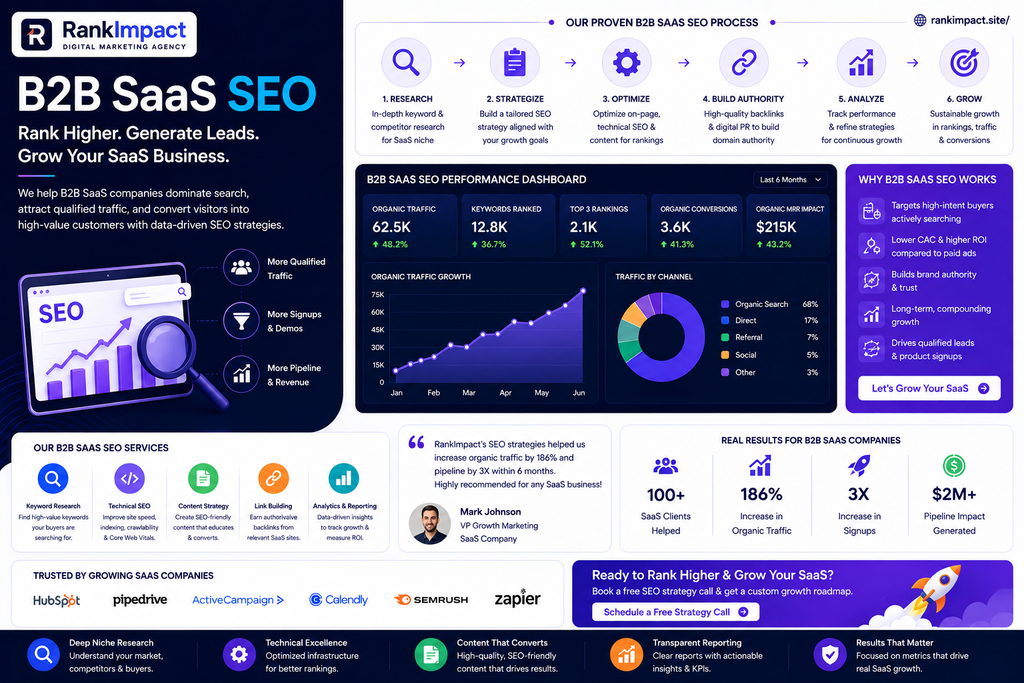
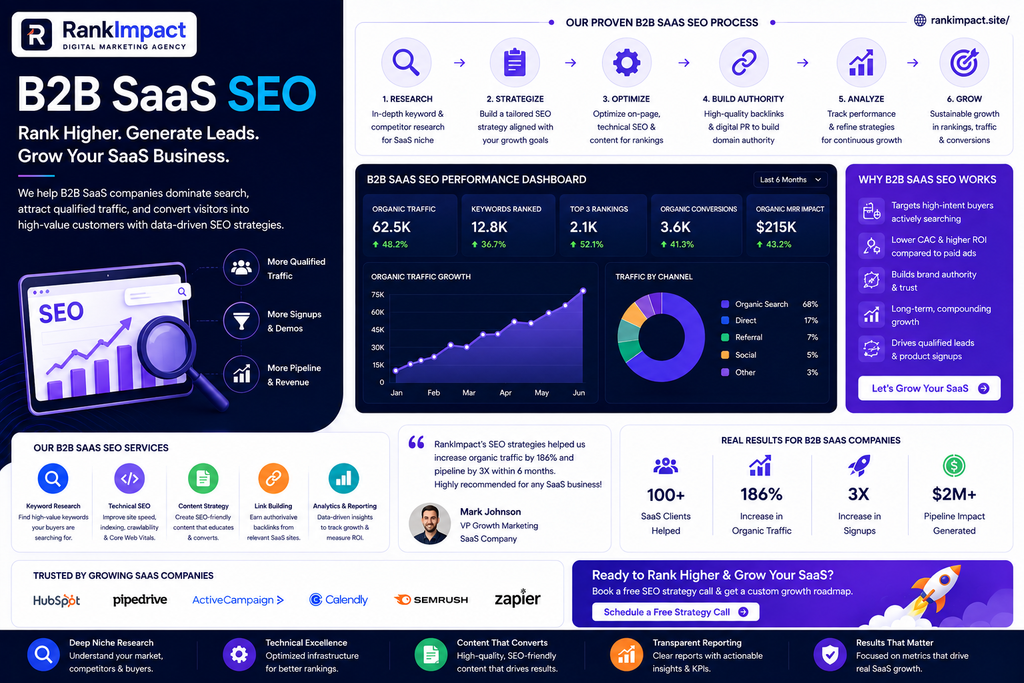
b2b saas seo buying committee and keyword strategy illustration 2026.

B2B SaaS SEO Guide 2026

Most companies approach b2b saas seo the exact same way consumer brands approached search five years ago chasing broad keyword volume and hoping enough traffic eventually converts into something valuable. That approach reliably produces six months of blog posts that rank for nothing and convert nobody because business buying simply does not work the way consumer buying does. This guide breaks down what actually moves pipeline in 2026 covering how buying committees research the specific keyword tiers that convert why informational content alone no longer earns clicks the way it once did and the precise mistakes keeping otherwise talented marketing teams stuck at the wrong end of search results.

Why B2B SaaS SEO Requires A Completely Different Playbook

B2B saas seo differs from consumer search optimization in ways that shape literally every decision from keyword selection through what counts as success. The typical business buying group involves somewhere between six and ten decision makers according to Gartner research with each stakeholder arriving to committee discussions carrying four or five pieces of independently gathered information they found on their own. This single fact explains why a single generic landing page built for one imaginary persona consistently underperforms content built to address the finance operations technical and executive perspectives that actually sit around a real buying table.

Sales cycles compound this complexity further stretching anywhere from three to twenty four months depending on deal size and industry which means your content needs to serve buyers at wildly different stages simultaneously rather than assuming everyone arrives ready to book a demo. The economics driving all of this matter too since a subscription business only benefits from an acquisition channel if the customers it produces stick around long enough to actually pay back what it cost to win them which is precisely why every serious b2b saas seo program in 2026 gets measured against pipeline and retained revenue rather than raw traffic or ranking position alone.

How B2B Buying Committees Actually Research Software

Understanding the buying committee is not an abstract concept it directly determines which keywords and content formats actually produce pipeline within b2b saas seo. Different stakeholders search completely different queries based on what they personally need to evaluate before signing off on a purchase with CFOs typically searching around implementation costs and expected return on investment while CTOs focus their research on technical requirements security posture and integration compatibility. Building content that specifically addresses each of these distinct concerns before a prospect ever speaks with your sales team consistently produces more qualified pipeline than content chasing broad high volume keywords that attract browsers rather than genuine evaluators.

Recent Gartner survey data covering more than 600 business buyers found 61 percent would actually prefer a completely rep free buying experience while 69 percent had personally encountered inconsistencies between information found on a vendor’s website and what a sales representative later told them directly. This finding carries enormous weight for anyone building a b2b saas seo strategy since it confirms buyers are actively trying to self serve their research and trust erodes quickly the moment your website contradicts what a prospect hears elsewhere. B2B buyers now complete more than 70 percent of their research entirely online before ever contacting a vendor meaning your organic content effectively functions as your first and sometimes most influential sales conversation whether your team realizes it or not.

The Keyword Tiers That Actually Drive B2B SaaS Pipeline

Keyword strategy inside b2b saas seo requires organizing search terms into distinct intent tiers rather than chasing whatever term shows the highest monthly search volume in your keyword research tool. High intent bottom funnel keywords directly signal active vendor evaluation including specific product comparisons pricing focused searches and phrases containing words like demo or versus and these terms convert at dramatically higher rates despite typically showing far lower search volume than broad category terms. A generic search like what is CRM might show 200 thousand monthly searches but converts at a fraction of the rate a specific search like best CRM for manufacturing companies with 50 to 200 employees produces despite that second term showing barely a few hundred monthly searches according to recent industry benchmarking.

Role specific keywords deserve dedicated attention within this framework since phrases like CFO software or VP of engineering tools filter specifically for decision maker traffic rather than casual researchers who happen to land on your site without any real purchasing authority. Use case keywords structured around your product name paired with a specific application such as your product for compliance reporting or your product for revenue forecasting drive genuinely qualified evaluation traffic since anyone searching this specific combination has already moved well past general category research. Industry terminology and category specific jargon particularly within regulated industries like finance healthcare or manufacturing naturally qualifies traffic since buyers in these spaces use precise language that casual browsers rarely search making these terms disproportionately valuable despite their modest search volume.

Why Informational Content Alone No Longer Works

A structural shift in how buyers actually consume search results has reshaped what belongs inside a modern b2b saas seo strategy and ignoring this shift means investing heavily in content that technically ranks while producing almost no genuine clicks. Recent research analyzing thousands of informational queries found organic click through collapsing from 1.76 percent to just 0.61 percent on searches where an AI generated overview appears above traditional results representing a 61 percent decline with paid advertising clicks falling by a comparable 68 percent on those same queries. This means the broad top of funnel educational content that dominated content marketing strategy for the past decade increasingly earns impressions without earning the actual visit that used to justify the investment.

There is a genuine silver lining worth understanding within this same research since brands that get directly cited inside an AI generated overview actually earned 35 percent higher organic click through compared to a standard result appearing without any AI summary above it. Separate analysis focused specifically on b2b saas sites found roughly 36 percent of their existing top ten rankings already carrying an AI overview above them confirming this shift has already fully arrived rather than representing some distant future concern. The practical implication for anyone building content strategy today is that structuring pages so they can be accurately cited within these AI summaries matters just as much as traditional ranking position particularly for the broader informational queries increasingly absorbed by an AI generated answer before a user ever scrolls down to a traditional blue link.

Building Content That Serves Every Stakeholder At Once

Effective b2b saas content within a modern seo strategy needs to simultaneously serve technical business and executive audiences rather than picking one imagined persona and writing exclusively for them. Research shows 64 percent of business buyers actually prefer genuine thought leadership over openly promotional content meaning your strongest performing pages tend to educate first and sell only once real trust has been established through demonstrated expertise. A single comprehensive page addressing a specific buying committee concern such as total cost of ownership can layer technical implementation detail for an IT stakeholder alongside a clear return on investment framework for a finance stakeholder within the same piece of content rather than forcing you to maintain entirely separate content tracks for each audience.

Original data and proprietary research consistently outperforms generic advice recycled across dozens of competing articles since a buying committee actively comparing vendors values a source that clearly demonstrates genuine expertise through unique findings rather than another rehash of commonly available information. Systematically distributing this content across the channels where your specific buying committee members actually spend time whether that means a technical community for engineers or an industry publication for finance leaders extends its reach considerably beyond whatever organic traffic your website generates on its own. Building this kind of multi stakeholder content consistently rather than sporadically is precisely what separates b2b saas seo programs generating genuine pipeline from those simply publishing content because a calendar says it is time for another post.

Technical SEO Considerations Specific To B2B SaaS Sites

Beyond content strategy b2b saas seo carries specific technical considerations that differ meaningfully from a typical consumer facing website. Many saas platforms run complex web applications alongside their public marketing site which means ensuring search engines and AI crawlers can properly access index and understand your core marketing pages deserves careful separate attention from whatever architecture powers your actual product experience. Site speed and core web vitals performance matter considerably given how much this factors into both traditional ranking algorithms and how AI driven crawlers evaluate whether your content deserves inclusion in a generated summary response.

Structured data implementation across pricing pages product pages and comparison content helps both search engines and AI systems accurately understand exactly what your product offers reducing the risk of a crawler misrepresenting your solution when summarizing it for a buyer who never actually visits your site directly. Clean logical site architecture connecting your core product pages pricing information and supporting content through consistent internal linking signals genuine topical authority to search engines while also making it considerably easier for a prospect navigating your site manually to find exactly the specific information relevant to their particular role within the buying committee.

Common Mistakes Undermining B2B SaaS SEO Results

Watching underperforming b2b saas seo programs reveals the same avoidable patterns appearing repeatedly across companies that should genuinely know better. Copying consumer style broad keyword targeting and chasing high search volume terms with little to no genuine purchase intent behind them produces exactly the outcome you would expect impressive traffic charts that never connect to actual revenue regardless of how consistently that content gets published. Building a single generic buyer persona and writing exclusively toward that imagined individual ignores the reality that six to ten actual stakeholders with genuinely different concerns will be evaluating your content before any real purchasing decision gets made.

Measuring success through raw organic traffic or keyword rankings rather than genuine pipeline contribution and closed revenue creates a dangerous blind spot where a program can appear successful on paper for months while leadership slowly loses confidence once nobody can connect that activity to actual business results. Ignoring the structural decline in raw informational click through caused by AI generated overviews and continuing to invest primarily in broad top of funnel content built for a search landscape that no longer fully exists wastes resources that could otherwise fund the bottom funnel comparison and use case content that genuinely converts. Many teams also underinvest in ensuring website messaging stays perfectly consistent with what sales representatives actually tell prospects directly which quietly damages trust exactly at the moment a skeptical buying committee is deciding whether your company deserves genuine consideration.

Measuring B2B SaaS SEO Success Beyond Rankings And Traffic

A genuinely useful measurement framework for b2b saas seo needs to move decisively past surface level metrics toward numbers that connect directly to revenue outcomes leadership actually cares about. Tracking pipeline contribution and closed deal attribution from organic search alongside more traditional keyword ranking and organic session data ensures your reporting tells the complete story rather than celebrating impressive numbers that quietly never translate into paying customers. Applying the 80 20 principle to your own page level performance data by identifying the small handful of pages actually driving the overwhelming majority of your qualified pipeline lets you concentrate further investment precisely where it produces the strongest measurable return rather than spreading effort evenly across every page on your site regardless of demonstrated performance.

Recognizing that only around 5 percent of your addressable market is actively searching for a solution at any given moment while the remaining 95 percent sits genuinely out of market for now helps calibrate realistic expectations for how much of your traffic should convert immediately versus how much represents a longer term nurture opportunity worth capturing through educational content anyway. Reviewing this complete picture on a consistent quarterly cadence alongside sales leadership rather than solely within marketing keeps your entire organization genuinely aligned around what is actually working and prevents continued investment decisions from being made purely on optimistic assumptions rather than measurable results. Many growing companies find real value in pairing this measurement discipline with support from a dedicated saas digital marketing agency that specifically understands how to connect b2b saas seo activity to genuine pipeline outcomes rather than vanity metrics alone.

Frequently Asked Questions

What makes b2b saas seo different from regular seo?

B2B saas seo accounts for buying committees of six to ten stakeholders longer sales cycles stretching months rather than days and measurement tied directly to pipeline and revenue rather than raw traffic or ranking position alone.

How many people are typically involved in a b2b saas purchasing decision?

Gartner research consistently shows the typical business buying group involves between six and ten decision makers each independently researching and bringing separate findings back to a broader committee evaluation process.

Why do low volume keywords sometimes convert better than high volume ones in b2b saas seo ?

Specific searches like a named product comparison or a role specific software query signal genuine active evaluation even at low search volume while broad category terms attract far more casual browsers who rarely convert into qualified pipeline.

How have AI overviews changed b2b saas seo strategy?

Organic click through has fallen sharply on informational queries where an AI overview appears though brands that get directly cited inside that overview actually see meaningfully higher click through than a standard result appearing without one.

Should content be written for one buyer persona or multiple stakeholders?

Effective b2b saas content should address technical business and executive concerns simultaneously within the same piece since a real buying committee includes multiple stakeholders each evaluating your solution from a genuinely different angle.

What percentage of the market is actively searching for a solution at any time?

Industry research suggests only around 5 percent of your addressable market is actively searching for a solution at any given moment which means the remaining 95 percent represents a longer term educational content opportunity rather than immediate conversion.

How long does a typical b2b saas buying cycle take?

Sales cycles commonly stretch anywhere from three to twenty four months depending on deal size industry and the number of stakeholders involved in the final purchasing decision.

What is the biggest mistake companies make with b2b saas seo?

Copying consumer style broad keyword targeting and measuring success through raw traffic rather than genuine pipeline contribution consistently produces content that ranks well while failing to generate any real business results.

Does technical seo matter differently for b2b saas sites?

Yes ensuring search engines and AI crawlers can properly access marketing pages separate from complex product application architecture along with strong core web vitals and clean structured data all carry particular importance for saas platforms.

How can a growing saas company execute b2b saas seo effectively?

Many companies partner with an experienced saas digital marketing agency that understands buying committee dynamics and can connect organic search activity directly to pipeline rather than treating traffic as the primary measure of success.

Conclusion

Winning at b2b saas seo in 2026 requires abandoning the consumer style playbook that still dominates far too much published advice and instead building a strategy genuinely designed around how business buying committees actually research and evaluate software. Understanding that six to ten stakeholders bring independent research to every purchasing decision that low volume keywords often convert far better than broad category terms and that AI overviews have fundamentally reshaped how informational clicks behave together should reshape where your team invests time and budget going forward. Prioritize precision over volume measure everything against genuine pipeline rather than vanity metrics and build content that serves every stakeholder around the buying table rather than one imagined persona and your organic search program becomes a genuine revenue engine rather than another line item nobody can confidently defend in a budget review.
Key Takeaways

  • B2B saas seo must account for buying committees of six to ten stakeholders each researching independently before bringing findings back to a group evaluation
  • Low volume role specific and comparison keywords consistently convert at far higher rates than broad high volume category terms despite showing much smaller search numbers
  • Organic click through has fallen sharply on informational queries where AI overviews appear though brands cited directly within those overviews see meaningfully stronger performance
  • Content should address technical business and executive concerns simultaneously since a real buying committee includes multiple stakeholders evaluating from genuinely different angles
  • Only around 5 percent of the addressable market is actively searching at any given time making educational content a longer term investment rather than an immediate conversion tool
  • Measuring success through pipeline contribution and closed revenue rather than raw traffic or rankings prevents dangerous blind spots in program evaluation
  • Technical fundamentals including crawlability core web vitals and structured data carry particular importance given the complex application architecture many saas platforms run alongside their marketing site
  • Partnering with a specialized saas digital marketing agency can help growing companies connect b2b saas seo activity directly to genuine pipeline rather than vanity metrics alone.
SEO For SaaS 2026 Strategy Guide That Drives Growth

Learn seo for saas in 2026 covering content clusters programmatic seo AI search optimization technical fundamentals and mistakes costing you pipeline.

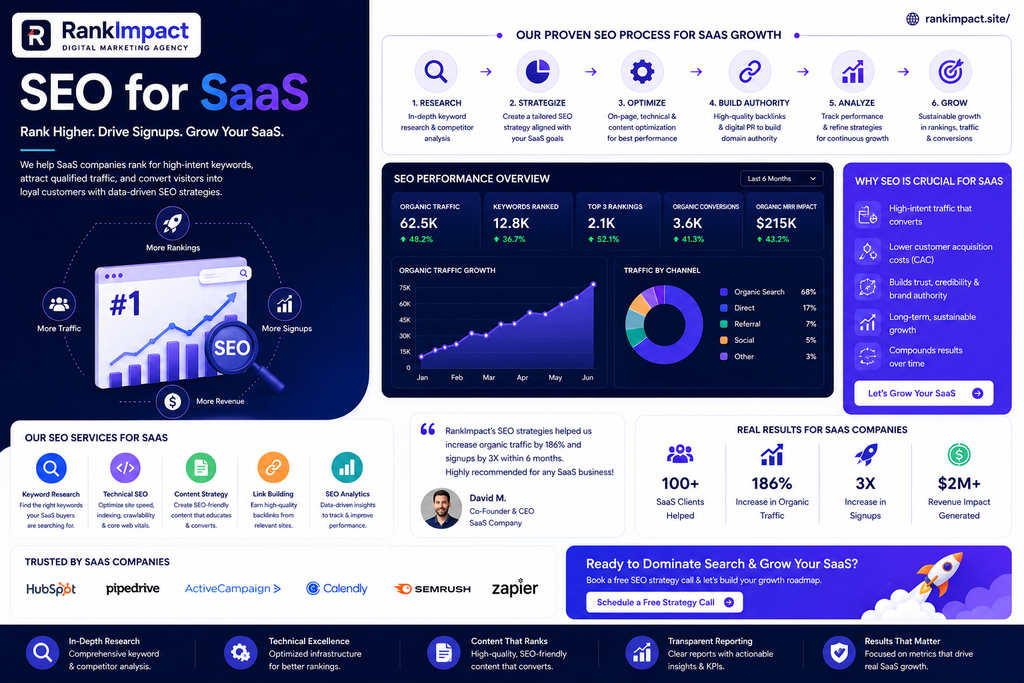
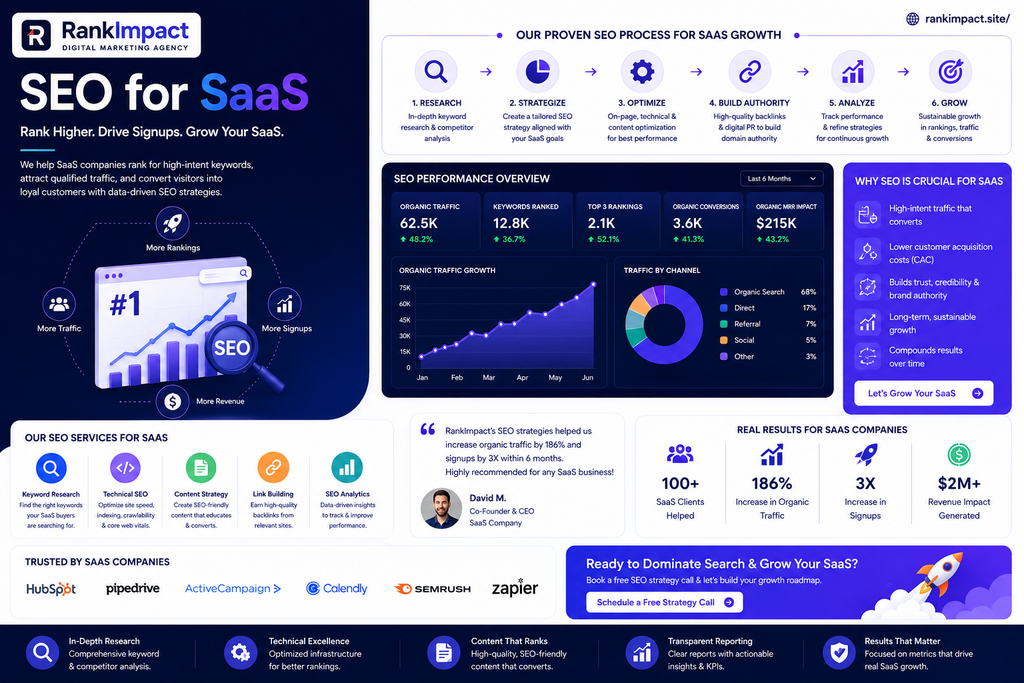
seo for saas 2026 strategy content clusters and AI search illustration.

SEO For SaaS 2026 Strategy Guide

Every software company eventually reaches the same crossroads paid acquisition costs keep climbing and leadership starts asking whether organic search could actually become a real growth channel rather than an afterthought buried in the marketing budget. Getting seo for saas right in 2026 looks meaningfully different from the tactics that worked even two years ago since buyer research now splits across traditional search and AI powered chat tools while Google itself has cracked down hard on low value scaled content. This guide walks through exactly how to build a genuine organic growth engine covering strategy content architecture technical fundamentals and the specific mistakes quietly capping results for otherwise capable marketing teams.

What SEO For SaaS Actually Means In 2026

SEO for saas is the practice of optimizing a software company’s website and content to rank for the specific queries its target buyers actually search throughout their entire evaluation journey. Unlike traditional SEO for an ecommerce store or local business seo for saas prioritizes monthly recurring revenue and pipeline contribution over raw traffic volume alone since a thousand visitors who will never buy software matters far less than a hundred visitors representing genuine purchase intent. This distinction shapes nearly every strategic decision from keyword selection through content format and even which metrics actually deserve leadership’s attention in a monthly report.

The category has also fundamentally split in a way that did not exist just a couple of years ago. A growing share of business buyers now consult an AI chat tool like ChatGPT Perplexity or Gemini at some point during their research with recent industry data placing that figure around 94 percent of business buying groups meaning a platform invisible to these tools is effectively invisible at the exact moment a deal gets shortlisted. Recent research also shows organic search programs delivering a median three year return on investment around 702 percent for saas companies that build a mature program which explains why so many companies are shifting real budget away from paid channels and toward building genuine organic authority over time.

Building Commercial Clarity Before Any Tactical Work Begins

The single biggest mistake companies make with seo for saas is jumping straight into keyword research and content production before establishing genuine clarity about who they are actually targeting. Effective strategy starts by clearly defining whether your product serves a self service motion small and medium business buyers or complex enterprise deals since this single decision shapes everything downstream including keyword selection content format and even which specific pages deserve priority investment. A self service product benefits enormously from bottom funnel comparison content and quick answer pages while an enterprise focused platform needs deeper content addressing multiple stakeholders across a much longer evaluation cycle.

Understanding the specific switch moments that bring a buyer to market matters just as much as understanding who they are. A prospect searching because their current tool just raised prices behaves very differently from one exploring options simply because their company is scaling and outgrowing a spreadsheet based process. Mapping these distinct triggers to specific content and keyword targets before writing a single article ensures your entire content investment aligns with genuine commercial outcomes rather than chasing broad search volume that never converts into demos or trials regardless of how well the resulting pages actually rank.

Content Clusters The Foundation Of Modern SaaS SEO

Topic clusters remain the structural backbone of any serious seo for saas strategy in 2026 and understanding how to build them correctly separates genuinely effective programs from scattered content calendars producing little real authority. A cluster consists of one comprehensive pillar page targeting a broad core topic surrounded by eight to twelve supporting articles each addressing a specific long tail subtopic or question with every cluster piece linking back to the pillar and the pillar linking out to each cluster in turn. This tightly interlinked structure signals genuine topical depth to search engines while also giving AI answer engines a coherent cross linked set of pages to draw from when summarizing your specific category to a buyer asking a research question.

Most teams following this approach see cluster rankings begin moving within three to four months with measurable pipeline impact typically following six to twelve months later a timeline worth setting clearly with leadership before starting rather than after when patience inevitably runs thin. A practical example for a project management software company might use a pillar page covering project management methodologies broadly supported by cluster pieces covering agile versus waterfall comparisons scrum implementation for remote teams and specific software comparison content all linking back to strengthen the central pillar’s authority. Building three or four of these clusters mapped directly to your core product use cases produces far stronger long term results than forty scattered blog posts covering unrelated tangential topics with no coherent internal linking structure tying them together.

Programmatic SEO Scaling Content Without Scaling Your Team

Programmatic seo has become one of the defining tactics separating fast growing saas companies from those relying purely on manual content production and understanding it correctly matters enormously given how much the rules around this tactic shifted during 2026. This approach generates large numbers of landing pages from a single template populated with structured data your product already possesses such as every integration your platform supports every specific use case it serves or every competitor buyers commonly compare you against. Zapier famously pioneered this exact approach building a dedicated landing page for every possible app combination while companies like HubSpot and Atlassian have applied similar templates to their own specific product ecosystems with considerable success.

The critical caveat every team needs to understand is that Google’s scaled content abuse policy enforced heavily during the March 2026 core update stripped between 50 and 80 percent of traffic from low value programmatic sites built on thin template swaps with no genuine unique value per page. Programmatic seo still works powerfully in 2026 but only when each generated page contains real data or genuine utility a prospect cannot find elsewhere rather than the same three sentences reshuffled across a thousand near identical URLs. Companies implementing this correctly are reporting 300 to 500 percent increases in organic traffic within twelve to eighteen months precisely because they treat each page as a genuine resource built on real structured data rather than a shortcut around actual content investment.

Comparison Content And Capturing High Intent Bottom Funnel Searches

Comparison and alternative focused content deserves particular priority within any seo for saas strategy because it captures searchers at the exact moment they are actively evaluating a purchase rather than simply researching a broad topic. Pages built around alternative to a specific named competitor searches consistently convert at meaningfully higher rates than generic educational content since anyone searching that specific phrase has already identified a problem with their current tool and is actively shopping for a replacement. Building these pages honestly with genuine feature comparisons pricing transparency and clear differentiation rather than thinly veiled marketing copy produces far stronger trust and conversion than an obviously biased comparison that damages credibility the moment a prospect notices the framing.

Best practice for this content type involves acknowledging genuine competitor strengths alongside your own differentiation since prospects researching alternatives are typically sophisticated buyers who can immediately spot dishonest positioning and will trust your entire site less once they catch even one exaggerated claim. Including specific pricing information migration guidance and honest use case fit guidance helps these pages serve genuine research needs which both improves conversion and increases the odds these pages get cited when a buyer asks an AI tool for a direct comparison between your product and a named competitor.

Technical SEO Foundations Every SaaS Site Needs

Strong content ultimately underperforms without a solid technical foundation supporting it and seo for saas carries several technical considerations specific to how software platforms are typically built. Core web vitals performance deserves particular attention since AI driven search crawlers increasingly factor genuine page speed and interactivity metrics into how they evaluate and summarize content meaning a slow loading site can undermine even genuinely excellent content regardless of how well researched it actually is. Many saas platforms run on complex single page application frameworks that require specific server side rendering configuration to ensure search engines and AI crawlers can actually access and index content properly rather than encountering a blank page where meaningful text should be.

Structured data markup deserves careful implementation across product pages pricing pages and content since properly formatted schema helps both traditional search engines and AI systems understand exactly what your page offers reducing ambiguity that could otherwise cause a crawler to misrepresent your product when summarizing it for a buyer. Site architecture matters just as much with a clear logical hierarchy connecting your homepage core product pages and content clusters through consistent internal linking that helps both search engines and human visitors understand how everything on your site relates to your core offering rather than presenting a disorganized collection of disconnected pages competing against each other for the same keywords.

Optimizing For AI Search Alongside Traditional Rankings

The single biggest shift reshaping seo for saas in 2026 involves treating traditional search engine optimization and generative engine optimization as one connected system rather than two separate disciplines competing for budget and attention. When a buyer asks an AI system a research question that system typically expands the original prompt into multiple related sub questions a process now commonly called query fan out meaning your content cluster needs to address every facet a buyer might explore rather than simply targeting one narrow keyword variation. Recent data shows AI overviews appearing above traditional search results now produce an average 61 percent click through decline on the queries where they appear making direct AI citation increasingly as valuable as a traditional top ranking position itself.

Structuring content with the most important direct answer appearing early in each section rather than buried under a lengthy introduction improves your odds of being cited inside an AI generated summary while also improving traditional featured snippet performance since both systems reward the same underlying clarity and directness. Building genuinely comprehensive cluster coverage around a core topic rather than a single isolated page increases the odds an AI system finds your content specifically relevant across multiple related sub questions a prospect might ask during their research rather than just one narrow phrasing that happens to match your target keyword exactly.

Common Mistakes Killing SaaS SEO Results

Watching underperforming seo for saas programs reveals the same avoidable mistakes appearing repeatedly across otherwise capable marketing teams. Publishing scattered standalone blog posts with no coherent cluster structure or internal linking strategy wastes enormous content investment since search engines struggle to identify genuine topical authority from disconnected pages covering unrelated tangential subjects. Chasing broad high volume keywords with no genuine commercial intent behind them produces impressive traffic charts that leadership eventually questions once nobody can connect that traffic to actual pipeline or closed revenue.

Treating programmatic seo as a shortcut around genuine content investment by publishing thin templated pages with no real unique value per page now carries serious risk given how aggressively Google’s 2026 scaled content policies penalize exactly this pattern. Measuring success through vanity metrics like raw traffic or keyword rankings rather than pipeline contribution and closed revenue creates a dangerous disconnect where marketing looks successful on paper while leadership quietly loses confidence in the entire program. Finally many teams ignore AI search visibility entirely treating it as a future consideration rather than a current priority which means they remain completely invisible during a growing share of buyer research happening right now through tools their own prospects are actively using.

Off page authority signals remain a meaningful ranking factor within seo for saas even as content and technical fundamentals get most of the attention in current industry discussion. Earning genuine editorial links from relevant industry publications and respected review sites continues carrying more weight than volume based link building tactics that produce low quality placements search engines increasingly discount or actively penalize. Building relationships with journalists and industry analysts covering your specific category through genuine expertise sharing and original research tends to produce far stronger long term link acquisition than direct outreach purely asking for a placement in exchange for nothing of genuine value to the publication.

Treating link building as an always on program woven into your broader content and public relations strategy rather than a separate isolated initiative produces considerably more consistent results over time. Original research and proprietary data specific to your industry or product category represents one of the most reliable ways to earn genuine editorial links since publications and other content creators consistently prefer citing primary data over simply linking to another company’s marketing page. Working with a specialized saas digital marketing agency that maintains genuine relationships across your specific industry can meaningfully accelerate this authority building process compared to building those relationships entirely from scratch with no existing network to draw from.

Measuring What Actually Matters In A SaaS SEO Program

Building a genuinely useful measurement framework for seo for saas requires moving well past surface level traffic numbers toward metrics that actually connect to business outcomes leadership cares about. Tracking pipeline contribution and closed revenue attributed to organic search alongside more traditional metrics like keyword rankings and organic sessions ensures your reporting tells the full story rather than celebrating vanity numbers that never translate into actual customers. Monitoring conversion rate at each stage from organic visitor through trial signup and eventually closed deal reveals exactly where your funnel is genuinely working and where it needs real attention rather than relying on a single blended conversion number that can mask a serious problem concentrated at just one specific stage.

Increasingly tracking AI citation frequency across major chat tools deserves a place in this measurement framework alongside traditional analytics since a growing share of your addressable buyer research happens through these systems whether or not your current reporting currently captures it. Reviewing this full picture quarterly alongside sales leadership rather than only within marketing keeps the entire organization aligned around the same understanding of what is genuinely working and ensures continued investment in organic search remains justified through real business outcomes rather than optimistic assumptions about future potential that never quite materializes into measurable results.

Frequently Asked Questions

What makes seo for saas different from regular seo?

SEO for saas prioritizes monthly recurring revenue and qualified pipeline over raw traffic volume and specifically accounts for longer buying cycles multiple stakeholders and increasingly the need to be cited accurately inside AI powered research tools rather than traditional search results alone.

How long does it take to see results from a saas seo strategy?

Most content clusters begin showing ranking movement within three to four months with measurable pipeline impact typically following six to twelve months later making patience and realistic timeline setting essential before starting any serious program.

Is programmatic seo still safe to use in 2026 ?

Yes but only when every generated page contains genuine unique data or utility since Google’s scaled content abuse policy enforced during the March 2026 core update stripped significant traffic from sites built on thin templated pages with no real value.

What is a content cluster and why does it matter for saas seo?

A content cluster combines one comprehensive pillar page with eight to twelve supporting articles addressing specific subtopics all interlinked together which signals genuine topical authority to search engines and gives AI tools a coherent set of pages to reference.

How important is AI search optimization for saas companies today?

Extremely important since roughly 94 percent of business buying groups now consult an AI chat tool during their research process meaning a platform poorly structured for these systems risks being effectively invisible during a significant share of active evaluation.

What return on investment can a saas company expect from organic search ?

Industry research shows a median three year return on investment around 702 percent for saas companies running a mature organic search program though results depend heavily on execution quality and consistency over time.

Should comparison content mention competitors by name?

Yes honest comparison content addressing named competitors directly tends to convert well since it captures buyers already actively shopping for alternatives though acknowledging genuine competitor strengths alongside your own differentiation builds far more trust than dishonest framing.

What technical factors matter most for saas seo in 2026?

Core web vitals performance proper server side rendering for complex application frameworks and clean structured data markup all matter significantly since AI driven crawlers increasingly factor these signals into how they evaluate and summarize your content.

How should a saas company measure seo success ?

Pipeline contribution and closed revenue attributed to organic search should take priority over vanity metrics like raw traffic alone with AI citation frequency increasingly deserving a place in this measurement framework alongside traditional analytics.

How can a growing saas company execute a seo strategy without a large internal team ?

Many companies partner with an experienced saas digital marketing agency to combine specialized strategic guidance with consistent execution across content technical work and link building without needing to build a large internal team from scratch.

Conclusion

Getting seo for saas right in 2026 requires treating organic search as a genuine long term growth engine built on commercial clarity coherent content clusters and technical fundamentals rather than a collection of disconnected tactics chasing whatever trend happens to be trending this quarter. Understanding your specific buyer and their switch moments before writing a single article building content that serves both traditional search engines and increasingly AI powered research tools and measuring success through pipeline rather than vanity metrics together separate programs that genuinely move the business from those that produce impressive charts nobody can connect to actual revenue. Start with clarity about who you serve build your content architecture deliberately rather than reactively and stay disciplined about measuring what actually matters and your organic search program can become one of the most durable cost effective growth channels available to your company for years to come.

Key Takeaways

  • SEO for saas prioritizes monthly recurring revenue and qualified pipeline over raw traffic volume which shapes every strategic decision from keyword selection through measurement
  • Establishing commercial clarity about your specific buyer and their switch moments before any tactical work begins prevents wasted content investment chasing irrelevant search volume
  • Content clusters combining one pillar page with eight to twelve supporting articles remain the structural foundation of effective modern saas seo programs
  • Programmatic seo still works powerfully in 2026 but only when every page delivers genuine unique value given how heavily Google now penalizes thin templated content
  • Comparison and alternative focused content captures high intent buyers actively shopping for a replacement and consistently converts better than generic educational content
  • Roughly 94 percent of business buying groups now consult an AI chat tool during research making generative engine optimization essential rather than optional
  • Technical fundamentals including core web vitals and proper structured data markup matter more than ever as AI crawlers increasingly factor these signals into their evaluation
  • Partnering with a specialized saas digital marketing agency can help growing companies execute a mature seo program without needing to build a large internal team from scratch.

Vertical SaaS News 2026 Funding And Market Trends

Get the latest vertical saas news covering 2026 funding numbers top industries acquisition activity and what founders and buyers should do about it.

vertical saas news 2026 funding trends and market data illustration.

Vertical SaaS News 2026

Every month brings fresh vertical saas news pointing to the same underlying story software built for a single industry keeps attracting serious investor capital while generic cross industry tools face a much tougher fundraising environment. Whether you are a founder deciding which market to build for an investor evaluating where capital is actually flowing or an operator trying to understand why your industry specific software vendor keeps getting acquired this guide breaks down exactly what is happening in vertical saas right now. We will cover the current funding numbers the specific industries attracting the most capital the acquisition trends reshaping the competitive landscape and the practical lessons any founder or buyer should take away from watching this space closely.

What Vertical SaaS Actually Means And Why It Matters

Vertical saas refers to cloud software built specifically around the workflows and operations of one single industry rather than serving broad general purpose needs across every type of business. Where a horizontal tool like a generic CRM or project management platform tries to serve virtually any company vertical saas products focus entirely on the specific compliance requirements terminology and daily operational patterns unique to fields like healthcare construction legal services veterinary practices or logistics. This narrow focus is precisely what makes vertical saas so defensible since a platform deeply woven into an industry’s specific regulatory and operational requirements creates switching costs that a generic competitor simply cannot replicate.

Recent market research places the current vertical saas market at approximately 94.86 billion dollars in overall valuation with roughly 60 percent of small businesses now relying on some form of industry specific software to run core operations. This matters for anyone following vertical saas news because it confirms the category has moved well past early experimentation into genuine mainstream adoption across small and mid sized businesses that previously cobbled together spreadsheets and generic tools to manage specialized workflows. Understanding this backdrop helps explain why so much recent vertical saas news centers on funding rounds acquisitions and new entrants rather than questioning whether the model itself actually works.

Current Vertical SaaS Funding Numbers For 2026

The headline story dominating vertical saas news throughout 2026 is a meaningful funding pullback compared to the previous year even as the underlying market keeps growing. Industry tracking data shows vertical saas companies raised approximately 11.8 billion dollars across 954 disclosed equity rounds through July 2026 representing roughly a 25 percent decline compared to the 15.8 billion dollars raised across more than 1140 rounds during the same period in 2025. A separate independent analysis focused specifically on pure play vertical saas companies found an even sharper contraction with qualifying startups raising about 1.54 billion dollars from January through July 2026 compared to roughly 2.69 billion dollars during the same window in 2025.

This funding pullback should not be mistaken for declining confidence in the category itself since total saas funding overall reached 187 billion dollars year to date in 2026 with the distribution shifting noticeably toward focused vertical plays rather than broad horizontal competitors. In fact separate research tracking horizontal saas funding specifically found that category growing from roughly 1.7 billion dollars in 2024 to 2.33 billion dollars in 2025 with year to date 2026 funding already reaching 1.8 billion dollars suggesting both categories are seeing larger individual rounds even as overall deal counts remain relatively modest. The practical takeaway from this vertical saas news is that investors are becoming more selective rather than less interested funneling capital toward companies with proven traction rather than spreading smaller checks across a larger number of early stage bets.

Which Industries Are Attracting The Most Capital

Not every vertical is seeing equal investor interest and recent vertical saas news reveals a clear concentration pattern worth understanding if you are evaluating where to build or invest. Healthcare technology continues commanding premium attention with recent merger and acquisition data showing healthcare IT companies commanding close to twice the revenue multiple of education technology companies in comparable deals a clear signal that regulatory complexity and mission critical workflows translate directly into stronger valuations. Construction legal services and logistics software have also seen sustained investor interest as these industries continue digitizing operations that historically relied on paper based processes and disconnected legacy systems.

Average contract values tell an important part of this story since vertical saas products routinely command annual contracts between 12 thousand and 40 thousand dollars for mid market customers compared to just 3 thousand to 8 thousand dollars for comparable horizontal tools serving the same size company. This pricing gap explains much of why investors remain drawn to focused vertical plays even during a broader funding contraction since the revenue efficiency of serving fewer customers at meaningfully higher contract values produces stronger unit economics than a horizontal competitor chasing volume across a much larger but less differentiated market.

Notable Companies Shaping Vertical SaaS News

Several established players continue to serve as reference points whenever vertical saas news covers where the category has succeeded at genuine scale. Veeva Systems built a commanding position in the life sciences industry providing cloud based solutions specifically for pharmaceutical and biotech companies since its founding in 2007 with its 2013 initial public offering marking a significant milestone that proved vertical software could achieve genuine public market scale rather than remaining a niche category. Toast built similar dominance in the restaurant technology space demonstrating how a vertical platform can expand from a single core product into a broader operating system for an entire industry once initial traction is established.

These established companies matter for anyone following current vertical saas news because they represent the proof points newer entrants and their investors point to when justifying continued capital deployment into increasingly specific industry niches. Prominent investors including Bessemer Venture Partners Accel and Salesforce Ventures continue prioritizing platforms demonstrating measurable switching costs alongside documented net revenue retention above 110 percent a benchmark that separates genuinely sticky vertical software from products that struggle to retain customers once initial enthusiasm fades.

Mergers And Acquisitions Reshaping The Vertical SaaS Landscape

Beyond primary funding rounds a significant thread running through recent vertical saas news involves accelerating merger and acquisition activity as larger platforms move to consolidate market position quickly. Strategic buyers accounted for 62 percent of lower middle market saas transactions in 2025 up meaningfully from 55 percent in 2023 showing established companies increasingly prefer acquiring proven vertical capabilities rather than building them internally from scratch. Companies including Salesforce HubSpot and Microsoft have all used targeted acquisitions to quickly fill specific capability gaps in their broader platforms with similar consolidation behavior now appearing at smaller scale as mid market software companies acquire niche AI or analytics startups before a competitor can move first.

A rolling analysis covering vertical saas funding between August 2025 and July 2026 identified 32 disclosed equity rounds totaling just under a billion dollars with notably no single deal dominating the overall total suggesting a genuinely broad base of investable opportunities rather than capital concentrated around one breakout category. This acquisition trend offers an important practical lesson for founders building in this space since demonstrating clear defensible workflow integration and measurable retention metrics increasingly matters more for securing a strong exit than pure growth rate alone particularly as strategic buyers become more selective about which capabilities genuinely justify a premium purchase price.

Global Expansion And Where Vertical SaaS Is Growing

While North America still commands the overwhelming majority of vertical saas capital recent vertical saas news reveals a gradual but genuine globalization trend worth watching closely. North America held approximately 94.5 percent of vertical saas capital and 85.7 percent of deals in 2024 with those figures shifting to 84.4 percent of capital and 70.5 percent of deals by 2025 indicating other regions are slowly but steadily gaining ground. Asia Pacific recorded five disclosed deals so far in 2026 though capturing only 0.9 percent of total capital suggesting more early stage startup formation than institutional scale funding commitment at this point in the region’s development.

Latin America shows a similarly early but encouraging pattern with one recorded deal representing 2.1 percent of capital in the current dataset a signal worth monitoring rather than a fully established regional trend just yet. The practical interpretation for founders and investors following this data is that vertical saas opportunities are expanding globally even as capital allocation still concentrates heavily around proven North American winners meaning genuinely differentiated regional plays addressing local regulatory or operational nuances may find real opportunity precisely because larger investors have not yet fully turned their attention there.

What This Vertical SaaS News Means For Founders And Buyers

Translating these broader trends into practical guidance helps both founders building in this space and business buyers evaluating vendor options make more informed decisions. For founders the current funding environment rewards demonstrating genuine switching costs and strong net revenue retention over pure growth rate alone since investors are clearly prioritizing quality over volume when deploying capital into an increasingly selective market. Choosing a genuinely underserved vertical with clear regulatory or operational complexity that a horizontal competitor cannot easily replicate continues to produce stronger fundraising outcomes and stronger long term contract values than building yet another generic tool competing purely on price or interface polish.

For business buyers evaluating vertical software vendors the accelerating acquisition activity across this space means genuinely diligencing a vendor’s financial stability and acquisition risk deserves real attention before signing a multi year contract particularly for mission critical workflows. Understanding whether a vendor’s parent company has a track record of maintaining acquired products or historically sunsetting them in favor of an internally built alternative can save considerable operational disruption down the line. A thoughtful vendor selection process that specifically asks about acquisition history and product roadmap continuity has become just as important as evaluating features and pricing alone given how active this consolidation trend has become.

Common Mistakes Founders Make Building Vertical SaaS Products

Watching struggling vertical saas startups reveals the same avoidable mistakes appearing repeatedly across different industries and founding teams. Choosing a vertical based purely on personal familiarity rather than genuine market size and willingness to pay often produces a technically solid product with no realistic path to venture scale outcomes regardless of how well it solves the underlying problem. Underestimating the sales cycle length and specific compliance requirements unique to regulated industries like healthcare or financial services frequently causes founders to burn through runway faster than anticipated while still trying to close their first meaningful cohort of paying customers.

Copying a horizontal go to market playbook built around self service signup and low touch onboarding rarely works for genuinely complex vertical products where customers expect white glove implementation support and deep understanding of their specific operational context. Many vertical saas founders also make the mistake of expanding into adjacent verticals too early before achieving genuine product market fit and defensible retention within their initial niche which spreads limited resources too thin to properly serve any single market well. Finally underinvesting in genuine industry specific marketing and content that speaks credibly to a niche audience in favor of generic saas marketing tactics borrowed from horizontal competitors consistently produces weaker demand generation results than a strategy built specifically around how that particular industry actually researches and evaluates new software.

How To Stay Current On Vertical SaaS News Going Forward

Building a consistent habit of tracking vertical saas news pays real dividends whether you are actively building fundraising or evaluating vendors for your own business. Following dedicated funding trackers and specialist publications that specifically cover vertical saas rather than relying purely on general technology news provides considerably more relevant signal since these sources often break down funding and acquisition data by specific industry vertical rather than treating saas as one undifferentiated category. Setting up alerts for your specific vertical of interest alongside adjacent categories helps you spot emerging competitors and potential partnership opportunities before they become widely known across the broader market.

Many companies operating in this space benefit from pairing genuine market awareness with support from a dedicated saas digital marketing agency that understands how to translate industry specific positioning into content and demand generation strategies that actually resonate with a narrow specialized buyer audience rather than diluting messaging in an attempt to appeal broadly. Reviewing quarterly funding and acquisition reports alongside your own team rather than reading headlines in isolation ensures your strategic decisions reflect genuine market movement rather than reacting to any single deal or headline that may not represent the broader trend actually unfolding across the category.

Frequently Asked Questions

What is vertical saas news actually covering right now ?

Current vertical saas news centers on a meaningful funding pullback in 2026 compared to 2025 alongside accelerating merger and acquisition activity as established platforms consolidate specialized capabilities across industries including healthcare construction and legal services.

How much funding did vertical saas companies raise in 2026 ?

Vertical saas companies raised approximately 11.8 billion dollars across 954 disclosed equity rounds through July 2026 representing roughly a 25 percent decline compared to the same period in 2025.

Which industries are attracting the most vertical saas investment?

Healthcare technology continues commanding premium valuations alongside sustained interest in construction legal services and logistics software as these industries keep digitizing historically paper based and disconnected operational processes.

Why do vertical saas companies command higher contract values than horizontal tools?

Deep integration into industry specific compliance requirements and operational workflows creates genuine switching costs allowing vertical saas products to charge annual contracts between 12 thousand and 40 thousand dollars compared to 3 thousand to 8 thousand dollars for comparable horizontal tools.

Is vertical saas funding declining because the category is failing ?

No the funding decline reflects investors becoming more selective rather than losing confidence in the category since total saas funding overall reached 187 billion dollars year to date in 2026 with capital increasingly concentrating toward proven vertical winners.

What metrics do investors prioritize when funding vertical saas companies ?

Investors increasingly prioritize documented net revenue retention above 110 percent alongside measurable switching costs rather than growth rate alone reflecting a broader shift toward quality over pure volume in this current funding environment.

Are established companies acquiring more vertical saas startups ?

Yes strategic buyers accounted for 62 percent of lower middle market saas transactions in 2025 up from 55 percent in 2023 as larger platforms increasingly prefer acquiring proven vertical capabilities rather than building them internally.

Is vertical saas growth limited to North America?

No while North America still holds the majority of capital its share fell from roughly 94.5 percent in 2024 to 84.4 percent in 2025 with Asia Pacific and Latin America showing early but genuine signs of growing vertical saas activity.

What mistakes do founders commonly make building vertical saas products?

Choosing a niche based on personal familiarity rather than genuine market size underestimating regulated industry sales cycles and copying a horizontal self service go to market playbook are among the most common and costly mistakes.

How can a vertical saas company improve its marketing and demand generation?

Many vertical saas companies partner with an experienced saas digital marketing agency to build content and positioning that speaks credibly to a narrow specialized industry audience rather than diluting messaging with generic saas marketing tactics.

Conclusion

The most important thread running through recent vertical saas news is that specialization continues winning even as overall funding volume contracts since investors are clearly rewarding companies with genuine defensible switching costs and strong retention over broad growth rate alone. Healthcare construction legal services and logistics remain particularly active categories while accelerating merger and acquisition activity signals established platforms are moving quickly to consolidate proven specialized capabilities before competitors can move first. Whether you are building a new vertical saas product evaluating where to deploy investment capital or simply choosing a software vendor for your own regulated industry understanding these funding patterns acquisition trends and geographic shifts gives you a genuine strategic advantage over competitors still operating on outdated assumptions about where this category stands today. Stay close to the data revisit your assumptions quarterly and let real market movement rather than headline noise guide your next decision in this genuinely fast moving space.

Key Takeaways

  • Vertical saas funding reached approximately 11.8 billion dollars through July 2026 representing a 25 percent decline compared to the same period in 2025 even as overall saas funding kept growing
  • The broader vertical saas market is valued at approximately 94.86 billion dollars with roughly 60 percent of small businesses now relying on industry specific software
  • Healthcare technology commands the strongest valuations with revenue multiples nearly double those seen in education technology deals
  • Vertical saas products routinely command annual contracts between 12 thousand and 40 thousand dollars compared to 3 thousand to 8 thousand dollars for comparable horizontal tools
  • Strategic acquisitions now account for 62 percent of lower middle market saas transactions as established platforms consolidate proven specialized capabilities
  • North America still holds the majority of vertical saas capital though its share has been gradually declining as Asia Pacific and Latin America show early growth signals
  • Common founder mistakes include choosing a niche based on familiarity rather than market size and copying a horizontal go to market playbook that does not fit complex vertical sales cycles
  • Partnering with a specialized saas digital marketing agency helps vertical saas companies build positioning and content that genuinely resonates with a narrow industry specific buyer audience.

SaaS SEO Consultant Guide 2026 Cost And Hiring Tips

Find the right saas seo consultant in 2026 with real hourly and retainer pricing key skills to look for red flags and when to hire versus build in house.

saas seo consultant hiring guide cost and skills illustration 2026.

SaaS SEO Consultant Guide 2026 Cost And Hiring Tips

Organic search remains one of the few marketing channels that keeps compounding in value long after the initial investment which is exactly why so many growing software companies eventually search for a saas seo consultant rather than trying to figure everything out internally. But hiring the right person for this role is trickier than it looks since the title gets used loosely across a market filled with generalists junior freelancers and genuinely specialized operators who understand the specific mechanics of subscription software growth. This guide breaks down exactly what a saas seo consultant does realistic 2026 pricing across every engagement model how to tell a strong candidate from a weak one and the mistakes that waste budget before a single ranking ever improves.

What A SaaS SEO Consultant Actually Does

A saas seo consultant is fundamentally different from a general SEO freelancer because the work centers on problems unique to subscription software businesses rather than generic search optimization. This typically means auditing a site for technical issues specific to product led growth platforms diagnosing why a previously ranking page has started losing traffic mapping keyword strategy to the actual buyer funnel stages a saas customer moves through and increasingly advising on how a company shows up inside AI powered search tools rather than traditional search results alone. The role sits closer to strategic diagnosis than pure execution which is an important distinction to understand before you start comparing candidates or quotes.

This distinction matters enormously when deciding who to hire. A consultant is typically one experienced person selling strategy diagnosis and a clear roadmap while an agency is a full team selling ongoing execution across content technical work link acquisition and AI visibility tracking simultaneously. If your team already has writers and a developer and what you are genuinely missing is direction a consultant often makes more sense than a full agency retainer. Bounded problems such as diagnosing a sudden traffic drop planning a site migration or building an initial twelve month roadmap are consultant shaped projects regardless of your company’s current revenue stage.

How Much Does A SaaS SEO Consultant Cost In 2026

Pricing varies considerably depending on the specific engagement model and the consultant’s experience level so understanding the full range helps you budget realistically rather than anchoring on a single number you saw somewhere online. Hourly consulting rates in 2026 typically run between 100 and 300 dollars per hour with the broader market average sitting closer to 171 dollars according to recent industry survey data covering hundreds of SEO providers. Monthly retainers for an individual saas seo consultant commonly range from 1500 to 10000 dollars with many experienced specialists focused specifically on software companies pricing their ongoing work between 3500 and 10000 dollars per month depending on scope and how hands on the engagement actually is.

Project based work follows a different structure entirely since a comprehensive technical SEO audit for a saas platform typically runs 5000 to 10000 dollars while a full content strategy including keyword research mapped to your specific funnel stages commonly falls between 8000 and 20000 dollars. Site migrations carry the highest project pricing often ranging from 15000 to 30000 dollars given how much revenue risk a poorly executed migration can create almost overnight. One useful comparison point when evaluating whether a consultant or a full agency makes more financial sense is that a senior in house SEO manager in the United States now earns roughly 118 thousand dollars annually in base salary alone which climbs to somewhere between 120 thousand and 180 thousand dollars once benefits and tools are included making a consultant relationship considerably more affordable for companies not yet ready to build an internal team.

Consultant Versus Agency Versus In House Which Is Right For You

Choosing between these three paths depends heavily on your current revenue stage and exactly what kind of gap you are trying to fill rather than any universal best answer. Hiring a saas seo consultant tends to make the most sense for companies below roughly 1 million dollars in annual recurring revenue that already have some internal content and development capacity but lack a clear strategic roadmap or senior judgment guiding day to day execution decisions. Consultants also make sense at any revenue stage for genuinely bounded problems like a technical migration a sudden traffic drop investigation or an initial audit meant to inform a broader hiring decision down the line.

A full agency retainer tends to make more sense once a company reaches somewhere between 2 million and 5 million dollars in annual recurring revenue and needs several specialized capabilities running simultaneously including technical SEO content production link acquisition and increasingly generative engine optimization tracking all at once. Recent industry analysis shows a full service retainer priced between 8000 and 15000 dollars monthly delivers roughly equivalent output to a 96 thousand to 180 thousand dollar annual in house investment while getting a program operational within weeks rather than the six to twelve months a full hiring cycle typically requires. Building a fully in house team generally only becomes the stronger financial choice once a company reaches 50 million dollars or more in annual recurring revenue or has a specific strategic reason to fully own the function such as a regulated industry or a content program deeply tied to proprietary product data.

Key Skills And Qualifications To Look For

Evaluating a potential saas seo consultant requires looking past a polished pitch deck toward specific evidence of genuine capability across several distinct areas. Strong tool proficiency with platforms like Semrush or Ahrefs alongside Google Analytics and Google Search Console remains table stakes since a consultant who cannot demonstrate fluent navigation of these platforms during a conversation will struggle to deliver the data driven recommendations your business actually needs. Deep technical SEO knowledge covering site architecture crawlability page speed and structured data matters particularly for saas platforms that often run on complex frameworks with unique indexing challenges compared to a simple content website.

Keyword research skill focused specifically on mapping terms to buyer funnel stages rather than chasing broad search volume alone separates consultants who genuinely understand saas buyer psychology from those applying a generic playbook borrowed from unrelated industries. Analytical thinking and comfort interpreting ranking fluctuations against algorithm updates matters enormously given how frequently search behavior continues shifting. Increasingly candidates should also demonstrate adaptability toward AI search changes since a growing share of buyer research now happens through generative engines rather than traditional search alone meaning a consultant with no clear point of view on generative engine optimization is already behind where the market has moved. Finally clear communication with non technical stakeholders matters just as much as technical skill itself since a brilliant strategy nobody on your team can actually understand or execute produces very little real value.

Red Flags To Watch For When Hiring

Certain warning signs appear consistently across saas seo consultant engagements that ultimately disappoint despite an impressive initial sales conversation. Vague guaranteed ranking promises should immediately raise concern since no honest consultant can guarantee a specific ranking position given how many variables sit outside anyone’s direct control including competitor behavior and ongoing algorithm changes. A consultant who cannot point to specific measurable case studies connecting past SEO work directly to pipeline or revenue rather than vanity traffic metrics alone is likely optimizing for the wrong outcomes entirely regardless of how confidently they present.

Watch closely for consultants who seem unable to discuss AI search visibility with any real depth since companies now report their brand being absent from AI generated answers roughly half the time their buyers are actively researching a purchase decision which means this genuinely is not an optional area of expertise anymore. Pricing that sits dramatically below typical market rates deserves scrutiny too since extremely low rates often signal junior talent learning on your budget or a consultant spread across far too many clients to deliver genuine focused attention. Finally be wary of anyone unwilling to provide a direct reference call with a past client since a consultant confident in their own track record should have no hesitation connecting you with someone who can speak honestly about the actual working relationship.

How Generative Engine Optimization Changes The Consultant Role

The rise of AI powered search tools has genuinely reshaped what a strong saas seo consultant needs to understand beyond traditional Google ranking factors alone. Generative engine optimization sometimes called answer engine optimization focuses specifically on whether AI tools like ChatGPT Perplexity and Gemini actually cite your company when a buyer asks a relevant research question rather than purely tracking where your pages rank inside a traditional search results page. Standalone GEO retainers now run anywhere from 1000 to 25000 dollars monthly depending on scope with one time AI search audits commonly priced between 1500 and 5000 dollars for companies wanting an initial diagnostic before committing to ongoing work.

For most growing saas companies this capability belongs inside a broader SEO retainer rather than existing as a completely separate line item since the underlying content strategy driving strong traditional rankings and strong AI citation performance overlaps considerably more than it differs. A genuinely qualified saas seo consultant in 2026 should be able to explain concretely how they track AI citation performance over time and what specific structural changes to your existing content improve your odds of being referenced inside an AI generated answer rather than treating this simply as a buzzword added to their service list without any real methodology behind it.

Common Mistakes Companies Make Hiring SEO Help

Watching disappointing SEO engagements unfold reveals the same avoidable mistakes appearing repeatedly across companies of every size. Choosing based purely on the lowest quoted price without evaluating actual relevant saas experience consistently produces generic advice that fails to account for the specific dynamics of subscription software buyer behavior and product led growth funnels. Expecting meaningful ranking improvements within thirty or sixty days sets unrealistic expectations that damage the relationship even when the underlying strategy is genuinely sound since organic search improvements typically take three to six months to show measurable movement.

Treating an initial audit or roadmap as a one time deliverable rather than an ongoing living strategy that needs regular revisiting as algorithms and AI search behavior continue shifting wastes the value of that initial investment within just a few months. Failing to give a consultant genuine access to analytics data content management systems and internal stakeholders slows progress considerably and often produces recommendations built on incomplete information. One particularly costly pattern involves companies hiring based purely on a consultant’s personal brand or social media presence without verifying whether their documented case studies actually connect to real pipeline and revenue rather than traffic numbers that look impressive but never translated into paying customers.

How To Evaluate And Onboard A New Consultant Successfully

Setting a new saas seo consultant relationship up for genuine success requires more deliberate structure than simply signing a contract and waiting for results. Start by clearly defining what success actually looks like for your specific engagement whether that means organic pipeline contribution AI citation coverage or a completed technical migration rather than leaving the definition of success vague and open to interpretation later. Providing full access to your analytics platforms content management system and at least one internal stakeholder who can answer product and customer questions quickly during the first thirty days dramatically accelerates how fast a new consultant can produce genuinely useful recommendations.

Establishing a regular reporting cadence covering both traditional ranking metrics and increasingly AI search visibility tracking keeps both sides accountable to measurable progress rather than vague reassurances that things are moving in the right direction. Many growing companies find that pairing a specialized saas seo consultant with broader support from a dedicated saas digital marketing agency creates a more complete growth system since the consultant provides focused SEO strategy while the agency handles broader execution across paid channels content distribution and demand generation that SEO alone cannot fully cover.

Frequently Asked Questions

What is the difference between a saas seo consultant and a saas seo agency ?

A consultant is typically one experienced person selling strategy diagnosis and a clear roadmap while an agency is a full team handling ongoing execution across content technical work link building and AI visibility tracking simultaneously.

How much does a saas seo consultant charge per hour?

Hourly rates in 2026 commonly range from 100 to 300 dollars with the broader market average sitting around 171 dollars though rates above 300 dollars per hour place a consultant in the top tier of the market.

When should a saas company hire a consultant instead of an agency?

Companies below roughly 1 million dollars in annual recurring revenue with existing writers and developers but no clear strategic direction along with any company facing a bounded problem like a migration or traffic drop tend to benefit most from a consultant relationship.

How long does it take to see results from SEO work ?

Most organic search improvements take three to six months to show measurable movement in rankings and traffic which means expecting significant results within thirty or sixty days sets an unrealistic timeline for any genuine strategy.

What tools should a qualified saas seo consultant know ?

Strong candidates should demonstrate fluent proficiency with Semrush or Ahrefs alongside Google Analytics and Google Search Console since these platforms provide the underlying data any credible SEO strategy actually depends on.

Is generative engine optimization part of a modern saas seo consultant role ?

Yes an increasing share of buyer research happens through AI powered chat tools rather than traditional search alone which means a genuinely qualified consultant in 2026 needs a clear methodology for tracking and improving AI citation performance.

What are red flags when evaluating a saas seo consultant ?

Guaranteed ranking promises an inability to connect past work to real pipeline or revenue extremely low pricing compared to market rates and reluctance to provide a direct reference call all signal a candidate worth avoiding.

Should a small SaaS startup hire an in house SEO manager or a consultant ?

Most early stage companies benefit more from a consultant relationship since a senior in house hire costs roughly 120 thousand to 180 thousand dollars annually once benefits are included compared to a considerably more affordable consultant retainer.

Does site migration require a specialized saas seo consultant?

Yes site migrations carry significant revenue risk if executed poorly and typically require specialized expertise with project pricing commonly running between 15000 and 30000 dollars given the technical complexity involved.

Can a saas seo consultant work alongside a broader marketing team ?

Yes many growing companies successfully pair a specialized saas seo consultant with a dedicated saas digital marketing agency handling broader execution creating a complete system that covers both focused SEO strategy and wider demand generation.

Conclusion

Hiring the right saas seo consultant in 2026 comes down to matching the engagement model to your actual revenue stage and specific gap rather than defaulting to whichever option seems most impressive or familiar. Understanding realistic pricing across hourly project and retainer models protects you from both dramatically overpaying and from anchoring on suspiciously cheap rates that typically signal inexperience. Prioritize candidates who can speak concretely about connecting past work to genuine pipeline results who demonstrate real fluency with both traditional SEO and the emerging demands of generative engine optimization and who communicate clearly enough that your entire team can actually act on their recommendations. Get this hiring decision right and organic search becomes one of the most durable and cost effective growth channels available to your business rather than another disappointing line item on your marketing budget.

Key Takeaways

  • A saas seo consultant sells strategic diagnosis and a clear roadmap while a full agency sells ongoing execution across multiple specialized capabilities at once
  • 2026 hourly rates commonly range from 100 to 300 dollars with monthly retainers typically falling between 1500 and 10000 dollars depending on scope and experience
  • Consultants tend to fit best below 1 million dollars in annual recurring revenue or for any bounded problem like a migration or traffic drop regardless of company size
  • Strong candidates demonstrate genuine tool proficiency technical SEO depth and a clear methodology for tracking AI search visibility rather than traditional rankings alone
  • Guaranteed ranking promises vague case studies and reluctance to provide client references are consistent red flags worth taking seriously
  • Generative engine optimization has become a core expectation for any consultant claiming genuine expertise in 2026 rather than an optional add on service
  • Organic search improvements typically take three to six months to show measurable results which should shape realistic expectations from the start
  • Pairing a focused saas seo consultant with a broader saas digital marketing agency often creates the most complete growth system for scaling companies.

google workspace saas technology b2b solutions

Explore google workspace saas technology b2b solutions covering 2026 pricing plans features security and how it compares to Microsoft 365 for business.

google workspace saas technology b2b solutions 2026 pricing and features illustration.

Google Workspace SaaS Technology B2B Solutions 2026 Guide

Every business eventually faces the same decision how do you give a growing team the tools to communicate collaborate and store information without stitching together a dozen disconnected apps that never quite talk to each other. Google workspace saas technology b2b solutions answer this problem by putting email documents video meetings and storage inside one cloud hosted subscription built specifically for how modern companies actually operate. This guide walks through exactly what Google Workspace includes how its pricing works in 2026 how it compares to the alternatives businesses consider and the practical steps that separate a smooth rollout from a frustrating one so you can make a genuinely informed decision for your own organization.

What Google Workspace Actually Is As A B2B SaaS Platform

Google Workspace is a cloud based productivity suite delivered entirely as software as a service meaning nothing gets installed on a local server and every update rolls out automatically to every subscribed user. The platform bundles Gmail for business email Google Docs Sheets and Slides for document creation Google Drive for cloud storage Google Meet for video conferencing and Google Calendar for scheduling all under a single login and a single monthly or annual invoice. This bundled approach is exactly what makes it one of the clearest examples of google workspace saas technology b2b solutions in action since a single subscription replaces what used to require separate email hosting document software and video conferencing licenses purchased from different vendors.

The B2B nature of the product shows up clearly in how it is priced and administered rather than in the individual apps themselves. A business administrator manages every user account from a central console controlling security policies data retention rules and access permissions across the entire organization something an individual consumer account simply cannot offer. This administrative layer combined with guaranteed uptime service level agreements and dedicated business support is what genuinely separates a Workspace business subscription from someone simply using a free personal Gmail account for company communication.

Current Google Workspace Pricing Plans For 2026

Understanding actual pricing helps you budget accurately rather than guessing based on outdated information since Google has adjusted its plans multiple times in recent years. The Business Starter plan currently runs around 7 dollars per user per month when billed annually and includes 30 gigabytes of storage per user support for up to 100 participant video meetings and access to Gmail Docs Sheets Slides Meet and basic Gemini AI features. Business Standard sits at roughly 14 dollars per user per month billed annually expanding storage to 2 terabytes per user increasing meeting capacity to 150 participants and unlocking the full set of Gemini AI features across every application in the suite.

Business Plus pushes further to around 22 dollars per user per month billed annually with 5 terabytes of storage per user support for 500 participant meetings and additional security features including secure LDAP connections and Google Vault for data retention and legal discovery needs. Enterprise pricing is not published publicly and instead requires a direct conversation with a Google sales representative since enterprise contracts typically include custom security requirements dedicated support and volume based discounts negotiated individually. One important recent shift worth noting is that Google folded its Gemini AI features directly into these standard plans rather than charging a separate add on fee which previously cost an additional 20 dollars per user per month meaning most businesses are now getting considerably more value at a relatively modest price increase compared to the old pricing structure.

Core Features That Make Google Workspace Valuable For Business

Beyond the individual applications several features specifically address the needs businesses evaluating google workspace saas technology b2b solutions actually care about. Real time collaborative editing lets multiple team members work inside the same document spreadsheet or presentation simultaneously with changes appearing instantly for everyone which eliminates the version control chaos that plagued earlier generations of office software built around emailing files back and forth. Google Meet integrates directly into Calendar invitations and Gmail making it simple to schedule and join video calls without switching between separate applications or remembering a different meeting link format for every platform.

Security and compliance features have expanded significantly with built in AI powered threat detection covering phishing attempts and malware across both Gmail and Drive along with automated data classification tools that help businesses identify and protect sensitive information without manual tagging. Google Vault provides the retention search and legal hold capabilities that regulated industries and larger organizations increasingly require for compliance purposes. Shared drives allow teams to organize files under a department or project ownership rather than tying critical documents to a single departing employee’s personal account which solves a genuinely common headache during employee turnover.

How Google Workspace Compares To Microsoft 365

Nearly every business evaluating Google Workspace also considers Microsoft 365 as the other dominant option in this category and understanding the real differences helps you choose based on your team’s actual workflow rather than brand familiarity alone. Microsoft 365 Business Basic starts around 6 dollars per user per month slightly undercutting Google’s entry tier while Business Standard runs close to 12.50 dollars per user per month though desktop versions of Word Excel and PowerPoint only become available at this tier or above. Google Workspace by contrast delivers its full application suite through the browser from the entry level plan onward which suits teams comfortable working entirely in a web based environment but may frustrate users who specifically need traditional desktop software with offline editing as their primary workflow.

The practical decision often comes down to existing habits and integration needs rather than a clear universal winner between the two platforms. Organizations already standardized on Windows desktop environments with heavy dependence on advanced Excel functions or complex PowerPoint animations frequently find Microsoft 365 fits their existing workflow with less retraining required. Teams that value seamless real time collaboration a simpler browser based experience and tight integration with other Google Cloud services tend to gravitate toward Workspace particularly if the organization already uses Android devices or other Google business tools that benefit from native integration.

Common Mistakes Businesses Make Choosing SaaS Productivity Tools

Watching organizations struggle with a poorly planned rollout reveals the same avoidable mistakes appearing again and again regardless of company size or industry. Choosing a platform based purely on the lowest advertised price without accounting for storage limits per user meeting participant caps or the specific security features your industry actually requires often forces an expensive mid contract upgrade once real usage patterns emerge. Skipping a genuine pilot rollout with a small representative group of employees before committing the entire organization means discovering workflow gaps and training needs only after every employee has already been forced to switch cold turkey.

Underestimating the data migration effort required when moving away from an existing email or file storage system frequently causes far more disruption than the platform switch itself since historical emails calendar events and file structures all need careful planning to transfer without data loss or broken sharing permissions. Failing to establish clear file organization and sharing conventions before rollout tends to produce a chaotic sprawl of shared drives and permission settings within just a few months that becomes genuinely difficult to untangle later. Finally many businesses treat the built in AI features as an afterthought rather than investing time training employees on how to actually use tools like automated meeting notes and email summarization which means the organization pays for capabilities that sit largely unused.

Best Practices For Rolling Out Google Workspace Successfully

A smooth implementation depends far more on deliberate planning than on the technical capabilities of the platform itself. Starting with a genuine pilot group of 10 to 20 employees representing different departments before a full company rollout surfaces workflow questions and training gaps while the stakes remain low and feedback can still shape your broader implementation plan. Establishing clear shared drive structures and naming conventions from day one prevents the disorganized file sprawl that becomes exponentially harder to fix once hundreds of documents already exist scattered across personal drives with inconsistent naming.

Investing in structured training sessions covering not just the basic applications but the collaboration and AI features specific to your chosen plan tier significantly improves actual adoption rather than leaving employees to discover functionality accidentally or not at all. Setting clear data governance policies around sharing permissions external collaboration and retention rules before rollout rather than reactively after a security incident protects the organization while still allowing the flexibility that makes cloud collaboration genuinely useful. Designating an internal Workspace administrator or champion who stays current on new feature releases and can answer day to day questions dramatically reduces the burden on IT support while improving overall employee confidence with the platform.

Security And Compliance Considerations For B2B Buyers

Security deserves particular attention for any business evaluating google workspace saas technology b2b solutions given how much sensitive company data flows through email documents and shared drives on a daily basis. Google Workspace includes built in encryption for data both in transit and at rest along with two factor authentication options and increasingly sophisticated AI driven threat detection that flags suspicious login attempts and phishing emails before they reach an employee inbox. Higher tier plans add advanced controls including data loss prevention rules that can automatically block sensitive information such as financial data or personal identifiers from being shared externally without proper authorization.

Businesses operating in regulated industries should specifically evaluate whether their required compliance framework such as healthcare data regulations or financial services requirements is supported at their chosen plan tier since some advanced compliance features including Google Vault for legal discovery and extended retention policies are only available starting at the Business Plus tier or above. Working with an implementation partner or dedicated Google Cloud reseller can help larger organizations navigate these compliance requirements correctly from the start rather than discovering a gap during an audit or security review after the platform is already fully deployed across the company.

Why SaaS Adoption And Marketing Strategy Go Hand In Hand

Adopting the right internal tools like Google Workspace solves how your team works together but it does nothing on its own to solve how you attract and convert your own customers which is a separate strategic challenge many growing companies underestimate. Just as choosing the right google workspace saas technology b2b solutions requires careful evaluation of features pricing and fit building a genuine customer pipeline requires the same level of deliberate strategy rather than ad hoc effort. Many growing businesses find real value in pairing strong internal collaboration tools with support from a specialized saas digital marketing agency that understands how to translate operational efficiency into a genuinely effective growth engine on the customer facing side of the business.

The connection here is more practical than it might first appear since a team collaborating efficiently inside Google Workspace produces marketing content customer proposals and sales materials faster than a team fighting disorganized file sharing and version control chaos. Internal tooling and external growth strategy are ultimately two sides of the same operational excellence that separates thriving companies from those constantly firefighting basic logistics instead of focusing on the work that actually moves the business forward.

Frequently Asked Questions

What is included in google workspace saas technology b2b solutions?

A typical Google Workspace business subscription includes Gmail for custom business email Google Docs Sheets and Slides for document creation Google Drive for cloud storage Google Meet for video conferencing and centralized admin controls for managing every user account across the organization.

How much does Google Workspace cost per user in 2026 ?

Pricing starts around 7 dollars per user per month for Business Starter billed annually and increases to roughly 14 dollars for Business Standard and 22 dollars for Business Plus with custom enterprise pricing available for larger organizations with specific requirements.

Is Google Workspace better than Microsoft 365 for small business?

Neither platform is universally better since the right choice depends on whether your team prefers a fully browser based collaborative workflow which favors Google Workspace or traditional desktop applications with offline editing which favors Microsoft 365.

Does Google Workspace include AI features ?

Yes Gemini AI features including email summarization automated meeting notes and writing assistance are now bundled directly into all Business and Enterprise plans rather than requiring a separate paid add on as was previously the case.

Can Google Workspace handle enterprise level security requirements ?

Yes though advanced compliance features such as Google Vault for legal discovery and extended data retention are typically only available starting at the Business Plus tier or through a custom Enterprise agreement rather than the entry level plans.

How long does it take to migrate a business to Google Workspace ?

Migration timelines vary significantly based on company size and data volume but a small business can often complete a basic email and file migration within a few weeks while larger organizations with complex legacy systems may need several months for a full transition.

Is there a free trial available for Google Workspace ?

Yes Google offers a 14 day free trial for new business customers allowing you to test the platform with your own team before committing to a paid subscription tier.

What is the biggest mistake businesses make when adopting a new SaaS platform?

Skipping a genuine pilot rollout with a small representative group before switching the entire organization is one of the most common mistakes since it means major workflow gaps only surface after every employee has already been forced to transition.

Can Google Workspace integrate with other business software?

Yes Google Workspace supports a wide range of third party integrations through its marketplace along with API access that allows custom integrations with CRM platforms project management tools and other business software your company already relies on.

How can a business improve growth alongside adopting new SaaS tools?

Many companies pair strong internal collaboration platforms with support from a dedicated saas digital marketing agency to ensure operational improvements translate into genuine customer acquisition and revenue growth rather than efficiency gains alone.

Conclusion

Choosing the right google workspace saas technology b2b solutions comes down to understanding exactly what each pricing tier includes how the platform compares to genuine alternatives and what a thoughtful rollout actually requires beyond simply purchasing licenses for your team. Google Workspace offers a genuinely compelling combination of collaborative editing integrated AI features and centralized administration that continues to make it one of the leading choices for businesses of nearly every size in 2026. Take the time to pilot the platform with a representative group establish clear governance policies from day one and invest in real training rather than assuming employees will figure out advanced features on their own. Get these fundamentals right and Google Workspace becomes a genuine productivity foundation for your business rather than just another software subscription sitting underutilized on your monthly invoice.

Key Takeaways

  • Google Workspace delivers email documents storage and video conferencing through a single cloud hosted subscription built specifically for business administration and security needs
  • 2026 pricing starts around 7 dollars per user per month for Business Starter and climbs to roughly 22 dollars for Business Plus with custom Enterprise pricing available
  • Gemini AI features are now bundled directly into standard plans rather than requiring a separate paid add on as in previous pricing structures
  • Choosing between Google Workspace and Microsoft 365 depends primarily on whether your team prefers browser based collaboration or traditional desktop software
  • A genuine pilot rollout with a small representative group before a full company switch prevents the most common and costly implementation mistakes
  • Advanced compliance features like Google Vault typically require the Business Plus tier or a custom Enterprise agreement for regulated industries
  • Clear file organization governance policies and structured training significantly improve real world adoption beyond the platform’s technical capabilities alone
  • Pairing efficient internal tools with a dedicated saas digital marketing agency helps translate operational improvements into genuine customer growth.

B2B SaaS Lead Generation Guide 7 Tactics For 2026

Master b2b saas lead generation with 2026 conversion benchmarks the channels that actually convert qualification frameworks and mistakes costing you pipeline.

b2b saas lead generation funnel and conversion benchmarks illustration 2026.

B2B SaaS Lead Generation Guide

Every software company eventually hits the same wall a great product with nowhere near enough qualified people asking to see it. B2B saas lead generation is the discipline of consistently attracting and converting the right business buyers rather than chasing raw traffic that never turns into pipeline. This guide breaks down exactly how the funnel behaves in 2026 which channels actually convert current industry benchmarks you can measure yourself against and the specific mistakes quietly draining budget across most software marketing teams. If you are trying to build a repeatable system rather than one off campaigns this is the practical playbook to work from.

What B2B SaaS Lead Generation Actually Means

B2B saas lead generation is the process of identifying attracting and converting business decision makers into qualified prospects for a subscription software product. Unlike consumer lead generation where a single individual makes an impulsive purchase b2b saas lead generation has to account for buying committees longer evaluation periods and a much higher average deal size which fundamentally changes what a good lead even looks like. A qualified lead in this context is not simply someone who filled out a form it is someone who represents a genuine business need budget authority or influence and a realistic timeline to purchase.

The stakes around getting this right have never been higher. Recent research shows the average business to business purchase now involves anywhere from six to ten stakeholders and can take three to eighteen months to close which means a marketing team generating raw form fills without any qualification process is setting sales up to waste enormous amounts of time chasing dead ends. Building a genuine b2b saas lead generation engine means designing every stage of that journey deliberately rather than hoping volume alone solves the problem.

Current B2B SaaS Conversion Benchmarks You Should Know

Before optimizing anything it helps enormously to know what normal actually looks like since panicking over a number that is actually healthy wastes time that could go toward real improvements. Recent industry analysis covering more than 100 million data points across fourteen industries places the average visitor to qualified lead conversion rate at around 2.9 percent across all business categories combined. B2B saas specifically converts lower than that broader average sitting closer to 1.1 to 1.4 percent visitor to lead which is completely normal for the category rather than a sign something is broken given how much research heavy browsing happens before a saas buyer ever fills out a form.

Further down the funnel the picture actually looks encouraging for software companies with lead to marketing qualified lead rates around 31 to 41 percent and marketing qualified lead to sales qualified lead conversion sitting around 13 percent for typical b2b saas companies. Overall lead to customer conversion for small and mid sized companies tends to land around 2.7 percent while enterprise focused companies with longer sales cycles see closer to 1.3 percent. The practical takeaway is simple if your visitor to lead rate sits near 1 to 1.5 percent you are performing at industry standard and your energy is better spent improving what happens after that first conversion rather than obsessing over top of funnel volume alone.

The Channels That Actually Drive B2B SaaS Pipeline

Not every lead generation channel deserves equal investment and current data makes the gap between options remarkably clear. Search engine optimization consistently produces some of the strongest full funnel results for saas companies with organic visitors converting to marketing qualified leads at roughly 41 percent and continuing to convert well all the way through to a closed deal because these visitors arrived with genuine research intent rather than being pushed an ad. Client referrals perform even better converting to qualified opportunities at rates well above most paid channels though referrals require an existing customer base large enough to generate meaningful volume.

Cold email remains one of the only channels giving a team direct control over volume and targeting making it particularly valuable for companies that need predictable pipeline rather than waiting for organic traffic to compound over months. Paid search and paid social still play a role especially for capturing high intent bottom of funnel searches but the numbers show organic channels running roughly 40 to 50 percent cheaper per lead than paid across nearly every industry with that cost gap widening even further once you follow leads all the way through to a closed deal. Webinars sit in an interesting middle ground with lower top of funnel conversion but genuinely strong close rates once someone commits an hour of their time suggesting they carry real intent worth nurturing carefully.

Building A Lead Qualification Framework That Works

One of the most common gaps in b2b saas lead generation is treating every form fill as equally valuable when in reality most software companies need a structured qualification framework to separate genuine opportunities from casual browsers. The classic BANT framework evaluating budget authority need and timeline still holds up well as a starting point though many modern saas teams add a fifth dimension around product fit to catch prospects who technically have budget and authority but would never actually get real value from the platform.

Lead scoring built on both demographic fit and behavioral engagement gives marketing and sales a shared language for prioritization rather than relying purely on gut feeling. A prospect from a company matching your ideal customer profile who has visited your pricing page multiple times and downloaded a detailed technical resource represents a fundamentally different opportunity than someone who skimmed a single blog post from an unrelated industry. Practical tip build your initial scoring model using no more than five to seven signals since overly complex scoring systems tend to get ignored by sales reps who cannot easily interpret what a given score actually means in practical terms.

Content Strategies That Convert B2B SaaS Buyers

Content remains one of the highest leverage investments in b2b saas lead generation precisely because so much of the modern buying journey happens before a prospect ever speaks with a salesperson. Bottom of funnel content addressing specific comparison questions alternative options and detailed use cases tends to convert at a dramatically higher rate than generic top of funnel educational content because it meets buyers at the exact moment they are actively evaluating a purchase decision rather than simply researching a topic. Publishing one genuinely useful ungated piece of content per week focused on the specific problems your ideal customer actually searches for consistently outperforms a scattered content calendar chasing broad keyword volume with little commercial intent behind it.

Case studies deserve particular attention within a b2b saas content strategy because they directly address the multi stakeholder buying committee problem giving a champion inside a prospect account concrete proof to bring back to their own budget approver and technical reviewer. Interactive tools such as a free calculator or assessment tend to generate strong engagement because they provide immediate personalized value in exchange for contact information rather than asking someone to trade their email for a generic downloadable guide. A detailed resource explaining what a saas digital marketing agency actually does and how to evaluate one is a good example of content that serves a genuine informational need while naturally attracting the exact audience considering that kind of investment.

Outbound And Sales Development Best Practices

Even with a strong inbound engine most b2b saas lead generation strategies still rely on deliberate outbound effort to reach accounts that will never organically discover your content on their own. Speed genuinely matters here far more than most teams realize with research consistently showing that responding to an inbound lead within five minutes dramatically increases the odds of a meaningful conversation compared to waiting even a few hours let alone a few days. A prospect who fills out a demo request and hears nothing back for two days has often already booked time with a competitor who moved faster.

Building outbound sequences around genuine intent signals rather than blasting a generic message to an entire target list produces meaningfully better reply rates since a prospect who recently changed jobs raised funding or posted about a relevant challenge is far more receptive to a specifically tailored message than a cold introduction with no context. A typical effective sequence runs somewhere between four and seven touchpoints spread across email and other channels rather than either a single email that gets ignored or an aggressive daily barrage that damages your sender reputation and brand perception. Verifying contact data before launching outreach also matters more than most teams budget for since a high bounce rate not only wastes SDR time but can actively damage domain reputation making every future email campaign less effective.

Common Mistakes Killing B2B SaaS Lead Generation Results

Watching underperforming lead generation programs reveals the same handful of mistakes appearing repeatedly across otherwise capable marketing teams. Treating every lead the same regardless of fit or engagement level overwhelms sales teams with low quality opportunities while genuinely promising prospects get lost in the noise. Gating too much valuable content behind a form actively pushes away researchers who would have engaged deeply with an ungated resource and potentially converted later through a lower friction channel like a newsletter signup or a direct demo request once genuine interest had already built.

Ignoring the data quality problem sitting quietly underneath every lead generation program causes far more damage than most marketers realize since a significant share of contact data goes stale within months meaning outreach built on an old list wastes SDR effort chasing bounced emails and outdated job titles. Measuring success purely by raw lead volume rather than pipeline contribution or closed revenue creates a dangerous incentive where marketing looks successful on paper while sales quietly drowns in unqualified opportunities that never convert. Finally many teams chase an ever growing list of channels and tactics rather than committing seriously to the three or four approaches that actually fit their specific buyer and sales motion which spreads budget and attention too thin to make real progress anywhere.

How To Measure And Optimize Your Lead Generation Funnel

Building a genuinely effective measurement system starts with tracking conversion rate at every individual funnel stage rather than relying on a single blended number that hides exactly where prospects are actually falling out of the process. Visitor to lead lead to marketing qualified lead marketing qualified lead to sales qualified lead and opportunity to close each deserve their own tracked benchmark since a healthy overall conversion rate can mask a serious problem concentrated at just one specific stage. Reviewing these numbers monthly alongside your sales team rather than in isolation ensures marketing and sales share the same understanding of where the real bottleneck sits.

Pipeline velocity meaning how quickly leads move through each stage often reveals more actionable insight than conversion rate alone since a slow moving deal ties up sales capacity and delays revenue even when it eventually closes successfully. Attribution modeling deserves honest attention as well since a large share of b2b marketers openly admit they struggle to connect their lead generation activity to actual business outcomes which makes it genuinely difficult to justify budget or confidently double down on the channels actually producing revenue. Running quarterly channel level reviews comparing cost per lead against full funnel conversion rather than top of funnel volume alone will consistently point you toward where additional investment produces the strongest return.

Frequently Asked Questions

What is a good conversion rate for b2b saas lead generation?

A visitor to qualified lead conversion rate between 1.1 and 1.5 percent is considered normal and healthy for b2b saas companies given how much research heavy browsing happens before a software buyer typically fills out a form.

Which channel generates the best leads for b2b saas companies ?

Organic search and client referrals consistently produce the strongest full funnel results converting well beyond the initial lead stage all the way through to a closed deal compared to most paid advertising channels.

How fast should a b2b saas company respond to a new lead?

Responding within five minutes of an inbound lead submission dramatically improves your odds of a meaningful conversation since delayed follow up frequently means a prospect has already engaged a faster moving competitor.

What is the difference between an MQL and an SQL in b2b saas lead generation ?

A marketing qualified lead has shown meaningful engagement or fit signals while a sales qualified lead has been vetted by the sales team as having genuine budget authority and timeline to actually purchase.

How many touchpoints should a b2b saas outbound sequence include?

Most effective outbound sequences use between four and seven touchpoints spread across email and other channels rather than a single message or an overly aggressive daily cadence that risks damaging brand perception.

Should gated content still be used in b2b saas lead generation?

Gated content still works well for high value resources like detailed guides or tools though publishing genuinely useful ungated content consistently often produces stronger long term results by building trust before ever asking for contact information.

Why do b2b saas companies have lower conversion rates than other industries?

Software buyers typically browse extensively during early research with no immediate purchase timeline while industries like legal or home services attract visitors already actively searching to hire someone immediately which naturally produces a higher visitor to lead rate.

How important is contact data quality in b2b saas lead generation?

Extremely important since outdated or inaccurate contact data drives high bounce rates that waste sales development time and can damage email sender reputation making every future outreach campaign less effective as a result.

What metrics matter more than raw lead volume?

Pipeline contribution closed revenue and full funnel conversion rate matter far more than raw lead count since a large volume of unqualified leads simply shifts wasted effort downstream onto an already stretched sales team.

How can a growing saas company build a stronger lead generation engine ?

Many companies partner with an experienced saas digital marketing agency to combine specialized channel expertise with the consistent execution needed to build pipeline without overextending a small internal marketing team.

Conclusion

Effective b2b saas lead generation in 2026 depends far less on chasing every new tactic and far more on disciplined execution across the channels that genuinely fit how your specific buyers research and evaluate software. Understanding realistic benchmarks helps you diagnose whether a problem actually exists before spending budget trying to fix something that was never broken while a clear qualification framework ensures sales spends time on opportunities that can genuinely close. Prioritize the handful of channels proven to convert well through the entire funnel rather than every channel available invest seriously in response speed and data quality and measure success through pipeline and revenue rather than raw volume alone. Build these fundamentals into a repeatable system and your lead generation program becomes a genuine growth engine rather than a constant source of frustration for both marketing and sales.

Key Takeaways

  • B2B saas lead generation must account for buying committees of six to ten stakeholders and sales cycles that often stretch three to eighteen months
  • Average visitor to qualified lead conversion for b2b saas sits between 1.1 and 1.5 percent which is normal for the category rather than a sign of a broken funnel
  • Organic search and client referrals consistently deliver the strongest full funnel conversion and the lowest cost per lead compared to most paid channels
  • Responding to inbound leads within five minutes meaningfully increases the odds of a genuine sales conversation
  • A structured qualification framework using both fit and engagement signals prevents sales from wasting time on unqualified opportunities
  • Outbound sequences built around genuine intent signals and run across four to seven touchpoints outperform generic mass outreach
  • Measuring pipeline contribution and full funnel conversion matters far more than tracking raw lead volume alone
  • Partnering with a specialized saas digital marketing agency can help growing companies build a consistent lead generation engine without overextending internal resources.

SaaS And B2B Explained The 2026 Business Model Guide

Understand how saas and b2b work together covering the business model pricing key metrics real examples and the trends shaping software sales in 2026.

saas and b2b business model guide illustration for 2026.

SaaS And B2B Explained The 2026 Business Model Guide

Walk into almost any modern office and the tools running day to day operations from the CRM tracking deals to the platform processing payroll all share the same underlying business model. Understanding how saas and b2b fit together is no longer a niche topic reserved for software founders it is essential knowledge for anyone building selling or investing in a business today. This guide breaks down exactly what the relationship between saas and b2b actually means how the business model works in practice the metrics that separate healthy companies from struggling ones and the mistakes that consistently trip up founders and marketers trying to succeed in this space.

What SaaS And B2B Actually Mean Together

SaaS stands for software as a service meaning an application hosted in the cloud and delivered to customers through a browser or app rather than installed on a local machine. B2B stands for business to business meaning the customer buying that software is another company rather than an individual consumer. Put these two terms together and saas and b2b describe cloud hosted software sold on a recurring subscription specifically to other businesses rather than to the general public.

This combination changed the software industry fundamentally. Before this model became standard buying enterprise software meant a large upfront license fee a lengthy on premise installation and an internal IT team dedicated to keeping servers running. The vendor now hosts everything manages infrastructure and pushes updates automatically while the customer simply logs in and pays monthly or annually. Recent market research shows the global b2b saas market reached roughly 390 billion dollars in 2025 with projections placing it near 492 billion dollars in 2026 and continued growth toward 1.5 trillion dollars by the early 2030s driven by nearly every business function from finance to customer support moving onto subscription platforms.

How The B2B SaaS Business Model Actually Works

The financial engine behind saas and b2b companies looks completely different from a traditional product business and understanding this difference explains almost every strategic decision these companies make. Instead of earning revenue once at the point of sale a b2b saas company earns a smaller recurring payment every month or year meaning the real profit only materializes after a customer has stayed subscribed long enough to cover the cost of acquiring them in the first place. This is why customer retention and expansion revenue matter just as much as closing new deals and often matter considerably more.

Selling specifically to businesses rather than individual consumers shapes nearly everything downstream in this model. B2B purchase decisions typically involve multiple stakeholders including an end user a budget owner and sometimes a security or legal reviewer which naturally extends the sales cycle compared to a consumer buying decision made by one person in a few minutes. Average contract values also differ dramatically with typical b2b saas deals ranging anywhere from 5 thousand to well over 100 thousand dollars annually compared to consumer subscription products that often charge somewhere between 50 and 300 dollars per year. This gap in deal size explains why b2b saas companies invest so heavily in dedicated sales teams and account management rather than relying purely on self service signup the way many consumer products do.

Key Metrics Every B2B SaaS Company Must Track

Anyone working seriously in saas and b2b needs fluency in a specific set of metrics because traditional profit and loss thinking does not capture what actually predicts long term success in a subscription business. Annual recurring revenue commonly abbreviated as ARR represents the predictable yearly revenue a company can count on from active subscriptions and serves as the primary yardstick investors and leadership teams use to measure growth. Churn rate measures the percentage of customers or revenue lost over a given period and even a seemingly small monthly churn rate compounds into a serious growth headwind over a full year.

Net revenue retention often shortened to NRR captures whether existing customers are expanding their spend fast enough to offset the revenue lost from those who cancel with the strongest companies in the space regularly reporting NRR above 110 percent meaning their existing customer base alone grows revenue even before counting a single new sale. Customer acquisition cost paired with CAC payback period tells a company how much it costs to win a new customer and how many months of revenue it takes to recover that investment which directly determines how aggressively a company can afford to spend on sales and marketing. Gross margin rounds out the core metric set and tends to run higher in software than almost any other industry since the marginal cost of serving one additional customer is extremely low once the platform itself has been built.

Common Pricing Models In B2B SaaS

Pricing strategy sits at the intersection of saas and b2b decision making because the wrong model can quietly cap growth even when the underlying product is genuinely excellent. Per seat pricing charges customers based on the number of individual users accessing the platform and works particularly well for collaboration tools where value scales naturally with headcount. Usage based pricing charges customers according to actual consumption such as API calls processed or data volume stored and has grown significantly in popularity because it aligns cost directly with the value a customer receives rather than an arbitrary seat count.

Tiered pricing bundles different feature sets into good better and best packages giving customers a clear upgrade path as their needs grow while flat rate pricing simply charges one fixed fee regardless of usage or seats which works best for simpler products with a narrow feature set. Many companies increasingly blend these approaches combining a base platform fee with usage based add ons for specific high value features. Choosing the right model requires genuinely understanding how your specific customers perceive value rather than copying whatever pricing structure a competitor happens to use since the same structure can produce completely different results depending on the product category and buyer psychology involved.

Real World Examples Of Successful B2B SaaS Companies

Looking at concrete examples makes the abstract concept of saas and b2b far easier to grasp in practical terms. Salesforce built its entire empire on selling customer relationship management software to sales teams across every industry proving early that businesses would trust mission critical data to a cloud hosted platform rather than an on premise system. HubSpot took a different entry point building inbound marketing tools that gradually expanded into a full customer platform covering sales service and operations demonstrating how a company can start narrow and expand horizontally over time.

Slack transformed workplace communication by making team messaging so genuinely useful that individual employees pulled the product into their organizations from the bottom up rather than waiting for a top down IT purchasing decision a pattern now commonly called product led growth. Zoom scaled explosively by making video conferencing simple enough that a business could adopt it without any dedicated training while still building the security and administrative controls large enterprises require. Each of these companies solved a genuine business problem with software delivered through the cloud and built pricing and go to market strategies specifically tailored to how businesses actually make purchasing decisions rather than borrowing a consumer playbook wholesale.

How B2B SaaS Buyers Actually Make Purchasing Decisions

Understanding buyer behavior is essential for anyone marketing or selling within the saas and b2b space because business purchasing decisions follow a fundamentally different path than consumer buying. Research now shows the vast majority of business to business buyers use AI powered chat tools at some point during their evaluation process meaning a growing share of research happens before a prospect ever fills out a form or speaks with a sales representative. By the time a genuine sales conversation begins many buyers have already formed a strong opinion about which vendors deserve serious consideration.

Multiple stakeholders typically weigh in on any meaningful purchase with a technical evaluator focused on integration and security a financial approver focused on budget and a day to day user focused on ease of use all needing to reach agreement before a deal closes. This reality means marketing and sales content needs to address several distinct audiences simultaneously rather than writing for a single generic buyer persona. Free trials product demonstrations and detailed case studies all serve the practical purpose of giving each stakeholder in this buying committee the specific type of proof they personally need before signing off on a purchase.

Best Practices For Building A Successful B2B SaaS Company

Companies that consistently succeed in the saas and b2b space tend to share a specific set of disciplined habits regardless of what product category they operate in. Prioritizing customer retention from the very first day rather than treating it as an afterthought once growth slows protects the recurring revenue foundation the entire business model depends on. Building a genuinely useful free trial or freemium experience that lets prospects experience real value before ever speaking with a salesperson consistently shortens sales cycles and improves close rates compared to a fully gated sales led approach.

Investing early in customer success as a dedicated function rather than folding it into support tickets pays dividends through higher renewal rates and more organic expansion revenue over time. Treating pricing as a living strategy that gets revisited and tested regularly rather than a decision made once at launch and never revisited again allows a company to capture more value as the product matures and customer understanding deepens. Finally building content and thought leadership that genuinely helps your target audience solve real problems rather than purely promoting your own product tends to compound into a durable competitive advantage that outlasts any single marketing campaign.

Common Mistakes Companies Make In B2B SaaS

Watching struggling companies in the saas and b2b space reveals the same avoidable mistakes appearing again and again. Chasing new customer acquisition aggressively while ignoring churn creates a leaky bucket problem where a company can spend enormous sums on marketing and sales only to see existing customers quietly cancel at nearly the same rate new ones sign up. Copying a competitor’s pricing model without understanding why it works for their specific customer base often produces disappointing results since the same structure can feel perfectly fair to one audience and confusing or unfair to another.

Underinvesting in onboarding is another frequent misstep since a customer who never reaches real value in their first few weeks rarely renews regardless of how good the underlying product actually is. Treating marketing and sales as entirely separate functions with no shared data or handoff process consistently produces friction that costs deals and frustrates prospects who have to repeat the same information multiple times. Many companies also underestimate how much research today’s buyers complete before ever engaging a sales team which means a thin or generic content strategy quietly disqualifies a company from consideration long before anyone from the sales team even knows a prospect existed.

The Future Of SaaS And B2B In 2026 And Beyond

The relationship between saas and b2b continues evolving rapidly and a handful of clear trends are shaping where the industry heads next. Artificial intelligence is moving from a feature bolted onto existing products toward a core part of how software actually functions with AI agents increasingly handling tasks that previously required a human operator inside the platform itself. Generative engine optimization is becoming as important as traditional search engine optimization since a growing share of buyer research now happens through AI chat tools rather than a traditional search engine alone requiring companies to structure their content differently to earn citations inside these AI generated answers.

Product led growth and traditional sales led growth continue merging into hybrid motions where usage data identifies which accounts show genuine buying intent before a human seller ever gets involved making the entire process more efficient for both the vendor and the buyer. Vertical specific software built for a single industry rather than a horizontal tool meant for every business is also gaining ground since buyers increasingly prefer a solution built specifically around their unique workflows rather than a generic platform requiring extensive customization. Companies that stay ahead of these shifts while maintaining the fundamentals of strong retention and genuine customer value will continue to define what success looks like across the saas and b2b landscape for years to come.

Frequently Asked Questions

What is the difference between B2B SaaS and B2C SaaS?

B2B SaaS sells software to other businesses typically involving multiple stakeholders longer sales cycles and higher contract values while B2C SaaS sells directly to individual consumers with simpler purchasing decisions and much lower price points.

What are examples of saas and b2b companies?

Well known examples include Salesforce for customer relationship management HubSpot for marketing and sales tools Slack for team communication and Zoom for video conferencing all of which sell cloud hosted subscription software specifically to business customers.

How big is the b2b saas market in 2026 ?

Current market research places the global b2b saas market at approximately 492 billion dollars in 2026 with continued strong growth projected as more business functions move onto cloud subscription platforms in the years ahead.

What metrics matter most in a b2b saas business ?

Annual recurring revenue churn rate net revenue retention customer acquisition cost and gross margin together form the core metric set that investors and leadership teams use to evaluate the health of a b2b saas company.

Why do b2b saas companies have longer sales cycles than consumer companies ?

Business purchases typically require approval from multiple stakeholders including technical financial and end user reviewers which naturally extends the time needed to reach a final purchasing decision compared to an individual consumer buying alone.

Is product led growth replacing sales led growth in b2b saas?

Not entirely rather the two approaches are increasingly merging with product usage data helping identify high intent accounts that are then handed to a human sales team at exactly the right moment in their evaluation.

What pricing model works best for a new b2b saas product ?

There is no universal answer since the ideal model depends on how your specific customers perceive value though per seat usage based and tiered pricing all remain common starting points worth testing against your actual customer base.

How does artificial intelligence affect b2b saas buying decisions?

A large and growing share of business buyers now use AI powered chat tools during their research process meaning companies increasingly need to structure their content so it can be accurately cited by these tools before a prospect ever contacts sales directly.

What is net revenue retention and why does it matter ?

Net revenue retention measures whether existing customers are expanding their spend fast enough to offset revenue lost from cancellations with the strongest b2b saas companies consistently reporting figures above 110 percent.

How can a growing saas company improve its marketing results?

Many companies partner with a specialized saas digital marketing agency to build the content and demand generation systems needed to reach business buyers effectively without overextending a small internal team.

Conclusion

The connection between saas and b2b represents one of the most important business models shaping the modern economy touching everything from how companies communicate to how they manage finances and serve their own customers. Understanding the mechanics behind this model from recurring revenue and retention metrics to pricing strategy and buyer behavior gives founders marketers and business leaders a genuine advantage whether they are building a new product or simply trying to make smarter purchasing decisions for their own company. Focus on the fundamentals that consistently separate thriving companies from struggling ones including disciplined retention efforts a pricing strategy grounded in real customer value and content that genuinely helps your buyers make informed decisions. Get these basics right and you position yourself to succeed in a business model that continues to grow and evolve at a genuinely remarkable pace.

Key Takeaways

  • SaaS and b2b together describe cloud hosted software sold on a recurring subscription specifically to business customers rather than individual consumers
  • The global b2b saas market is projected near 492 billion dollars in 2026 with continued strong growth expected through the early 2030s
  • Key metrics including annual recurring revenue churn rate net revenue retention and customer acquisition cost matter more than traditional profit measures in this business model
  • Multiple stakeholders and longer sales cycles are standard in b2b saas purchasing decisions compared to simpler consumer buying behavior
  • Common pricing models include per seat usage based tiered and flat rate with the right choice depending entirely on how customers perceive value
  • Retention and expansion revenue often matter more to long term success than new customer acquisition alone
  • Artificial intelligence and generative engine optimization are reshaping how business buyers research and discover software solutions
  • Partnering with an experienced saas digital marketing agency can help growing companies build the demand generation systems needed to compete effectively.

Pixieset Company Overview B2B SaaS 7 Facts For 2026

Read this pixieset company overview b2b saas guide covering products pricing revenue and 7 facts every buyer should know before choosing the platform in 2026.

pixieset company overview b2b saas platform for photographers.

What Is Pixieset A Quick Company Snapshot

Pixieset is a Vancouver based software company that built an all in one platform for photographers and creative professionals. The core idea behind the business is simple photographers needed one connected system to deliver photo galleries build a website sell prints and prints products run online stores and manage client bookings instead of stitching together five separate tools. Since launching the company has grown into a platform used by hundreds of thousands of photographers and creative business owners around the world which places it firmly in the vertical SaaS category rather than a generic horizontal tool built for every industry. This distinction matters a lot for anyone doing competitive research because vertical SaaS companies like Pixieset tend to win by depth of workflow features rather than breadth of audience.

The Origin Story Behind Pixieset Founding and Growth

Pixieset was founded in 2013 in Vancouver Canada by Phoebe Jiang and Simon Wong who set out to solve a very specific pain point in the photography industry the clunky and unprofessional way photographers were delivering finished images to their clients. Early on the founders focused on a client gallery product that let photographers upload polished password protected galleries their clients could browse download from and order prints through. That single feature became the foundation for a much larger platform. Over the following decade the company expanded into website building online stores a studio management system and payment tools turning a single utility product into a full business operating system for creatives. The company has been recognized as a leading Vancouver based software solutions provider for photographers and creative professionals and its growth story is frequently cited as an example of a bootstrapped creative tool maturing into an investor backed SaaS company.

Core Products Inside the Pixieset Platform

A useful way to understand Pixieset as a business is to look at the product suite as four connected pillars rather than one single app.

The first pillar is Client Galleries which remains the flagship product and allows photographers to deliver high resolution images through a branded gallery experience complete with proofing tools favoriting and direct print ordering. The second pillar is Websites a drag and drop website builder aimed specifically at photographers who need a portfolio that converts visitors into paying clients without hiring a developer. The third pillar is the Online Store which turns finished photos into sellable products including prints albums and digital downloads with built in fulfillment. The fourth pillar is Studio Manager which functions as the operational backbone covering client bookings contracts invoicing and payments in one dashboard. Together these four pillars mean a photographer can technically run their entire client facing business inside a single login which is exactly the kind of workflow lock in that makes vertical SaaS companies sticky and valuable.

How Pixieset Fits Into the B2B SaaS Landscape

At first glance Pixieset might look like a consumer facing photography app but the underlying business model is textbook B2B SaaS. The buyer is not a casual hobbyist it is a small business owner a working photographer or a creative studio using the software to run recurring revenue generating operations. Pixieset sells subscription access charges based on usage tiers and builds features around retention and upsell paths which are the same growth mechanics used by mainstream B2B SaaS companies in project management CRM and marketing tooling. Understanding Pixieset through this lens is useful for SaaS marketers and founders because the company demonstrates how a vertical focused tool can achieve strong retention by owning an entire workflow for a specific professional audience rather than trying to be a general purpose product for everyone.

Pixieset Pricing Plans and Business Model

Pixieset generally follows a freemium to paid subscription structure a common and proven B2B SaaS pattern. New users can start on a limited free tier to test core features such as client galleries before upgrading to paid plans that unlock storage limits custom branding advanced store features and studio management tools. This approach lowers the barrier to entry for solo photographers while creating a natural upgrade path as their business grows and their storage or feature needs increase. The layered pricing model also allows Pixieset to serve two very different customer types inside one product line the beginner photographer running a side business and the established studio managing dozens of active clients a strategy many successful SaaS companies use to expand average revenue per customer over time.

Key Company Metrics Revenue Team Size and Funding

For anyone researching Pixieset as a company rather than just a product the underlying numbers tell an important trust building story. Pixieset reached approximately 19 million dollars in revenue in 2025 with a team of around 173 people reflecting steady and disciplined growth rather than the boom and bust pattern seen at many venture backed startups. On the funding side Pixieset received a growth investment from Susquehanna Growth Equity an entrepreneur focused growth equity firm that exclusively invests in software and information services companies giving the company institutional backing and governance structure. Pixieset has also been involved in acquisition activity including a deal involving Polarr completed in May 2025 which points to a company actively expanding its product capabilities through strategic purchases rather than organic development alone. These are exactly the kinds of signals a cautious B2B buyer or partner should look for before trusting a vendor with client data and recurring payments.

Top Pixieset Competitors and How It Stands Apart

No pixieset company overview b2b saas discussion is complete without placing the company against its competitive set. Pixieset competes with platforms including PhotoShelter SmugMug and Vermilion along with a wider field of more than a hundred active competitors in the photography software space according to industry tracking data. What tends to separate Pixieset from single purpose competitors is the breadth of its connected suite. A tool that only offers galleries forces photographers to bolt on a separate website builder and a separate invoicing system while Pixieset consolidates those functions under one account and one login. For a buyer comparing options the real question is rarely which tool has the prettiest gallery design it is which platform reduces the number of separate subscriptions and logins a small creative business needs to juggle every single month.

Who Should Use Pixieset Ideal Customer Profile

Not every business needs the full Pixieset suite and understanding the ideal customer profile helps clarify whether the platform is the right fit before you invest time migrating existing systems. The strongest fit tends to be a solo photographer or a small studio with two to five team members who handles the entire client journey from booking through final image delivery and product sales. Wedding photographers portrait studios family photographers and small commercial photography businesses tend to see the fastest return because their workflow naturally moves through gallery delivery print sales and repeat bookings which lines up directly with what the platform was built to handle. On the other end of the spectrum a large enterprise studio with dozens of photographers and complex custom integration needs may eventually outgrow certain modules and look toward more customizable enterprise software though many larger studios still use Pixieset for the client facing gallery and delivery layer even after adopting separate internal tools for accounting or large scale team management.

Company Culture and the Team Behind Pixieset

A company overview is incomplete without looking at how the business actually operates internally because culture often predicts product quality and customer support consistency over the long run. Pixieset has built a reputation around a design focused engineering culture with an emphasis on clean interfaces thoughtful product decisions and a support team that understands the day to day reality of running a photography business rather than treating customers as generic software users. The company has also been recognized among the best workplaces in its home region which signals a stable internal culture that tends to translate into lower staff turnover and more consistent product development over time. For a B2B buyer this kind of operational stability is a meaningful signal because a platform with high internal turnover often struggles to maintain support quality and product roadmap consistency which are two of the biggest long term risks when adopting any SaaS vendor for a growing business.

Best Practices for Using Pixieset as a Growing Creative Business

Businesses that get the most value out of Pixieset tend to follow a few consistent habits. They set up their online store and pricing structure before their first client delivery rather than after so every gallery automatically becomes a sales opportunity. They invest time customizing gallery branding and website templates early because a polished first impression directly affects client trust and referral rates. They also treat the Studio Manager tools as a core part of daily operations rather than an afterthought since centralizing contracts bookings and payments inside one system reduces administrative overhead significantly. Finally the most successful users regularly review their storage and plan tier as their business grows to avoid last minute upgrade friction during a busy shooting season.

Common Mistakes Businesses Make When Evaluating Pixieset

The most common mistake is comparing Pixieset purely on price without factoring in the time saved by having galleries websites stores and client management in a single connected platform. A cheaper standalone tool often ends up costing more once you add the price of a separate website builder and a separate invoicing app. Another common mistake is signing up for a plan without mapping actual storage needs first which leads to unexpected upgrade costs mid year. Some businesses also underuse the platform by only adopting the gallery feature and ignoring the website and store tools that could be generating additional print and product revenue from the same client base. Avoiding these mistakes usually comes down to treating the evaluation process seriously and mapping the full workflow rather than judging the platform on a single feature in isolation.

Frequently Asked Questions

What is Pixieset used for?

Pixieset is used by photographers and creative professionals to deliver client photo galleries build portfolio websites sell prints and products through an online store and manage bookings contracts and payments through a studio management dashboard.

When was Pixieset founded?

Pixieset was founded in 2013 in Vancouver Canada by co founders Phoebe Jiang and Simon Wong who built the platform to simplify how photographers deliver finished work to clients.

Is Pixieset a B2B SaaS company?

Yes Pixieset operates as a vertical B2B SaaS company selling subscription software to small business owners specifically photographers and creative studios that need recurring workflow and client management tools which is why a pixieset company overview b2b saas analysis fits the platform naturally.

Where is Pixieset headquartered?

Pixieset is headquartered in Vancouver British Columbia Canada where its core leadership and product teams are based.

Does Pixieset have a free plan ?

Pixieset offers a free tier for new users to test core gallery features before upgrading to a paid plan with expanded storage branding and studio management tools.

Who are Pixieset main competitors?

Pixieset’s main competitors include platforms such as PhotoShelter SmugMug and other photography focused software providers along with dozens of smaller niche tools in the client gallery and studio management space.

How many people use Pixieset?

Pixieset serves hundreds of thousands of photographers and creative business owners globally making it one of the larger platforms in its specific software category.

Has Pixieset raised outside funding ?

Yes Pixieset received a growth investment from Susquehanna Growth Equity a firm that invests exclusively in software and information services companies giving the business institutional financial backing.

What makes Pixieset different from a simple gallery tool?

Pixieset combines client galleries a website builder an online store and a studio management system into one connected platform reducing the number of separate tools a creative business needs to operate.

Is Pixieset a good long term choice for a growing studio?

For studios that want to consolidate client delivery sales and operations into one login Pixieset is generally a strong long term choice because its pricing tiers and feature set are built to scale alongside a growing client base.

Conclusion

Pixieset has grown from a single client gallery tool built in 2013 into a genuine B2B SaaS company serving hundreds of thousands of photographers and creative businesses with institutional backing and steady revenue growth behind it. Understanding this pixieset company overview b2b saas picture matters whether you are choosing software for your own creative business studying the company as a competitor or researching it as a case study in vertical SaaS growth. The platform succeeds because it solves a full workflow rather than a single feature and that same lesson applies to almost any SaaS business trying to build long term retention in a crowded market.

Key Takeaways

Pixieset was founded in 2013 in Vancouver Canada by Phoebe Jiang and Simon Wong

The platform combines client galleries a website builder an online store and studio management into one connected system

Pixieset operates as a vertical B2B SaaS company using a freemium to paid subscription model

The company reported around 19 million dollars in revenue in 2025 with roughly 173 team members

Pixieset received institutional growth funding from Susquehanna Growth Equity and has made strategic acquisitions to expand its product suite

Main competitors include PhotoShelter SmugMug and other photography focused software platforms

The biggest evaluation mistake buyers make is comparing price alone instead of the full connected workflow value.

SaaS Sales Jobs 2026 Guide To Roles And Salaries

Explore saas sales jobs for 2026 covering SDR AE and leadership titles real salary ranges required skills and how to break in with no prior experience.

saas sales jobs 2026 career roles and salary guide illustration.

SaaS Sales Jobs 2026 Guide To Roles And Salaries

Software companies are hiring sales talent at a pace few other industries can match and saas sales jobs now sit among the highest paying and fastest growing career paths in tech. Whether you are a recent graduate weighing your first career move or an experienced seller looking to jump from a traditional industry into software this guide walks through exactly what these roles look like today what they pay how to break in and how to grow from an entry level position into a leadership seat. Nothing here is generic career advice everything is grounded in the actual titles skills and numbers shaping the saas sales job market right now.

What Are SaaS Sales Jobs And Why They Are Booming

SaaS sales jobs involve selling cloud based software delivered through a subscription rather than a one time purchase. Instead of closing a single sale and moving on a saas seller builds a relationship designed to renew and expand year after year which fundamentally changes how the job works compared to traditional sales. Success is measured not just by new deals but by retention expansion revenue and customer health because a churned customer erases months of hard won progress.

Demand for this talent keeps climbing because the software industry itself keeps expanding into every corner of business operations. Recent industry research shows remote saas roles now make up nearly half of all open positions with hybrid arrangements close behind giving candidates more flexibility than almost any other sales career path. Companies ranging from early stage startups to public software giants are hiring simultaneously across sales development account management and customer success creating a job market with genuine room for people entering at different experience levels.

The Most Common SaaS Sales Job Titles Explained

One of the most confusing parts of exploring saas sales jobs is the sheer number of titles that all sound similar but mean different things depending on the company. Understanding these distinctions helps you target the right roles and avoid applying to positions that do not match your actual skill set.

A Sales Development Representative often shortened to SDR focuses entirely on the top of the funnel finding and qualifying leads before handing them to a closer. An Account Executive commonly called an AE owns the full sales cycle from qualified lead through signed contract and typically carries the highest commission potential among individual contributor roles. A Customer Success Manager works after the sale focusing on onboarding adoption and renewal rather than new logo acquisition though the line between this role and sales continues to blur as more companies tie compensation to expansion revenue. A Sales Engineer partners with an AE to handle technical demonstrations and product questions making this an ideal path for candidates with a technical background who still want to work in a revenue generating role. Above these individual contributor roles sit Sales Manager Director of Sales and eventually VP of Sales or Chief Revenue Officer positions that shift focus from personal quota to building and coaching an entire team.

How Much SaaS Sales Jobs Actually Pay

Compensation is one of the biggest reasons candidates pursue saas sales jobs and the numbers genuinely stand out compared to most other sales careers. Entry level Sales Development Representatives typically earn a base salary in the range of 55 thousand to 75 thousand dollars with additional commission built on top for hitting activity and qualified meeting targets. Account Executives see a much wider range depending on deal size and market with total compensation commonly falling between 140 thousand and 240 thousand dollars once commission is included and top performers at larger enterprise focused companies reporting total pay well beyond 300 thousand dollars.

Sales Managers overseeing a small team of AEs often earn total compensation in the 180 thousand to 260 thousand dollar range while VP of Sales and Chief Revenue Officer roles at growth stage companies frequently exceed 300 thousand dollars once bonus and equity are factored in. Location still matters though less than it used to since remote work has become so common. States like Washington New York and California continue to post average salaries meaningfully above the national figure while fully remote postings increasingly offer standardized pay bands regardless of where a candidate lives. One important nuance for anyone comparing numbers online is that publicly listed averages vary enormously between data sources because they mix base only figures with total compensation figures so always confirm exactly what a number includes before using it to negotiate.

Skills That Actually Get You Hired For SaaS Sales Jobs

Hiring managers filling saas sales jobs consistently look for a specific blend of skills that goes beyond simply being a strong talker. Discovery skills sit at the top of that list meaning the ability to ask sharp questions that uncover a prospect’s real business problem rather than pitching features before understanding the need. Comfort with a CRM platform particularly Salesforce or HubSpot is close to mandatory since nearly every stage of a modern sales process is tracked and forecasted through these systems. Written communication matters more than many candidates expect because so much of a software sales cycle happens through email and asynchronous messaging rather than live conversation alone.

Increasingly companies also look for basic fluency with AI powered sales tools including conversation intelligence platforms that record and analyze calls and AI assisted prospecting tools that help identify and personalize outreach to the right accounts. Candidates coming from a technical background such as customer support engineering or product roles often have a real advantage moving into a Sales Engineer or technical Account Executive position because they can speak credibly to how the product actually works. Three practical steps for building these skills before you even land your first interview are practicing discovery questions out loud until they feel natural earning a free certification in Salesforce or HubSpot and recording yourself doing a mock product demo to identify where your explanation gets confusing.

How To Break Into SaaS Sales With No Prior Experience

A large share of people searching for saas sales jobs are trying to break in without direct software sales experience and the good news is this remains genuinely achievable with the right approach. Entry level Sales Development Representative roles exist specifically because companies know they need to train new sellers rather than expecting everyone to arrive fully formed. Highlighting transferable experience from retail hospitality recruiting or any role involving quotas cold outreach or customer facing communication gives you a legitimate story even without a sales title on your resume.

Building a small portfolio before applying makes an outsized difference. Recording a short mock discovery call practicing a cold outreach sequence for a real software product you admire and writing two or three sample prospecting emails all give hiring managers tangible proof of effort that most applicants never bother providing. Networking directly with current SDRs and AEs at target companies through a short genuine message asking for fifteen minutes of advice consistently outperforms submitting applications through a career site alone since referrals dramatically increase interview rates. One practical example a former retail store manager broke into a Sales Development Representative role at a mid sized SaaS company entirely by demonstrating quota attainment from retail sales targets alongside a self recorded mock cold call that impressed the hiring manager more than any resume bullet point could.

Common Mistakes Candidates Make Chasing SaaS Sales Jobs

Watching candidates repeatedly stumble in the same ways when pursuing saas sales jobs makes certain patterns easy to spot. Applying to dozens of postings with an identical generic resume rather than tailoring even three or four bullet points to each company’s specific product wastes far more time than it saves. Focusing entirely on compensation during an interview rather than demonstrating genuine curiosity about the product and its customers signals to hiring managers that a candidate may not stick around once the initial excitement fades.

Underestimating how much research a strong candidate is expected to do before even a first call is another frequent misstep since interviewers can immediately tell whether someone has actually explored the product website pricing page and recent company news. Treating a rejection as a dead end rather than asking for specific feedback closes off a relationship that could easily reopen for a future opening at the same company. Finally many candidates avoid practicing objection handling out loud before interviews then freeze when asked a role play question that every serious saas sales interview process now includes in some form.

Best Practices For Growing A Career In SaaS Sales

Long term success in saas sales jobs depends far more on consistent habits than on any single trick or shortcut. Tracking your own personal metrics including call volume conversion rate at each funnel stage and average deal size gives you concrete evidence of growth to bring into performance reviews and promotion conversations rather than relying on a manager’s general impression. Seeking a mentor one or two levels above your current role and asking specific tactical questions about their own career path accelerates learning far faster than trial and error alone.

Specializing gradually rather than trying to be everything at once tends to pay off particularly well. A seller who becomes genuinely excellent at handling technical objections or navigating complex multi stakeholder enterprise deals becomes far more valuable and promotable than a generalist who performs adequately across every situation. Staying current on how AI tools are reshaping the sales process matters too since companies increasingly expect sellers to use these tools to research accounts personalize outreach and prepare for calls rather than relying purely on manual effort. Sellers who document their own playbooks and successful email sequences also tend to move into sales enablement or management roles faster because they have already proven they can help other people replicate their results.

What A Typical Interview Process Looks Like

Most companies hiring for saas sales jobs follow a fairly predictable multi stage process even though the exact number of steps varies by company size. An initial recruiter screen usually lasts twenty to thirty minutes and focuses on basic fit communication style and salary expectations. A hiring manager interview digs deeper into your specific experience and often includes early behavioral questions about how you have handled rejection or a difficult customer conversation in the past.

For Account Executive and Sales Engineer roles a role play or mock demo round is almost universal where you present a simplified pitch or handle a simulated objection in real time. Many companies also include a case study or written exercise where you outline how you would approach territory planning or a specific account strategy giving you a chance to demonstrate structured thinking beyond raw charisma. A final round often involves meeting additional team members or a senior leader to confirm cultural fit before an offer is extended. Preparing a genuine two or three minute story about a time you turned around a difficult situation with data to back it up will serve you well across nearly every stage of this process.

Frequently Asked Questions

What is the average salary for saas sales jobs ?

Average total compensation varies significantly by role and seniority with entry level Sales Development Representatives typically earning between 55 thousand and 75 thousand dollars while experienced Account Executives commonly reach 140 thousand to 240 thousand dollars including commission.

Do I need a college degree for saas sales jobs?

Many companies list a degree as preferred rather than required particularly for entry level roles and strong candidates without a degree regularly get hired when they demonstrate relevant transferable experience and genuine sales aptitude during the interview process.

What is the difference between an SDR and an Account Executive?

An SDR focuses on prospecting and qualifying leads at the top of the funnel while an Account Executive owns the complete sales cycle from a qualified lead through a signed contract and typically earns significantly higher commission as a result.

Are saas sales jobs stressful ?

Most saas sales roles involve real pressure tied to quota attainment and pipeline targets though the specific intensity varies widely by company culture management style and how realistic the assigned quota actually is.

Can I work remotely in saas sales jobs ?

Yes remote positions now account for nearly half of all open saas sales roles making this one of the more flexible sales career paths available today alongside a substantial number of hybrid arrangements.

How long does it take to get promoted from SDR to Account Executive?

Most companies expect this transition to take between twelve and eighteen months of consistently strong performance though candidates who exceed quota early and proactively build relevant skills sometimes move faster.

What tools should I learn before applying for saas sales jobs ?

Familiarity with a CRM platform such as Salesforce or HubSpot along with basic exposure to sales engagement tools and AI powered prospecting platforms will make you noticeably more attractive to hiring managers.

Is a technical background helpful for saas sales jobs?

Yes candidates with technical experience often move successfully into Sales Engineer or technically focused Account Executive roles because they can speak credibly about product functionality during customer conversations.

What is the highest paying role in saas sales ?

Chief Revenue Officer and VP of Sales positions at growth stage companies represent the highest earning potential within saas sales frequently exceeding 300 thousand dollars in total compensation once bonus and equity are included.

How do growing SaaS companies support their sales teams?

Many scaling companies pair strong sales hiring with a dedicated saas digital marketing agency to keep the pipeline full of qualified leads so sales teams can focus on closing rather than constantly hunting for their own opportunities.

Conclusion

SaaS sales jobs remain one of the most rewarding and accessible paths into a high paying tech career whether you are starting from scratch or transferring skills from an entirely different industry. The roles differ meaningfully from Sales Development Representative through Account Executive to sales leadership and understanding those differences helps you target the right opportunities rather than applying blindly. Compensation genuinely rewards strong performance skills like disciplined discovery and CRM fluency can be learned quickly and remote flexibility continues to expand access for candidates regardless of location. Focus on building real demonstrable proof of your ability before you apply practice the parts of the interview process that consistently trip people up and treat every conversation even a rejection as a relationship worth maintaining for the opportunities still ahead.

Key Takeaways

  • SaaS sales jobs are built around recurring revenue which shifts the focus toward retention and expansion not just closing a single deal
  • Common titles include Sales Development Representative Account Executive Customer Success Manager Sales Engineer and sales leadership roles each with distinct responsibilities
  • Entry level SDR pay typically starts between 55 thousand and 75 thousand dollars while experienced Account Executives commonly earn 140 thousand to 240 thousand dollars in total compensation
  • Discovery skills CRM fluency and comfort with AI powered sales tools consistently top the list of what hiring managers look for
  • Candidates without direct sales experience can break in by building a small portfolio of mock calls emails and demos before applying
  • Nearly half of open saas sales roles are fully remote with hybrid arrangements close behind
  • Consistent habits like tracking personal metrics finding a mentor and specializing gradually drive long term career growth far more than shortcuts
  • Growing companies often pair sales hiring with a dedicated saas digital marketing agency to keep pipeline full and support long term revenue growth

7 Lead Generation Tool Tips From Bootstrapped Founders

Real saas founder stories lead generation tool bootstrap to success examples covering Basecamp ConvertKit Ahrefs and Mailchimp with practical lessons.

Saas founder stories lead generation tool bootstrap to success infographic timeline.

Why Bootstrapped SaaS Founder Stories Matter So Much

Bootstrapped saas founder stories carry a specific kind of credibility that funded company case studies often lack, since these founders generated their initial customers and revenue without the marketing budgets that venture funding typically provides. Studying how a founder went from zero customers to a sustainable business using organic lead generation reveals tactics that genuinely work without significant capital, which matters enormously for the vast majority of founders who will never raise institutional funding. These stories also tend to emphasize a lead generation tool or channel used with real discipline and consistency over time, rather than a large paid advertising budget deployed all at once, which offers a far more replicable playbook for someone starting with limited resources. Understanding the actual mechanics behind how these founders found their early customers, not just the fact that they eventually succeeded, is what separates genuinely useful founder stories from motivational content that leaves a reader inspired but without any practical next step. It also helps to remember that these stories rarely unfolded as smoothly in real time as they appear in hindsight, since most of these founders spent long stretches with slow, uncertain growth before their chosen lead generation approach began to meaningfully compound.

Basecamp And The Power Of Content As A Lead Generation Tool

Basecamp, originally built inside the design agency 37signals, became one of the most frequently referenced bootstrap to success stories in the software industry, largely because the company built its audience through consistent public writing rather than traditional advertising. The founders published essays, opinions, and lessons about business and software on their company blog for years before the product itself gained significant traction, which built a large, engaged audience that trusted their perspective long before ever being asked to buy anything. This approach turned content itself into the primary lead generation tool for the business, since readers who followed the blog for its ideas naturally became curious about the software the same team was building. The lesson for founders today is that publishing genuinely useful, opinionated content consistently over a long period can build the kind of audience trust that eventually converts into customers, even without a large marketing team or advertising budget behind it. This approach also carried a secondary benefit that is easy to overlook, since a genuinely opinionated voice tends to attract a more engaged and loyal audience than neutral, generic content, which in turn produces stronger word of mouth referrals once those readers eventually become paying customers.

ConvertKit And Building Around A Specific Underserved Audience

ConvertKit, an email marketing platform, took a strikingly different path to reach a similar destination, achieving sustainable bootstrapped growth by focusing specifically on the needs of professional bloggers and content creators rather than trying to serve every type of business from day one. The founder engaged directly and personally with early users, joining relevant online communities, offering hands on support, and building a product shaped closely by direct feedback from that specific target audience rather than broad market research. This narrow focus became a highly effective lead generation strategy in its own right, since serving one audience segment exceptionally well generated strong word of mouth within that community, which is often more efficient and more trustworthy than any paid acquisition channel available to an early stage company. The broader lesson here is that narrowing your target audience early, rather than trying to appeal to everyone, often accelerates bootstrapped growth by making word of mouth referrals and community based lead generation dramatically more effective. It is also worth noting that this level of direct engagement was only sustainable because the founder chose a genuinely narrow niche, since attempting the same hands on approach across a much broader, more generic audience would have been logistically impossible for a small early stage team.

Ahrefs And Organic Search As A Long Term Lead Generation Tool

Ahrefs built its bootstrapped growth heavily around search engine optimization and genuinely comprehensive educational content, using its own product to research and publish detailed guides on SEO topics that its target audience of marketers and website owners were actively searching for. This created a powerful compounding effect, since the company’s own tool helped inform content that then attracted the exact audience most likely to eventually need and purchase that same tool, creating a naturally aligned lead generation loop. Rather than relying on paid channels that stop producing results the moment spending stops, this organic search based approach continued generating qualified traffic and leads for years after individual pieces of content were originally published, which is a defining advantage of strong SEO investment over paid alternatives. The key takeaway for other bootstrapped founders is that building genuinely comprehensive, well researched content around your specific area of expertise can function as a long term lead generation tool that keeps working long after the initial investment of time and effort. This example also illustrates an important structural advantage available to certain products, since a company whose own tool can be used to produce the very content that attracts customers gains an efficiency that competitors without a similar built in feedback loop find genuinely difficult to replicate.

Mailchimp And Patient, Freemium Driven Growth

Mailchimp spent many years as a bootstrapped company before eventually reaching a scale that led to a significant acquisition, and much of that early growth came from a freemium model that let small businesses use the core product for free before eventually needing to upgrade as their subscriber list grew. This approach functioned as an exceptionally effective lead generation tool, since it removed nearly all friction from trying the product, allowing word of mouth and organic discovery to do much of the early marketing work that would otherwise have required a significant advertising budget. The founders also prioritized building a genuinely reliable, well designed product over pursuing rapid, unsustainable growth, understanding that a strong product experience would generate its own organic referrals over time far more effectively than aggressive marketing tactics layered on top of a mediocre product. This story reinforces a lesson that appears repeatedly across bootstrapped success stories, that patience paired with a genuinely useful free offering can outperform more aggressive, capital intensive growth strategies over a long enough timeframe. It is also worth noting that this patience was a deliberate choice rather than a lack of ambition, since the founders consistently prioritized long term customer trust and product quality over the kind of short term growth metrics that often pressure venture funded companies into decisions that undermine sustainable growth.

Common Lead Generation Patterns Across These Bootstrap Stories

Across nearly every one of these bootstrap to success stories, consistency clearly matters more than intensity, since founders who published content, engaged with their community, or refined their product steadily over years consistently outperformed approaches built around occasional, high effort bursts of activity. A clear focus on a specific, well understood audience also appears repeatedly, since trying to serve everyone from the very beginning consistently diluted both product focus and the effectiveness of early lead generation efforts across nearly every example. Nearly all of these founders also built lead generation directly into the product experience itself, whether through free tiers, genuinely useful content, or active community engagement, rather than treating marketing as a completely separate function bolted onto the business afterward. Finally, each of these companies found one primary lead generation tool or channel that fit their specific audience and doubled down on genuinely mastering it, rather than spreading thin, inconsistent effort across many different channels simultaneously without excelling at any single one of them. A less obvious pattern worth mentioning is that each founder was willing to accept slow, unglamorous progress for a meaningful stretch of time, resisting the temptation to chase quick wins that would not have compounded into the sustainable growth these companies eventually achieved.

7 How To Apply These Lessons To Your Own Bootstrapped SaaS

Start by identifying a genuinely specific, underserved audience segment rather than trying to build a product that appeals broadly to everyone, since a narrower focus consistently makes both your product decisions and your early lead generation efforts significantly more effective. Choose one primary lead generation tool or channel that genuinely fits how your specific target audience already discovers new products, whether that is organic search, a particular online community, or content marketing, and commit to mastering that single channel before attempting to meaningfully expand into several others simultaneously. Build lead generation directly into your product wherever realistically possible, whether through a genuinely useful free tier, a referral mechanism, or content that showcases your specific expertise, rather than treating growth as an entirely separate activity disconnected from the product itself. Expect this process to take considerably longer than paid acquisition typically would, and plan your personal finances and expectations accordingly, since nearly every bootstrap to success story involves a multi year timeline rather than rapid, overnight growth. Finally, document what genuinely works for your specific audience and be willing to abandon tactics that sound appealing in theory but are not actually producing real leads for your particular product and market. Revisiting this documentation regularly, ideally every few months, helps ensure your lead generation approach evolves alongside your growing understanding of what your specific audience actually responds to, rather than remaining locked into early assumptions that may no longer hold true as your business matures.

Frequently Asked Questions

What can founders learn from saas founder stories about bootstrapping?

These saas founder stories lead generation tool bootstrap to success examples consistently show that consistency, a narrow audience focus, and building lead generation directly into the product tend to matter more for sustainable growth than large marketing budgets or aggressive paid advertising spending.

What is the best lead generation tool for a bootstrapped saas company?

There is no single best tool, since the right choice depends heavily on where your specific target audience already spends time, though content marketing, organic search, and genuine community engagement have repeatedly proven effective across many bootstrapped success stories.

How long does it typically take to bootstrap a saas company to success?

Timelines vary considerably, but most well documented bootstrap to success stories involve several years of consistent effort rather than rapid, overnight growth, which is an important expectation to set early on.

Can a bootstrapped saas company really compete with venture funded competitors?

Yes, many bootstrapped companies have successfully competed against and even outperformed funded competitors by focusing on sustainable growth, genuine product quality, and efficient lead generation rather than trying to outspend better funded rivals.

Why do content marketing and SEO appear so often in saas founder stories?

Content marketing and SEO appear frequently because they function as a compounding lead generation tool, continuing to attract qualified traffic long after the initial content was published, unlike paid advertising which stops producing results the moment spending stops.

Is a freemium model a good lead generation tool for bootstrapped companies?

A freemium model can be highly effective when it removes meaningful friction from trying the product and the core free tier still delivers genuine value, though it requires patience since converting free users to paying customers usually takes time.

What mistake do founders commonly make when trying to replicate these bootstrap stories?

A common mistake is trying to copy the exact tactics from a specific story without adapting them to their own audience and product, when the deeper, more transferable lesson is usually the underlying focus and consistency rather than the specific channel used.

How important is niching down according to these saas founder stories?

Niching down appears repeatedly as a critical factor, since focusing on a specific, well understood audience consistently made both product decisions and lead generation efforts significantly more effective across nearly every bootstrap to success example.

Should a bootstrapped founder focus on one lead generation channel or many?

Most successful bootstrap to success stories show founders focusing deeply on one primary lead generation channel that fit their specific audience, rather than spreading thin effort across many channels without excelling at any single one.

What is the single biggest takeaway from these saas founder stories?

The single biggest takeaway is that sustainable, patient growth built around genuine value for a specific audience consistently outperforms short term, aggressive tactics, a pattern that shows up across nearly every well documented bootstrap to success story.

Conclusion

These saas founder stories lead generation tool bootstrap to success examples make one thing clear, sustainable growth without outside funding is genuinely achievable, but it requires patience, a specific audience focus, and real discipline around one primary lead generation approach rather than chasing every available channel at once. Basecamp, ConvertKit, Ahrefs, and Mailchimp each found a different specific path, but the underlying pattern across all of them remains remarkably consistent, build something genuinely useful for a well understood audience and let a single, well executed lead generation tool compound over time rather than expecting quick results. Whether you are just starting your own bootstrapped software company or looking to refine an existing growth approach, the lessons from these stories offer a genuinely practical, proven framework rather than vague inspiration alone. Approached with patience and consistency, your own bootstrap to success story is a realistic outcome rather than simply a hopeful ambition.

Key Takeaways

Bootstrapped saas founder stories offer credible, replicable lessons since they were built without large marketing budgets Content marketing and SEO function as compounding lead generation tools that keep working long after initial publication Narrowing your target audience early consistently makes both product decisions and lead generation efforts more effective Freemium models can serve as a powerful lead generation tool when they remove real friction from trying the product Consistency over a multi year timeframe matters more than intensity or occasional bursts of marketing effort Choosing one primary lead generation channel and mastering it outperforms spreading thin effort across many channels.

Get Your FREE SEO Audit

Enter your details below. Our team will review your website and email you a comprehensive SEO and speed report within 24 hours.