+92 318 3068833 Get Free Audit

SaaS Content Marketing 11 Strategies That Drive Signups

Learn how SaaS content marketing turns organic traffic into trial signups and revenue, with strategies, formats, and mistakes to avoid in 2026.
SaaS content marketing

Why SaaS Content Marketing Decides Who Wins the Category

Every SaaS category eventually reaches a point where the product features start to look the same across vendors. When that happens, the company that wins is usually the one that has built the most trust with buyers before they ever request a demo. That trust is built almost entirely through content.

SaaS content marketing is the practice of creating and distributing educational, product aware, and decision stage content that moves software buyers from first discovering a problem to signing up for a trial and eventually becoming a paying customer. Unlike traditional content marketing, it has to serve a longer, more research heavy buying journey, support both marketing and product teams, and speak to technical and non technical stakeholders at the same time.

Research from First Page Sage’s 2026 benchmarking study found that cite index=59-3 B2B SaaS SEO produces an average return of 702 percent with a break even period of roughly seven months when measured over a three year window cite. Few other marketing channels for software companies come close to that kind of long term payoff, which is exactly why so many SaaS founders and marketing leaders treat content as a core growth lever rather than a side project.

This guide breaks down what SaaS content marketing actually involves, how it differs from generic B2B content, and the specific strategies, formats, and workflows that experienced SaaS marketers rely on to turn blog traffic into trial signups and expansion revenue.

What Makes SaaS Content Marketing Different From Regular Content Marketing

On the surface, SaaS content marketing looks like any other form of content marketing. There is still keyword research, blog writing, distribution, and measurement. The differences show up in the details, and they matter enormously if you want your content to actually move the needle.

First, SaaS products are usually intangible and often hard to explain in a single sentence, which means content has to do more educational heavy lifting before a prospect understands why the product matters. Second, the buying committee for most B2B software purchases includes several people with different priorities, so a single blog post rarely closes a deal on its own. Third, SaaS is a subscription business, so content does not stop mattering after the sale. Onboarding guides, feature announcements, and best practice articles all influence whether a customer renews or churns.

Finally, SaaS competes in some of the most saturated search results on the internet. Review sites like G2 and Capterra, along with a handful of large incumbent brands, dominate the top rankings for many high intent software queries. Winning visibility requires content that is more specific, more technically credible, and better structured than what a generic content marketing playbook produces.

Understanding Buyer Intent Across the SaaS Funnel

The single biggest mistake in SaaS content marketing is treating every piece of content the same way. Buyers at different stages of the funnel need fundamentally different information, and mapping content to each stage is what separates a strategy that generates leads from one that just generates traffic.

Top of funnel content targets people who are aware of a problem but not yet aware that software can solve it. These readers respond well to broad educational guides, industry trend pieces, and original research. Middle of funnel content targets people actively comparing approaches or evaluating categories of tools, so templates, calculators, and how to guides tend to perform best here. Bottom of funnel content targets people who already know they need a solution and are deciding between specific vendors, which is where comparison pages, alternative pages, and detailed case studies do the heavy lifting.

A useful rule of thumb shared by several experienced SaaS content strategists is that alternative and versus pages, while lower in search volume than broad educational terms, convert at dramatically higher rates because the searcher is closer to a buying decision. Mapping your keyword list to funnel stage before you write a single article prevents the common trap of producing dozens of top of funnel posts that generate traffic but never move anyone toward a purchase.

Building a SaaS Content Marketing Strategy That Aligns With Product Led Growth

Many SaaS companies now rely on product led growth, where the product itself, often through a free trial or freemium tier, does much of the selling. This changes what a content strategy needs to accomplish. It is no longer enough to generate a lead for a sales team to call. Content also needs to drive self serve signups and help users discover value inside the product quickly.

A strong SaaS content marketing strategy for a product led company typically includes use case pages that show specific job to be done scenarios, in app content and empty states that guide new users, and comparison content that helps prospects self select the right plan or feature set without a sales conversation. It also means writing content with clear, low friction calls to action, since a reader who is ready to act should be able to start a trial in one click rather than fill out a lengthy contact form.

The strategy also needs a clear point of view on what the company stands for. Buyers increasingly choose vendors that demonstrate real expertise rather than generic best practices they could find anywhere. Original research, proprietary benchmarks, and opinionated frameworks consistently outperform recycled listicle content because they cannot be easily replicated by competitors or summarized away by an AI answer engine.

Keyword Research and Topical Authority for SaaS Companies

Keyword research for SaaS content marketing works best when it starts from the product rather than from a generic keyword tool. Begin by listing every job your product helps a user accomplish, every problem it solves, and every alternative approach a buyer might currently be using instead of your software. From there, expand into adjacent topics your audience cares about, even if those topics are not directly about your product category.

Topical authority is built by covering a subject area exhaustively rather than publishing isolated posts. A useful structure is the pillar and cluster model, where a broad pillar page targets a competitive head term and a set of supporting articles targets the specific long tail questions related to that topic, all linked back to the pillar. This structure signals to search engines that your site has depth on the subject, and it also gives readers a clear path to explore related content, which improves engagement metrics.

Keyword difficulty matters more for newer SaaS sites than for established ones. A site with limited domain authority should prioritize lower competition, high commercial intent terms first to build early wins, then gradually move into more competitive head terms as authority grows. Chasing the highest volume keyword in a category before your site has earned enough authority is one of the most common ways early stage SaaS content programs waste months of effort.

Content Formats That Work Best for SaaS Companies

Blog posts remain the backbone of most SaaS content marketing programs, but the format mix matters. Comparison and alternative pages convert exceptionally well because they meet buyers at the exact moment they are deciding between vendors. Customer case studies build the kind of social proof that no amount of self authored content can replicate, especially when they include specific, measurable outcomes.

Webinars deserve more attention than many SaaS marketers give them. Industry data shows that cite index 58 4 a majority of marketers report webinars generate higher quality leads than any other content format cite, largely because live formats create a level of engagement and trust that static content cannot match. Templates, calculators, and other interactive tools also perform well because they let prospects experience the value of your thinking, and often your product, before they ever sign up.

Changelogs and product update posts are frequently overlooked, but they matter for retention. Existing customers who understand what is new and why it matters are less likely to churn, and public changelogs also give your sales and customer success teams fresh material to share with prospects and accounts. A well rounded SaaS content marketing plan blends acquisition focused formats with retention focused formats rather than treating content purely as a top of funnel activity.

Structuring a SaaS Content Team and Workflow

Small SaaS companies often start with a single content marketer wearing several hats, while larger organizations build dedicated teams that include a content strategist, writers or freelancers, an SEO specialist, and a designer or video producer. Regardless of team size, the workflow that separates high performing programs from stagnant ones is consistency paired with a documented editorial process.

Every piece of content should move through a clear pipeline that includes topic research and validation, an outline or brief that captures search intent and key points to cover, a draft reviewed by someone with subject matter expertise, and a publishing checklist that covers onpage SEO, internal linking, and calls to action. Subject matter review is especially important in SaaS, where technical inaccuracies or outdated feature claims damage credibility with the exact audience you are trying to win over.

Publishing frequency matters less than most marketers assume, but consistency does not. Research on SaaS blogging performance found that cite index=56 2 roughly 98 percent of top performing SaaS companies maintain an active blog, and those publishing eleven or more posts per month see over three times more traffic than less frequent publishers cite. The takeaway is not that every company needs to publish daily, but that a realistic, sustainable cadence beats sporadic bursts of content followed by long gaps.

SEO Best Practices for SaaS Content Marketing

Technical SEO issues quietly undermine a surprising number of otherwise strong SaaS content programs. Product subdomains that are not properly blocked from crawling can waste crawl budget on thin, session specific pages instead of your marketing content. Duplicate pricing pages, parameter heavy URLs, and slow loading, JavaScript heavy marketing sites all suppress rankings that good content should otherwise earn.

On page optimization for SaaS content should focus on matching search intent precisely, using clear heading structure, and answering the core question a reader is searching for within the first few sentences of the page. This approach also happens to align well with how featured snippets and AI generated answer summaries pull information, since both favor content that states a direct answer early and supports it with detail afterward.

Backlinks remain one of the strongest ranking factors for competitive SaaS keywords. Analysis from uSERP found that <cite index=”65 6″>pages ranking in the top position have nearly four times as many backlinks as lower ranked pages on the same results page</cite>. For SaaS companies, earning links through original research, tool based content, and genuine expert commentary tends to outperform outreach campaigns built around generic guest posts.

Using SaaS Content Marketing to Reduce Churn and Grow Existing Accounts

Most conversations about SaaS content marketing focus entirely on acquisition, but some of the highest-leverage content a SaaS company can produce is aimed at existing customers. Onboarding guides, feature deep dives, and workflow-specific tutorials directly influence whether a new customer reaches the point of realizing value, often called the activation moment, before their trial ends or their first invoice arrives.

For customers already using the product, ongoing educational content helps drive feature adoption, which is one of the strongest predictors of renewal. A customer who only uses a fraction of what your software offers is far more likely to churn than one who has adopted several core workflows. Content that proactively teaches underused features, shares customer success patterns, and explains new releases keeps the product relevant in the customer’s daily work.

This retention focused content also supports expansion revenue. Case studies and use case content that show what is possible at a higher tier or with an add on feature give customer success and sales teams natural material for upsell conversations, without content ever feeling like a hard sell.

Common SaaS Content Marketing Mistakes to Avoid

The most common mistake is writing generic, surface level content that could have been published by any company in any industry. Buyers evaluating software are usually more sophisticated than the average reader, and shallow content erodes trust rather than building it. The second most common mistake is ignoring bottom of funnel content in favor of broad, high volume topics that look impressive in traffic reports but rarely convert.

Many SaaS teams also underestimate how much technical SEO and site structure affect content performance, publishing excellent articles on a site that search engines struggle to crawl efficiently. Others treat content as a one time project rather than a compounding asset, failing to update older posts as the product evolves, which leaves outdated screenshots, pricing, and feature claims live on the site for years.

A final and increasingly important mistake is failing to differentiate content from what a search engine or AI assistant can already summarize. As more informational queries get resolved directly within search results and AI tools, purely explanatory content loses value over time. The content that continues to earn attention going forward is content built on original data, direct product expertise, and a clear point of view that cannot be easily reproduced by a machine summarizing publicly available information.

Measuring the ROI of SaaS Content Marketing

Traffic is the easiest metric to track and the least useful one on its own. A mature SaaS content marketing program measures performance against business outcomes, including trial signups attributed to organic content, content influenced pipeline, and the eventual conversion of content sourced leads into paying customers. Tools like Google Search Console and product analytics platforms can be connected to track a reader’s path from first blog visit to signup.

Assisted conversions matter as much as last click conversions in SaaS, since the buying journey often spans weeks or months and touches multiple pieces of content before a decision is made. Attribution models that only credit the final touchpoint will consistently undervalue top and middle of funnel content, leading teams to defund the very content that built initial awareness and trust.

For retention focused content, the relevant metrics shift to feature adoption rate, time to activation, and support ticket deflection. A knowledge base article that reduces support volume for a common question delivers measurable value even though it will never appear in a traditional marketing attribution report, which is why SaaS content ROI should be evaluated holistically across acquisition, activation, and retention rather than through a single funnel top metric.

Real World SaaS Content Marketing Examples

Several well known SaaS companies illustrate what disciplined content marketing looks like in practice. Ahrefs built its blog around detailed, data backed guides written by practitioners who use the product daily, which reinforces product credibility while ranking for competitive SEO terms. HubSpot has long relied on a massive library of educational content across every stage of the funnel, supported by tools and templates that generate leads independent of the blog itself.

Smaller, more focused companies show that scale is not a prerequisite for strong results. Niche SaaS products have grown organic traffic significantly by publishing narrowly focused, highly specific content that speaks directly to a well defined audience rather than trying to compete for broad, generic terms. The common thread across every successful example is specificity. Companies that describe exactly who a piece of content is for, and exactly what problem it solves, consistently outperform companies producing broader, less targeted material aimed at everyone and no one in particular.

Frequently Asked Questions

What is SaaS content marketing?

SaaS content marketing is the process of creating and distributing content, such as blog posts, comparison pages, case studies, and guides, to attract, convert, and retain customers for a software as a service business. It differs from general content marketing because it must support a longer buying cycle, multiple stakeholders, and both new customer acquisition and existing customer retention.

How is SaaS content marketing different from B2B content marketing in general?

SaaS content marketing shares many principles with broader B2B content marketing but places heavier emphasis on product education, comparison content, and post sale retention material, since SaaS revenue depends on ongoing subscriptions rather than one time purchases.

How long does it take to see results from SaaS content marketing?

Most SaaS companies begin seeing measurable organic traffic and lead generation within three to six months, though competitive terms and newer domains often take longer. Results tend to compound over time as topical authority and backlink profiles grow.

What type of content converts best for SaaS companies?

Bottom of funnel content such as comparison pages, alternative pages, and detailed case studies typically converts at the highest rate, since it targets readers who are actively evaluating vendors and close to a purchase decision.

How often should a SaaS company publish blog content?

Consistency matters more than raw frequency. A sustainable cadence that a team can maintain long term, whether that is weekly or a few times a month, generally outperforms sporadic bursts of publishing followed by long gaps.

Should SaaS companies create content for existing customers, not just prospects?

Yes. Onboarding guides, feature updates, and educational content for current users directly influence activation, feature adoption, and renewal rates, making retention focused content one of the highest leverage areas of a content program.

How does SEO fit into a SaaS content marketing strategy?

SEO and content marketing are deeply intertwined for SaaS companies, since organic search is typically the largest source of long term, low cost traffic. Keyword research, technical site health, and backlink acquisition all directly affect how much value a content program generates.

What are the biggest mistakes SaaS companies make with content marketing?

Common mistakes include publishing generic content that lacks real expertise, over indexing on top of funnel topics while neglecting bottom of funnel conversion content, ignoring technical SEO issues, and treating content as a one time project instead of an asset that requires ongoing updates.

How should a SaaS company measure content marketing ROI?

ROI should be measured across the full customer lifecycle, including organic traffic, trial signups, content influenced pipeline, and retention metrics like feature adoption and support ticket deflection, rather than relying on a single top of funnel metric like page views.

Do small SaaS startups need a large content team to succeed with content marketing?

No. Many successful SaaS content marketing programs start with a single dedicated marketer or a small team, focused on a narrow set of high intent topics, before scaling up as the strategy proves itself and budget allows.

Conclusion

SaaS content marketing is no longer optional for software companies competing in crowded categories. It is the mechanism through which buyers build trust, evaluate alternatives, and ultimately decide who deserves their business, and it continues working long after the sale by driving activation and reducing churn. The companies that treat content as a disciplined, funnel aware program, backed by real subject matter expertise and sound technical execution, consistently outperform those treating it as an occasional blogging exercise. Whether you are a founder writing your first ten articles or a marketing leader scaling a mature program, the fundamentals stay the same: understand exactly who you are writing for, map content to where they are in their decision, and never stop refining what you publish as your product and market evolve.
Conclusion

SaaS content marketing is no longer optional for software companies competing in crowded categories. It is the mechanism through which buyers build trust, evaluate alternatives, and ultimately decide who deserves their business, and it continues working long after the sale by driving activation and reducing churn. The companies that treat content as a disciplined, funnel aware program, backed by real subject matter expertise and sound technical execution, consistently outperform those treating it as an occasional blogging exercise. Whether you are a founder writing your first ten articles or a marketing leader scaling a mature program, the fundamentals stay the same: understand exactly who you are writing for, map content to where they are in their decision, and never stop refining what you publish as your product and market evolve.

Key Takeaways

Effective SaaS content marketing requires mapping content to every stage of the buyer journey rather than producing generic educational posts alone. Bottom of funnel formats like comparison pages and case studies typically deliver the strongest conversion rates. Topical authority, built through a structured pillar and cluster approach, outperforms isolated, disconnected blog posts. Technical SEO health directly affects whether strong content can actually rank. Retention focused content for existing customers is often undervalued despite its direct impact on renewal and expansion revenue. Original research, proprietary data, and genuine product expertise increasingly separate content that earns lasting attention from content that gets summarized away by search engines and AI tools. Finally, ROI should be tracked holistically across acquisition, activation, and retention, not through traffic alone.
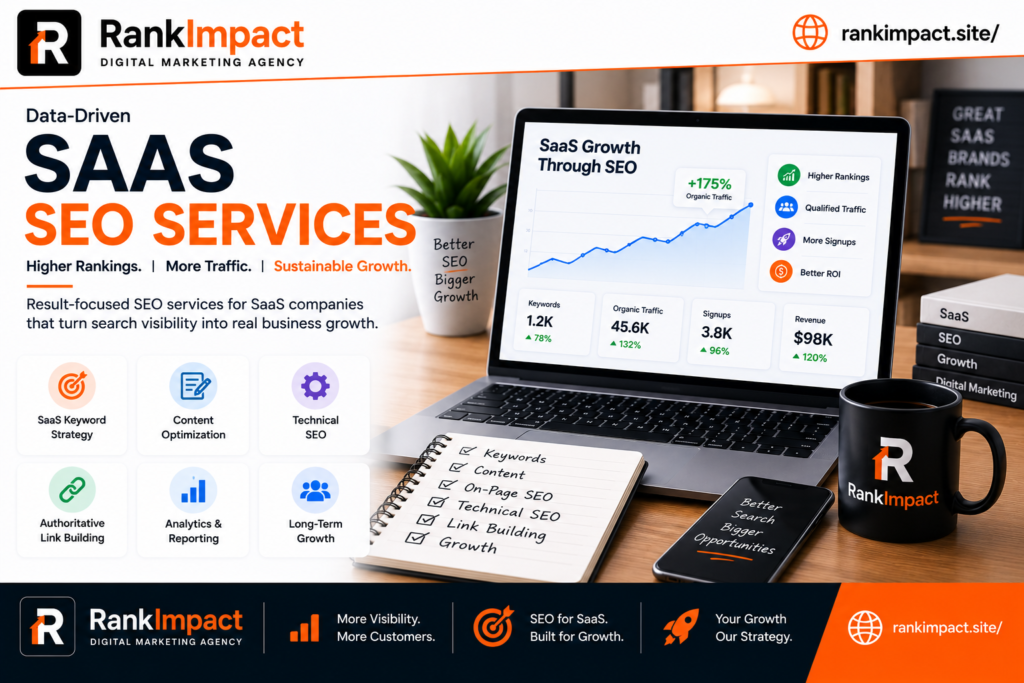
SaaS SEO Services 7 Steps to Choose the Right Partner

Discover 7 key steps to choosing the right SaaS SEO services partner, including what to look for, common mistakes, and pricing tips.

SaaS SEO services

SaaS SEO Services A Complete Guide to Choosing the Right Partner

Choosing between building an internal SEO function and hiring outside help is a decision nearly every growing SaaS company eventually faces, and it rarely has an obvious answer. SaaS SEO services occupy a specific niche within the broader digital marketing industry because ranking a software product involves technical considerations, buyer research patterns, and content depth requirements that differ meaningfully from SEO work in most other industries. A generalist agency comfortable optimizing an ecommerce product page or a local business listing often struggles when asked to build topical authority around a complex software category with a long, research intensive sales cycle.

This guide is written for founders, marketing leaders, and growth teams evaluating whether to bring in SaaS SEO services and, if so, how to actually choose a partner that will deliver genuine results rather than vanity traffic metrics. Readers researching this topic typically fall into a few groups. Some are early stage founders trying to understand what SaaS SEO services actually include before committing budget. Others are marketing leaders who have already tried a generalist agency without success and are trying to understand what a specialized provider does differently. And some are evaluating multiple SaaS SEO services providers and need a framework for comparing them meaningfully. This article addresses all three in depth.

What SaaS SEO Services Actually Include

SaaS SEO services typically cover a combination of strategic, technical, and content focused work specifically tailored to how software buyers research and evaluate products. This usually begins with keyword and topic research grounded in actual buyer intent rather than generic search volume, since a term with high search volume but low genuine buying intent often wastes resources that would be better spent targeting more specific, lower volume terms closer to an actual purchase decision.

Technical SEO work forms another core component, addressing site architecture, page speed, structured data, and crawlability issues that specifically affect how search engines index and understand a SaaS company’s often large and complex website, which frequently includes a marketing site, a documentation section, a blog, and sometimes a separate help center all needing to work together cohesively from a technical indexing standpoint.

Content strategy and production represents the most visible component of most SaaS SEO services, encompassing everything from top of funnel educational content to bottom of funnel comparison and product pages designed to convert readers already deep in an evaluation process. Link building and digital PR often round out a comprehensive service offering, since earning genuine authoritative backlinks remains one of the more difficult but impactful levers within any competitive SEO strategy.

Why SaaS Companies Need a Specialized Approach

Software buyers research differently than consumers or buyers in most other B2B categories, typically consuming a longer sequence of content before ever engaging directly with a sales team, often involving multiple stakeholders within the same purchasing company who each research independently before a group decision is made. SaaS SEO services built around this reality structure content specifically to support this extended, multi stakeholder research process rather than optimizing purely for a single conversion moment.

The competitive landscape within most software categories has also grown considerably more sophisticated, with well funded competitors regularly publishing detailed comparison content, in depth guides, and product led content specifically designed to intercept buyers at every stage of research. Generic SEO tactics that might work adequately in a less competitive industry frequently underperform significantly against this level of sophistication, which is precisely why specialized SaaS SEO services focused specifically on software company growth have become a distinct category within the broader agency landscape.

Search intent within software categories also carries unique complexity, since a single keyword can represent meaningfully different intent depending on subtle phrasing, and providers experienced specifically with SaaS companies tend to recognize these distinctions more reliably than generalist providers accustomed to industries with more straightforward, transactional search behavior.

Core Deliverables to Expect From a Quality Provider

A genuinely comprehensive SaaS SEO services engagement typically begins with a thorough technical and content audit identifying specific gaps and opportunities rather than generic recommendations that could apply to nearly any website. This audit should result in a clear, prioritized roadmap rather than an overwhelming list of every possible improvement without guidance on what actually matters most given the company’s current stage and resources.

Ongoing content production forms the backbone of most engagements, and quality providers typically involve subject matter expertise directly in the process rather than producing generic content written without genuine understanding of the software category or its buyers. This often means structured interviews with a company’s own product and customer success teams to extract genuine expertise that generic freelance writers simply cannot replicate independently.

Regular reporting tied to meaningful business metrics, rather than surface level traffic numbers alone, distinguishes providers genuinely focused on driving pipeline from those primarily focused on demonstrating activity. A provider should be able to clearly connect specific content or technical work to measurable outcomes like organic trial signups or demo requests, even if full attribution remains imperfect given the realistic complexity of a typical SaaS buying journey.

Technical implementation support, not just recommendations, matters considerably as well, since many internal teams lack the bandwidth or specific expertise to implement technical SEO recommendations independently, and a provider willing to work directly within a company’s content management system or alongside its engineering team tends to produce considerably faster and more reliable results than one that simply hands off a list of suggested changes.

How to Evaluate SaaS SEO Services Providers

Reviewing a prospective provider’s own case studies and client results provides useful signal but should be examined critically rather than taken entirely at face value, since traffic growth alone does not necessarily indicate genuine business impact. Asking specifically about how results connected to actual pipeline or revenue for previous SaaS clients reveals considerably more than a chart showing organic traffic climbing over time.

Requesting to speak directly with a current or recent client, ideally one in a similar stage or category to your own company, offers insight that marketing materials alone cannot provide, particularly around how responsive and collaborative the provider actually is once an engagement is underway rather than during the initial sales process when every provider naturally presents its best face.

Evaluating a provider’s own content and organic visibility offers a surprisingly direct signal, since a SaaS SEO services provider that cannot demonstrate strong organic performance for its own website raises legitimate questions about whether they can genuinely deliver that same outcome for a client’s more complex situation.

Understanding exactly who will work on your account day to day, rather than only the senior team members present during the sales process, prevents a common disappointment where impressive initial conversations give way to considerably less experienced staff handling the actual ongoing work once a contract begins.

Common Mistakes Companies Make When Hiring SaaS SEO Services

One of the most frequent mistakes is selecting a provider based primarily on price rather than evaluating genuine fit and experience within the software category specifically, since a lower cost provider lacking real SaaS expertise often ends up costing considerably more in wasted time and missed opportunity than a more expensive specialized provider would have.

Expecting rapid results within the first few months represents another common misstep, since meaningful organic SEO results generally require six to twelve months to materialize even with excellent execution, given how long search engines take to fully recognize and reward genuinely improved topical authority and content depth. Companies that abandon a provider prematurely based on impatience often never see the results that were beginning to build.

Many companies also fail to provide the internal access and collaboration a provider genuinely needs to succeed, treating an external SEO engagement as something that can operate entirely independently without input from product, sales, or customer facing teams who hold genuine expertise the provider needs to produce truly authoritative content rather than surface level material.

Neglecting to align on clear success metrics before an engagement begins creates ongoing friction and unclear expectations later, since a company expecting pipeline impact while a provider is measuring success primarily through traffic growth will inevitably experience a mismatch that becomes apparent only well into the engagement rather than being addressed proactively from the start.

In House SEO Versus Hiring SaaS SEO Services

Deciding between building an internal team and hiring an external provider depends considerably on company stage, budget, and how central organic growth is to the overall growth strategy. Very early stage companies often lack sufficient budget to hire a full internal team while simultaneously lacking sufficient content volume to fully occupy an outside agency’s typical retainer, making a smaller specialized freelancer or boutique provider a more practical starting point than either extreme.

Companies at a more established growth stage frequently find that a hybrid model works best, maintaining a smaller internal team responsible for strategy and internal subject matter coordination while outsourcing specific execution work like technical implementation or content production volume to specialized SaaS SEO services providers who can scale output more flexibly than hiring additional full time staff.

Larger, well resourced companies sometimes eventually build a fully internal team once organic growth has proven itself as a genuinely core growth channel worth dedicated permanent investment, though even at this stage many continue supplementing internal capacity with specialized outside expertise for specific technical audits or competitive analysis work that benefits from an outside perspective.

Pricing Models and Budget Expectations

SaaS SEO services pricing varies considerably depending on scope, provider experience level, and whether an engagement includes content production volume or focuses primarily on strategy and technical work. Monthly retainer models remain the most common structure, typically scaling based on the volume of content produced and the depth of ongoing technical and strategic involvement included within the engagement.

Project based pricing sometimes applies to discrete work like a comprehensive technical audit or a content migration project with a clearly defined scope and endpoint, though most SaaS companies benefit more from an ongoing retainer relationship given how much organic SEO results depend on sustained, consistent effort over an extended period rather than a single discrete project.

Companies should approach unusually low pricing with healthy skepticism, since genuinely effective SaaS SEO services require meaningful time investment from experienced practitioners, and pricing significantly below typical market rates often indicates either less experienced staff, production heavy content mills prioritizing volume over genuine quality, or unsustainable business practices that eventually affect service quality as a provider scales.

Questions to Ask Before Signing a Contract

Asking directly what specific SaaS categories a provider has worked within previously reveals whether their experience genuinely transfers to your own company’s situation, since expertise gained working with consumer subscription apps does not necessarily transfer smoothly to complex B2B software with a considerably longer and more technical buying process.

Understanding exactly how content topics get selected and approved throughout an engagement clarifies how much internal involvement will genuinely be required, preventing a mismatch where a company expects a provider to work entirely independently while the provider actually expects significant ongoing internal collaboration to produce genuinely authoritative content.

Clarifying what happens to content and any accumulated organic assets if the engagement ends helps avoid an unpleasant surprise later, since some providers structure contracts in ways that complicate a company’s ability to continue benefiting from work already completed after a relationship concludes.

Frequently Asked Questions

What do SaaS SEO services typically include?

SaaS SEO services typically include keyword and topic research grounded in buyer intent, technical SEO work, content strategy and production, and link building specifically tailored to how software buyers research and evaluate products.

How much do SaaS SEO services typically cost?

Pricing varies considerably based on scope and provider experience, though most SaaS companies should approach unusually low pricing with skepticism since genuinely effective work requires meaningful time investment from experienced practitioners.

How long does it take to see results from SaaS SEO services?

Meaningful organic results typically take six to twelve months to materialize, even with excellent execution, given how long search engines take to fully recognize genuinely improved topical authority and content depth.

Should an early stage SaaS startup hire SaaS SEO services or build an internal team?

Early stage companies often benefit most from a smaller specialized freelancer or boutique provider, since they typically lack sufficient budget for a full internal team while also lacking enough content volume for a large outside agency retainer.

What makes SaaS SEO services different from general SEO services?

SaaS SEO services address the longer, multi stakeholder buying process, technical complexity, and competitive content sophistication specific to software categories, requiring genuine category expertise that generalist providers often lack.

How can a company evaluate whether a SaaS SEO services provider is genuinely effective?

Companies should review case studies critically, speak directly with current or recent clients, and examine the provider’s own organic visibility as a direct signal of whether they can genuinely deliver similar results.

Do SaaS SEO services include technical implementation or only recommendations?

Quality providers typically offer direct implementation support rather than only recommendations, since many internal teams lack the bandwidth to execute technical SEO changes independently.

What is the biggest mistake companies make when hiring SaaS SEO services?

The biggest mistake is selecting a provider based primarily on price rather than genuine SaaS specific experience, since a cheaper but less specialized provider often costs more in wasted time and missed opportunity.

Can a hybrid model combining internal staff and outside SaaS SEO services work well?

Yes, many established growth stage companies find a hybrid model effective, maintaining internal strategy and subject matter coordination while outsourcing execution and content volume to a specialized provider.

What should be clarified before signing a contract with a SaaS SEO services provider?

Companies should clarify prior category specific experience, how content topics get selected and approved, and what happens to accumulated content and organic assets if the engagement ends.

Conclusion

Choosing among available SaaS SEO services providers requires looking well beyond a polished pitch deck toward genuine category specific experience, transparent reporting tied to real business outcomes, and a collaborative approach that treats a company’s own product and customer expertise as essential to producing content that actually deserves to rank. Companies that invest the time to evaluate providers rigorously, set realistic timeline expectations, and maintain genuine internal collaboration throughout an engagement consistently see stronger, more sustainable results than those that treat outside SEO help as a hands off solution requiring no meaningful internal involvement.

Key Takeaways

SaaS SEO services differ meaningfully from general SEO work due to longer buying cycles, multiple stakeholders, and considerably more sophisticated competitive content within most software categories. A comprehensive engagement should include technical implementation support, not only strategic recommendations left for an internal team to execute independently. Evaluating a provider’s own organic visibility and speaking directly with current clients reveals considerably more than marketing materials or case studies alone. Meaningful results typically require six to twelve months, and companies that abandon a provider prematurely often never see results that were genuinely beginning to build. A hybrid model combining internal strategic ownership with outsourced execution frequently works best for companies at a more established growth stage.

SaaS Content Marketing A Complete Guide for 2026

Discover how SaaS content marketing actually drives growth, common mistakes to avoid, and how to measure results in this complete strategy guide.

 SaaS content marketing

SaaS Content Marketing A Complete Guide to Growing Your Software Business

Every SaaS company eventually reaches a point where paid acquisition alone cannot sustain growth at a reasonable cost, and that is usually the moment leadership starts taking content seriously. khttps://www.quoleady.com/best-saas-content-marketing-blogs/

has become one of the most reliable long term growth channels in software because buyers of business software research extensively before ever speaking to a sales representative. A well built content program does not just generate traffic. It builds trust with a technical and often skeptical audience, shortens sales cycles by answering objections before they arise, and compounds in value over time in a way paid channels simply do not.

This guide is written for marketing leaders, founders, and content strategists at SaaS companies who want to understand what actually drives results in this space rather than repeating generic advice that ignores how software buyers actually behave. Readers researching this topic typically include early stage founders trying to build a content function from scratch, marketing managers looking to improve an underperforming existing program, and content specialists who understand writing but need a clearer picture of how content ties to SaaS specific metrics like trial signups and expansion revenue. This article addresses all three by covering strategy, execution, and measurement in depth.

What Makes SaaS Content Marketing Different

SaaS content marketing differs from content marketing in most other industries because the buying process is longer, more research intensive, and often involves multiple stakeholders within the purchasing company. A single piece of content rarely closes a deal. Instead, effective SaaS content works as part of a longer nurture sequence where a potential buyer might read a comparison article, later download a guide, eventually attend a webinar, and only then request a demo weeks or months after the first interaction.

The audience is also typically more technically literate and skeptical of marketing language than consumer audiences, which means content that leans on vague superlatives or unsubstantiated claims tends to underperform compared to content grounded in specifics, data, and genuine product expertise. Buyers researching software solutions can usually detect thin or superficial content quickly, and that impression transfers directly to how they perceive the credibility of the product itself.

Finally, SaaS content marketing operates within a subscription business model where the goal extends beyond initial acquisition into retention and expansion. Content aimed at existing customers, such as onboarding guides and advanced use case articles, plays a meaningful role in reducing churn and increasing account value, which is a dimension largely absent from content strategy in transactional business models.

Building a Content Strategy Rooted in Buyer Intent

Effective SaaS content marketing begins with mapping content directly to the stages of the buyer journey rather than producing content based purely on internal ideas about interesting topics. Top of funnel content addresses broad problems your target audience faces, often without mentioning your product directly, and exists primarily to build awareness and demonstrate expertise. Middle of funnel content narrows toward specific solutions and often includes comparison content, in depth guides, and case studies that help a prospect evaluate options seriously. Bottom of funnel content directly supports the final decision, including detailed product pages, pricing explanations, and customer success stories that reduce remaining hesitation before a purchase.

Keyword research should inform this strategy but should never become the sole driver of topic selection. Understanding what your ideal customer profile actually struggles with, gathered directly from sales calls, support tickets, and customer interviews, consistently produces stronger content ideas than keyword tools alone, since search volume data cannot tell you which problems matter most to the specific segment you are trying to reach.

Competitive content analysis remains valuable but should focus on identifying genuine content gaps rather than simply matching what competitors have already published. If every competitor in your space has written a surface level article on a broad topic, there is a real opportunity in producing something meaningfully deeper that addresses the nuances practitioners actually encounter rather than adding another shallow entry to an already crowded topic.

Content Formats That Perform Well for SaaS Companies

Long form educational guides that thoroughly address a specific problem tend to perform exceptionally well for SaaS companies because they build topical authority while serving genuine reader need, particularly when a topic touches on complex workflows where readers are actively searching for comprehensive answers rather than quick tips.

Comparison and alternative pages address searches from buyers actively evaluating multiple tools, and these pages convert unusually well because the reader is already deep in an active buying process rather than early stage research. Writing these honestly, acknowledging genuine competitor strengths rather than dismissing them, builds far more credibility than one sided comparisons that readers quickly recognize as biased marketing content.

Customer case studies remain one of the most persuasive content formats in SaaS specifically because they provide social proof from a similar type of buyer facing a similar problem, and detailed case studies that include specific metrics and honest discussion of implementation challenges consistently outperform vague success story templates.

Original research and data driven content, such as industry benchmark reports or survey findings, generates strong backlink activity and media attention that few other content formats achieve, since journalists and other content creators actively seek original data to reference rather than recycling existing information.

Product led content, including detailed feature explanations and use case walkthroughs, supports users already in a trial or evaluation period by helping them understand how to actually apply the product to their specific situation, which directly influences trial to paid conversion rates.

Common Mistakes in SaaS Content Marketing

One of the most frequent mistakes is producing content exclusively focused on the product itself rather than the broader problems and workflows the product exists within. Readers researching a problem are rarely ready to read purely promotional content, and articles that pivot too quickly into product pitches tend to lose reader trust and abandon the educational value that initially attracted them.

Inconsistent publishing cadence undermines many otherwise well intentioned content programs. Content marketing compounds over time, and a program that publishes intensively for a few months before going dormant loses the momentum needed to build meaningful search visibility and audience trust. A sustainable, even modest, consistent cadence outperforms sporadic bursts of high volume publishing followed by long gaps.

Many SaaS companies also neglect updating existing content after publication, treating each article as a finished project rather than a living asset that requires periodic refreshing as the product evolves, competitors change, and search intent shifts. Older high performing articles that go stale gradually lose rankings, and a regular content audit identifying pages needing updates often produces faster results than producing entirely new content.

Failing to align content marketing with sales and customer success teams represents another significant gap. Content teams operating in isolation from the frontline teams talking to customers daily miss enormously valuable insight into actual objections, common questions, and language customers use, all of which should directly inform content topics and messaging.

Finally, many companies measure content success using vanity metrics like page views alone rather than metrics tied to actual business outcomes such as trial signups, demo requests, or influenced pipeline, which makes it difficult to demonstrate content’s actual contribution to revenue and can lead to premature program cuts during budget reviews.

Distribution Strategies Beyond Search Engine Optimization

While organic search remains a primary channel for most SaaS content programs, relying exclusively on search traffic creates unnecessary vulnerability to algorithm changes and leaves substantial reach on the table. Email newsletters distributed to an existing subscriber base extend the life of each piece of content well beyond its initial publication and help nurture prospects who are not yet ready to buy.

Community engagement within platforms where your target audience already gathers, whether industry specific forums, professional communities, or relevant social platforms, allows content to reach audiences who may never encounter it through search alone, provided the engagement feels genuinely helpful rather than promotional.

Strategic partnerships with complementary companies serving the same audience, through guest content exchanges or co created resources, expose your content to an already qualified audience that trusts the partner’s recommendation, often producing higher quality traffic than cold organic discovery alone.

Paid promotion of your strongest performing content, even at a modest budget, can accelerate initial traction for pieces that show early organic promise, helping content reach the audience and engagement signals needed to compete for competitive search rankings faster than waiting for organic growth alone.

Measuring the Impact of SaaS Content Marketing

Meaningful measurement requires connecting content performance to metrics that matter to the broader business rather than stopping at surface level traffic numbers. Tracking which content pieces influence trial signups or demo requests, using attribution models appropriate to your typical sales cycle length, provides a much clearer picture of actual business impact than organic traffic alone.

Engagement quality metrics, including average time on page and scroll depth, help distinguish between content that genuinely satisfies reader intent and content that attracts clicks but fails to deliver real value, which search engines increasingly account for when determining long term rankings.

For content specifically targeting existing customers, tracking correlation between content consumption and reduced churn or increased expansion revenue demonstrates a dimension of content value that pure acquisition focused reporting misses entirely, and this data often proves persuasive when advocating for continued content investment during budget discussions.

Search visibility tracking across your core topic areas, rather than monitoring individual keyword rankings in isolation, provides a better indicator of growing topical authority over time, since search engines increasingly reward comprehensive coverage of a subject area rather than isolated optimization around individual search terms.

Building Topical Authority Over Time

Search engines increasingly favor websites that demonstrate comprehensive expertise across an entire topic area rather than isolated high quality individual articles scattered across unrelated subjects. Building genuine topical authority in SaaS content marketing means systematically covering the full breadth of a subject area your audience cares about, with clear internal linking connecting related articles into a coherent resource rather than a disconnected collection of blog posts.

This approach also compounds in effectiveness over time because each new piece of content benefits from the established authority and internal linking structure already built by previous content, making topical clusters increasingly efficient to rank as they grow rather than each new piece starting from zero authority independently.

Frequently Asked Questions

What is SaaS content marketing?

SaaS content marketing is the practice of creating educational and informative content specifically designed to attract, engage, and convert software buyers throughout a typically long and research intensive purchasing process.

How is SaaS content marketing different from ecommerce content marketing?

SaaS content marketing addresses longer sales cycles, multiple stakeholders, and technically sophisticated buyers, and extends beyond acquisition into retention and expansion content for existing customers, unlike the primarily transactional focus common in ecommerce content.

How often should a SaaS company publish new content?

Consistency matters more than raw volume, and most successful programs maintain a sustainable weekly or biweekly cadence rather than publishing intensively in bursts followed by long periods of inactivity.

What content format converts best for SaaS companies?

Comparison and alternative pages typically convert at the highest rate because they capture readers already deep in an active evaluation process, though long form educational guides drive the most overall traffic and topical authority.

Should SaaS companies update old content or only create new content?

Regularly updating existing high performing content often produces faster measurable results than creating new content, since refreshed articles can recover lost rankings and improve conversion without needing to build authority from scratch.

How does content marketing support customer retention in SaaS?

Content aimed at existing customers, including onboarding guides and advanced use case articles, helps users extract more value from the product, which directly correlates with reduced churn and increased account expansion over time.

What metrics matter most for measuring SaaS content marketing success?

Metrics tied to business outcomes, such as content influenced trial signups and pipeline, matter significantly more than surface level traffic numbers alone, since traffic without business impact does not justify continued investment.

How long does it take to see results from SaaS content marketing?

Meaningful organic results typically take six to twelve months to materialize given the time required to build topical authority and rank competitively, though earlier wins are possible through distribution channels beyond search alone.

Does SaaS content marketing still work without a large budget?

Yes, since consistency and genuine subject matter expertise matter more than budget size, and many successful SaaS content programs began with a single dedicated writer producing consistently rather than a large team.

How should content teams work with sales teams in a SaaS company?

Content teams should regularly gather insight from sales calls and customer conversations to inform topic selection and messaging, since frontline teams often understand actual buyer objections and language far better than content teams working in isolation.

Conclusion

SaaS content marketing succeeds when it is built around genuine buyer research rather than internal assumptions about interesting topics, executed with consistency rather than sporadic bursts, and measured against real business outcomes rather than surface level traffic metrics. Companies that treat content as a long term compounding asset, connected across a coherent topical structure and continually refreshed as the market evolves, consistently outperform those chasing short term traffic spikes with disconnected, one off articles.

Key Takeaways

SaaS content marketing requires mapping content to distinct buyer journey stages rather than producing content based purely on internal preference. Comparison pages and case studies tend to convert particularly well because they reach buyers already deep in an active evaluation process. Common mistakes include product focused content that ignores genuine reader problems, inconsistent publishing, and neglecting to update existing content over time. Measuring success against business outcomes like trial signups and pipeline influence matters far more than tracking page views alone. Building genuine topical authority through comprehensive, internally linked coverage of a subject area compounds in effectiveness over time far more than isolated individual articles.

Get Your FREE SEO Audit

Enter your details below. Our team will review your website and email you a comprehensive SEO and speed report within 24 hours.