+92 318 3068833 Get Free Audit

7 Things To Know About What Is SaaS Sales In 2026

Learn what is saas sales with a complete beginner friendly guide covering the process key roles required skills and how it differs from traditional sales.
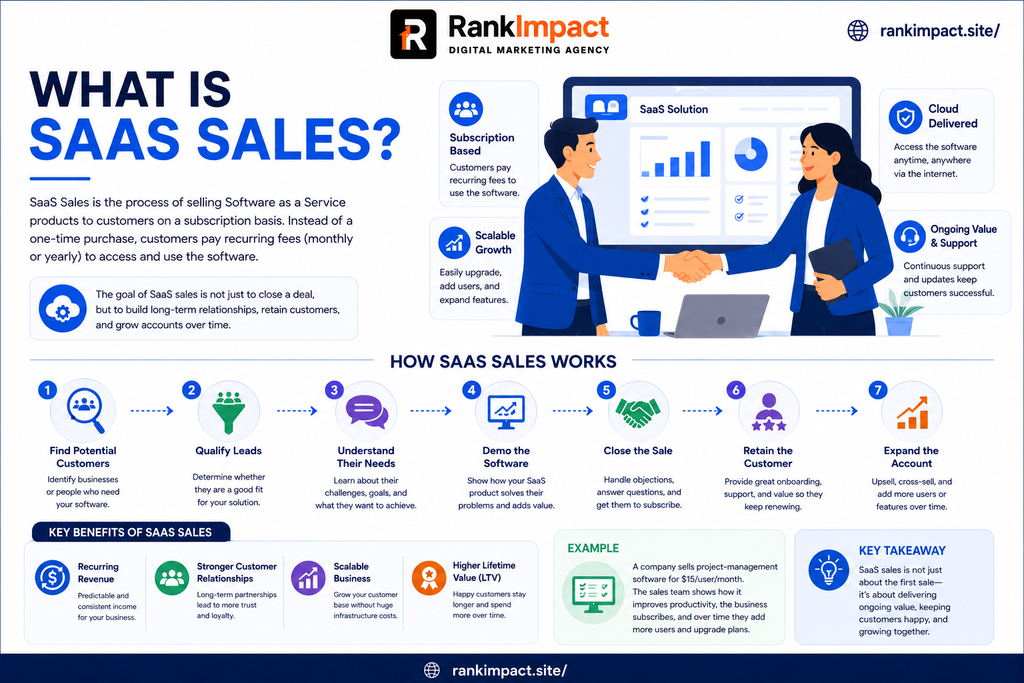
What is SaaS sales with a sales representative demonstrating software.

1 What Is SaaS Sales

What is saas sales, in the simplest terms, is the process of selling software that customers access through a subscription rather than a product they purchase once and own outright. A saas sales professional guides a prospective customer from first learning about a product through evaluation, negotiation, and finally signing a subscription agreement, and in many companies that same person or team stays involved afterward to support renewal and expansion of the account. Because the software is delivered through the cloud rather than installed on a customer’s own servers, the sales process often includes live product demonstrations, trial periods, and close collaboration with technical evaluators who need to confirm the software actually solves their problem before a purchase decision is made. Unlike selling a physical product or a one time service, the ongoing nature of a subscription means the relationship between buyer and seller does not end at the signature, which shapes almost every part of how this type of selling is structured and measured. Anyone new to the field should start with this basic definition before moving on to specific tactics, since a solid answer to what is saas sales makes every later concept, from qualification to renewal, much easier to understand.

2 Why Understanding SaaS Sales Matters

The software industry has become one of the largest and fastest growing career paths in sales, and Understanding what is saas sales matters whether you are considering a career in the field or building a company that depends on this function to grow. Software companies rely heavily on recurring revenue, which means the sales team is not just responsible for closing new deals but also plays a role in customer retention and expansion, since a poorly qualified deal or an overpromised feature during the sales process often leads directly to churn later on. This retention focused reality is a core part of any honest answer to what is saas sales, since closing the deal is genuinely only half the job. For job seekers, this field offers strong earning potential and clear career progression from entry level roles into more senior positions, and many of the skills learned are transferable across the technology industry more broadly. For founders and business leaders, understanding the fundamentals of this discipline helps in hiring the right people, setting realistic expectations for a new sales team, and recognizing what a healthy versus unhealthy sales process actually looks like as the company scales. Even leaders who will never carry a quota themselves benefit from knowing what is saas sales at a foundational level, since it helps them evaluate whether the process their team follows actually reflects best practice or has quietly drifted into bad habits.

3 How The SaaS Sales Process Typically Works

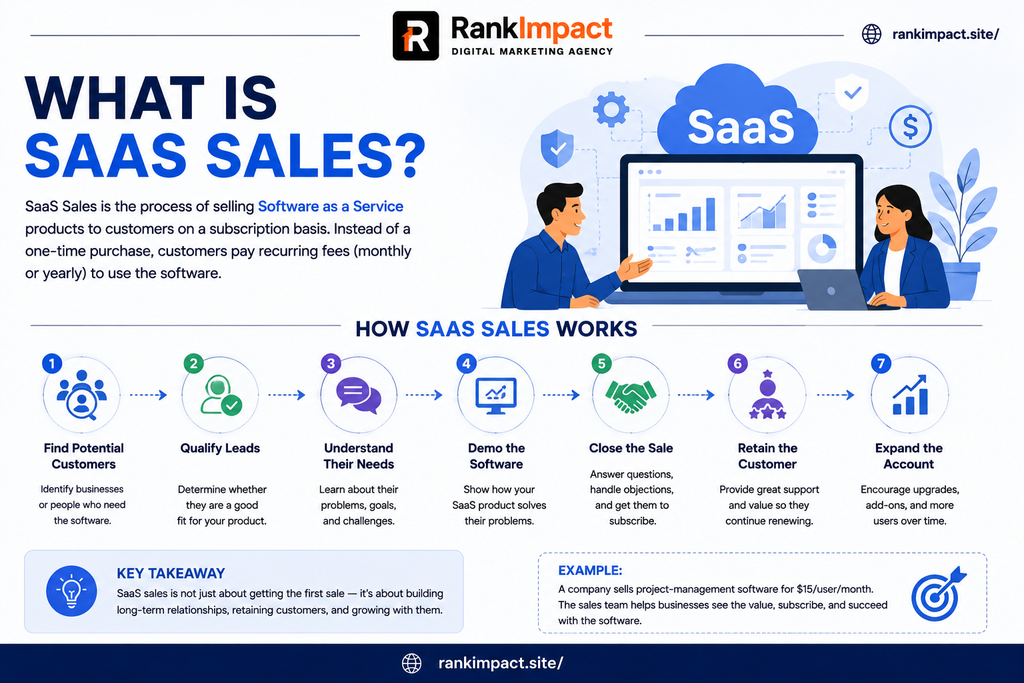
The process generally begins with lead generation, where marketing efforts or outbound prospecting identify potential customers who might benefit from the product. Understanding what is saas sales at this stage mostly means understanding how a name on a spreadsheet becomes a genuine, qualified conversation. Once a lead shows interest, a sales representative typically qualifies the prospect by confirming they have a genuine problem the product solves, the budget and authority to make a purchase decision, and a reasonable timeline for solving that problem. This qualification step is one of the most practical parts of what is saas sales, since skipping it wastes time on both sides of the conversation. Discovery calls follow, where the rep asks detailed questions to understand the prospect’s specific situation rather than immediately pitching features, since understanding the actual problem leads to a far more persuasive and relevant conversation later on. A product demonstration usually comes next, tailored to the specific use case uncovered during discovery rather than a generic walkthrough of every feature the software offers. Skipping straight to a generic demo is one of the fastest ways to undersell what is saas sales actually capable of accomplishing for a specific prospect. From there, the deal typically moves into proposal and negotiation, where pricing, contract terms, and any final questions from stakeholders get resolved before the customer signs. Many companies also include a trial or pilot period at some point in this process, giving the prospect hands on experience with the product before committing to a full contract, which builds confidence and reduces the perceived risk of the purchase decision. This full sequence, from first outreach to signed contract, is really the practical answer to what is saas sales when you see it play out in a real deal rather than described in the abstract.

4 Key Roles Within A SaaS Sales Team

A typical sales organization includes several distinct roles working together rather than one person handling the entire process alone, which is another piece of the puzzle for anyone still working out what is saas sales looks like in practice inside a real company. Sales development representatives focus on the earliest stage of the funnel, researching and reaching out to potential customers to generate qualified conversations for the rest of the team. Understanding this entry point is often the fastest way to grasp what is saas sales from the ground up, since it is where most newcomers to the field actually start. Account executives typically own the deal from qualified conversation through close, running discovery calls, demos, and negotiations to bring the sale across the finish line. This is often the role people picture first when they ask what is saas sales, though it is really only one piece of a larger team effort. Sales engineers or solutions consultants support more technical deals by answering detailed product questions and helping evaluate whether the software will integrate properly with a prospect’s existing systems. This technical layer is a part of what is saas sales that often surprises people coming from a purely relationship driven sales background. Customer success or account management roles often pick up the relationship after the initial sale, focusing on onboarding, ongoing support, and identifying opportunities for the customer to expand their subscription over time. This handoff is a defining piece of what is saas sales that has no real equivalent in most traditional one time sales environments. Sales leadership roles oversee the entire function, setting targets, coaching the team, and ensuring the overall process stays efficient as the company grows, and understanding how these roles connect helps explain why this field offers so many different entry points and career paths. Whichever role you enter through, the underlying answer to what is saas sales stays the same, everyone on the team is ultimately working toward the same recurring revenue outcome from a different angle.

5 Skills That Matter Most In SaaS Sales

Strong communication and active listening consistently rank among the most important skills, since understanding a prospect’s actual problem requires genuinely hearing what they say rather than waiting for a chance to pitch. These skills matter just as much as knowing what is saas sales in theory, since even a perfect definition does not close a single deal without the ability to actually execute a conversation well. Comfort with technology and a willingness to learn the product deeply also matters significantly, since a rep who cannot speak confidently about how the software actually works will struggle to build credibility with technical evaluators. Resilience is essential because rejection is a normal and frequent part of the job, and the reps who succeed long term are typically the ones who can handle a string of no answers without losing motivation or confidence. This resilience factor rarely shows up in a short definition of what is saas sales, but it is one of the biggest predictors of who actually lasts in the field. Organization and time management matter more than many newcomers expect, since a rep juggling dozens of active deals at different stages needs a reliable system to avoid letting opportunities slip through the cracks. This operational discipline is an underrated part of what is saas sales that rarely gets mentioned in beginner focused overviews. Finally, a genuine consultative mindset, meaning a focus on solving the customer’s problem rather than simply pushing toward a signature, tends to separate top performers from reps who close fewer deals and struggle with renewal rates on the accounts they do win.

6 How SaaS Sales Differs From Other Types Of Sales

Traditional retail or one time product sales end the relationship at the point of purchase, while this type of selling treats the sale as the beginning of an ongoing relationship built around renewal and expansion, which is one of the clearest ways to explain what is saas sales to someone coming from a different sales background entirely. Pricing structures also differ meaningfully, since subscription products are often priced per user, by usage, or through tiered plans rather than a single flat price, which requires a rep to understand a prospect’s likely growth trajectory to recommend the right plan. This pricing complexity is a big part of what makes what is saas sales genuinely different from selling something with a single fixed price tag. The sales cycle length varies more widely as well, ranging from same day self serve purchases for low cost products to multi month enterprise deals involving several stakeholders and a formal procurement process. Buying committees also tend to be more complex in this space, often including a technical evaluator, an economic buyer, and an end user champion, each of whom needs to be addressed differently during the sales process, which is quite different from the more straightforward single decision maker dynamic common in many traditional retail transactions. This complexity is one more reason a full answer to what is saas sales needs more than a single sentence to actually make sense.

7 Common Mistakes People Make When Learning SaaS Sales

New reps often make the mistake of pitching product features immediately instead of first understanding the prospect’s actual problem, which makes even a genuinely useful product sound generic and forgettable. This is often the first hard lesson anyone learns after moving past the textbook definition of what is saas sales and into an actual live conversation with a prospect. Another common mistake is neglecting to build relationships with multiple stakeholders on a deal, relying entirely on a single champion who may lose influence or leave the company before the deal closes. Many newcomers also underestimate how much technical product knowledge matters, assuming charisma alone can carry a deal, when in reality prospects increasingly expect a rep to answer detailed questions about how the software actually works. Ignoring the post sale relationship is another frequent mistake, since a rep who disappears the moment a contract is signed misses valuable opportunities for referrals, expansion revenue, and a strong reputation that leads to future deals. Anyone still learning what is saas sales should treat this lesson as essential, since the post sale relationship is where long term earning potential actually comes from. Finally, treating every prospect the same way regardless of their specific situation tends to produce mediocre results, since the most successful reps consistently tailor their approach to each buyer’s actual needs rather than running through a rigid, one size fits all script.

Frequently Asked Questions

What is saas sales in the simplest terms?

What is saas sales comes down to this, it is the process of selling subscription based software, guiding a prospective customer from first interest through a signed agreement and often supporting them afterward to encourage renewal and expansion.

Do I need a technical background to work in saas sales?

No, a technical background is not required, though a genuine willingness to learn the product deeply and understand how it solves customer problems is essential for building credibility during the sales process. Many people asking what is saas sales assume it requires a computer science degree, when in reality curiosity and strong communication skills matter far more.

How long does it typically take to close a saas sales deal?

Deal length varies significantly based on price and complexity, ranging from same day self serve purchases for low cost products to several months for larger enterprise deals involving multiple stakeholders and formal approval.

What entry level roles exist in saas sales?

Sales development representative is the most common entry point, focusing on prospecting and qualifying leads before handing them off to an account executive who manages the deal through to close.

Is saas sales a good career choice?

Yes, this field generally offers strong earning potential, clear career progression, and transferable skills, making it an attractive option for people entering sales or transitioning from another industry, which is often the real reason so many people search what is saas sales in the first place.

What is the difference between saas sales and traditional sales?

The biggest difference is that saas sales focuses on an ongoing subscription relationship built around renewal and expansion, while traditional sales typically ends the relationship at the point of a one time purchase, which is really the heart of what is saas sales as a distinct discipline.

What tools do saas sales teams typically use?

Most teams rely on a customer relationship management platform to track deals, a sales engagement tool for outreach, and often a conversation intelligence tool to analyze calls and improve performance over time, all of which support the day to day mechanics behind what is saas sales in a modern organization.

How is commission structured in saas sales?

Commission structures vary by company, but many pay a base salary plus commission tied to closed deals, and some companies also include a component tied to renewal or expansion revenue to reward long term account health, which reflects how what is saas sales differs meaningfully from a commission model built purely around one time transactions.

What skills should I develop to succeed in saas sales?

Strong communication, active listening, resilience, organization, and a consultative mindset focused on solving customer problems consistently separate top performers from reps who struggle to hit their targets, and developing these skills is really the practical side of learning what is saas sales beyond just memorizing a definition.

Can someone with no sales experience break into saas sales?

Yes, many companies hire entry level sales development representatives with little or no prior experience, since this role focuses on developing foundational skills that build toward more senior sales positions over time, which makes what is saas sales a genuinely practical question for someone considering a first career move rather than just an academic one.

How does saas sales actually feel different day to day compared to what people expect?

Most newcomers expect constant cold calling and pressure tactics, but the reality of what is saas sales in a modern, healthy organization looks more like structured research, thoughtful discovery conversations, and consultative problem solving, with far more listening than talking involved in a typical week. This day to day reality is often the most surprising part of what is saas sales for anyone coming in with outdated assumptions about the field.

Conclusion

What is saas sales ultimately comes down to a straightforward idea, it is the process of guiding a prospective buyer through evaluating and purchasing subscription software, then supporting that relationship well beyond the initial signature. Understanding this field means understanding both the mechanics of the sales process and the mindset that separates top performers from everyone else, a genuine focus on solving the customer’s problem rather than simply pushing toward a close. Whether you are exploring this as a career path or trying to build your first sales process as a founder, the fundamentals stay the same, listen more than you pitch, understand the product deeply, and treat every closed deal as the start of a relationship rather than the end of one. Build on that foundation and the rest of the skills needed in this field become far easier to develop over time, and the next time someone asks you what is saas sales, you will have a genuinely complete answer rather than a one line definition.
Key Takeaways

What is saas sales comes down to selling subscription software and supporting the customer relationship well beyond the initial sale The process typically moves through lead generation, qualification, discovery, demo, proposal, and close Key roles include sales development representatives, account executives, sales engineers, and customer success professionals Communication, resilience, organization, and a consultative mindset consistently separate top performers from the rest This field differs from traditional sales mainly through its focus on renewal and expansion rather than a single transaction Entry level roles like sales development representative make what is saas sales a genuinely accessible career path for newcomers.
SaaS Lead Generation Guide 2026 Strategies That Convert

Learn proven saas lead generation strategies for 2026 covering content SEO paid ads and product led growth to attract and convert qualified customers.

saas lead generation

What Is SaaS Lead Generation

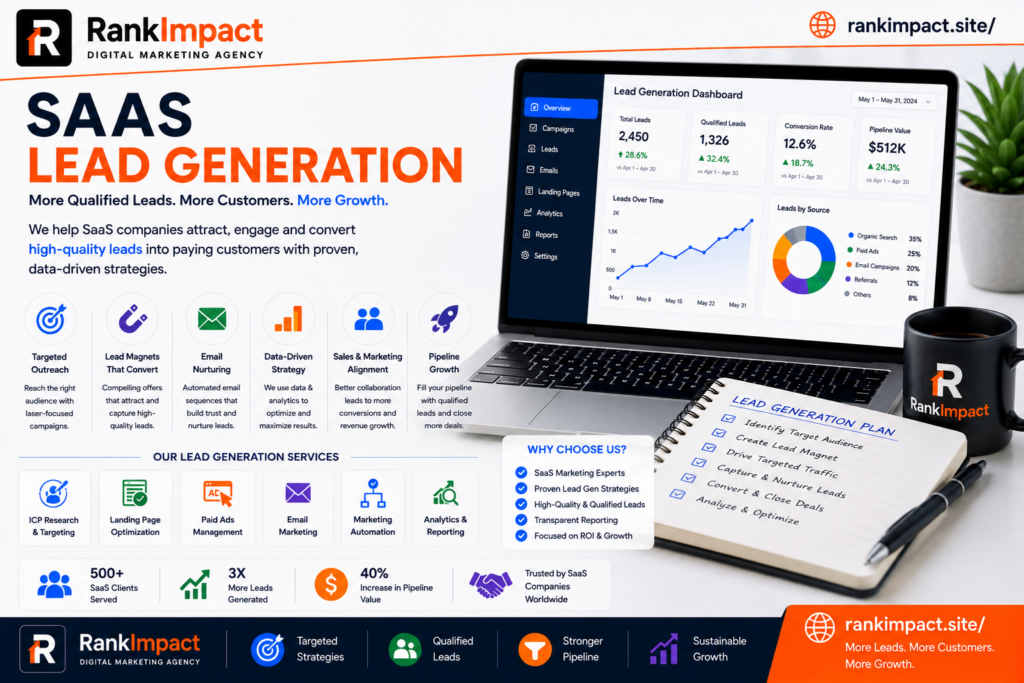
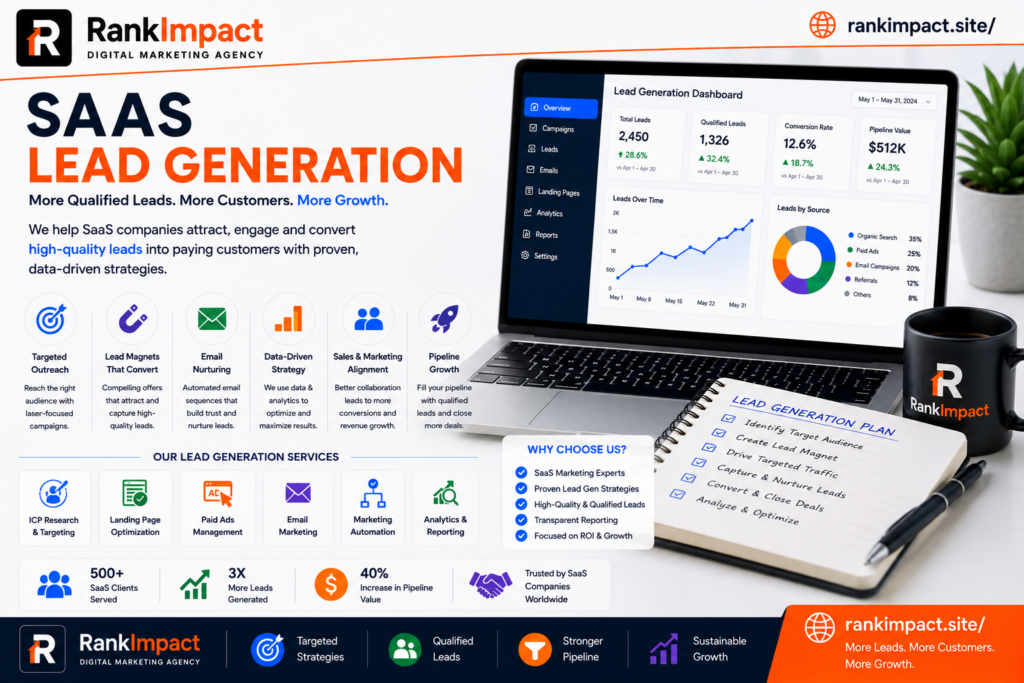
Saas lead generation is the process of attracting identifying and nurturing potential customers for a software as a service product until they are ready to start a trial book a demo or make a purchase. Unlike traditional lead generation that might rely heavily on cold calling or print advertising saas lead generation typically centers around digital channels such as content marketing search engine optimization paid advertising and product led growth tactics that let prospects experience value before ever speaking to a sales representative.

The goal of saas lead generation is not simply to collect as many email addresses as possible but to attract the right audience people who genuinely have the problem your software solves and the budget authority to purchase it. Because saas products are usually sold on a recurring subscription basis the quality of a lead matters just as much as the volume since a poorly matched customer will likely churn within a few months and drag down the overall business economics.

Why SaaS Lead Generation Is Different From Traditional Marketing

Saas lead generation operates under a unique set of dynamics that traditional product marketing does not face. Because software is often sold through recurring subscriptions the customer relationship does not end at the point of sale. This means saas lead generation strategies need to attract customers who are likely to stay engaged renew their subscription and eventually expand their usage rather than simply making a single transaction and disappearing.

Trial and freemium models also set saas lead generation apart from other industries. Many software companies allow prospects to use a limited version of the product for free or test the full version for a set number of days before committing to payment. This approach shifts a significant part of the lead generation process toward proving value quickly rather than relying purely on persuasive sales copy or discount offers.

The buying committee involved in software purchases tends to be more complex as well. A single saas lead generation campaign might need to appeal to an end user who will use the product daily a department manager who controls the budget and an IT or security team that needs to approve the tool before it can be adopted company wide. Successful campaigns account for all of these stakeholders rather than targeting only one persona.

Core Channels for SaaS Lead Generation

Content marketing remains one of the strongest pillars of saas lead generation because it allows companies to attract prospects who are actively searching for solutions to a specific problem. Blog posts comparison guides and educational resources that answer real questions build trust over time and often convert better than paid advertising because the reader arrives already interested in the topic rather than being interrupted by an ad.

Search engine optimization works closely alongside content and deserves its own focus within saas lead generation strategy. Ranking for keywords related to the problems your software solves ensures a steady stream of organic traffic that does not require ongoing ad spend. Long term saas lead generation programs that invest early in search visibility often see compounding returns as older articles continue generating leads years after publication.

Paid advertising through search and social platforms remains a valuable channel for saas lead generation especially when a company needs faster results than organic content can provide. Search ads tend to work well for capturing high intent prospects who are already searching for a solution while social ads are often more effective for building awareness among an audience that may not yet realize they have the problem your product solves.

Product led growth has become an increasingly popular saas lead generation strategy where the product itself acts as the primary acquisition channel. Free trials freemium tiers and interactive demos let prospects experience the value of the software firsthand which often shortens the sales cycle and reduces the burden placed on marketing content and sales conversations alone.

Referral and partnership programs round out a well balanced saas lead generation strategy. Existing customers who are genuinely satisfied with a product are often willing to refer colleagues especially when incentivized properly and partnerships with complementary software companies can open access to an entirely new pool of qualified prospects.

Building a High Converting Landing Page for SaaS Lead Generation

A landing page built specifically for saas lead generation needs to communicate value within seconds since visitors arriving from ads or search results rarely have patience for vague messaging. The headline should clearly state what the product does and who it is for while the supporting copy addresses the specific pain point that brought the visitor to the page in the first place.

Social proof plays a critical role in saas lead generation landing pages because software buyers are naturally cautious about committing to a new tool. Customer testimonials case study snippets and recognizable client logos reduce perceived risk and give hesitant visitors the confidence needed to take the next step whether that is starting a trial or booking a demo.

The call to action deserves careful attention as well. A landing page focused on saas lead generation should generally offer a single clear action rather than presenting multiple competing options that create decision fatigue. Reducing form fields to only the essential information needed also tends to improve conversion rates significantly since every additional field creates friction that can cause a prospect to abandon the process.

Nurturing Leads Through the SaaS Funnel

Not every lead captured through saas lead generation efforts is ready to buy immediately and this is where nurturing becomes essential. Email sequences that deliver relevant educational content based on where a prospect entered the funnel help maintain engagement without feeling pushy or overly promotional. A lead who downloaded a beginner guide needs different follow up content than one who requested a product demo.

Lead scoring is a practical tool within saas lead generation that helps sales and marketing teams prioritize their time effectively. By assigning point values to specific actions such as visiting a pricing page attending a webinar or opening multiple emails teams can identify which leads are showing genuine buying signals and route them to sales at the right moment rather than too early or too late.

Marketing automation platforms make it possible to scale saas lead generation nurturing without requiring a large team to manually manage every interaction. Behavioral triggers can automatically send a relevant case study when a prospect visits a specific feature page or alert a sales representative when a high value account shows increased engagement across multiple touchpoints.

Common Mistakes Companies Make With SaaS Lead Generation

One of the most frequent mistakes in saas lead generation is focusing entirely on lead volume while ignoring lead quality. Marketing teams under pressure to hit numbers sometimes cast an overly wide net that generates plenty of form fills but very few leads that actually match the ideal customer profile. This creates frustration for sales teams and inflates the perceived cost of acquiring a genuinely qualified customer.

Another common mistake is neglecting the handoff between marketing and sales. Even a well executed saas lead generation campaign can fail if leads sit untouched for days before a sales representative follows up. Speed to lead matters significantly in software sales since prospects researching multiple vendors will often move forward with whichever company responds first with helpful relevant information.

Many companies also make the mistake of treating saas lead generation as a one time project rather than an ongoing system. Content gets published once and never updated ad campaigns run without regular optimization and landing pages remain unchanged for years despite declining performance. Consistent testing and refinement are necessary to keep results improving over time rather than slowly declining.

Ignoring the post trial experience is another costly error. Companies often pour significant resources into saas lead generation to drive trial signups but then fail to guide those users toward activation and value realization during the trial period. Without a structured onboarding sequence many trial users simply never return leaving strong top of funnel numbers that never translate into paying customers.

Best Practices for Scaling SaaS Lead Generation

Scaling saas lead generation successfully starts with clearly defining an ideal customer profile before increasing spend or content output. Knowing exactly which company size industry and use case represents your best fit customer allows every channel from content to paid ads to be built around attracting that specific audience rather than generic broad appeal.

Diversifying channels is another important practice for sustainable saas lead generation growth. Relying entirely on one source such as paid search or a single content platform creates vulnerability if algorithm changes or rising costs suddenly reduce performance. A balanced mix of organic content paid advertising product led growth and partnerships provides more stability over time.

Aligning sales and marketing teams around shared definitions and goals significantly improves saas lead generation outcomes. When both teams agree on what qualifies as a good lead and communicate regularly about which channels and messaging are producing the best results the entire process becomes more efficient and less prone to wasted effort.

Regularly analyzing data and attribution is essential for improving saas lead generation over time. Understanding which channels and campaigns actually drive customers rather than just leads allows teams to reallocate budget toward what is genuinely working and away from tactics that look good on a dashboard but fail to produce real revenue.

The Future of SaaS Lead Generation

Artificial intelligence is beginning to reshape saas lead generation in meaningful ways particularly through predictive lead scoring that can identify high intent prospects earlier in their research journey. These tools analyze behavioral patterns across thousands of data points to surface signals that a human marketer might easily miss.

Personalization is also becoming more sophisticated within saas lead generation strategies. Rather than sending the same generic message to every visitor modern platforms can dynamically adjust landing page content email messaging and even pricing presentation based on a visitor’s industry company size or previous behavior on the site.

Community driven growth is emerging as another important trend shaping the future of saas lead generation. Companies that build active communities around their product category often generate a steady stream of warm leads through organic discussion recommendations and shared knowledge exchanges that feel far more authentic than traditional advertising ever could.

Frequently Asked Questions

What does saas lead generation mean?

Saas lead generation refers to the process of attracting and converting potential customers for a software as a service product through channels such as content marketing search engine optimization paid advertising and product led growth strategies.

What is the best channel for saas lead generation?

There is no single best channel for saas lead generation since the right mix depends on your target audience and sales cycle though most successful companies combine content marketing search engine optimization and product led growth for balanced long term results.

How long does saas lead generation take to show results?

Paid advertising within saas lead generation can produce leads within days while organic strategies such as content marketing and search engine optimization typically take three to six months to build meaningful momentum but tend to deliver more sustainable long term results.

What is a good conversion rate for saas lead generation landing pages?

Conversion rates for saas lead generation landing pages vary widely by industry and traffic source but a rate between three and five percent is generally considered solid while rates above ten percent are considered excellent for most software categories.

How does product led growth relate to saas lead generation?

Product led growth is a saas lead generation approach where the product itself serves as the primary driver of new customer acquisition through free trials or freemium tiers that let prospects experience value before making a purchase decision.

What is lead scoring in saas lead generation?

Lead scoring is a method used in saas lead generation that assigns point values to specific prospect behaviors such as visiting a pricing page or attending a webinar to help sales teams prioritize which leads are most likely ready to buy.

Should saas lead generation focus more on quality or quantity?

Quality should generally take priority over quantity in saas lead generation because poorly matched customers tend to churn quickly which increases acquisition costs and undermines long term revenue even if initial signup numbers look impressive.

How do sales and marketing teams work together in saas lead generation?

Effective saas lead generation requires sales and marketing teams to agree on a shared definition of a qualified lead and maintain regular communication aboWhat role does content marketing play in saas lead generationut which channels and messaging are converting best so leads are followed up quickly and appropriately.

What role does content marketing play in saas lead generation?

Content marketing plays a central role in saas lead generation by attracting prospects who are actively searching for solutions to their problems and building trust through educational resources before they ever interact with a sales representative.

Can small saas companies compete in lead generation against larger competitors?

Yes small saas companies can compete effectively in lead generation by focusing on a narrow well defined niche producing highly specific content and building genuine community engagement rather than trying to outspend larger competitors on broad advertising campaigns.

Conclusion

Saas lead generation has evolved into a multi channel discipline that blends content search advertising and product experience into a single coordinated system rather than relying on any one tactic alone. Companies that build their saas lead generation strategy around a clearly defined ideal customer profile diversify their channels and maintain tight alignment between sales and marketing consistently outperform those chasing volume without a clear strategic foundation. As artificial intelligence personalization and community driven growth continue reshaping the landscape businesses that invest in a thoughtful adaptable saas lead generation approach today will be best positioned to capture sustainable growth in the years ahead.

Key Takeaways

Saas lead generation focuses on attracting and converting the right prospects for a subscription based software product rather than simply maximizing lead volume

Core channels include content marketing search engine optimization paid advertising product led growth and referral partnerships that work best when combined strategically

High converting landing pages rely on clear value focused headlines strong social proof and a single simple call to action with minimal form friction

Common mistakes include prioritizing quantity over quality neglecting fast sales follow up and treating lead generation as a one time project instead of an ongoing system

Lead scoring and marketing automation help teams prioritize genuinely interested prospects and scale nurturing efforts efficiently

Artificial intelligence personalization and community driven growth are shaping the next generation of effective saas lead generation strategies

Get Your FREE SEO Audit

Enter your details below. Our team will review your website and email you a comprehensive SEO and speed report within 24 hours.