A complete guide to SaaS marketing proven channels content strategy product led growth tactics, and the metrics that actually drive growth in 2026.
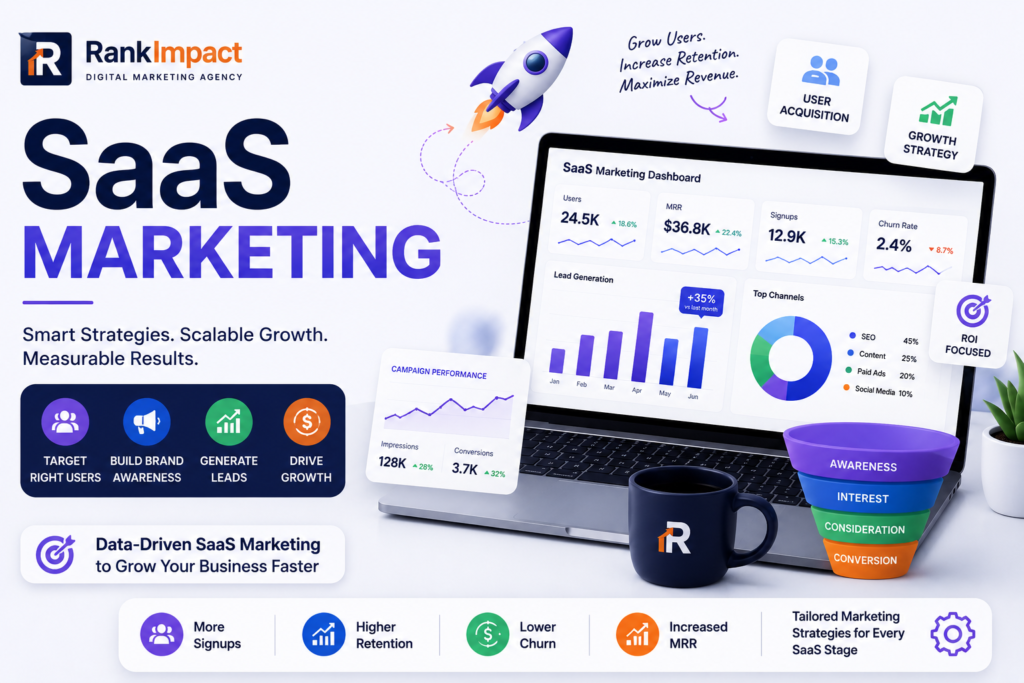
Table of Contents
SaaS Marketing The Complete Framework for Driving Real Growth
Marketing a SaaS product is a fundamentally different game than marketing almost anything else. You’re not selling a single transaction you’re selling a recurring relationship that has to keep proving its value month after month, renewal after renewal. That single fact changes everything about how a smart marketing strategy gets built, from the channels worth prioritizing to the metrics that actually predict long term revenue. This guide walks through what makes marketing for software companies unique, the channels and tactics delivering results right now, how product led growth has reshaped the funnel, and the metrics that separate marketing teams driving real pipeline from those just generating vanity numbers. Whether you’re building a marketing function from scratch or trying to fix one that’s stalled, you’ll find a practical, no fluff framework here rather than another recycled checklist.
What Makes SaaS Marketing Different From Traditional Marketing
At its core, this field revolves around a subscription business model, which means the goal isn’t just to win a customer it’s to win a customer who sticks around long enough, and gets enough value, to justify the cost of acquiring them in the first place. This shifts the entire marketing conversation toward metrics like customer lifetime value, churn, and expansion revenue, none of which matter much in a traditional one time sale business. It also means the marketing team’s job doesn’t end at the signature on a contract. Onboarding emails, in-app messaging, and lifecycle campaigns all fall under the marketing umbrella in a software company in a way they simply don’t for a business selling physical goods. Another defining feature is the length and complexity of the buying journey. Most B2B software purchases involve multiple stakeholders, a trial or demo period, and a research phase that can stretch across weeks or months, which means marketing has to nurture prospects through a much longer consideration window than a typical consumer purchase requires.
Understanding the SaaS Marketing Funnel
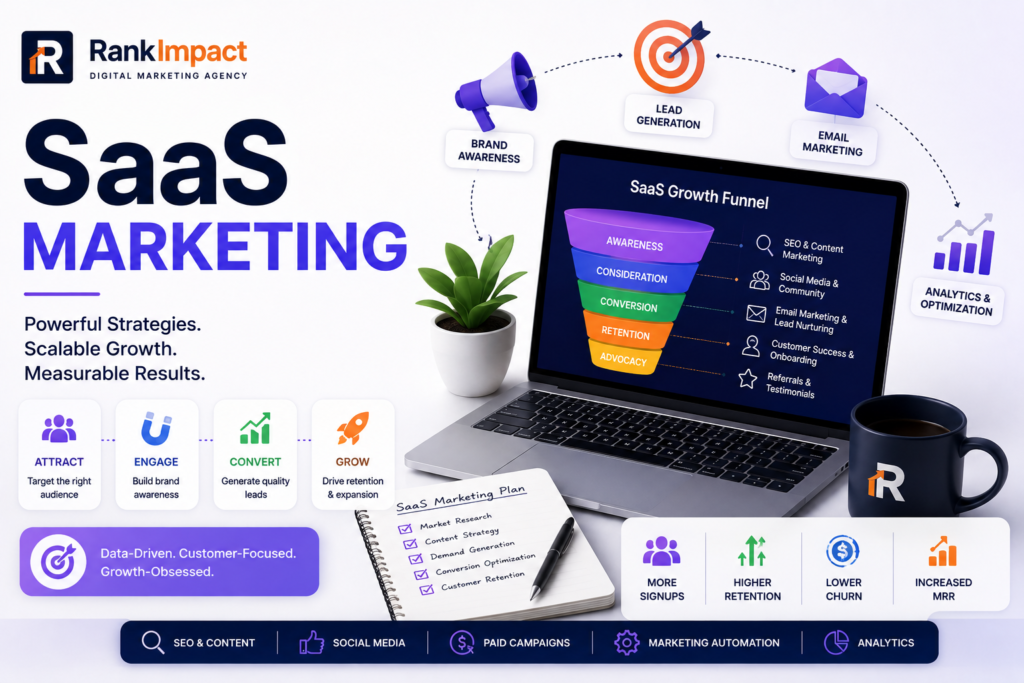
A well built funnel for software companies looks different from a classic awareness to purchase model because software buyers move through distinct stages that each require different content and messaging. At the top, prospects are usually searching for a problem, not a product they know their reporting process is broken or their team is wasting time on manual data entry, but they haven’t necessarily identified the category of tool that solves it. The middle of the funnel is where education and comparison happen, as prospects start evaluating specific solutions, reading reviews, and comparing feature sets against competitors. The bottom of the funnel is where trials, demos, and free tier signups convert into paying customers, and this is where sales and marketing alignment matters most, since a poorly handled trial experience can undo months of upstream nurturing. What separates strong execution from average results is recognizing that the funnel doesn’t end at the sale post purchase onboarding, retention campaigns, and expansion messaging are just as much a marketing responsibility as the content that generated the original lead.
Core Channels That Drive Results in SaaS Marketing
No single channel carries the full weight of a modern go to market strategy, but a handful consistently deliver outsized results. Search engine optimization remains one of the highest leverage channels because it captures demand from prospects actively researching solutions, and unlike paid channels, the traffic keeps compounding long after the content is published. Paid search and social advertising complement organic efforts by targeting high intent keywords and specific job titles or firmographics, which is particularly effective for reaching decision makers who don’t yet know your brand exists. Content marketing, covered in more depth below, builds the trust and authority that shortens sales cycles. Community-led approaches building a Slack group, a user forum, or an active presence in existing communities where your buyers already spend time have become increasingly important as buyers grow skeptical of traditional advertising. Partnerships and integrations marketing, where you co market with complementary tools your customers already use, can also unlock distribution that would be expensive to build through paid channels alone.
Content Marketing for SaaS: Building Authority and Trust
Content sits at the center of most successful growth strategies because software purchases are considered decisions, and buyers do extensive research before ever talking to sales. The most effective SaaS content doesn’t just chase keywords it demonstrates genuine expertise on the problems your product solves, which builds the kind of trust that Google’s Helpful Content guidelines and E-E-A-T signals reward, and that actual human buyers respond to as well. Comparison pages, case studies, and use case specific landing pages tend to perform exceptionally well because they meet prospects at the exact moment they’re evaluating options. Educational content guides, templates, and frameworks that help a prospect solve their problem whether or not they buy your product builds the kind of goodwill that turns readers into advocates over time. It’s worth noting that content marketing for software companies works best as a long game; a single blog post rarely converts a reader into a customer on the first visit, but a consistent library of useful, well targeted content compounds into a durable acquisition channel that keeps performing long after the initial investment.
SEO for SaaS Companies: Why It’s a Long-Term Growth Engine
Search engine optimization deserves its own spotlight within any growth strategy because of how directly it ties to buyer intent. Someone searching best project management software for remote teams is further along in their decision process than someone who clicked a random display ad, which makes organic search traffic disproportionately valuable relative to its cost. Effective SaaS SEO starts with mapping content to the different stages of the buyer journey top of funnel educational content, middle of funnel comparison and alternative pages, and bottom of funnel product and pricing pages all need distinct treatment. Technical SEO also matters more for software companies than many marketers realize, since SaaS websites often have complex site architectures, gated content, and app adjacent pages that can create indexing and crawlability issues if left unmanaged. Building topical authority covering a subject area comprehensively rather than publishing scattered, disconnected posts has become especially important as search engines increasingly reward sites that demonstrate depth across a topic cluster rather than isolated keyword targeting.
Paid Acquisition PPC LinkedIn Ads and Retargeting
Paid channels play a specific role in SaaS marketing capturing high intent demand quickly while organic and content efforts build momentum in the background. Search ads targeting bottom of funnel keywords terms like category software pricing or competitor alternative tend to deliver the strongest return because they reach prospects who are actively comparing solutions. LinkedIn advertising has become a staple for B2B software companies specifically because of its firmographic and job title targeting, which lets marketers reach decision makers with precision that’s harder to replicate on other platforms, even though the cost per click typically runs higher. Retargeting campaigns, which serve ads to visitors who’ve already engaged with your site or content, consistently produce better conversion rates than cold prospecting because they’re re engaging an audience that has already shown interest. The common mistake with paid acquisition is treating it as a standalone channel rather than an amplifier for content and product led efforts the best performing paid campaigns almost always point to a strong landing page or piece of content that was already converting organically.
Product Led Growth and Its Role in SaaS Marketing
Product-led growth has reshaped how many software companies think about marketing entirely, shifting some of the acquisition burden from sales and advertising onto the product itself. In a PLG motion, the free trial or freemium tier becomes the primary conversion mechanism, which means marketing’s job shifts toward driving qualified signups and then nurturing users through onboarding rather than pushing every lead toward a sales conversation. This changes what good marketing content looks like instead of gated whitepapers designed to capture a lead’s email, PLG-oriented content tends to focus on removing friction, answering objections, and showcasing the product’s value as directly as possible. In app messaging, product tours, and lifecycle email sequences become core marketing responsibilities in a PLG company, working alongside traditional content and paid channels rather than replacing them. Not every SaaS business is a fit for a pure PLG approach complex, high price enterprise products often still need sales led motions but even sales-led companies increasingly borrow PLG tactics like interactive demos and self serve trials to shorten their sales cycles.
Email Marketing and Lifecycle Campaigns for SaaS
Email remains one of the most underrated channels for software companies, largely because it’s often treated as an afterthought rather than a strategic lever. Onboarding sequences that guide new users toward their first meaningful product outcome sometimes called the aha moment directly influence whether a trial converts into a paying customer, making this one of the highest leverage email programs a SaaS company can build. Nurture campaigns for prospects who aren’t ready to buy yet keep a brand top of mind without being pushy, gradually building trust through useful, relevant content rather than constant sales pitches. Expansion and upsell campaigns, targeted at existing customers who are good candidates for a higher tier or additional seats, often get less attention than acquisition marketing but can meaningfully boost revenue at a fraction of the cost of winning a new customer. Win back campaigns aimed at churned customers round out a mature lifecycle program, and while conversion rates on these are naturally lower, the cost of reaching an already familiar audience makes even modest results worthwhile.
Metrics That Matter How to Measure SaaS Marketing Success
Vanity metrics like page views and social followers are easy to track but rarely tell you whether your marketing is actually driving business results. Customer acquisition cost, measured against customer lifetime value, is the single most important ratio in evaluating whether a channel or campaign is sustainable a channel that generates leads cheaply but attracts customers who churn quickly isn’t actually efficient, no matter how good the surface-level numbers look. Marketing qualified leads and their conversion rate into sales qualified leads help teams understand where the funnel is leaking, though these metrics matter far less in PLG companies, where product engagement signals often replace traditional lead scoring. Content-specific metrics like organic traffic growth, keyword rankings, and assisted conversions help content teams understand which topics and formats are actually contributing to pipeline rather than just generating traffic for its own sake. For companies with a self serve or freemium motion, activation rate the percentage of signups who reach a meaningful product milestone often matters more than raw signup volume, since it’s a much stronger predictor of eventual paid conversion.
Common Mistakes SaaS Marketers Make
One of the most common mistakes is optimizing for top of funnel volume without a clear plan for converting that traffic into pipeline, which leads to impressive traffic charts that never translate into revenue growth. Another frequent misstep is neglecting the post-signup experience, treating the trial or free tier period as sales’ problem rather than a continuation of the marketing funnel that requires its own strategy and content. Teams also commonly underinvest in customer marketing and retention campaigns, pouring nearly all their budget into new customer acquisition while ignoring the fact that expansion revenue from existing customers is typically far cheaper to generate. Chasing every new channel or tactic without giving any of them enough time to mature is another trap SEO and content marketing in particular take months to show results, and teams that abandon these efforts too early never see the compounding returns that make them worthwhile. Finally, many SaaS marketing teams fail to align closely enough with product and sales, which results in messaging that doesn’t match what the product actually does or objections that sales hears constantly but marketing never addresses in its content.
Best Practices for Building a Strong SaaS Marketing Strategy
Start by getting genuinely clear on your ideal customer profile and the specific problems they’re trying to solve, since every channel and piece of content performs better when it’s built around a sharply defined audience rather than a vague sense of businesses that might need software like ours. Build a content strategy around topical authority rather than isolated keyword targeting, covering your core subject area comprehensively so that search engines and readers alike recognize genuine depth of expertise. Treat your website’s comparison, alternative, and pricing pages as seriously as your homepage, since these often convert at far higher rates than generic marketing content because they meet buyers at a decisive moment in their research. Invest in lifecycle and retention marketing from the start rather than treating it as a later stage priority, since the compounding value of reduced churn and increased expansion revenue tends to outperform pure acquisition spend over time. Finally, build a measurement framework that ties marketing activity to pipeline and revenue rather than surface level engagement metrics, so that budget decisions are grounded in what’s actually moving the business forward.
Frequently Asked Questions
What is SaaS marketing?
SaaS marketing is the set of strategies and channels used to attract, convert, and retain customers for subscription based software products, spanning content, SEO, paid acquisition, product led growth, and lifecycle email campaigns.
How is SaaS marketing different from B2B marketing in general?
While SaaS marketing shares many B2B fundamentals, it places heavier emphasis on retention, expansion revenue, and post-purchase engagement because subscription businesses depend on ongoing customer value rather than a single transaction.
What channels work best for SaaS marketing?
SEO, content marketing, paid search, LinkedIn advertising, and product led growth tactics like free trials and freemium tiers consistently deliver strong results, though the ideal mix depends on price point and sales complexity.
Is content marketing worth it for SaaS companies?
Yes. Content marketing builds the trust and authority that shortens B2B sales cycles, and because software purchases involve extensive research, well targeted content consistently influences buying decisions even without a direct call to action.
What is product-led growth and how does it relate to SaaS marketing?
Product-led growth is a strategy where the product itself, often through a free trial or freemium tier, becomes the primary driver of acquisition and conversion, shifting marketing’s focus toward onboarding and in-product messaging.
How important is SEO for SaaS companies?
SEO is one of the highest leverage channels in SaaS marketing because it captures buyers actively searching for solutions, and unlike paid channels, organic traffic compounds over time rather than stopping when the budget runs out.
What metrics should SaaS marketing teams track?
Customer acquisition cost relative to lifetime value, activation rate, marketing qualified lead conversion, and content driven pipeline contribution matter far more than vanity metrics like page views or social followers.
How long does it take to see results from SaaS marketing?
Paid channels can generate leads within days, but content marketing and SEO typically take three to six months to show meaningful traction, with the strongest results compounding over a year or more of consistent investment.
Do small SaaS companies need a full marketing team?
Not necessarily. Early stage SaaS companies often succeed with a lean, focused approach one or two core channels executed well rather than spreading a small team thin across every possible tactic.
What’s the biggest mistake companies make in SaaS marketing?
The most common mistake is over indexing on top of funnel traffic generation while under investing in the post signup experience and retention marketing, both of which have a direct and often larger impact on revenue.
Conclusion
SaaS marketing isn’t just traditional marketing applied to a software product — it’s a distinct discipline shaped by recurring revenue, longer buying cycles, and a funnel that extends well past the initial sale. The companies that get it right treat content, SEO, paid acquisition, and product-led growth as interconnected parts of a single system rather than isolated tactics, and they measure success by pipeline and retention rather than vanity metrics. Building a strong SaaS marketing function takes time — content and SEO in particular reward patience — but the compounding results are exactly what make software companies some of the most efficient, scalable businesses to grow. Whether you’re starting from scratch or refining an existing strategy, the fundamentals covered here give you a framework that holds up regardless of your company’s size or stage.
Key Takeaways
- SaaS marketing centers on recurring revenue, which means retention and expansion matter as much as new customer acquisition.
- A strong marketing funnel extends beyond the sale, covering onboarding, lifecycle email, and customer marketing.
- SEO and content marketing are among the highest-leverage channels because they capture buyers actively researching solutions.
- Product-led growth shifts part of the acquisition burden onto the product itself through free trials and freemium tiers.
- Customer acquisition cost relative to lifetime value is the most important metric for evaluating channel efficiency.
- The most common mistake is over-investing in top-of-funnel traffic while neglecting the post-signup and retention experience.