Discover the 7 core SaaS foundations including architecture metrics retention and security that determine long term business success
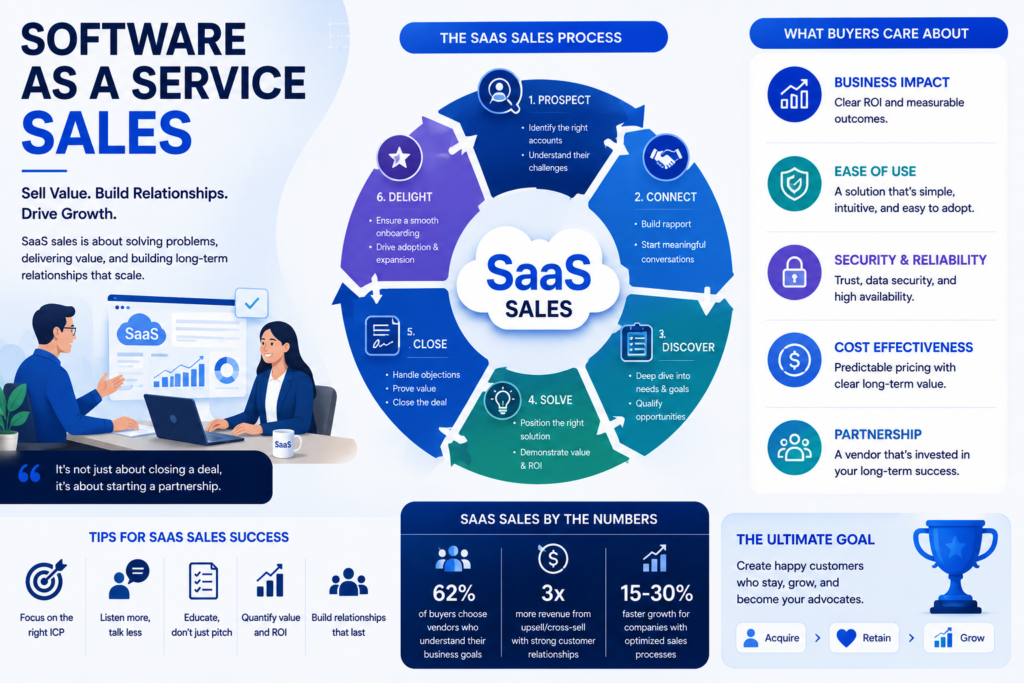
Table of Contents
SaaS Foundations Key Pillars for Building and Scaling a Successful SaaS Business
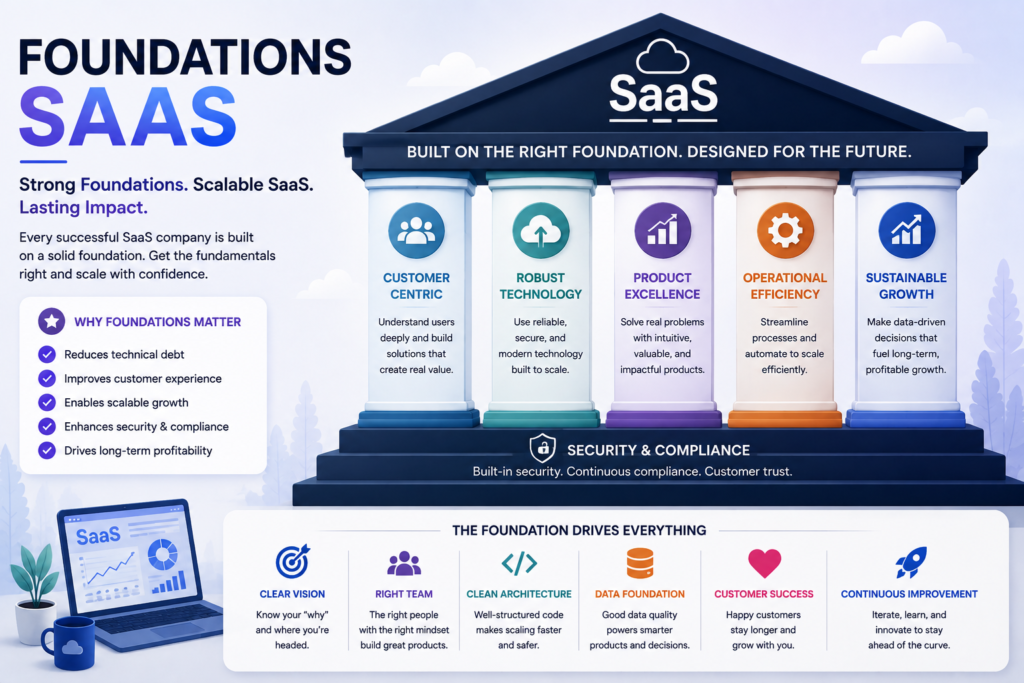
Every successful software as a service company can trace its stability back to a small set of fundamentals that were either built correctly from the start or repaired painfully later once cracks began to show. These SaaS foundations are not glamorous and they rarely show up in a pitch deck slide about growth hacks yet they quietly determine whether a company can survive a difficult funding environment retain its best customers and scale without collapsing under its own complexity. Too many founders and operators focus entirely on acquisition and feature velocity while neglecting the underlying structure that supports everything else including the revenue model the technical architecture the metrics that reveal true health and the customer relationships that keep the business alive month after month. In this guide we will walk through every major pillar that makes up strong SaaS foundations including the business model itself the technical infrastructure choices the financial metrics worth tracking the product decisions that create long term stickiness and the security practices that protect trust. Whether you are three months into building your first SaaS product or five years into scaling an established platform this guide will give you a grounded framework for strengthening the foundations your business depends on.
What SaaS Foundations Actually Means for a Software Business
When people talk about SaaS foundations they are really describing the underlying structure that makes a subscription software business function reliably rather than any single feature or marketing tactic. Strong SaaS foundations include a clear and repeatable revenue model a technical architecture built for multi tenant scale a set of financial metrics that reveal true business health and operational practices around security customer success and product development that hold up as the company grows. A company can have an impressive product demo and still lack strong SaaS foundations if its churn is quietly climbing its infrastructure cannot handle real usage spikes or its unit economics do not actually work at scale. This is why experienced operators treat foundational work as an ongoing discipline rather than a task that gets checked off once during the early days of a company. Just as a building needs a foundation strong enough to support future floors a software as a service company needs foundational systems strong enough to support future customers revenue and complexity without requiring a painful rebuild later.
The Core Business Model Behind Software as a Service
Understanding the subscription business model is the first and most important layer of any serious approach to SaaS foundations because it changes almost every decision that follows. Unlike a traditional software sale where revenue arrives mostly upfront a subscription model spreads revenue recognition across the life of the customer relationship which means the company only becomes profitable on a customer after enough months or years of retained subscription payments. This single structural fact is why customer lifetime value and retention become central to every strategic conversation inside a software as a service company since a business that cannot retain customers long enough to recoup its acquisition cost is standing on unstable foundations no matter how much initial revenue it generates. The subscription model also creates a natural alignment between vendor and customer because continued payment depends on continued value which is very different from a perpetual license model where the vendor gets paid regardless of whether the customer keeps using the product. Founders building strong SaaS foundations need to internalize this alignment early because it should influence pricing packaging and even how the product roadmap gets prioritized around ongoing customer value rather than one time feature novelty.
Technical Architecture as a Foundational Pillar
The technical architecture underneath a software as a service platform is one of the most consequential and least visible parts of strong SaaS foundations because customers never see the infrastructure directly yet they feel its effects constantly through speed reliability and data security. Multi tenant architecture where a single application instance serves many customers efficiently while keeping their data properly isolated is the backbone of most scalable SaaS platforms because it allows a company to serve thousands of customers without maintaining thousands of separate deployments. Choosing cloud infrastructure that can scale horizontally as usage grows protects a company from painful rebuilds later while a well designed API layer allows the product to integrate cleanly into a customer’s existing technology stack which increasingly determines whether a platform gets adopted at all. Companies that treat architecture as an afterthought often discover the cost years later when a growing customer base exposes performance bottlenecks that require a fundamental rebuild under significant time pressure. Strong SaaS foundations require engineering leadership to think several stages of growth ahead rather than optimizing purely for the fastest path to an initial product launch since architectural debt compounds in ways that are far more expensive to fix once real customer data and real revenue depend on the system working correctly.
Financial Metrics That Reveal the Health of Your Foundations
No discussion of SaaS foundations is complete without a serious look at the financial metrics that reveal whether the underlying business model is actually working. Monthly recurring revenue and annual recurring revenue provide the baseline picture of predictable income but they only tell part of the story on their own. Customer acquisition cost measured against customer lifetime value shows whether the company can profitably acquire new customers over time since a business spending more to acquire a customer than that customer will ever generate in revenue is standing on foundations that cannot support long term growth no matter how impressive the top line numbers look. Net revenue retention has become one of the most closely watched metrics among experienced operators and investors because it captures how much revenue expands or contracts from the existing customer base which directly reflects whether the product delivers enough ongoing value to justify continued and growing investment from customers. Gross margin also deserves careful attention in a software as a service business because unusually high infrastructure or support costs relative to revenue can quietly erode the profitability that subscription businesses are supposed to deliver at scale. Building a habit of reviewing these metrics on a consistent cadence rather than only during fundraising season is one of the clearest signs of a company that takes its SaaS foundations seriously.
Product Foundations That Create Long Term Stickiness
A software as a service product needs more than a compelling initial feature set to build durable SaaS foundations because customers ultimately stay for the ongoing value the product delivers rather than the promise made during the sales process. Strong onboarding is one of the most underrated product foundations because the first days of a customer relationship set the tone for whether the product becomes embedded into daily workflows or quietly abandoned after the initial enthusiasm fades. Building workflows that create genuine switching costs through integrations accumulated data or team wide adoption gives a product durability that a single standout feature never can since competitors can usually copy a feature far more easily than they can replicate years of accumulated customer data and embedded process. Regularly gathering and acting on customer feedback through structured channels rather than anecdotal requests from the loudest customers helps product teams prioritize development in ways that actually strengthen retention rather than simply adding surface level complexity. Companies with the strongest SaaS foundations also resist the temptation to chase every competitor feature announcement and instead maintain a clear product philosophy that guides which capabilities genuinely serve their core customer base over the long term.
Customer Acquisition Foundations for Sustainable Growth
Building repeatable customer acquisition is another essential layer of SaaS foundations because growth built on inconsistent or unscalable tactics eventually stalls in ways that damage investor confidence and team morale alike. A strong acquisition foundation starts with genuine clarity about the ideal customer profile since targeting the wrong segment leads to poor product fit high churn and wasted marketing spend even when initial signups look promising. Diversifying acquisition channels rather than relying entirely on one source such as paid advertising protects a company from sudden cost increases or platform policy changes that can disrupt an entire growth strategy overnight. Content marketing search engine optimization and word of mouth referrals tend to compound in value over time which makes them particularly valuable components of long term SaaS foundations compared to channels that only produce results for as long as spending continues. Sales and marketing alignment also matters significantly here because a disconnect between the promises made during acquisition and the reality delivered by the product creates exactly the kind of early churn that undermines every other foundational metric a company is trying to build.
Retention and Customer Success as a Foundational Pillar
Retention deserves its own dedicated place among SaaS foundations because a subscription business fundamentally depends on customers choosing to continue paying month after month or year after year. Proactive customer success programs that monitor product usage and reach out before problems escalate consistently outperform reactive support models that only engage once a customer is already frustrated or considering cancellation. Onboarding quality directly predicts long term retention since customers who reach genuine value quickly are far more likely to renew than those who struggle through a confusing early experience regardless of how powerful the underlying product actually is. Building a structured process for identifying at risk accounts through usage data rather than gut feeling allows customer success teams to intervene early which protects revenue that would otherwise be lost quietly and discovered only after a cancellation notice arrives. Expansion revenue from existing customers through upsells and cross sells also strengthens SaaS foundations significantly because growing revenue from a retained customer base is typically far less expensive than acquiring an entirely new customer to replace lost revenue.
Security and Compliance as a Trust Foundation
Security has become one of the most non negotiable elements of strong SaaS foundations because customers are trusting a software vendor with sensitive business data the moment they sign up which makes trust itself part of the product. Basic security foundations include data encryption both at rest and in transit role based access controls and a clearly documented incident response plan that customers can review during procurement. Compliance certifications such as SOC 2 or ISO 27001 have become table stakes for many enterprise buyers and pursuing these certifications earlier than feels comfortable often pays significant dividends once larger deals require them during vendor evaluation. Regular security audits and penetration testing help companies discover vulnerabilities before a malicious actor does which protects both customer data and the company’s reputation in an industry where a single serious breach can permanently damage trust that took years to build. Companies that treat security as a foundational investment rather than a reactive checkbox exercise consistently find it easier to close larger deals and retain enterprise customers who require this level of assurance before committing significant budget.
Common Mistakes That Weaken SaaS Foundations
Even well funded and talented teams routinely undermine their own SaaS foundations through a handful of predictable mistakes that are worth naming directly. Prioritizing rapid feature expansion over core product stability often creates a bloated and fragile platform that becomes increasingly difficult to maintain which eventually slows the very growth the expansion was meant to accelerate. Ignoring unit economics during a period of easy fundraising is another common trap since a company that grows quickly on unsustainable customer acquisition costs eventually faces a painful reckoning once capital becomes harder to raise. Underinvesting in customer success while overinvesting in new customer acquisition creates a leaky bucket problem where the company spends heavily to fill the top of the funnel while losing existing customers out the bottom just as quickly. Treating security and compliance as someone else’s problem until an enterprise deal requires it often means scrambling to retrofit practices that would have been far easier and cheaper to build correctly from the beginning. Finally many teams delay addressing technical architecture problems because the short term cost of a rebuild feels larger than the long term cost of accumulating architectural debt which almost always turns out to be the more expensive choice in the end.
How to Strengthen Your SaaS Foundations Over Time
Strengthening SaaS foundations is not a one time project but an ongoing discipline that experienced operators build directly into how the company reviews its own performance. Establishing a regular cadence for reviewing core metrics including net revenue retention customer acquisition cost and gross margin ensures that foundational weaknesses get caught early rather than discovered during a difficult fundraising conversation or a sudden wave of churn. Investing in architecture improvements before they become urgent protects engineering teams from the kind of reactive firefighting that slows product development and frustrates customers experiencing performance problems. Building customer success into the organization as a core function rather than an afterthought pays dividends across acquisition cost retention and expansion revenue simultaneously since a well served customer base becomes the company’s strongest source of referrals and case studies. Treating security and compliance investment as a growth enabler rather than a cost center changes how quickly a company can pursue larger enterprise deals once the market opportunity presents itself. Companies that consistently revisit and reinforce these SaaS foundations year after year tend to compound their advantages while competitors who neglect them often find themselves rebuilding under much less favorable conditions.
Frequently Asked Questions
What does SaaS foundations mean in a business context?
SaaS foundations refers to the underlying structure of a software as a service business including its subscription revenue model technical architecture financial metrics product stability and security practices that together determine whether the company can scale reliably over time.
Why are strong SaaS foundations important for early stage startups?
Strong SaaS foundations help early stage startups avoid painful rebuilds and financial surprises later since decisions made about architecture pricing and customer success in the earliest days often become far more expensive to correct once the company has scaled significantly.
What financial metrics matter most for SaaS foundations?
The most important metrics include monthly and annual recurring revenue customer acquisition cost customer lifetime value net revenue retention and gross margin since together these numbers reveal whether the underlying business model is actually sustainable.
How does technical architecture affect SaaS foundations?
Technical architecture directly affects SaaS foundations because a multi tenant scalable infrastructure supports growth smoothly while a poorly designed system often requires an expensive and disruptive rebuild once customer volume and data complexity increase significantly.
What role does customer success play in SaaS foundations ?
Customer success plays a central role in SaaS foundations because retention and expansion revenue depend heavily on proactive engagement that helps customers reach real value quickly rather than reactive support that only responds after problems have already escalated.
How important is security for SaaS foundations?
Security is a critical part of SaaS foundations because customers trust a vendor with sensitive data from the moment they sign up and a serious breach can permanently damage the reputation and enterprise sales pipeline a company has spent years building.
What is the biggest mistake companies make with their SaaS foundations?
One of the most damaging mistakes is prioritizing rapid feature expansion or aggressive customer acquisition while neglecting unit economics and customer success which eventually creates unsustainable growth that collapses once outside capital becomes harder to access.
How often should a company review its SaaS foundations?
Experienced operators review core SaaS foundations including financial metrics architecture health and retention data on a consistent monthly or quarterly cadence rather than only during fundraising or crisis moments so weaknesses get caught and corrected early.
Can a SaaS company fix weak foundations after it has already scaled ?
Yes but the process becomes significantly more expensive and disruptive since fixing architecture debt correcting unit economics or rebuilding customer trust after scale requires more time resources and coordination than addressing these same issues earlier.
What is the difference between SaaS foundations and SaaS growth strategy ?
SaaS foundations refer to the underlying structural elements that support a sustainable business while growth strategy refers to the specific tactics used to acquire and expand customers though a growth strategy built on weak foundations typically fails to sustain itself over time.
Conclusion
Strong SaaS foundations rarely make headlines yet they consistently determine which software as a service companies survive difficult periods and which ones quietly unravel under pressure they were never structurally prepared to handle. From the subscription business model itself through technical architecture financial metrics product stickiness customer acquisition retention and security every pillar covered in this guide plays a distinct role in supporting sustainable growth rather than growth that looks impressive briefly before collapsing. Founders and operators who treat SaaS foundations as an ongoing discipline rather than a box to check during the earliest days of a company consistently build businesses capable of weathering market shifts competitive pressure and internal complexity as they scale. The work of strengthening these foundations never truly finishes since new growth stages introduce new challenges that test whether earlier decisions were made with enough care and foresight. Companies that invest in their SaaS foundations early and revisit them consistently put themselves in a far stronger position to build something that lasts well beyond the excitement of an initial product launch.
Key Takeaways
Strong SaaS foundations combine a clear subscription business model scalable technical architecture reliable financial metrics and disciplined operational practices rather than any single feature or growth tactic. Technical architecture decisions made early either support future scale smoothly or create expensive rebuilds once real customer volume arrives which makes foundational engineering choices worth significant early attention. Financial metrics including net revenue retention customer acquisition cost and gross margin reveal whether the underlying business model is genuinely sustainable rather than only appearing successful on the surface. Customer success and retention deserve equal investment alongside customer acquisition since a leaky retention foundation undermines even the most successful growth efforts. Security and compliance function as trust foundations that increasingly determine whether a company can close larger enterprise deals as it matures. Treating SaaS foundations as an ongoing discipline rather than a one time task consistently separates companies that scale sustainably from those that eventually rebuild under far more difficult conditions.