+92 318 3068833 Get Free Audit

SaaS Security Posture Management Guide 2026 Explained

Learn what saas security posture management means and how it protects cloud apps from misconfigurations weak permissions and compliance gaps in 2026.
saas security posture management

What Is SaaS Security Posture Management

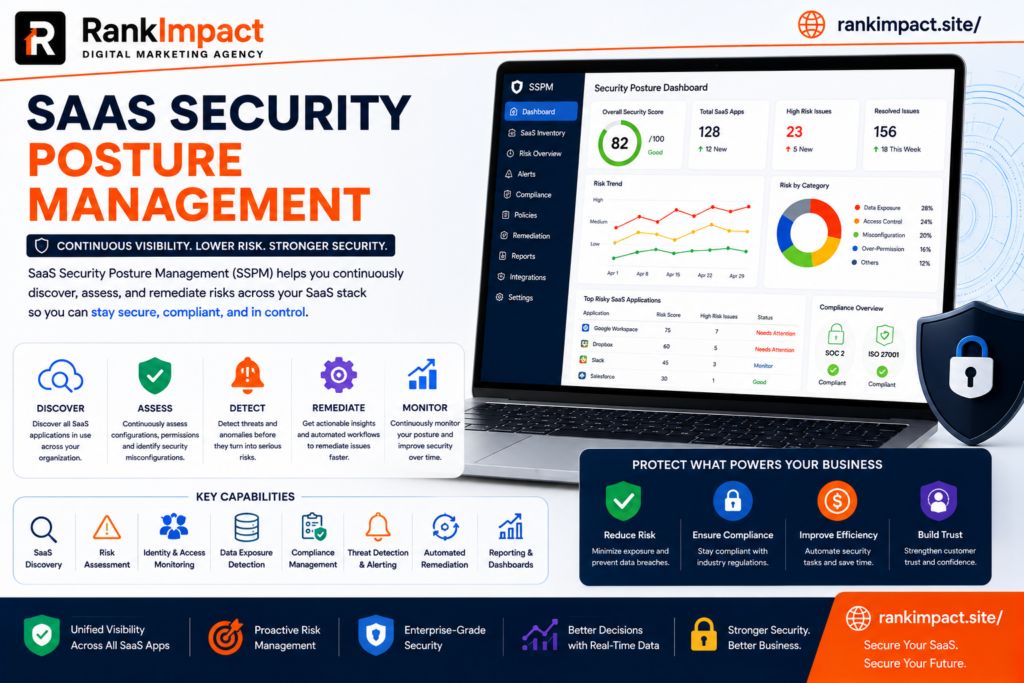
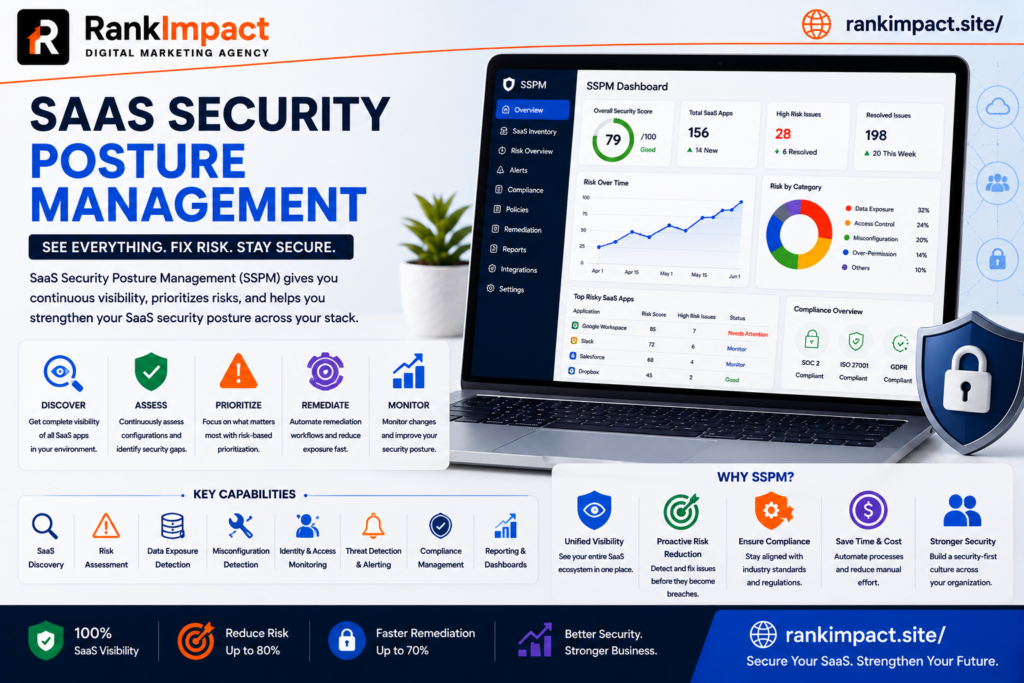
Saas security posture management is the practice of continuously monitoring assessing and improving the security configuration of cloud based software applications used across an organization. As companies adopt dozens or even hundreds of saas tools for communication project management finance and human resources each application introduces its own settings permissions and potential misconfigurations that can create security gaps if left unchecked. Saas security posture management gives organizations visibility into these gaps and provides a structured way to fix them before they become costly breaches.

Unlike traditional network security which focused primarily on protecting a defined perimeter such as an office network or data center saas security posture management addresses a much more distributed environment where sensitive data lives across many independently managed cloud platforms. Each of these platforms has its own security settings and default configurations are not always aligned with an organization’s actual risk tolerance which is exactly the gap that saas security posture management is designed to close.

Why SaaS Security Posture Management Has Become Essential

The rapid growth of cloud software adoption has created what many security professionals now call saas sprawl where employees across different departments sign up for tools independently often without formal approval from IT or security teams. Saas security posture management has become essential precisely because this sprawl makes it nearly impossible for security teams to manually track every application every user permission and every configuration change happening across the organization.

Data breaches originating from misconfigured cloud applications have become increasingly common and often result from simple oversights rather than sophisticated attacks. A file sharing folder left publicly accessible an overly broad permission granted to a third party integration or an inactive employee account that was never deactivated are the kinds of everyday issues that saas security posture management is specifically built to catch before they lead to a serious incident.

Regulatory pressure has also increased the importance of saas security posture management across nearly every industry. Data protection laws increasingly require organizations to demonstrate that they have controls in place to monitor and secure customer information wherever it is stored including within third party cloud applications. Without a structured saas security posture management program demonstrating this level of control during an audit becomes extremely difficult.

Core Components of SaaS Security Posture Management

Continuous configuration monitoring sits at the heart of any effective saas security posture management program. Rather than performing periodic manual security reviews modern platforms continuously scan connected applications to detect risky settings such as disabled multi factor authentication overly permissive sharing rules or unused administrative accounts and flag them immediately for remediation.

Identity and access governance is another critical component within saas security posture management. This involves tracking exactly who has access to which applications what level of permission they hold and whether that access still aligns with their current role. Employees who change departments or leave the company entirely often retain access to sensitive systems far longer than they should without a dedicated process to catch these gaps.

Third party application risk assessment has become increasingly important as saas security posture management programs mature. Many saas platforms allow integrations with other third party tools through APIs and these connected applications can introduce risk even when the primary platform itself is properly secured. Evaluating and monitoring these connected integrations is now considered a core function of comprehensive saas security posture management.

Compliance mapping rounds out the core components of saas security posture management by connecting technical security controls directly to specific regulatory requirements such as data residency rules or industry specific standards. This mapping makes it significantly easier for security and compliance teams to demonstrate adherence during audits without manually cross referencing spreadsheets and screenshots.

How SaaS Security Posture Management Differs From Traditional Security Tools

Traditional security tools such as firewalls and endpoint protection software were built to defend a relatively fixed network perimeter and a known set of devices. Saas security posture management operates in a fundamentally different environment where the assets being protected are cloud applications controlled by third party vendors rather than infrastructure the organization directly owns or manages.

Visibility is another major point of difference. Traditional security tools typically provide detailed visibility into network traffic and device activity but very little insight into application level configurations such as sharing permissions or user roles within a specific saas platform. Saas security posture management fills this gap by connecting directly to each application through APIs to continuously assess configuration level risk that traditional tools simply cannot see.

Response speed also differs significantly between the two approaches. Because saas security posture management platforms continuously monitor configurations rather than relying on periodic manual audits security teams can often remediate a misconfiguration within hours of it appearing rather than discovering it months later during an annual review when the damage may have already occurred.

How to Implement SaaS Security Posture Management

Implementing saas security posture management effectively starts with building a complete inventory of every cloud application currently in use across the organization. This discovery phase often reveals a surprising number of unauthorized or forgotten applications that were never formally approved which is exactly the kind of hidden risk a saas security posture management program is designed to surface.

Once the inventory is complete the next step involves connecting each critical application to the saas security posture management platform through secure API integrations. This connection allows the platform to begin continuously monitoring configurations user permissions and third party integrations without requiring manual checks from the security team on an ongoing basis.

Establishing clear security baselines is essential during implementation. Every organization has different risk tolerance levels so a saas security posture management program should define what constitutes an acceptable configuration for each type of application rather than relying purely on generic default recommendations that may not reflect the organization’s actual compliance requirements.

Assigning clear ownership for remediation is often the step that determines whether a saas security posture management program succeeds or fails in practice. Detecting a misconfiguration provides little value if there is no defined process for who addresses it and by when. Successful programs typically assign specific owners for each application and establish service level expectations for resolving flagged issues.

Common Mistakes Companies Make With SaaS Security Posture Management

One of the most frequent mistakes organizations make with saas security posture management is treating it as a one time audit rather than an ongoing continuous process. Cloud application configurations change constantly as new employees join settings get adjusted and new integrations are added which means a single point in time assessment quickly becomes outdated and provides a false sense of security.

Another common mistake is focusing saas security posture management efforts only on a handful of high profile applications while ignoring smaller tools that individual teams have adopted independently. These smaller unmonitored applications often become the weakest link in an organization’s overall security posture precisely because they receive the least attention from centralized security teams.

Failing to involve business unit leaders in the saas security posture management process is another pitfall that undermines long term success. Security teams that attempt to enforce strict configuration changes without explaining the reasoning to department heads often face pushback or workarounds that quietly reintroduce the very risks the program was designed to eliminate.

Many organizations also underestimate the importance of prioritization within saas security posture management. Not every flagged issue carries the same level of risk and treating every alert with equal urgency quickly leads to alert fatigue among security teams. Effective programs establish clear risk scoring so the most critical issues receive immediate attention while lower priority items are addressed on a reasonable timeline.

Best Practices for a Strong SaaS Security Posture Management Program

Automating remediation wherever possible significantly strengthens a saas security posture management program by reducing the time between detection and resolution. Many platforms now offer automated workflows that can immediately disable an inactive account or revoke an overly broad permission without requiring manual intervention for common well understood risk patterns.

Regularly reviewing and updating security baselines keeps a saas security posture management program relevant as the organization and its risk landscape evolve. What was considered an acceptable configuration a year ago may no longer align with current compliance requirements or emerging threat patterns so baselines should be revisited on a consistent schedule rather than set once and forgotten.

Integrating saas security posture management findings into broader security operations improves overall organizational resilience. Rather than treating cloud application security as a separate silo leading organizations feed relevant alerts and risk data into their central security operations center so analysts have a complete picture when investigating potential incidents across the entire technology environment.

Training employees on secure usage of approved saas platforms complements the technical controls provided by saas security posture management tools. Many misconfigurations originate from well meaning employees who simply do not understand the security implications of a particular sharing setting so ongoing education remains an important human layer alongside automated monitoring.

The Future of SaaS Security Posture Management

Artificial intelligence is increasingly being applied within saas security posture management to identify subtle patterns of risk that traditional rule based detection might miss entirely. Machine learning models can analyze historical configuration changes and user behavior to flag anomalies that suggest a compromised account or an emerging insider threat long before a rule based system would catch the same issue.

Deeper integration between saas security posture management and identity providers is another trend shaping the future of the category. As organizations increasingly centralize authentication through single sign on systems security platforms are gaining richer context about user identity and behavior which allows for more accurate risk assessment across every connected application.

Expanding coverage to include generative artificial intelligence tools represents a newer frontier for saas security posture management. As employees begin connecting company data to various artificial intelligence platforms and plugins security teams are extending their monitoring scope to include these emerging tools which introduce entirely new categories of data exposure risk that did not exist just a few years ago.

Frequently Asked Questions

What does saas security posture management mean?

Saas security posture management means continuously monitoring and improving the security configuration of cloud based software applications to identify and fix risks such as excessive permissions weak authentication settings or unauthorized third party integrations.

Why is saas security posture management important for small businesses?

Saas security posture management is important for small businesses because they often lack dedicated security teams to manually monitor every cloud application which makes automated continuous monitoring especially valuable for catching risks before they lead to a breach.

How is saas security posture management different from cloud security posture management?

Saas security posture management focuses specifically on securing software as a service applications such as communication and productivity tools while cloud security posture management typically addresses infrastructure level cloud environments such as virtual servers and storage systems.

What are the biggest risks that saas security posture management helps prevent?

Saas security posture management helps prevent risks such as publicly exposed files excessive user permissions inactive accounts that remain active and risky third party integrations that could expose sensitive company data.

How long does it take to implement saas security posture management?

Initial implementation of saas security posture management including application discovery and connecting core platforms typically takes a few weeks though building out mature baselines and remediation workflows can take several months depending on the number of applications involved.

Does saas security posture management require dedicated security staff?

While saas security posture management platforms automate much of the monitoring and detection work organizations still benefit from having at least one dedicated owner responsible for reviewing alerts and coordinating remediation across different teams.

Can saas security posture management help with regulatory compliance?

Yes saas security posture management helps organizations demonstrate regulatory compliance by mapping technical security controls directly to specific requirements and providing documented evidence of continuous monitoring during audits.

What industries benefit most from saas security posture management?

Industries handling sensitive data such as healthcare finance and technology benefit significantly from saas security posture management though any organization relying on multiple cloud applications faces similar risks that make the practice valuable.

Artificial intelligence improves saas security posture management by identifying unusual behavioral patterns and configuration changes that might indicate a security risk which traditional rule based systems could easily overlook.

What should a company look for when choosing a saas security posture management platform

A company should look for broad application coverage strong API integration capabilities automated remediation options and clear compliance mapping features when choosing a saas security posture management platform.

Conclusion

Saas security posture management has become a foundational requirement for any organization operating across a growing number of cloud applications rather than an optional add on reserved for large enterprises. Companies that invest in continuous monitoring clear ownership and strong baseline configurations through a structured saas security posture management program significantly reduce their exposure to costly data breaches and compliance failures. As artificial intelligence and generative tools continue expanding the cloud application landscape organizations that prioritize saas security posture management today will be far better positioned to manage risk confidently in the years ahead.
Key Takeaways

Saas security posture management continuously monitors cloud application configurations to identify and remediate security risks before they lead to a breach

Growing saas sprawl across departments makes manual security oversight nearly impossible which is why continuous automated monitoring has become essential

Core components include configuration monitoring identity and access governance third party risk assessment and compliance mapping

Common mistakes include treating the process as a one time audit ignoring smaller applications and failing to prioritize alerts by actual risk level

Successful programs assign clear remediation ownership automate common fixes and regularly update security baselines as the organization evolves

Artificial intelligence and deeper identity integration are shaping the next generation of saas security posture management capabilities
SaaS Lead Generation Guide 2026 Strategies That Convert

Learn proven saas lead generation strategies for 2026 covering content SEO paid ads and product led growth to attract and convert qualified customers.

saas lead generation

What Is SaaS Lead Generation

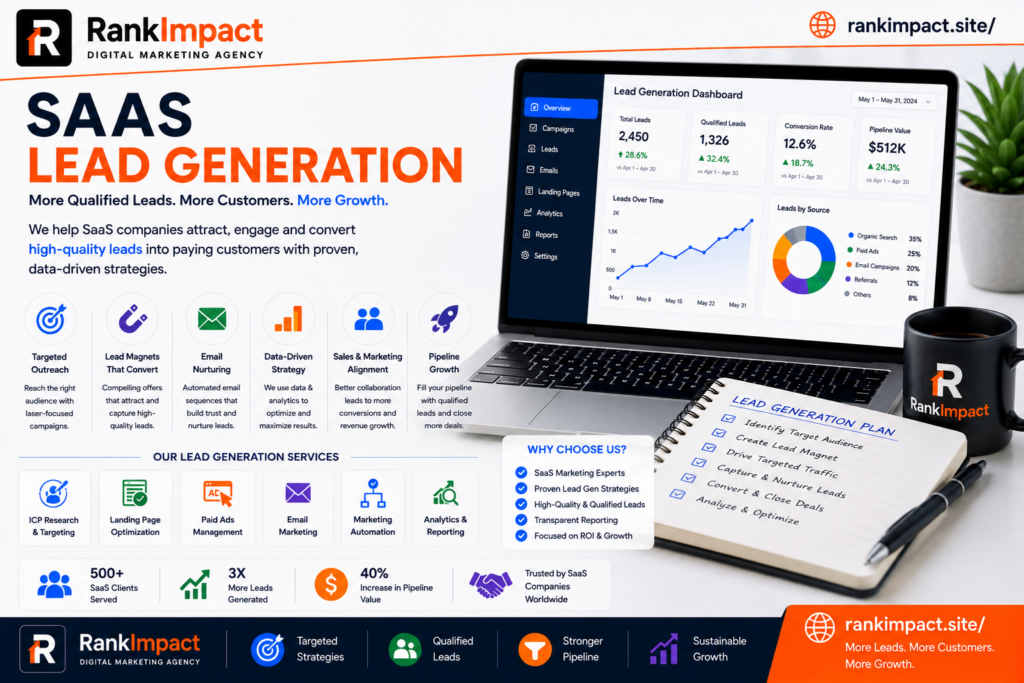
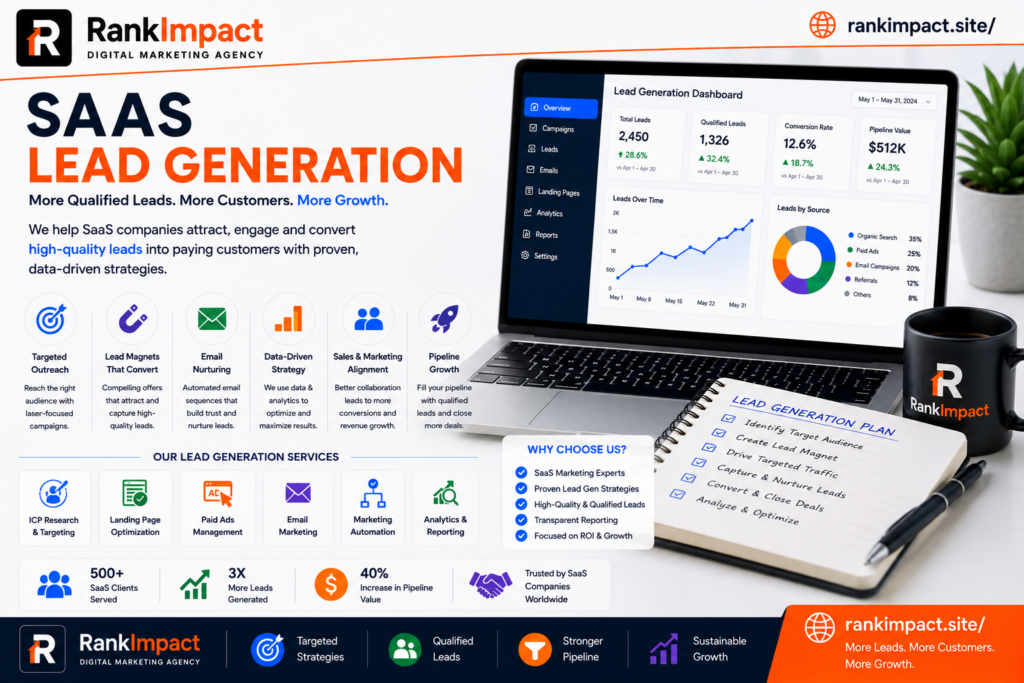
Saas lead generation is the process of attracting identifying and nurturing potential customers for a software as a service product until they are ready to start a trial book a demo or make a purchase. Unlike traditional lead generation that might rely heavily on cold calling or print advertising saas lead generation typically centers around digital channels such as content marketing search engine optimization paid advertising and product led growth tactics that let prospects experience value before ever speaking to a sales representative.

The goal of saas lead generation is not simply to collect as many email addresses as possible but to attract the right audience people who genuinely have the problem your software solves and the budget authority to purchase it. Because saas products are usually sold on a recurring subscription basis the quality of a lead matters just as much as the volume since a poorly matched customer will likely churn within a few months and drag down the overall business economics.

Why SaaS Lead Generation Is Different From Traditional Marketing

Saas lead generation operates under a unique set of dynamics that traditional product marketing does not face. Because software is often sold through recurring subscriptions the customer relationship does not end at the point of sale. This means saas lead generation strategies need to attract customers who are likely to stay engaged renew their subscription and eventually expand their usage rather than simply making a single transaction and disappearing.

Trial and freemium models also set saas lead generation apart from other industries. Many software companies allow prospects to use a limited version of the product for free or test the full version for a set number of days before committing to payment. This approach shifts a significant part of the lead generation process toward proving value quickly rather than relying purely on persuasive sales copy or discount offers.

The buying committee involved in software purchases tends to be more complex as well. A single saas lead generation campaign might need to appeal to an end user who will use the product daily a department manager who controls the budget and an IT or security team that needs to approve the tool before it can be adopted company wide. Successful campaigns account for all of these stakeholders rather than targeting only one persona.

Core Channels for SaaS Lead Generation

Content marketing remains one of the strongest pillars of saas lead generation because it allows companies to attract prospects who are actively searching for solutions to a specific problem. Blog posts comparison guides and educational resources that answer real questions build trust over time and often convert better than paid advertising because the reader arrives already interested in the topic rather than being interrupted by an ad.

Search engine optimization works closely alongside content and deserves its own focus within saas lead generation strategy. Ranking for keywords related to the problems your software solves ensures a steady stream of organic traffic that does not require ongoing ad spend. Long term saas lead generation programs that invest early in search visibility often see compounding returns as older articles continue generating leads years after publication.

Paid advertising through search and social platforms remains a valuable channel for saas lead generation especially when a company needs faster results than organic content can provide. Search ads tend to work well for capturing high intent prospects who are already searching for a solution while social ads are often more effective for building awareness among an audience that may not yet realize they have the problem your product solves.

Product led growth has become an increasingly popular saas lead generation strategy where the product itself acts as the primary acquisition channel. Free trials freemium tiers and interactive demos let prospects experience the value of the software firsthand which often shortens the sales cycle and reduces the burden placed on marketing content and sales conversations alone.

Referral and partnership programs round out a well balanced saas lead generation strategy. Existing customers who are genuinely satisfied with a product are often willing to refer colleagues especially when incentivized properly and partnerships with complementary software companies can open access to an entirely new pool of qualified prospects.

Building a High Converting Landing Page for SaaS Lead Generation

A landing page built specifically for saas lead generation needs to communicate value within seconds since visitors arriving from ads or search results rarely have patience for vague messaging. The headline should clearly state what the product does and who it is for while the supporting copy addresses the specific pain point that brought the visitor to the page in the first place.

Social proof plays a critical role in saas lead generation landing pages because software buyers are naturally cautious about committing to a new tool. Customer testimonials case study snippets and recognizable client logos reduce perceived risk and give hesitant visitors the confidence needed to take the next step whether that is starting a trial or booking a demo.

The call to action deserves careful attention as well. A landing page focused on saas lead generation should generally offer a single clear action rather than presenting multiple competing options that create decision fatigue. Reducing form fields to only the essential information needed also tends to improve conversion rates significantly since every additional field creates friction that can cause a prospect to abandon the process.

Nurturing Leads Through the SaaS Funnel

Not every lead captured through saas lead generation efforts is ready to buy immediately and this is where nurturing becomes essential. Email sequences that deliver relevant educational content based on where a prospect entered the funnel help maintain engagement without feeling pushy or overly promotional. A lead who downloaded a beginner guide needs different follow up content than one who requested a product demo.

Lead scoring is a practical tool within saas lead generation that helps sales and marketing teams prioritize their time effectively. By assigning point values to specific actions such as visiting a pricing page attending a webinar or opening multiple emails teams can identify which leads are showing genuine buying signals and route them to sales at the right moment rather than too early or too late.

Marketing automation platforms make it possible to scale saas lead generation nurturing without requiring a large team to manually manage every interaction. Behavioral triggers can automatically send a relevant case study when a prospect visits a specific feature page or alert a sales representative when a high value account shows increased engagement across multiple touchpoints.

Common Mistakes Companies Make With SaaS Lead Generation

One of the most frequent mistakes in saas lead generation is focusing entirely on lead volume while ignoring lead quality. Marketing teams under pressure to hit numbers sometimes cast an overly wide net that generates plenty of form fills but very few leads that actually match the ideal customer profile. This creates frustration for sales teams and inflates the perceived cost of acquiring a genuinely qualified customer.

Another common mistake is neglecting the handoff between marketing and sales. Even a well executed saas lead generation campaign can fail if leads sit untouched for days before a sales representative follows up. Speed to lead matters significantly in software sales since prospects researching multiple vendors will often move forward with whichever company responds first with helpful relevant information.

Many companies also make the mistake of treating saas lead generation as a one time project rather than an ongoing system. Content gets published once and never updated ad campaigns run without regular optimization and landing pages remain unchanged for years despite declining performance. Consistent testing and refinement are necessary to keep results improving over time rather than slowly declining.

Ignoring the post trial experience is another costly error. Companies often pour significant resources into saas lead generation to drive trial signups but then fail to guide those users toward activation and value realization during the trial period. Without a structured onboarding sequence many trial users simply never return leaving strong top of funnel numbers that never translate into paying customers.

Best Practices for Scaling SaaS Lead Generation

Scaling saas lead generation successfully starts with clearly defining an ideal customer profile before increasing spend or content output. Knowing exactly which company size industry and use case represents your best fit customer allows every channel from content to paid ads to be built around attracting that specific audience rather than generic broad appeal.

Diversifying channels is another important practice for sustainable saas lead generation growth. Relying entirely on one source such as paid search or a single content platform creates vulnerability if algorithm changes or rising costs suddenly reduce performance. A balanced mix of organic content paid advertising product led growth and partnerships provides more stability over time.

Aligning sales and marketing teams around shared definitions and goals significantly improves saas lead generation outcomes. When both teams agree on what qualifies as a good lead and communicate regularly about which channels and messaging are producing the best results the entire process becomes more efficient and less prone to wasted effort.

Regularly analyzing data and attribution is essential for improving saas lead generation over time. Understanding which channels and campaigns actually drive customers rather than just leads allows teams to reallocate budget toward what is genuinely working and away from tactics that look good on a dashboard but fail to produce real revenue.

The Future of SaaS Lead Generation

Artificial intelligence is beginning to reshape saas lead generation in meaningful ways particularly through predictive lead scoring that can identify high intent prospects earlier in their research journey. These tools analyze behavioral patterns across thousands of data points to surface signals that a human marketer might easily miss.

Personalization is also becoming more sophisticated within saas lead generation strategies. Rather than sending the same generic message to every visitor modern platforms can dynamically adjust landing page content email messaging and even pricing presentation based on a visitor’s industry company size or previous behavior on the site.

Community driven growth is emerging as another important trend shaping the future of saas lead generation. Companies that build active communities around their product category often generate a steady stream of warm leads through organic discussion recommendations and shared knowledge exchanges that feel far more authentic than traditional advertising ever could.

Frequently Asked Questions

What does saas lead generation mean?

Saas lead generation refers to the process of attracting and converting potential customers for a software as a service product through channels such as content marketing search engine optimization paid advertising and product led growth strategies.

What is the best channel for saas lead generation?

There is no single best channel for saas lead generation since the right mix depends on your target audience and sales cycle though most successful companies combine content marketing search engine optimization and product led growth for balanced long term results.

How long does saas lead generation take to show results?

Paid advertising within saas lead generation can produce leads within days while organic strategies such as content marketing and search engine optimization typically take three to six months to build meaningful momentum but tend to deliver more sustainable long term results.

What is a good conversion rate for saas lead generation landing pages?

Conversion rates for saas lead generation landing pages vary widely by industry and traffic source but a rate between three and five percent is generally considered solid while rates above ten percent are considered excellent for most software categories.

How does product led growth relate to saas lead generation?

Product led growth is a saas lead generation approach where the product itself serves as the primary driver of new customer acquisition through free trials or freemium tiers that let prospects experience value before making a purchase decision.

What is lead scoring in saas lead generation?

Lead scoring is a method used in saas lead generation that assigns point values to specific prospect behaviors such as visiting a pricing page or attending a webinar to help sales teams prioritize which leads are most likely ready to buy.

Should saas lead generation focus more on quality or quantity?

Quality should generally take priority over quantity in saas lead generation because poorly matched customers tend to churn quickly which increases acquisition costs and undermines long term revenue even if initial signup numbers look impressive.

How do sales and marketing teams work together in saas lead generation?

Effective saas lead generation requires sales and marketing teams to agree on a shared definition of a qualified lead and maintain regular communication aboWhat role does content marketing play in saas lead generationut which channels and messaging are converting best so leads are followed up quickly and appropriately.

What role does content marketing play in saas lead generation?

Content marketing plays a central role in saas lead generation by attracting prospects who are actively searching for solutions to their problems and building trust through educational resources before they ever interact with a sales representative.

Can small saas companies compete in lead generation against larger competitors?

Yes small saas companies can compete effectively in lead generation by focusing on a narrow well defined niche producing highly specific content and building genuine community engagement rather than trying to outspend larger competitors on broad advertising campaigns.

Conclusion

Saas lead generation has evolved into a multi channel discipline that blends content search advertising and product experience into a single coordinated system rather than relying on any one tactic alone. Companies that build their saas lead generation strategy around a clearly defined ideal customer profile diversify their channels and maintain tight alignment between sales and marketing consistently outperform those chasing volume without a clear strategic foundation. As artificial intelligence personalization and community driven growth continue reshaping the landscape businesses that invest in a thoughtful adaptable saas lead generation approach today will be best positioned to capture sustainable growth in the years ahead.

Key Takeaways

Saas lead generation focuses on attracting and converting the right prospects for a subscription based software product rather than simply maximizing lead volume

Core channels include content marketing search engine optimization paid advertising product led growth and referral partnerships that work best when combined strategically

High converting landing pages rely on clear value focused headlines strong social proof and a single simple call to action with minimal form friction

Common mistakes include prioritizing quantity over quality neglecting fast sales follow up and treating lead generation as a one time project instead of an ongoing system

Lead scoring and marketing automation help teams prioritize genuinely interested prospects and scale nurturing efforts efficiently

Artificial intelligence personalization and community driven growth are shaping the next generation of effective saas lead generation strategies

SaaS HR Management Guide 2026 Benefits and Best Tools

Discover how saas hr management streamlines payroll onboarding and compliance in 2026. Learn features benefits and how to choose the right platform.

saas hr management

What Is SaaS HR Management

SaaS hr management refers to the use of cloud based Software as a Service platforms to handle every core human resources function including recruitment onboarding payroll benefits performance tracking compliance and employee data storage. Instead of installing software on local servers a company using saas hr management simply logs into a web browser or mobile app and accesses everything through a subscription model hosted by the vendor. This approach removes the burden of maintaining physical infrastructure updating software manually or hiring dedicated IT staff just to keep HR systems running.

The rise of saas hr management is closely tied to the broader shift toward cloud computing across every business function. Companies of every size from five person startups to enterprises with thousands of employees now rely on saas hr management tools because they are faster to deploy more affordable upfront and easier to scale than legacy on premise HR systems. The core idea behind saas hr management is simple. HR teams should spend their time on people not on patching servers or manually updating spreadsheets.

Why Businesses Are Switching to SaaS HR Management

Traditional HR software often required significant capital investment long implementation timelines and constant technical maintenance. Saas hr management flips that model entirely by offering a subscription based structure where businesses pay monthly or annually based on the number of employees or features used. This shift has made powerful HR tools accessible to small and mid sized businesses that previously could not afford enterprise grade systems.

Another major driver behind the adoption of saas hr management is remote and hybrid work. When teams are distributed across cities or countries HR processes need to work from anywhere at any time. A cloud based saas hr management platform allows employees to submit time off requests update personal information access pay stubs and complete onboarding tasks without ever stepping into an office. This flexibility has become a baseline expectation rather than a bonus feature.

Cost predictability is another reason companies are moving toward saas hr management. Instead of unpredictable maintenance fees and expensive upgrade cycles businesses get a clear subscription price that usually includes updates security patches and customer support. This predictability makes budgeting easier for finance teams and reduces the total cost of ownership over time compared to legacy systems.

Core Features of a Strong SaaS HR Management Platform

Not all platforms are built the same and understanding the essential features of saas hr management helps buyers avoid choosing a tool that looks impressive but lacks depth where it matters. A strong saas hr management platform typically includes an applicant tracking system for recruitment a structured onboarding workflow for new hires and a centralized employee database that stores documents contracts and personal information securely.

Payroll and benefits administration are also central to most saas hr management suites. The best platforms integrate payroll processing tax calculations and benefits enrollment directly into the same system so HR teams are not manually transferring data between disconnected tools. Performance management features such as goal tracking review cycles and feedback tools are increasingly standard as well since employee development has become a top priority for retention.

Compliance tools deserve special attention within saas hr management because labor laws vary by region and change frequently. Leading platforms automatically update compliance rules track required documentation and send alerts when policies need attention. Reporting and analytics dashboards round out a complete saas hr management solution by giving leadership visibility into headcount turnover diversity metrics and workforce trends without requiring manual data pulls.

How SaaS HR Management Improves Employee Experience

Employee experience has become one of the most important metrics tied to retention and productivity and saas hr management plays a direct role in shaping it. Self service portals allow employees to update their own information request time off and access company policies instantly instead of waiting on HR staff to respond to emails. This kind of autonomy reduces friction and builds trust between employees and the organization.

Onboarding is another area where saas hr management makes a visible difference. New hires who go through a smooth digital onboarding process that includes automated document signing training assignments and welcome messages tend to feel more confident and engaged from day one. A clunky paper based onboarding process by contrast often leaves new employees confused and disconnected before they even start contributing.

Communication also improves significantly with saas hr management because most platforms include built in messaging announcement boards and recognition tools. Employees no longer have to dig through email chains to find important updates and managers can publicly recognize achievements in a way that boosts morale across the entire organization.

SaaS HR Management vs Traditional HR Software

The difference between saas hr management and traditional on premise HR software comes down to deployment cost and flexibility. Traditional systems require physical servers dedicated IT support and often a large upfront licensing fee before a company sees any value. Saas hr management eliminates that barrier by hosting everything in the cloud and charging a predictable subscription fee that scales with the business.

Updates are another key difference. With traditional software updates are often manual time consuming and sometimes require downtime that disrupts daily operations. Saas hr management vendors push updates automatically in the background so users always have access to the latest features and security patches without lifting a finger.

Scalability also favors saas hr management. A company using on premise software that suddenly doubles in size may need to purchase additional licenses hardware and support contracts which can take weeks to implement. A saas hr management platform on the other hand can typically scale up or down within minutes simply by adjusting the subscription plan making it far more suitable for fast growing or seasonal businesses.

How to Choose the Right SaaS HR Management Solution

Choosing the right saas hr management platform starts with clearly identifying the specific pain points your organization is trying to solve. A company struggling with manual payroll errors has different priorities than one struggling with disorganized recruitment so the evaluation process should begin with an honest audit of current HR workflows and gaps.

Integration capability is one of the most overlooked factors when selecting saas hr management software. The platform needs to connect smoothly with existing tools such as accounting software communication platforms and applicant sourcing channels. A saas hr management system that operates in isolation from the rest of your tech stack creates more manual work rather than less which defeats the purpose of automation.

Security and compliance certifications should also be a top priority since HR systems store some of the most sensitive data a company holds including social security numbers salary details and medical information. Look for saas hr management vendors that offer strong data encryption regular third party security audits and compliance with regional data protection regulations relevant to your industry.

Finally consider the vendor’s customer support quality and long term product roadmap. A saas hr management provider that offers responsive support and continues investing in new features will serve your business far better over time than one offering a cheap price with limited ongoing development.

Common Mistakes Companies Make With SaaS HR Management

One of the most frequent mistakes businesses make when adopting saas hr management is rushing the implementation without proper data migration planning. Moving years of employee records from spreadsheets or legacy systems into a new platform requires careful mapping and validation. Skipping this step often leads to missing records duplicate entries or incorrect payroll calculations that create headaches for months afterward.

Another common mistake is underutilizing the platform’s full feature set. Many companies purchase a comprehensive saas hr management solution but only use it for basic tasks like storing employee files while ignoring powerful features such as performance tracking analytics or automated compliance alerts. This results in a poor return on investment and a system that never reaches its full potential.

Failing to train employees and managers properly is another pitfall that undermines saas hr management adoption. Even the most intuitive platform requires a short onboarding period for staff to understand how to use self service features correctly. Companies that skip training often see low adoption rates and employees reverting back to old manual processes out of frustration.

Lastly some organizations choose a saas hr management platform based purely on price without considering scalability. A cheap tool that cannot grow with the company often needs to be replaced within a year or two which creates additional migration costs and disruption that could have been avoided with better upfront planning.

Best Practices for Implementing SaaS HR Management

Successful implementation of saas hr management starts with assembling a small cross functional team that includes HR IT and a few representative employees from different departments. This team should be responsible for testing the platform before full rollout gathering feedback and identifying any workflow gaps that need to be addressed before the wider organization begins using it.

A phased rollout tends to work better than switching everything at once. Start by migrating core functions such as employee records and time off tracking before layering in more complex modules like performance reviews or advanced analytics. This approach in saas hr management reduces the risk of overwhelming staff and allows the team to troubleshoot issues on a smaller scale first.

Clear communication throughout the transition is essential. Employees should understand why the company is adopting a new saas hr management platform what benefits it brings to their daily work and where to go for help if they run into issues. Transparent communication reduces resistance and builds buy in across the organization.

Ongoing evaluation after launch is just as important as the initial rollout. Set a schedule to review usage data gather employee feedback and measure whether the saas hr management platform is delivering the efficiency gains that were expected. Continuous improvement ensures the investment keeps paying off as the company evolves.

The Future of SaaS HR Management

Artificial intelligence is rapidly reshaping saas hr management with predictive analytics that can flag flight risk employees before they resign and recommend personalized development plans based on performance data. These capabilities move HR from a reactive function to a proactive strategic partner within the business.

Automation is also expanding beyond simple workflows into more complex decision support. Modern saas hr management platforms increasingly use machine learning to screen resumes suggest interview questions and even draft personalized onboarding plans based on a new hire’s role and background. This reduces administrative burden while improving consistency across the hiring process.

Employee wellbeing tools are becoming a standard part of saas hr management as companies recognize the connection between mental health support and retention. Expect to see more platforms integrating pulse surveys wellness check ins and mental health resources directly into the core HR experience rather than treating them as separate add on tools.

Frequently Asked Questions

What does saas hr management mean in simple terms?

Saas hr management means using cloud based software accessed through a subscription to handle human resources tasks such as payroll recruitment onboarding and employee records instead of relying on physical servers or paper based systems.

Is saas hr management suitable for small businesses?

Yes saas hr management is often ideal for small businesses because it requires no large upfront investment scales easily as the team grows and eliminates the need for dedicated IT staff to maintain the system.

How much does a saas hr management platform typically cost?

Pricing for saas hr management usually follows a per employee per month model that can range from a few dollars to over twenty dollars per employee depending on the features included such as payroll benefits and advanced analytics.

Is employee data safe on a saas hr management platform?

Reputable saas hr management providers use strong encryption regular security audits and compliance certifications to protect sensitive employee data making them generally safer than storing information in spreadsheets or unsecured local files.

Can saas hr management integrate with accounting software?

Most modern saas hr management platforms offer native integrations or open APIs that connect directly with popular accounting and payroll systems allowing data to flow automatically without manual entry.

How long does it take to implement a saas hr management system?

Implementation timelines vary but most saas hr management platforms can be set up within a few weeks for small to mid sized companies while larger enterprises with complex data migrations may take a couple of months.

What is the difference between HRIS and saas hr management?

HRIS refers to the broader category of human resources information systems while saas hr management specifically describes HRIS tools delivered through a cloud based subscription model rather than installed on premise.

Does saas hr management support remote teams?

Yes saas hr management is particularly well suited for remote and hybrid teams since employees can access self service portals payroll information and onboarding materials from any location with an internet connection.

What features should I prioritize in a saas hr management platform?

Prioritize core features such as payroll accuracy compliance tracking integration capability and self service tools since these directly impact daily operations and employee satisfaction more than flashy secondary features.

Can saas hr management help reduce HR administrative workload?

Yes automation within saas hr management significantly reduces manual administrative tasks such as data entry document processing and compliance tracking freeing HR teams to focus on strategic initiatives like culture and talent development.

Conclusion

Saas hr management has moved from being a nice to have convenience to a foundational requirement for modern businesses managing distributed teams and rising employee expectations. Companies that invest in the right saas hr management platform and implement it thoughtfully gain measurable advantages in efficiency compliance and employee satisfaction that directly support long term growth. As artificial intelligence and automation continue advancing the gap between businesses using strong saas hr management tools and those relying on outdated manual processes will only widen making now the right time to evaluate your options and make the switch.

Key Takeaways

Saas hr management delivers cloud based human resources functionality through a subscription model that removes the need for physical infrastructure and dedicated IT maintenance

Businesses adopt saas hr management for cost predictability remote work support and faster scalability compared to traditional on premise systems

Core features to evaluate include payroll processing compliance automation self service portals and integration capability with existing business tools

Common implementation mistakes include rushing data migration underusing platform features and skipping employee training

A phased rollout clear communication and ongoing evaluation lead to more successful saas hr management adoption

Artificial intelligence and predictive analytics are shaping the next generation of saas hr management platforms with a growing focus on employee wellbeing

SaaS Application Development Services 7 Things to Know

Learn 7 essential things to know about SaaS application development services before hiring a partner, from architecture to pricing models.

saas application development services

SaaS Application Development Services 7 Things to Know Before You Hire

Building a SaaS product involves considerably more than writing code and deploying it to a server. It requires architectural decisions that will shape how the product scales for years, security practices that determine whether enterprise customers will ever trust the platform, and an understanding of subscription business mechanics that most general software development simply does not require. This is precisely why SaaS application development services have become a distinct and specialized category within the broader software development industry, separate from generalist agencies that build websites or standard business applications without genuine multi tenant or subscription specific expertise.

This guide is written for founders, product leaders, and technical decision makers evaluating whether to build a SaaS product internally or partner with outside development services, and if partnering, how to actually select a provider capable of delivering genuine long term value rather than a functional but fragile initial version. Readers researching this topic typically fall into a few groups. Some are non technical founders needing a development partner capable of owning the entire technical build. Others are technical founders needing supplemental capacity or specific expertise their internal team lacks. And some are already working with a provider and evaluating whether that relationship is genuinely serving the company’s long term technical needs. This article addresses all three in depth.

What SaaS Application Development Services Actually Involve

SaaS application development services typically encompass the full lifecycle of building a cloud based, subscription delivered software product, extending well beyond initial coding into architecture planning, ongoing infrastructure management, and continuous iteration based on real user feedback after launch. This usually begins with discovery and technical architecture planning, where a development partner works to understand genuine business requirements before making foundational decisions around technology stack, database design, and multi tenancy approach that will be extremely costly to reverse later once a product has real users and data depending on those early choices.

Core development work covers building the actual application functionality, including user authentication, subscription billing integration, and the specific features that deliver a product’s core value proposition. Quality SaaS application development services also address infrastructure and deployment architecture specifically suited to a subscription model, including considerations around scalability, uptime reliability, and the specific security requirements that differentiate a multi tenant SaaS application from a simpler standalone software project serving only a single organization.

Ongoing maintenance and iterative development frequently continue well past initial launch, since a SaaS product’s value depends heavily on continuous improvement based on genuine user feedback and evolving market needs, unlike a one time software delivery that a client simply takes ownership of without expecting further collaborative development.

Why SaaS Development Requires Genuinely Specialized Expertise

Multi tenancy architecture represents one of the most consequential technical decisions in any SaaS product, determining how customer data remains properly isolated and secure while still allowing the underlying application infrastructure to serve many customers efficiently from shared resources. Getting this architectural decision wrong early creates technical debt that becomes exponentially more expensive to correct as a product grows and accumulates real customer data built on top of a flawed foundational structure.

Subscription billing logic introduces genuine complexity that a generalist development team unfamiliar with SaaS specifically often underestimates significantly, including handling plan upgrades and downgrades, prorated billing adjustments, failed payment recovery workflows, and the various edge cases that emerge once a subscription business has meaningfully diverse customer billing situations across different plan tiers and payment timing.

Security and compliance requirements also differ meaningfully in a SaaS context compared to standard software development, particularly once a product begins serving business customers who will scrutinize data handling practices closely during their own procurement process. A development partner without genuine experience building products that have successfully passed enterprise security review often misses considerations that only become apparent once a product actually faces this kind of scrutiny from a sophisticated prospective customer.

Core Deliverables to Expect From a Quality Development Partner

A genuinely thorough engagement begins with a discovery phase producing clear technical documentation and architecture decisions before any significant code gets written, rather than jumping directly into development based on an incomplete or ambiguous understanding of actual requirements. This upfront investment, while sometimes feeling like it delays visible progress, consistently prevents considerably more costly rework later once foundational architectural assumptions prove mismatched with genuine product needs.

Transparent, iterative development practices, including regular working software demonstrations rather than a single large delivery at the end of a lengthy development period, allow a client to provide meaningful feedback throughout the process rather than only discovering misalignment once a project is largely complete and difficult to meaningfully adjust without significant additional cost.

Comprehensive testing practices, including automated testing coverage rather than relying purely on manual quality assurance, meaningfully reduce the risk of costly production issues once real customers depend on the application functioning reliably. A development partner should be able to clearly explain their testing approach and provide genuine visibility into testing coverage rather than treating quality assurance as an opaque internal process the client simply has to trust without any real transparency.

Documentation and genuine knowledge transfer matter considerably as well, since a client should never end up entirely dependent on a single external provider with no internal understanding of how their own product actually works technically. Quality providers proactively document architectural decisions and provide genuine technical knowledge transfer rather than treating documentation as an afterthought only produced reluctantly upon explicit request.

How to Evaluate SaaS Application Development Services Providers

Reviewing a prospective provider’s portfolio specifically for genuine SaaS experience, rather than general software development across unrelated project types, reveals whether their expertise actually transfers meaningfully to your own product’s specific technical challenges. A provider whose portfolio consists primarily of simple websites or basic internal tools, however technically competent that work may be, often lacks the specific multi tenant architecture and subscription billing experience a genuine SaaS product requires.

Requesting to speak directly with a previous SaaS specific client offers considerably more useful insight than marketing materials or a curated case study alone, particularly around how the provider actually performed once real technical challenges emerged during development rather than only how they presented during the initial sales process. Asking this previous client specifically about post launch support and how the provider handled unexpected technical issues after the product went live reveals meaningful information about genuine long term partnership quality.

Understanding a provider’s specific technology stack expertise and confirming genuine alignment with your product’s technical requirements prevents a mismatch where a provider technically capable in a different stack attempts to build your product using unfamiliar tools, often resulting in a less polished and less maintainable final product than working with a provider whose genuine expertise matches your specific technical needs.

Clarifying exactly who will work on your project day to day, distinct from the senior team members present during initial sales conversations, prevents the common disappointment of impressive early conversations giving way to considerably less experienced developers actually handling the ongoing technical work once a contract begins.

Choosing Between a Full Product Build and Supplemental Development Support

Companies with no internal technical team typically need a provider capable of owning the entire product build, from initial architecture through ongoing feature development, essentially functioning as an outsourced technical team responsible for the product’s complete technical execution. This arrangement requires genuinely deep trust and clear communication given how much technical decision making authority the provider inevitably holds throughout the relationship.

Companies with an existing internal technical team more commonly need supplemental development support for specific expertise gaps or additional capacity during particularly demanding periods, rather than complete ownership of the product. This kind of engagement typically works best when the external provider integrates closely with the internal team’s existing processes and technical standards rather than operating as an entirely separate and disconnected development effort running parallel to internal work.

Understanding genuinely which category your company falls into before beginning to evaluate providers prevents pursuing the wrong type of engagement entirely, since a provider excellent at complete product ownership may not integrate as smoothly into an existing team’s established workflow, and the reverse mismatch creates similar friction in the opposite direction.

Common Mistakes Companies Make When Hiring Development Services

Selecting a provider based primarily on the lowest quoted price, without adequately weighing genuine SaaS specific experience and technical quality, frequently results in considerably higher total cost once accumulated technical debt and necessary rework are eventually accounted for, often discovered only well after the initial engagement has concluded and the provider is no longer involved.

Providing insufficiently clear requirements and expecting a development partner to independently fill significant strategic gaps represents another common misstep, since even an excellent technical provider cannot compensate fully for a client’s own unclear product vision, and the resulting product frequently reflects that underlying ambiguity regardless of the provider’s genuine technical skill.

Neglecting to plan for genuine long term maintenance and iteration needs beyond initial launch creates problems that surface months later, when a company realizes the provider relationship was structured purely around delivering an initial version without adequate consideration for the ongoing development work every genuinely successful SaaS product requires well past its first release.

Failing to establish clear intellectual property and code ownership terms before beginning work occasionally creates serious complications later, particularly if a client relationship with a provider eventually ends and questions arise about who genuinely owns the resulting codebase and any accumulated technical assets built during the engagement.

Pricing Models and Budget Considerations

SaaS application development services pricing varies considerably based on project scope, provider experience level, and geographic location of the development team, with fixed price, time and materials, and dedicated team models each suiting different project situations depending on how clearly defined the initial requirements genuinely are. Fixed price arrangements work reasonably well for narrowly scoped projects with stable, well understood requirements, while time and materials or dedicated team models typically suit the more common situation where a SaaS product’s requirements will genuinely evolve considerably as development progresses and real user feedback begins informing product direction.

Companies should approach unusually low pricing quotes with genuine skepticism, since quality SaaS specific development expertise commands real market rates, and pricing significantly below typical market rates for comparable scope often indicates either considerably less experienced developers, inadequate testing and quality practices, or unsustainable business practices likely to affect delivery quality as a project progresses.

Questions to Ask Before Signing a Development Contract

Asking specifically about a provider’s experience with multi tenant architecture and subscription billing integration reveals genuine SaaS specific expertise beyond general software development capability, since these represent the specific technical areas where generalist providers most commonly lack genuine depth compared to specialized SaaS development providers.

Understanding exactly what ongoing support and maintenance looks like after initial launch, including response time commitments for critical issues, clarifies whether the relationship genuinely extends into the long term partnership most SaaS products require rather than ending abruptly the moment an initial version ships.

Clarifying intellectual property ownership, code repository access, and exactly what happens if the engagement ends prematurely protects a company from potentially serious complications later, ensuring genuine ownership and continued access to the codebase regardless of how the specific provider relationship eventually evolves.

Frequently Asked Questions

What do SaaS application development services typically include?

SaaS application development services typically include discovery and architecture planning, core application development, subscription billing integration, infrastructure and deployment setup, and ongoing maintenance and iterative development after launch.

How much do SaaS application development services typically cost?

Pricing varies considerably based on project scope and provider experience, though companies should approach unusually low quotes with skepticism since genuine SaaS specific expertise commands real market rates reflecting its specialized nature.

Why is multi tenancy architecture important in SaaS application development?

Multi tenancy architecture determines how customer data remains properly isolated and secure while still serving many customers efficiently from shared infrastructure, and getting this decision wrong early creates costly technical debt later.

Should a non technical founder hire SaaS application development services for a full product build?

Yes, non technical founders typically need a provider capable of owning the entire technical build, functioning essentially as an outsourced technical team responsible for complete product execution and ongoing development.

What is the difference between fixed price and time and materials pricing models?

Fixed price arrangements suit narrowly scoped projects with stable requirements, while time and materials models typically suit SaaS products where requirements evolve considerably as development progresses and user feedback informs direction.

How can a company evaluate whether a development provider has genuine SaaS experience?

Companies should review portfolios specifically for multi tenant SaaS products rather than general software work, and speak directly with previous SaaS specific clients about post launch support and technical partnership quality.

Does SaaS application development include ongoing support after launch?

Quality providers typically continue offering maintenance and iterative development well past initial launch, since a SaaS product’s value depends heavily on continuous improvement based on genuine user feedback over time.

What is the biggest mistake companies make when hiring SaaS application development services?

The biggest mistake is selecting a provider based primarily on the lowest price without adequately weighing genuine SaaS specific experience, often resulting in considerably higher total cost once technical debt is eventually accounted for.

Can an internal technical team work alongside external SaaS application development services?

Yes, companies with an existing internal team commonly hire supplemental development support for specific expertise gaps, which works best when the external provider integrates closely with existing internal processes and standards.

What should be clarified regarding intellectual property before hiring a development provider?

Companies should clarify intellectual property ownership, code repository access, and exactly what happens to the codebase if the engagement ends prematurely, protecting against serious complications later in the relationship.

Conclusion

Selecting among available SaaS application development services providers requires looking well beyond a polished initial pitch toward genuine multi tenant architecture experience, transparent development practices, and a demonstrated commitment to long term partnership rather than a purely transactional initial build. Companies that invest time evaluating providers rigorously, clarify requirements and ownership terms clearly upfront, and plan realistically for the ongoing development every genuinely successful SaaS product requires consistently avoid the costly technical debt and relationship friction that catches so many companies off guard during their first major development engagement.

Key Takeaways

SaaS application development services differ meaningfully from general software development due to multi tenancy architecture, subscription billing complexity, and security requirements specific to serving many business customers from shared infrastructure. A quality provider should offer transparent, iterative development practices along with comprehensive testing and genuine documentation rather than treating these as afterthoughts. Evaluating a provider’s genuine SaaS specific portfolio and speaking directly with previous clients reveals considerably more than marketing materials or curated case studies alone. Clarifying intellectual property ownership and long term support expectations before signing a contract prevents serious complications later in the relationship. Companies with no internal technical team typically need full product ownership, while those with existing teams more commonly benefit from supplemental development support integrated closely with internal processes.

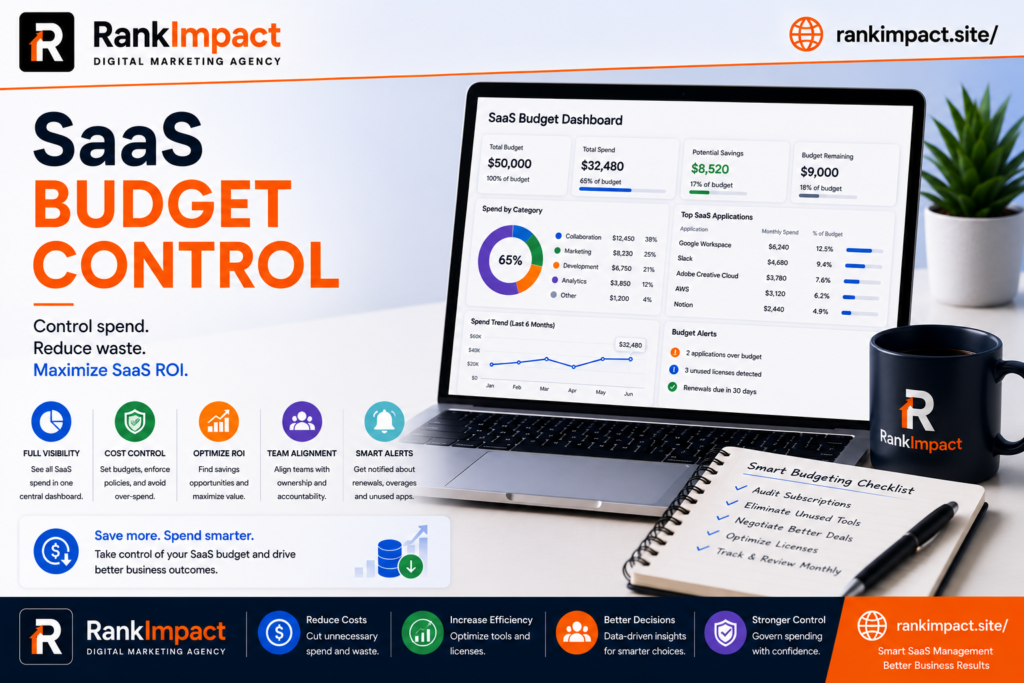
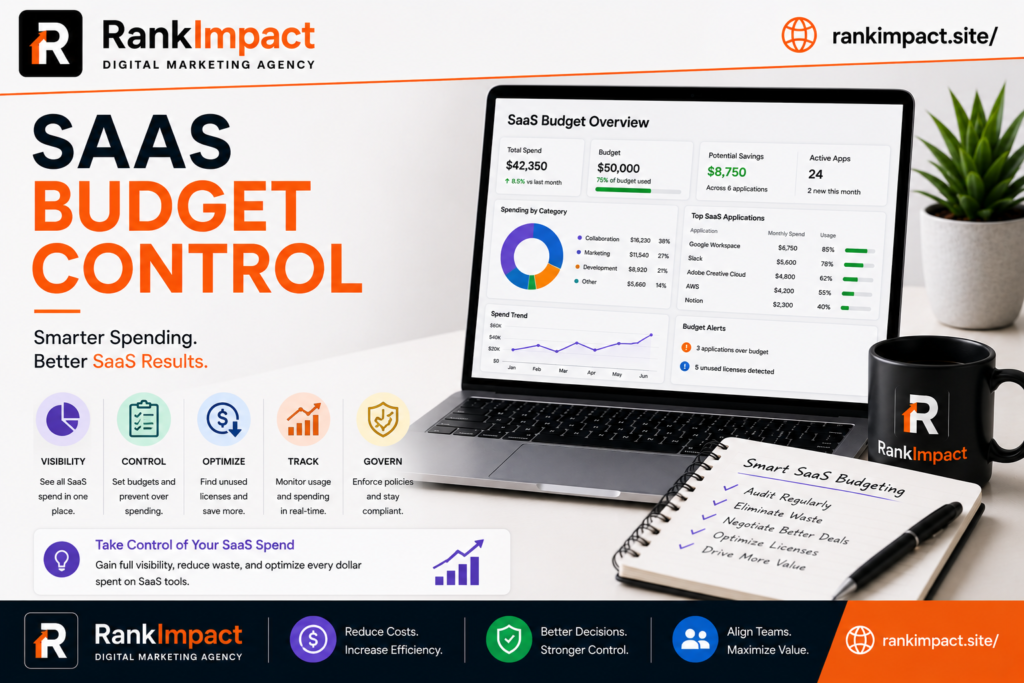
SaaS Budget Control A Complete Guide for 2026

Learn how to build effective SaaS budget control including spend audits, license optimization, and renewal negotiation in this complete guide.

SaaS budget control

SaaS Budget Control A Complete Guide to Managing Software Spend

Most companies discover a real SaaS budget control problem the same way. Someone in finance runs an audit ahead of a renewal cycle and finds a list of subscriptions nobody remembers approving, tools with a handful of active users despite being billed for hundreds of seats, and departments that each purchased a slightly different version of the same tool independently. This scenario has become common enough that SaaS budget control has shifted from a minor operational task into a genuine strategic priority for finance and operations leaders across companies of nearly every size.

This guide is written for finance leaders, operations managers, and IT decision makers who need a practical framework for controlling software spend without slowing down the teams that genuinely need those tools to do their jobs well. Readers researching this topic typically fall into a few groups. Some are finance leaders trying to build a formal process where none currently exists. Others are operations leads at a scaling company where tool sprawl has quietly gotten out of hand. And some are executives trying to understand why software spend keeps climbing faster than headcount. This article addresses all three by covering the strategic, procedural, and practical dimensions of SaaS budget control in depth.

Why SaaS Budget Control Has Become Genuinely Difficult

Software purchasing has become radically decentralized compared to a decade ago. A marketing manager can subscribe to a new tool with a company credit card in minutes, a sales team can adopt a trial that quietly becomes a paid subscription, and an engineering team can spin up infrastructure tools without ever routing the purchase through a formal procurement process. This decentralization has genuine benefits, since teams can adopt tools that solve immediate problems without waiting weeks for approval, but it also means software spend often grows without any single person maintaining a complete picture of what the company is actually paying for.

The subscription pricing model itself compounds this challenge. Unlike a large one time purchase that naturally triggers scrutiny, a recurring monthly charge of a modest amount rarely draws attention on its own, yet dozens of these smaller subscriptions accumulated across departments over several years can represent a genuinely significant portion of operating expenses that nobody has reviewed holistically. Many companies only discover the true scale of this spend when a finance team finally conducts a comprehensive audit, often revealing overlapping tools, unused licenses, and forgotten trials that quietly converted to paid plans.

What SaaS Budget Control Actually Means

SaaS budget control refers to the systems, processes, and oversight a company puts in place to track, manage, and optimize its software subscription spending across the entire organization. This extends well beyond simply approving new purchases and includes ongoing monitoring of usage, renewal timing, license allocation, and the relationship between what a company pays for a tool and the actual value that tool delivers to the teams using it.

Effective SaaS budget control requires visibility as its foundation. A company cannot control spend it cannot see clearly, which means building a complete inventory of active subscriptions, their cost, their renewal dates, and who within the organization actually uses them represents the essential first step before any meaningful optimization can happen. Many companies are surprised by how much this initial inventory process alone reveals about spend they had lost track of entirely.

Building a Complete Inventory of Software Spend

Creating an accurate inventory starts with pulling data from every possible source rather than relying on a single system that likely misses a meaningful portion of actual spend. Corporate credit card statements often reveal subscriptions purchased outside any formal procurement process, while accounting software categorization can help identify recurring software charges that might otherwise blend into broader expense categories without specific attention.

Cross referencing this financial data against actual usage data from single sign on logs or the tools themselves reveals a critical second dimension beyond simple cost, namely whether a subscription is genuinely being used at the level it is being paid for. A tool billed for fifty seats but showing regular activity from only twelve users represents a clear and immediately actionable opportunity, and this kind of usage versus cost mismatch tends to be far more common than most finance leaders initially expect once they actually look.

Engaging directly with department heads during this inventory process adds essential context that financial data alone cannot provide. A tool showing low login frequency might still be critical for a specific quarterly process that happens infrequently, and understanding this kind of nuance prevents a well intentioned cost cutting effort from accidentally removing a tool a team genuinely depends on for something not reflected in daily usage patterns.

Establishing Clear Approval Workflows for New Purchases

Once a company understands its current spend, preventing the same sprawl from recurring requires a deliberate approval process for new subscriptions going forward. The most effective approval workflows balance genuine oversight against speed, since a process so slow or bureaucratic that teams route around it entirely defeats its own purpose and simply pushes spending back into the shadows it was designed to eliminate.

A practical approach involves setting a clear spending threshold below which team leads can approve new tools independently, while purchases above that threshold require a brief review confirming the tool does not significantly overlap with something the company already pays for. This threshold should be calibrated to the company’s actual size and risk tolerance rather than copied directly from another company’s process, since what represents meaningful oversight for a small team can feel like unnecessary friction for a larger organization with more established purchasing patterns.

Requiring a documented business justification, even briefly, for purchases above the threshold creates a natural moment for reflection that often surfaces redundancy before a purchase happens rather than after, which is considerably easier to prevent than to unwind once a team has built workflows around a new tool.

Reducing Redundant and Overlapping Tools

Tool redundancy accumulates gradually and often invisibly as different departments solve similar problems independently over time without full awareness of what other teams are already using. A marketing team might adopt a project management tool entirely separate from the one engineering already uses, or two departments might each purchase a similar analytics platform because neither was aware the other had already solved a nearly identical need.

Conducting a structured redundancy review, ideally on an annual basis, involves mapping tools by function rather than by department, which often reveals overlap that would remain hidden if reviewed purely through a departmental lens. When redundancy is identified, consolidating onto a single tool typically requires careful change management rather than simply mandating a switch, since the team currently on the tool being phased out will need genuine support transitioning workflows and data without significant disruption to their ongoing work.

Standardizing on approved tools within specific categories, communicated clearly to teams before they go searching for a new solution independently, prevents a meaningful amount of redundancy from forming in the first place. A simple internal resource listing company approved tools by function, kept current and easily accessible, meaningfully reduces the likelihood of a team purchasing something that substantially duplicates an existing subscription.

Optimizing License Allocation and Seat Usage

Even after eliminating genuinely redundant tools, most companies still overpay significantly for licenses within tools they genuinely need due to seat allocation that does not match actual usage. Regularly reviewing active user counts against purchased seats across every subscription surfaces immediate opportunities to downgrade plan tiers or remove inactive licenses without losing any functionality the company actually relies on.

Automating this review where possible, through tools specifically designed to track SaaS usage patterns, removes the dependency on someone remembering to manually audit dozens of subscriptions on a regular schedule, which in practice tends to happen inconsistently at best without dedicated tooling supporting the process.

Offboarding processes deserve particular attention within this context, since departing employees frequently retain active licenses across multiple tools for weeks or months after leaving simply because deprovisioning access was not built into a formal offboarding checklist. Integrating license removal directly into the standard offboarding workflow, rather than treating it as a separate manual task that IT remembers only sporadically, closes a gap that quietly costs many companies a meaningful amount over the course of a year.

Negotiating Renewals Strategically

Renewal timing represents one of the most underutilized opportunities within SaaS budget control, since many companies allow subscriptions to auto renew without any negotiation simply because tracking every individual renewal date across dozens of tools feels administratively burdensome. Building a renewal calendar that flags upcoming contracts at least sixty to ninety days before their renewal date creates the lead time needed to genuinely negotiate rather than accepting whatever terms a vendor’s default renewal presents.

Approaching a renewal conversation armed with actual usage data strengthens a company’s negotiating position considerably, since a vendor is far more likely to offer meaningful concessions when a customer can demonstrate genuine intent to right size or reconsider the relationship rather than appearing to renew automatically regardless of the terms offered.

Multi year contracts can offer meaningful discounts but should be weighed carefully against the flexibility a company loses by committing further into the future, particularly for tools in categories where the competitive landscape is evolving quickly and a better alternative might emerge before a long commitment period ends.

Common Mistakes Companies Make With SaaS Budget Control

One of the most frequent mistakes is treating a spend audit as a one time project rather than an ongoing discipline, conducting a thorough review once and then allowing the same sprawl that prompted the original audit to gradually reaccumulate over the following year without any regular follow up process in place.

Overcorrecting toward excessive restriction represents an opposite but equally damaging mistake, where a company responds to discovering wasted spend by implementing such a slow or bureaucratic approval process that teams begin purchasing tools outside official channels again simply to avoid the friction, recreating the exact visibility problem the new process was meant to solve.

Many companies also focus exclusively on cost while ignoring the value a tool genuinely delivers, cutting a subscription based purely on its price without adequately weighing the productivity or revenue impact losing that tool would actually have on the team using it. Effective SaaS budget control requires evaluating cost against genuine business value rather than treating every reduction in spend as an unambiguous win regardless of what is lost.

Failing to involve the actual users of a tool in decisions about its future frequently backfires as well, since finance or operations teams making unilateral decisions based purely on usage data often miss important context that only the team actually using the tool day to day can provide about why that usage pattern looks the way it does.

Building a Sustainable SaaS Budget Control Process

The companies that manage software spend most effectively treat SaaS budget control as a continuous, cross functional discipline rather than an occasional cost cutting exercise triggered only when spend becomes visibly alarming. This typically means assigning clear ownership, whether to a dedicated finance operations role or a rotating cross departmental committee, responsible for maintaining the software inventory, monitoring usage trends, and managing the renewal calendar on an ongoing basis rather than reactively.

Establishing a regular cadence, such as a quarterly review meeting bringing together finance and key department leads, keeps SaaS budget control embedded in normal operating rhythm rather than becoming a forgotten process that only resurfaces when a particularly large invoice draws unwanted attention. This consistency ultimately matters more than any individual tactic, since the discipline of ongoing review is what prevents the same expensive sprawl from quietly rebuilding itself year after year.

Frequently Asked Questions

What is SaaS budget control?

SaaS budget control refers to the systems and processes a company uses to track, manage, and optimize its software subscription spending, including visibility into active tools, usage monitoring, and renewal management across the organization.

How do companies typically lose control of SaaS spending?

Companies typically lose control through decentralized purchasing where individual teams subscribe to tools independently, combined with small recurring charges that rarely draw scrutiny compared to larger one time purchases.

What is the first step in establishing SaaS budget control?

The first step is building a complete inventory of active subscriptions by cross referencing credit card statements, accounting records, and single sign on logs to understand both what is being paid for and what is actually being used.

How often should a company review its SaaS budget control process?

Most effective programs conduct a quarterly review alongside a more comprehensive annual audit, keeping oversight consistent rather than only reviewing spend when a problem becomes obviously visible.

Should small companies worry about SaaS budget control?

Yes, since tool sprawl and unused licenses accumulate proportionally even in smaller organizations, and establishing good habits early prevents a much larger and more difficult cleanup as the company scales.

How can a company reduce redundant software tools?

Conducting a structured review that maps tools by function rather than department typically reveals overlap, followed by careful change management to consolidate onto a single approved tool per category.

What role does offboarding play in SaaS budget control?

Offboarding plays a significant role since departing employees often retain active licenses for weeks or months if license removal is not built directly into the standard offboarding checklist.

How far in advance should renewal negotiations begin?

Most successful negotiations begin sixty to ninety days before a contract renewal date, providing enough lead time to gather usage data and negotiate meaningfully rather than accepting default renewal terms.

What is the biggest mistake companies make with SaaS budget control?

The biggest mistake is treating a spend audit as a one time project rather than an ongoing discipline, which allows the same tool sprawl that prompted the original review to gradually reaccumulate.

Does SaaS budget control mean cutting every underused tool?

No, effective SaaS budget control weighs actual business value against cost rather than automatically cutting every tool with lower usage, since some tools remain genuinely important despite infrequent activity.

Conclusion

SaaS budget control has become an essential discipline for companies of nearly every size as software purchasing has grown increasingly decentralized and subscription costs have quietly accumulated across departments. Building genuine visibility into active spend, establishing approval workflows that balance oversight against speed, and treating renewal negotiation and license optimization as ongoing priorities rather than occasional projects together form the foundation of a program that genuinely controls costs without slowing down the teams that depend on these tools daily. Companies that build this as a continuous discipline, with clear ownership and a regular review cadence, consistently avoid the expensive sprawl that catches so many organizations off guard during their first comprehensive audit.

Key Takeaways

SaaS budget control requires building complete visibility into active software spend before any meaningful optimization becomes possible. Decentralized purchasing and small recurring charges are the primary reasons software spend grows without adequate oversight in most companies. Regular reviews of license allocation and usage data frequently reveal significant opportunities to downgrade or eliminate unused seats. Renewal negotiations conducted sixty to ninety days in advance, backed by genuine usage data, produce considerably better outcomes than passive auto renewal. Treating SaaS budget control as an ongoing discipline with clear ownership, rather than a one time audit, prevents the same costly sprawl from quietly rebuilding over time.

SaaS Security A Complete Guide for 2026

Learn what SaaS security really involves, how to evaluate vendors, avoid common mistakes and build a strong security program in this complete guide.

saas security

SaaS Security A Complete Guide to Protecting Your Cloud Applications

Every SaaS company eventually reaches a point where a customer, investor, or compliance auditor asks a pointed question about how data is protected. That moment is often the first time a growing company realizes that SaaS security is not a single feature to bolt on but an ongoing discipline that touches engineering, operations, legal, and customer trust simultaneously. As more business critical workflows move to cloud based software, buyers have grown far more sophisticated about evaluating the security posture of the tools they adopt, and companies that treat security as an afterthought increasingly lose deals to competitors who can answer security questions with confidence.

This guide is written for founders, security leads, and product teams at SaaS companies who need a practical understanding of what SaaS security actually involves, not a vague overview repeating industry buzzwords. Readers researching this topic typically fall into a few groups. Some are early stage founders trying to understand what security investments matter before their first enterprise sale. Others are security or engineering leaders building out a formal program and looking for a structured checklist. And some are buyers evaluating a SaaS vendor and trying to understand what questions actually matter. This article addresses all three by covering the technical, procedural, and compliance dimensions of SaaS security in depth.

What SaaS Security Actually Covers

SaaS security refers to the practices, tools, and policies used to protect data, infrastructure, and user access within a cloud delivered software application. Unlike traditional on premise software where a company controls its own servers and network perimeter, SaaS security operates in a shared responsibility model. The cloud infrastructure provider, such as a major cloud platform, secures the underlying physical infrastructure, while the SaaS vendor is responsible for securing the application itself, its configuration, and how customer data is handled within it. Understanding where that line sits is one of the most common points of confusion for teams new to this space.

This shared model means SaaS security spans several interconnected areas including identity and access management, data encryption, application security, infrastructure configuration, incident response, and regulatory compliance. A weakness in any one of these areas can undermine the others, which is why mature SaaS security programs treat these as one integrated system rather than isolated checkboxes.

Why SaaS Security Has Become a Board Level Priority

A decade ago security was frequently treated as a cost center that companies invested in reluctantly. That has shifted dramatically as high profile breaches at well known SaaS companies demonstrated how quickly customer trust and revenue can evaporate after an incident. Enterprise buyers now routinely require a completed security questionnaire, a SOC 2 report, or evidence of specific controls before signing a contract, which means weak security posture directly blocks revenue rather than simply representing abstract risk.

Regulatory pressure has intensified this shift further. Depending on the industries a SaaS company serves, frameworks such as GDPR, HIPAA, or various state level privacy laws impose specific legal obligations around how customer data is stored, processed, and disclosed in the event of a breach. Non compliance can result in significant fines and reputational damage that far exceeds the cost of building proper controls from the start.

Investors have also grown more security conscious during due diligence, particularly at growth stage and later funding rounds, where a security assessment increasingly forms part of the standard diligence process alongside financial and legal review. Companies that can point to a documented and mature security program often move through diligence faster and with fewer downstream conditions attached to the deal.

Core Pillars of a Strong SaaS Security Program

Identity and access management sits at the foundation of most SaaS security programs because the majority of breaches originate from compromised credentials rather than sophisticated technical exploits. Implementing single sign on, enforcing multi factor authentication, and applying the principle of least privilege so that employees and integrations only access the data strictly necessary for their role dramatically reduces the attack surface available to an intruder.

Data encryption protects information both at rest and in transit. Encrypting data at rest ensures that even if underlying storage is somehow accessed inappropriately, the data itself remains unreadable without the proper decryption keys. Encrypting data in transit using current TLS standards prevents interception as data moves between a user’s browser and your servers or between internal services. Key management practices, including how encryption keys are rotated and who has access to them, deserve just as much attention as the encryption itself since poorly managed keys undermine even strong encryption algorithms.

Application security involves building security considerations directly into the software development lifecycle rather than testing for vulnerabilities only after code ships. This includes secure code review practices, automated static and dynamic application security testing, dependency scanning to catch vulnerable third party libraries, and regular penetration testing conducted by qualified external firms. Companies that treat application security as a continuous process embedded in engineering workflows consistently catch far more issues than those relying solely on periodic external audits.

Infrastructure security covers how cloud environments are configured, including network segmentation, firewall rules, and monitoring for misconfigurations that could expose data unintentionally. Cloud misconfiguration remains one of the leading causes of data exposure incidents, often stemming from a storage bucket or database left accessible without proper access controls rather than a sophisticated attack.

Incident response planning ensures a company can react quickly and effectively when something does go wrong. This includes having a documented response plan, clearly assigned roles during an incident, and a tested communication process for notifying affected customers and regulators within legally required timeframes. Companies that only think through incident response after an actual breach occurs consistently respond slower and less effectively than those with a rehearsed plan.

Common SaaS Security Mistakes Companies Make

One of the most frequent mistakes is treating security as a project with a defined end date rather than an ongoing operational discipline. Companies sometimes complete a security audit, address the findings, and then let practices lapse until the next audit cycle, creating a pattern of reactive rather than continuous improvement.

Overprivileged access is another persistent problem, particularly as companies scale and employees change roles without their access permissions being updated accordingly. Regular access reviews that verify each employee and integration only retains the permissions they currently need prevent this kind of privilege creep from accumulating unnoticed over time.

Many companies also underinvest in vendor and third party risk management. A SaaS product often integrates with numerous third party services and subprocessors, and a security weakness in any of those dependencies can expose your customers’ data even if your own systems are well protected. Maintaining an inventory of third party integrations along with periodic review of their security posture closes a gap that attackers increasingly target directly.

Delayed patching represents a surprisingly common vulnerability given how well understood the risk is. Known vulnerabilities in dependencies or infrastructure components that remain unpatched for extended periods provide an easy entry point for attackers using automated scanning tools that specifically search for outdated and exploitable software versions.

Finally, many early stage companies delay pursuing formal compliance certifications like SOC 2 until an enterprise deal specifically requires it, which often means scrambling to build controls retroactively under deadline pressure rather than establishing them as standard practice from the beginning. Starting the compliance journey earlier, even informally, tends to produce a more mature and defensible security posture over time.

How to Evaluate the Security of a SaaS Vendor

Buyers evaluating a SaaS vendor should request specific evidence rather than accepting vague assurances about security being a top priority. A current SOC 2 Type II report or equivalent independent audit provides concrete evidence that controls have been tested over time rather than simply documented on paper. Asking directly about data encryption practices, where data is physically stored, and what subprocessors have access to customer data gives buyers a clearer picture of actual data handling than marketing materials typically provide.

Understanding a vendor’s incident response history and communication practices matters as well. Asking how a vendor has handled past security incidents, even minor ones, reveals more about their operational maturity than asking whether they have ever experienced a breach. Companies with mature programs tend to be transparent about past incidents and the specific improvements made afterward.

Reviewing a vendor’s data deletion and retention policies is particularly important for companies operating under strict regulatory requirements, since understanding exactly what happens to your data if you cancel a subscription, and how quickly it is permanently deleted, prevents unpleasant surprises later.

Compliance Frameworks Relevant to SaaS Companies

SOC 2 has become something close to a baseline expectation for SaaS companies selling to enterprise customers in the United States, evaluating controls across security, availability, processing integrity, confidentiality, and privacy depending on which trust service criteria a company chooses to include in its audit scope.

ISO 27001 serves a similar purpose internationally and is often specifically requested by customers based outside the United States, providing a globally recognized framework for information security management systems.

GDPR applies to any company processing personal data of individuals within the European Union regardless of where the company itself is based, imposing specific requirements around consent, data subject rights, and breach notification timelines that differ meaningfully from United States regulatory approaches.

HIPAA compliance becomes relevant specifically for SaaS companies handling protected health information within the United States healthcare system, requiring specific technical and administrative safeguards along with signed business associate agreements with covered entities.

Choosing which frameworks to pursue should be driven directly by the industries and geographies a company sells into rather than pursuing every available certification simultaneously, since compliance work represents real ongoing resource investment that should be prioritized strategically.

Building a Security Aware Culture Across Your Company

Technical controls alone cannot fully protect a SaaS company if employees are not equally security conscious in their daily behavior. Regular security awareness training that goes beyond a single onboarding session and includes periodic phishing simulations helps employees recognize social engineering attempts, which remain one of the most common ways attackers gain initial access to otherwise well protected systems.

Making security a visible priority from leadership downward, rather than treating it purely as an engineering or IT concern, encourages employees across sales, customer support, and other departments to flag suspicious activity rather than assuming security is someone else’s responsibility entirely. Companies that successfully build this kind of shared ownership consistently detect and respond to potential issues faster than those where security remains siloed within a single team.

The Future of SaaS Security

Artificial intelligence is increasingly being used both offensively and defensively within the SaaS security landscape, with attackers using AI to craft more convincing phishing content while security teams use similar technology to detect anomalous behavior patterns across large volumes of user activity that would be impossible to review manually. Companies evaluating security tooling should expect this trend to accelerate and should ask vendors specifically how AI is being used within their own detection and monitoring systems.

Zero trust architecture continues gaining adoption as the standard approach to modern SaaS security, moving away from the older assumption that anything inside a network perimeter can be trusted by default, and instead requiring continuous verification of every user and device attempting to access resources regardless of their network location.

Frequently Asked Questions

What is SaaS security in simple terms?

SaaS security refers to the practices and tools used to protect data, user access, and infrastructure within cloud based software applications, covering areas like encryption, identity management, and compliance.

Who is responsible for security in a SaaS shared responsibility model?

Cloud infrastructure providers secure the underlying physical infrastructure, while SaaS vendors are responsible for securing the application itself, its configuration, and how customer data is handled within it.

Why do enterprise buyers require SOC 2 reports from SaaS vendors?

A SOC 2 report provides independently audited evidence that a vendor’s security controls have been tested and operate effectively over time, giving enterprise buyers confidence beyond marketing claims alone.

What is the most common cause of SaaS security breaches?

Compromised credentials and cloud misconfigurations, rather than sophisticated technical exploits, remain the most common root causes behind SaaS security incidents.

How often should a SaaS company conduct penetration testing?

Most mature SaaS companies conduct penetration testing at least annually, with additional testing after significant architectural changes or before major product launches.

Does a small SaaS startup need SOC 2 compliance immediately?

Not necessarily immediately, but beginning to build relevant controls early makes pursuing formal certification significantly easier once enterprise customers begin requiring it during sales negotiations.

What is the difference between GDPR and HIPAA compliance?

GDPR governs personal data of individuals within the European Union across all industries, while HIPAA specifically governs protected health information within the United States healthcare system.

How does multi factor authentication improve SaaS security?

Multi factor authentication requires a second verification step beyond a password, significantly reducing the risk of unauthorized access even when a password has been compromised through phishing or a data breach.

What should a company include in an incident response plan?

An effective incident response plan should include clearly assigned roles, defined escalation procedures, a communication plan for notifying affected customers and regulators, and a process for conducting a post incident review.

How can a SaaS company evaluate the security risk of third party integrations?

Companies should maintain an inventory of all third party integrations and subprocessors, review their security certifications periodically, and limit the data shared with each integration to only what is operationally necessary.

Conclusion

SaaS security is not a single product a company purchases or a checkbox completed before a compliance audit. It is an ongoing discipline spanning identity management, encryption, application development practices, infrastructure configuration, and organizational culture that must evolve continuously as a company grows and as the threat landscape shifts. Companies that treat SaaS security as a core operational function rather than a reactive afterthought consistently close enterprise deals faster, retain customer trust more effectively, and avoid the significant financial and reputational cost of a preventable security incident.

Key Takeaways

SaaS security operates under a shared responsibility model where cloud providers secure infrastructure while vendors secure their application and data handling practices. Identity and access management, encryption, and application security form the foundational pillars most SaaS companies should prioritize first. Common mistakes include treating security as a one time project, overprivileged access accumulating unnoticed, and delaying compliance work until an enterprise deal specifically demands it. Buyers evaluating vendors should request concrete evidence such as a current SOC 2 report rather than accepting general assurances. Building a security aware culture across the entire company, not just the engineering team, meaningfully improves how quickly potential issues are detected and addressed.

SaaS for Schools A Complete Guide to School Software 2026

Discover how SaaS for schools works in 2026, how to evaluate vendors, avoid common mistakes and implement school software successfully.

saas for school

SaaS for Schools A Complete Guide to Choosing and Implementing School Software

Schools today run on far more than textbooks and whiteboards. Behind every functioning classroom sits a stack of digital tools handling attendance grading communication and administration. This is where SaaS for schools has become one of the most important categories in education technology. Administrators teachers and IT coordinators are increasingly searching for software as a service solutions that reduce manual work improve communication with parents and give leadership real time visibility into how a school is performing academically and operationally.

If you are researching SaaS for schools right now you are likely one of three types of readers. You could be a school administrator trying to modernize outdated systems. You might be an IT director evaluating vendors and comparing features before a budget cycle closes. Or you could be an edtech founder trying to understand the market before building or selling into it. This guide is written to serve all three because the underlying questions are the same. What does SaaS actually mean in a school context. Which tools solve which problems. How do you avoid the common mistakes that waste budget and frustrate teachers. And how do you implement a new system without disrupting the school year.

What SaaS for Schools Actually Means

Software as a service is a delivery model where a school pays a subscription fee to access software hosted on the vendor’s servers rather than installing and maintaining software on its own machines. In a school setting this typically covers learning management systems student information systems communication platforms scheduling tools and financial administration software. The defining characteristic is that the school does not own physical servers or manage complex installations. Everything runs in the cloud and is accessed through a browser or app.

This matters enormously for schools because most educational institutions do not have large IT departments. A district with three schools might have one or two IT staff responsible for hundreds of devices and dozens of applications. SaaS for schools shifts the burden of maintenance security patching and uptime to the vendor allowing that small IT team to focus on classroom support rather than server management. It also means schools can start using a new tool within days rather than months since there is no hardware procurement or installation cycle involved.

Why Schools Are Moving to SaaS Faster Than Ever

The shift toward cloud based software in education accelerated dramatically during remote learning periods and it has not reversed. Teachers grew accustomed to digital gradebooks parent communication apps and online assignment submission and most have no interest in returning to paper based systems. Parents now expect real time updates on their child’s attendance and grades through a portal rather than a note sent home in a backpack.

Budget pressure is another driver. Traditional on premise software often required upfront licensing costs hardware purchases and ongoing maintenance contracts that strained already tight education budgets. Subscription based SaaS pricing spreads cost predictably across the year and often scales with enrollment which makes financial planning easier for business managers. Many vendors also offer tiered pricing specifically designed for the education sector recognizing that public schools operate under different financial constraints than private companies.

Data driven decision making has also pushed adoption. Administrators are under pressure to demonstrate measurable outcomes and modern SaaS platforms for schools include dashboards and reporting features that make it far easier to track attendance trends grade distributions and intervention outcomes than manually compiled spreadsheets ever could.

The Core Categories of SaaS Tools Schools Actually Use

Not every school needs every category of software but understanding the landscape helps when building a technology roadmap. Student information systems form the backbone of most school operations handling enrollment records grades transcripts and scheduling. Learning management systems focus on delivering coursework assignments and assessments to students and are especially critical for hybrid or blended learning models. Communication platforms connect teachers administrators and parents through messaging portals and automated notifications replacing the fragmented mix of emails phone calls and paper flyers many schools relied on for years.

Financial and administrative software handles budgeting payroll and procurement while HR platforms manage staff records certifications and professional development tracking. Assessment and analytics tools measure student progress against standards and increasingly use predictive indicators to flag students who may need additional support before they fall significantly behind. Choosing SaaS for schools effectively usually means selecting one strong tool in each essential category rather than trying to find a single platform that does everything adequately but nothing exceptionally.

How to Evaluate a SaaS Vendor for Your School

Evaluating vendors is where many schools go wrong because they focus almost entirely on feature lists rather than fit and support quality. A feature rich platform that your teachers find confusing or that lacks responsive customer support during the first month of school will cause more harm than a simpler tool that works reliably.

Start by mapping your actual pain points before looking at any vendor website. Write down the specific problems you are trying to solve whether that is inconsistent attendance tracking across buildings slow parent communication or fragmented student records spread across multiple legacy systems. A vendor demo becomes far more useful when you can ask directly how their product solves your documented problems rather than being swept along by a generic feature tour.

Data privacy and compliance deserve serious scrutiny given how much sensitive student information flows through these systems. In the United States this means confirming compliance with FERPA and, where relevant, COPPA for platforms used by younger students. Ask vendors directly where data is stored how it is encrypted and what happens to your school’s data if you ever cancel the subscription. A reputable vendor will have clear documented answers rather than vague reassurances.

Integration capability is another area schools underestimate. A new tool that cannot connect to your existing student information system or single sign on provider creates duplicate data entry and frustrated staff. Ask specifically about API access and existing integrations with the systems you already run before signing a contract.

Finally evaluate the vendor’s education specific experience. A company that primarily serves corporate clients and has recently added an education tier often lacks the nuanced understanding of academic calendars grading periods and compliance requirements that education focused vendors have built into their product over years of iteration.

Common Mistakes Schools Make When Adopting SaaS Tools

The most frequent mistake is purchasing software based on a compelling sales demo without involving the teachers and staff who will use it daily. Administrators sometimes select a platform that looks impressive in a boardroom presentation but proves cumbersome in an actual classroom with thirty students and a fifty minute period. Involving a small group of teachers in the evaluation process before purchase dramatically improves adoption rates after rollout.

Underestimating training time is another common misstep. Schools often introduce new software during the first week of the academic year when staff are already overwhelmed with orientation activities and returning students. A far more effective approach is training staff during the summer with follow up sessions scheduled during the first few weeks once real usage questions emerge naturally.

Many schools also fail to designate a clear internal champion for each new tool. Without someone responsible for answering day to day questions troubleshooting minor issues and communicating updates from the vendor adoption tends to fragment with different teachers using the tool in inconsistent ways or abandoning it altogether when they hit a small obstacle.

Ignoring total cost of ownership is a financial mistake that shows up later. The advertised subscription price rarely includes implementation fees data migration costs training time or the cost of integrating with existing systems. Requesting a complete cost breakdown before signing prevents unpleasant budget surprises mid year.

Finally schools sometimes accumulate too many overlapping tools over several years of piecemeal purchasing decisions. Conducting an annual audit of active software subscriptions often reveals redundant tools serving the same function purchased by different departments at different times which quietly drains budget that could be better spent elsewhere.

Best Practices for a Smooth SaaS Implementation

A phased rollout consistently outperforms an all at once launch. Piloting a new platform with one grade level or one department for a semester allows the school to identify and fix workflow issues before expanding school wide, and it produces internal champions who can help train colleagues during the broader rollout.

Clear communication with parents matters more than schools often anticipate particularly for tools that change how they receive information about their children. A short explanatory email or orientation video sent before launch significantly reduces confused calls to the front office during the first weeks of use.

Building in regular check ins with the vendor during the first semester helps surface issues early. Many education focused SaaS companies offer a dedicated customer success contact for schools and scheduling monthly calls during the initial rollout period ensures small problems get addressed before they become reasons for staff to abandon the tool.

Documenting internal processes as they are built prevents knowledge loss when staff turn over, which happens frequently in education. A simple shared document outlining how attendance is entered how grades sync or how parent accounts are created saves enormous time when a new staff member takes over a role mid year.

Pricing Models and Budget Considerations

Most SaaS for schools pricing follows a per student or per user annual subscription model though some vendors charge flat institutional rates for smaller schools. Per student pricing scales naturally with enrollment which works well for growing districts but can become expensive quickly for larger schools, so requesting volume discount tiers during negotiation is worthwhile once enrollment crosses a few hundred students.

Many vendors offer separate tiers distinguishing basic functionality from premium features like advanced analytics or additional integrations. Schools should resist the temptation to purchase the highest tier immediately and instead start with core functionality, upgrading only once staff have demonstrated they are using the base features consistently and would genuinely benefit from additional capability.

Grant funding and state technology allocations often specifically cover education software purchases and it is worth checking with your business office whether current subscriptions could be reimbursed or funded through existing grant programs before assuming the full cost must come from the general operating budget.

Security and Data Privacy Considerations Specific to Education

Schools hold an unusually sensitive combination of data including minors personal information academic records and in many cases health related accommodations. This makes security diligence non negotiable when selecting any SaaS platform. Beyond confirming regulatory compliance schools should ask vendors about their data breach notification policy, how quickly they patch known vulnerabilities and whether they undergo independent security audits.

Single sign on integration deserves particular attention because it reduces the number of passwords students and staff must manage which in turn reduces both security risk and support requests to the IT department. Most established education SaaS vendors support integration with common identity providers and this should be treated as a near mandatory requirement rather than a nice to have feature during vendor selection.

The Future of SaaS in Education

Artificial intelligence features are increasingly built directly into education SaaS platforms, from automated essay feedback to predictive analytics identifying students at risk of falling behind. Schools evaluating new platforms should ask vendors how these features work, what data trains them and how much human oversight remains part of the process, since transparency here is still uneven across the market.

Interoperability standards are also improving, with more vendors building around common education data standards that make switching platforms or connecting multiple tools significantly less painful than it was even five years ago. This trend benefits schools directly by reducing vendor lock in and making the overall SaaS for schools ecosystem more flexible over time.

Frequently Asked Questions

What does SaaS mean in an education context?

SaaS in education refers to cloud hosted software that schools access through a subscription rather than installing on their own servers, covering tools like student information systems learning management platforms and communication apps.

Is SaaS for schools more affordable than traditional software?

For most schools yes, since SaaS eliminates large upfront hardware and licensing costs in favor of predictable subscription pricing, though total cost of ownership should always include training and integration expenses.

How long does it take to implement a new SaaS platform in a school?

A typical implementation ranges from a few weeks for simple communication tools to a full semester for comprehensive student information system migrations, depending on data migration complexity and staff training needs.

What is the difference between a learning management system and a student information system?

A learning management system focuses on delivering coursework assignments and assessments to students, while a student information system manages enrollment records grades transcripts and scheduling at an administrative level.

How do schools ensure SaaS platforms comply with student data privacy laws?

Schools should confirm FERPA and, where applicable, COPPA compliance directly with vendors, review data storage and encryption practices and ensure contracts specify what happens to data if the subscription ends.

What is the biggest reason SaaS implementations fail in schools?

Insufficient staff training and lack of teacher involvement during vendor selection are the most common reasons adoption fails, since tools chosen without frontline input often do not match actual classroom workflows.

Can small schools afford enterprise level SaaS tools?

Many education focused vendors offer tiered pricing specifically designed for smaller institutions, and it is worth negotiating directly since list pricing is rarely the final offer for education buyers.

Should schools choose one all in one platform or multiple specialized tools?

Most schools achieve better results choosing one strong specialized tool per core function such as attendance grading and communication rather than one platform attempting to do everything moderately well.

How often should a school review its SaaS software subscriptions?

An annual audit is recommended to identify redundant tools underused subscriptions and opportunities to consolidate spending before the next budget cycle begins.

What questions should a school ask before signing a SaaS contract?

Schools should ask about data ownership and portability, integration capabilities with existing systems, total implementation cost beyond the subscription fee and what dedicated support is available during the first semester of use.

Conclusion

Choosing the right SaaS for schools is less about finding the platform with the longest feature list and more about matching real institutional needs to tools that staff will actually use consistently. The schools that see the strongest results are the ones that involve teachers early, plan training realistically, scrutinize data privacy seriously and treat vendor selection as an ongoing relationship rather than a one time purchase decision. Approached this way SaaS for schools becomes a genuine operational advantage rather than another underused subscription sitting quietly in the budget.

Key Takeaways

SaaS for schools shifts software maintenance and hosting responsibility to the vendor which particularly benefits schools with limited IT staff. Successful adoption depends far more on teacher involvement and training quality than on feature comparisons alone. Data privacy compliance including FERPA should be verified directly with every vendor before signing a contract. A phased rollout starting with one grade level or department consistently produces better long term adoption than a school wide launch. Annual audits of existing software subscriptions help schools avoid paying for redundant overlapping tools year after year.

SaaS Foundations Explained 7 Pillars That Matter

Discover the 7 core SaaS foundations including architecture metrics retention and security that determine long term business success

SaaS foundations

SaaS Foundations Key Pillars for Building and Scaling a Successful SaaS Business

Every successful software as a service company can trace its stability back to a small set of fundamentals that were either built correctly from the start or repaired painfully later once cracks began to show. These SaaS foundations are not glamorous and they rarely show up in a pitch deck slide about growth hacks yet they quietly determine whether a company can survive a difficult funding environment retain its best customers and scale without collapsing under its own complexity. Too many founders and operators focus entirely on acquisition and feature velocity while neglecting the underlying structure that supports everything else including the revenue model the technical architecture the metrics that reveal true health and the customer relationships that keep the business alive month after month. In this guide we will walk through every major pillar that makes up strong SaaS foundations including the business model itself the technical infrastructure choices the financial metrics worth tracking the product decisions that create long term stickiness and the security practices that protect trust. Whether you are three months into building your first SaaS product or five years into scaling an established platform this guide will give you a grounded framework for strengthening the foundations your business depends on.

What SaaS Foundations Actually Means for a Software Business

When people talk about SaaS foundations they are really describing the underlying structure that makes a subscription software business function reliably rather than any single feature or marketing tactic. Strong SaaS foundations include a clear and repeatable revenue model a technical architecture built for multi tenant scale a set of financial metrics that reveal true business health and operational practices around security customer success and product development that hold up as the company grows. A company can have an impressive product demo and still lack strong SaaS foundations if its churn is quietly climbing its infrastructure cannot handle real usage spikes or its unit economics do not actually work at scale. This is why experienced operators treat foundational work as an ongoing discipline rather than a task that gets checked off once during the early days of a company. Just as a building needs a foundation strong enough to support future floors a software as a service company needs foundational systems strong enough to support future customers revenue and complexity without requiring a painful rebuild later.

The Core Business Model Behind Software as a Service

Understanding the subscription business model is the first and most important layer of any serious approach to SaaS foundations because it changes almost every decision that follows. Unlike a traditional software sale where revenue arrives mostly upfront a subscription model spreads revenue recognition across the life of the customer relationship which means the company only becomes profitable on a customer after enough months or years of retained subscription payments. This single structural fact is why customer lifetime value and retention become central to every strategic conversation inside a software as a service company since a business that cannot retain customers long enough to recoup its acquisition cost is standing on unstable foundations no matter how much initial revenue it generates. The subscription model also creates a natural alignment between vendor and customer because continued payment depends on continued value which is very different from a perpetual license model where the vendor gets paid regardless of whether the customer keeps using the product. Founders building strong SaaS foundations need to internalize this alignment early because it should influence pricing packaging and even how the product roadmap gets prioritized around ongoing customer value rather than one time feature novelty.

Technical Architecture as a Foundational Pillar

The technical architecture underneath a software as a service platform is one of the most consequential and least visible parts of strong SaaS foundations because customers never see the infrastructure directly yet they feel its effects constantly through speed reliability and data security. Multi tenant architecture where a single application instance serves many customers efficiently while keeping their data properly isolated is the backbone of most scalable SaaS platforms because it allows a company to serve thousands of customers without maintaining thousands of separate deployments. Choosing cloud infrastructure that can scale horizontally as usage grows protects a company from painful rebuilds later while a well designed API layer allows the product to integrate cleanly into a customer’s existing technology stack which increasingly determines whether a platform gets adopted at all. Companies that treat architecture as an afterthought often discover the cost years later when a growing customer base exposes performance bottlenecks that require a fundamental rebuild under significant time pressure. Strong SaaS foundations require engineering leadership to think several stages of growth ahead rather than optimizing purely for the fastest path to an initial product launch since architectural debt compounds in ways that are far more expensive to fix once real customer data and real revenue depend on the system working correctly.

Financial Metrics That Reveal the Health of Your Foundations

No discussion of SaaS foundations is complete without a serious look at the financial metrics that reveal whether the underlying business model is actually working. Monthly recurring revenue and annual recurring revenue provide the baseline picture of predictable income but they only tell part of the story on their own. Customer acquisition cost measured against customer lifetime value shows whether the company can profitably acquire new customers over time since a business spending more to acquire a customer than that customer will ever generate in revenue is standing on foundations that cannot support long term growth no matter how impressive the top line numbers look. Net revenue retention has become one of the most closely watched metrics among experienced operators and investors because it captures how much revenue expands or contracts from the existing customer base which directly reflects whether the product delivers enough ongoing value to justify continued and growing investment from customers. Gross margin also deserves careful attention in a software as a service business because unusually high infrastructure or support costs relative to revenue can quietly erode the profitability that subscription businesses are supposed to deliver at scale. Building a habit of reviewing these metrics on a consistent cadence rather than only during fundraising season is one of the clearest signs of a company that takes its SaaS foundations seriously.

Product Foundations That Create Long Term Stickiness

A software as a service product needs more than a compelling initial feature set to build durable SaaS foundations because customers ultimately stay for the ongoing value the product delivers rather than the promise made during the sales process. Strong onboarding is one of the most underrated product foundations because the first days of a customer relationship set the tone for whether the product becomes embedded into daily workflows or quietly abandoned after the initial enthusiasm fades. Building workflows that create genuine switching costs through integrations accumulated data or team wide adoption gives a product durability that a single standout feature never can since competitors can usually copy a feature far more easily than they can replicate years of accumulated customer data and embedded process. Regularly gathering and acting on customer feedback through structured channels rather than anecdotal requests from the loudest customers helps product teams prioritize development in ways that actually strengthen retention rather than simply adding surface level complexity. Companies with the strongest SaaS foundations also resist the temptation to chase every competitor feature announcement and instead maintain a clear product philosophy that guides which capabilities genuinely serve their core customer base over the long term.

Customer Acquisition Foundations for Sustainable Growth

Building repeatable customer acquisition is another essential layer of SaaS foundations because growth built on inconsistent or unscalable tactics eventually stalls in ways that damage investor confidence and team morale alike. A strong acquisition foundation starts with genuine clarity about the ideal customer profile since targeting the wrong segment leads to poor product fit high churn and wasted marketing spend even when initial signups look promising. Diversifying acquisition channels rather than relying entirely on one source such as paid advertising protects a company from sudden cost increases or platform policy changes that can disrupt an entire growth strategy overnight. Content marketing search engine optimization and word of mouth referrals tend to compound in value over time which makes them particularly valuable components of long term SaaS foundations compared to channels that only produce results for as long as spending continues. Sales and marketing alignment also matters significantly here because a disconnect between the promises made during acquisition and the reality delivered by the product creates exactly the kind of early churn that undermines every other foundational metric a company is trying to build.

Retention and Customer Success as a Foundational Pillar

Retention deserves its own dedicated place among SaaS foundations because a subscription business fundamentally depends on customers choosing to continue paying month after month or year after year. Proactive customer success programs that monitor product usage and reach out before problems escalate consistently outperform reactive support models that only engage once a customer is already frustrated or considering cancellation. Onboarding quality directly predicts long term retention since customers who reach genuine value quickly are far more likely to renew than those who struggle through a confusing early experience regardless of how powerful the underlying product actually is. Building a structured process for identifying at risk accounts through usage data rather than gut feeling allows customer success teams to intervene early which protects revenue that would otherwise be lost quietly and discovered only after a cancellation notice arrives. Expansion revenue from existing customers through upsells and cross sells also strengthens SaaS foundations significantly because growing revenue from a retained customer base is typically far less expensive than acquiring an entirely new customer to replace lost revenue.

Security and Compliance as a Trust Foundation

Security has become one of the most non negotiable elements of strong SaaS foundations because customers are trusting a software vendor with sensitive business data the moment they sign up which makes trust itself part of the product. Basic security foundations include data encryption both at rest and in transit role based access controls and a clearly documented incident response plan that customers can review during procurement. Compliance certifications such as SOC 2 or ISO 27001 have become table stakes for many enterprise buyers and pursuing these certifications earlier than feels comfortable often pays significant dividends once larger deals require them during vendor evaluation. Regular security audits and penetration testing help companies discover vulnerabilities before a malicious actor does which protects both customer data and the company’s reputation in an industry where a single serious breach can permanently damage trust that took years to build. Companies that treat security as a foundational investment rather than a reactive checkbox exercise consistently find it easier to close larger deals and retain enterprise customers who require this level of assurance before committing significant budget.

Common Mistakes That Weaken SaaS Foundations

Even well funded and talented teams routinely undermine their own SaaS foundations through a handful of predictable mistakes that are worth naming directly. Prioritizing rapid feature expansion over core product stability often creates a bloated and fragile platform that becomes increasingly difficult to maintain which eventually slows the very growth the expansion was meant to accelerate. Ignoring unit economics during a period of easy fundraising is another common trap since a company that grows quickly on unsustainable customer acquisition costs eventually faces a painful reckoning once capital becomes harder to raise. Underinvesting in customer success while overinvesting in new customer acquisition creates a leaky bucket problem where the company spends heavily to fill the top of the funnel while losing existing customers out the bottom just as quickly. Treating security and compliance as someone else’s problem until an enterprise deal requires it often means scrambling to retrofit practices that would have been far easier and cheaper to build correctly from the beginning. Finally many teams delay addressing technical architecture problems because the short term cost of a rebuild feels larger than the long term cost of accumulating architectural debt which almost always turns out to be the more expensive choice in the end.

How to Strengthen Your SaaS Foundations Over Time

Strengthening SaaS foundations is not a one time project but an ongoing discipline that experienced operators build directly into how the company reviews its own performance. Establishing a regular cadence for reviewing core metrics including net revenue retention customer acquisition cost and gross margin ensures that foundational weaknesses get caught early rather than discovered during a difficult fundraising conversation or a sudden wave of churn. Investing in architecture improvements before they become urgent protects engineering teams from the kind of reactive firefighting that slows product development and frustrates customers experiencing performance problems. Building customer success into the organization as a core function rather than an afterthought pays dividends across acquisition cost retention and expansion revenue simultaneously since a well served customer base becomes the company’s strongest source of referrals and case studies. Treating security and compliance investment as a growth enabler rather than a cost center changes how quickly a company can pursue larger enterprise deals once the market opportunity presents itself. Companies that consistently revisit and reinforce these SaaS foundations year after year tend to compound their advantages while competitors who neglect them often find themselves rebuilding under much less favorable conditions.

Frequently Asked Questions

What does SaaS foundations mean in a business context?

SaaS foundations refers to the underlying structure of a software as a service business including its subscription revenue model technical architecture financial metrics product stability and security practices that together determine whether the company can scale reliably over time.

Why are strong SaaS foundations important for early stage startups?

Strong SaaS foundations help early stage startups avoid painful rebuilds and financial surprises later since decisions made about architecture pricing and customer success in the earliest days often become far more expensive to correct once the company has scaled significantly.

What financial metrics matter most for SaaS foundations?

The most important metrics include monthly and annual recurring revenue customer acquisition cost customer lifetime value net revenue retention and gross margin since together these numbers reveal whether the underlying business model is actually sustainable.

How does technical architecture affect SaaS foundations?

Technical architecture directly affects SaaS foundations because a multi tenant scalable infrastructure supports growth smoothly while a poorly designed system often requires an expensive and disruptive rebuild once customer volume and data complexity increase significantly.

What role does customer success play in SaaS foundations ?

Customer success plays a central role in SaaS foundations because retention and expansion revenue depend heavily on proactive engagement that helps customers reach real value quickly rather than reactive support that only responds after problems have already escalated.

How important is security for SaaS foundations?

Security is a critical part of SaaS foundations because customers trust a vendor with sensitive data from the moment they sign up and a serious breach can permanently damage the reputation and enterprise sales pipeline a company has spent years building.

What is the biggest mistake companies make with their SaaS foundations?

One of the most damaging mistakes is prioritizing rapid feature expansion or aggressive customer acquisition while neglecting unit economics and customer success which eventually creates unsustainable growth that collapses once outside capital becomes harder to access.

How often should a company review its SaaS foundations?

Experienced operators review core SaaS foundations including financial metrics architecture health and retention data on a consistent monthly or quarterly cadence rather than only during fundraising or crisis moments so weaknesses get caught and corrected early.

Can a SaaS company fix weak foundations after it has already scaled ?

Yes but the process becomes significantly more expensive and disruptive since fixing architecture debt correcting unit economics or rebuilding customer trust after scale requires more time resources and coordination than addressing these same issues earlier.

What is the difference between SaaS foundations and SaaS growth strategy ?

SaaS foundations refer to the underlying structural elements that support a sustainable business while growth strategy refers to the specific tactics used to acquire and expand customers though a growth strategy built on weak foundations typically fails to sustain itself over time.

Conclusion

Strong SaaS foundations rarely make headlines yet they consistently determine which software as a service companies survive difficult periods and which ones quietly unravel under pressure they were never structurally prepared to handle. From the subscription business model itself through technical architecture financial metrics product stickiness customer acquisition retention and security every pillar covered in this guide plays a distinct role in supporting sustainable growth rather than growth that looks impressive briefly before collapsing. Founders and operators who treat SaaS foundations as an ongoing discipline rather than a box to check during the earliest days of a company consistently build businesses capable of weathering market shifts competitive pressure and internal complexity as they scale. The work of strengthening these foundations never truly finishes since new growth stages introduce new challenges that test whether earlier decisions were made with enough care and foresight. Companies that invest in their SaaS foundations early and revisit them consistently put themselves in a far stronger position to build something that lasts well beyond the excitement of an initial product launch.

Key Takeaways

Strong SaaS foundations combine a clear subscription business model scalable technical architecture reliable financial metrics and disciplined operational practices rather than any single feature or growth tactic. Technical architecture decisions made early either support future scale smoothly or create expensive rebuilds once real customer volume arrives which makes foundational engineering choices worth significant early attention. Financial metrics including net revenue retention customer acquisition cost and gross margin reveal whether the underlying business model is genuinely sustainable rather than only appearing successful on the surface. Customer success and retention deserve equal investment alongside customer acquisition since a leaky retention foundation undermines even the most successful growth efforts. Security and compliance function as trust foundations that increasingly determine whether a company can close larger enterprise deals as it matures. Treating SaaS foundations as an ongoing discipline rather than a one time task consistently separates companies that scale sustainably from those that eventually rebuild under far more difficult conditions.

Software as a Service Sales 6 Proven Strategies

Master software as a service sales with this guide covering 6 proven strategies sales models key metrics and mistakes to avoid before you scale

software as a service sales

Software as a Service Sales Models, Process, Metrics, and Best Practices

Selling software as a service is fundamentally different from selling almost any other product because the sale is never really finished the day a contract gets signed. A subscription business only wins when the customer keeps paying month after month or year after year which means every sales conversation carries the weight of a future renewal decision. This single fact changes how deals get structured how sales teams get compensated and how success gets measured across the entire revenue organization. Software as a service sales also moves at a pace and complexity that varies enormously depending on price point since a twenty dollar per month tool might close in a single self service checkout while an enterprise platform can involve a six month cycle with a dozen stakeholders. In this guide we will break down the full landscape of software as a service sales including the major sales models the stages every deal moves through the metrics that actually predict revenue health and the specific mistakes that cause otherwise promising pipelines to stall. Whether you are building a sales motion for the first time or refining one that already exists you will find a practical framework here that reflects how top performing SaaS companies actually operate.

What Makes Software as a Service Sales Different

The core difference between software as a service sales and traditional software sales comes down to the ongoing nature of the relationship. In the old model of selling perpetual software licenses a company earned most of its revenue upfront and support contracts were a secondary consideration. In a subscription business the opposite is true because the initial sale is only the beginning of a much longer revenue relationship that depends on continued product usage and renewed trust. This shifts the entire incentive structure of a sales team since closing a deal that will churn within three months actually hurts the business more than it helps because of the cost required to acquire that customer in the first place. Sales reps in this environment need to think less like closers chasing a single transaction and more like relationship builders who are setting up a customer for long term success from the very first conversation. This is also why software as a service sales teams increasingly share ownership of outcomes with customer success and product teams rather than operating as an isolated function that disappears after the contract is signed.

Core Sales Models Used Across the SaaS Industry

Not every software as a service sales motion looks the same and understanding which model fits your product is one of the most important early decisions a company makes. Self service sales work well for low price point products where customers can sign up start a trial and convert to a paid plan without ever speaking to a human which requires an exceptional onboarding experience since the product itself has to do the selling. Inside sales relies on a team of reps handling inbound leads and outbound outreach through calls video meetings and email typically for mid market deals where some human guidance speeds up the decision but a lengthy field sales process would be overkill. Enterprise sales involves a longer and more consultative cycle often with multiple stakeholders a formal procurement process and custom contract negotiation which is common for platforms serving large organizations with complex requirements. Many successful SaaS companies actually blend these models by offering a self service entry point for smaller customers while maintaining a dedicated enterprise sales team for larger accounts which allows the business to capture revenue across very different customer segments without forcing every buyer through the same journey.

The Stages of a Modern Software as a Service Sales Cycle

A well defined sales cycle gives every rep on a team a shared language and a repeatable structure to follow even when individual deals look different. The cycle typically begins with prospecting and qualification where a rep determines whether a lead has a genuine problem the product solves along with the budget and authority to make a purchase decision. Discovery follows next and this stage deserves far more attention than most reps give it because uncovering the real business pain behind a request determines everything about how the rest of the deal unfolds. After discovery comes the demonstration or trial stage where the product gets shown in a way that directly maps to the specific problems uncovered during discovery rather than a generic feature walkthrough that fails to connect with the buyer’s actual situation. Negotiation and procurement often follow for larger deals and this stage can stretch for weeks as legal and security teams review contracts particularly for enterprise buyers with strict compliance requirements. The cycle technically closes when the contract is signed but in software as a service sales the strongest teams treat closed won as the start of a new relationship rather than the finish line since the real test begins during onboarding and continues through every renewal conversation that follows.

Metrics That Actually Predict SaaS Sales Health

Vanity metrics like total deals closed in a month tell an incomplete story so experienced sales leaders track a broader set of numbers that reveal the true health of their revenue engine. Monthly recurring revenue and annual recurring revenue show the predictable baseline of income the business can count on which becomes the foundation for almost every other calculation in a subscription business. Customer acquisition cost measures how much it costs to win a new customer and this number only becomes meaningful when compared against customer lifetime value since a business spending more to acquire customers than those customers will ever generate in revenue is on an unsustainable path. Sales cycle length reveals how efficiently deals move through the pipeline and a lengthening cycle often signals friction somewhere in the process whether that is unclear pricing weak discovery or an overly complex procurement requirement. Win rate against qualified opportunities shows how effectively a team converts genuine interest into signed contracts while net revenue retention captures how much revenue expands or contracts from existing customers after the initial sale which many experienced operators consider the single most important number in the entire business. Tracking these metrics consistently allows a sales organization to diagnose problems early rather than discovering them only after a quarter has already gone badly.

Proven Techniques That Convert in SaaS Sales Conversations

The techniques that consistently work in software as a service sales share a common thread of putting the customer’s actual business outcomes ahead of product features. Consultative selling asks reps to spend more time listening than talking during early conversations so they can genuinely understand the prospect’s workflow before ever introducing a solution which builds far more trust than a scripted pitch. Tying every product capability directly back to a measurable business outcome such as hours saved per week or revenue protected per quarter makes the value concrete rather than abstract which matters enormously to buyers who need to justify the purchase internally. Multi threading a deal by building relationships with several stakeholders rather than relying on a single champion protects a deal from stalling if that one contact changes roles or loses internal influence during a lengthy sales cycle. Using customer stories and case studies from similar companies in the same industry helps prospects visualize their own success and reduces the perceived risk of trying something new. Finally creating genuine urgency through a clear cost of inaction conversation works far better than artificial discount deadlines because it respects the buyer’s intelligence while still motivating a timely decision.

Common Mistakes That Quietly Kill SaaS Deals

Even experienced sales teams fall into patterns that slowly erode their pipeline without anyone noticing until quarterly numbers come up short. One frequent mistake is rushing past discovery to get to a demo because reps feel pressure to show the product quickly which often results in a generic presentation that fails to connect with what the buyer actually cares about. Another common error is neglecting to identify the true economic buyer early in the process which leads to deals that feel promising for weeks before stalling once they reach someone with real budget authority who was never properly engaged. Overpromising on features or timelines to win a deal creates a serious problem down the line because customer success and product teams inherit expectations they cannot realistically meet which damages the relationship almost immediately after the contract is signed. Many teams also underinvest in handling procurement and security review efficiently which causes deals that were emotionally won weeks earlier to die slowly in legal review simply because nobody proactively prepared the documentation buyers needed. Finally failing to align sales compensation with long term customer health rather than just initial bookings encourages reps to prioritize quick wins over sustainable revenue which eventually shows up as elevated churn that damages the entire business model.

Tools and Technology Supporting Modern SaaS Sales Teams

Technology has become deeply embedded in how software as a service sales teams operate today and choosing the right stack meaningfully affects both rep productivity and forecasting accuracy. A strong customer relationship management platform remains the foundation of any sales operation since it centralizes every interaction and gives leadership visibility into pipeline health across the entire team. Sales engagement platforms help reps manage outbound sequences and follow up consistently without letting promising leads slip through the cracks during a busy week. Conversation intelligence tools that record and analyze sales calls have become increasingly valuable because they allow managers to coach based on actual conversations rather than secondhand summaries which dramatically improves the quality of feedback reps receive. Forecasting and revenue intelligence platforms use historical deal data to flag at risk opportunities before they slip which gives sales leaders time to intervene rather than being surprised at the end of a quarter. None of these tools replace fundamental sales skill but the right combination removes friction from a rep’s day and gives leadership the data needed to coach effectively and forecast with real confidence.

Building and Scaling a High Performing SaaS Sales Team

Growing a software as a service sales team from a handful of early reps into a structured organization requires deliberate planning rather than simply hiring more people and hoping revenue follows. Early stage companies benefit from generalist reps who can handle a full deal cycle from prospecting through close because specialization too early often creates unnecessary handoffs before the process is even proven. As the business matures splitting the function into dedicated roles for prospecting closing and account management typically improves both efficiency and rep specialization once there is enough volume to justify the structure. Investing in a formal onboarding program for new reps pays dividends quickly since ramp time directly affects how fast a growing team reaches full productivity and a disorganized onboarding experience extends that ramp far longer than necessary. Sales leadership should also build a consistent coaching cadence built around real deal reviews and call recordings rather than relying purely on pipeline reports because the qualitative side of coaching often reveals problems that raw numbers alone cannot show. Culture matters just as much as process in this environment since the best software as a service sales teams tend to share information openly across reps rather than treating every deal as a solo competition which ultimately raises performance across the entire team.

Aligning Sales with Customer Success for Sustainable Growth

Because subscription revenue depends entirely on renewals the line between sales and customer success has blurred significantly in modern SaaS organizations. Deals that get handed off to customer success with unclear expectations or an unrealistic implementation timeline create friction that damages the relationship right at the moment it should be strengthening. The strongest companies build a formal handoff process where sales shares detailed context about the customer’s goals stakeholders and success criteria so the customer success team can pick up seamlessly rather than starting from scratch. Some organizations take this further by tying a portion of sales compensation to renewal outcomes which naturally discourages reps from overselling deals that are unlikely to succeed long term. Regular communication between sales and customer success about expansion opportunities within existing accounts also creates a healthier revenue mix since growing an existing customer is typically far less expensive than acquiring a brand new one. Companies that treat sales and customer success as two halves of one connected revenue motion consistently outperform those that let the two functions operate in isolation from each other.

Frequently Asked Questions

What is software as a service sales Software as a service sales refers to the process of selling subscription based software products where revenue depends on ongoing customer retention rather than a single upfront transaction which requires sales teams to focus on long term customer success from the very first conversation.

How is SaaS sales different from traditional software sales SaaS sales differs because the initial sale is only the beginning of a recurring revenue relationship which means sales teams must prioritize product fit and long term value over a single transaction since a churned customer directly hurts the business even after the deal was technically won.

What are the main SaaS sales models The three main models are self service sales for low price point products inside sales for mid market deals handled remotely through calls and video and enterprise sales for large complex deals involving multiple stakeholders and formal procurement processes.

What metrics matter most in SaaS sales The most important metrics include monthly and annual recurring revenue customer acquisition cost customer lifetime value sales cycle length win rate and net revenue retention which together reveal whether the sales motion is generating sustainable long term revenue.

How long does a typical SaaS sales cycle take Sales cycle length varies dramatically by price point with self service products sometimes converting in minutes while enterprise deals often take three to six months or longer depending on the number of stakeholders and the complexity of procurement.

What is the biggest mistake in SaaS sales Rushing past genuine discovery to reach a demo is one of the most damaging mistakes because it leads to generic presentations that fail to connect with the buyer’s actual business problem which lowers both win rates and long term customer satisfaction.

How does customer success relate to SaaS sales Customer success and sales are closely connected in a subscription business because a poorly handed off deal with unrealistic expectations can quickly lead to churn which is why the strongest companies build a formal handoff process between the two teams.

What tools do SaaS sales teams typically use Common tools include a customer relationship management platform for pipeline visibility sales engagement software for consistent outbound follow up conversation intelligence tools for coaching and forecasting platforms that flag at risk deals before they slip.

How should SaaS sales compensation be structured Many companies tie a portion of compensation to renewal or retention outcomes rather than initial bookings alone which discourages reps from overselling deals that are unlikely to succeed and encourages a stronger focus on sustainable long term revenue.

What skills matter most for someone starting a career in SaaS sales Strong listening skills genuine curiosity about a customer’s business problems and the ability to tie product capabilities to measurable outcomes matter far more than aggressive closing tactics for anyone building a long term career in software as a service sales.

Conclusion

Software as a service sales rewards a fundamentally different mindset than traditional transactional selling because every deal is really the beginning of a long term relationship rather than a finish line to cross. Understanding the sales models that fit your product the stages every deal moves through and the metrics that reveal true revenue health gives any sales organization a foundation to build on rather than relying on instinct alone. The techniques that consistently work including genuine discovery multi threaded relationships and outcome focused conversations all share a common thread of putting the customer’s success ahead of a quick close. Avoiding the common mistakes covered in this guide from rushed demos to misaligned compensation protects both near term revenue and long term retention which ultimately determines whether a subscription business thrives. As you refine your own approach to software as a service sales remember that the strongest teams treat sales and customer success as two connected parts of the same journey rather than separate functions working in isolation from each other.

Key Takeaways

Software as a service sales depends on long term retention which means every deal should be approached as the start of an ongoing relationship rather than a single transaction. Choosing the right sales model whether self service inside sales or enterprise sales should match your price point and the complexity of your buyer’s decision process. Tracking metrics like net revenue retention customer acquisition cost and sales cycle length reveals the true health of a revenue engine far better than deal count alone. Genuine discovery multi threading and outcome focused conversations consistently outperform aggressive closing tactics in subscription sales environments. Aligning sales compensation and handoff processes with customer success protects the business from the churn that results from overselling. Building a repeatable sales process and a consistent coaching cadence allows a software as a service sales team to scale without losing quality as headcount grows.

SaaS Company Evaluation Criteria Checklist 7 Steps

Follow this 7 step SaaS company evaluation criteria checklist to compare vendors on security pricing support and scalability before you buy.

SaaS company evaluation criteria checklist

SaaS Company Evaluation Criteria Checklist A Complete Guide for 2026

Choosing a software vendor used to be simple because most companies bought a handful of licenses and installed the software once. That world no longer exists. Modern businesses run on dozens of interconnected SaaS platforms that touch finance operations customer data and daily workflows so a poor vendor choice can quietly cost a company months of lost productivity and thousands of dollars in wasted spend. This is exactly why a structured SaaS company evaluation criteria checklist has become essential reading for anyone responsible for software purchasing decisions in 2026. Rather than relying on a sales demo and a gut feeling buyers now need a repeatable framework that examines a vendor from every angle including their financial health their security practices their support quality and their long term product roadmap. In this guide we will walk through every criterion that belongs on a serious SaaS company evaluation criteria checklist explain why each one matters and show you how experienced buyers apply this checklist in real purchasing decisions. By the end you will have a practical framework you can adapt for your own organization whether you are buying your first CRM or renewing an enterprise wide platform.

What a SaaS Company Evaluation Criteria Checklist Actually Covers

A proper SaaS company evaluation criteria checklist is not a single question like does this tool have the features we need. It is a multi dimensional scorecard that looks at the vendor as a business partner rather than just a piece of software. Think of it in four broad buckets: the product itself the company behind the product the commercial terms and the operational fit within your organization. Many buyers make the mistake of spending ninety percent of their evaluation time on features and only ten percent on everything else which is backwards because features can usually be replicated or worked around while a financially unstable vendor or a weak security program can end a partnership overnight. A mature checklist forces you to slow down and score each category independently so that a flashy interface does not overshadow a real weakness in data governance or customer support. When you build your own version of this checklist you should assign a weight to each category based on what matters most to your business because a healthcare company will weight compliance far higher than a small marketing agency would.

Financial Health and Business Stability

One of the most overlooked items on any SaaS company evaluation criteria checklist is the financial stability of the vendor itself. Software as a service is a subscription relationship not a one time purchase so you are effectively betting that this company will still exist and still be investing in the product three or five years from now. Ask vendors about their funding history their customer growth rate and how long they have been profitable or on a clear path to profitability. Publicly traded companies make this easier because their financials are available but private companies especially venture backed startups can be harder to assess. Look for signals like recent funding rounds customer count growth industry analyst reports and how transparent the company is when you ask direct questions about runway. A vendor that dodges financial questions or seems evasive about growth metrics should raise a flag. Vendor lock in becomes a real risk when a company goes out of business or gets acquired and sunsets the product you depend on so treating financial due diligence as a core part of your evaluation protects your business from a painful migration down the road.

Product Architecture and Technical Fit

The technical foundation of a SaaS platform tells you a great deal about how the company builds and maintains its product. When evaluating architecture look at whether the platform is built on modern cloud infrastructure whether it offers a documented API for integrations and whether it has a track record of reliable uptime. Ask vendors to share their uptime history over the past twelve months along with their incident response process because a company that hides this information is usually hiding a problem. Multi tenancy versus single tenancy architecture also matters depending on your data isolation requirements especially in regulated industries. Beyond raw architecture examine how often the company ships updates and whether those updates come with clear release notes because a stagnant product roadmap often signals a company that has stopped investing in innovation. Mobile access offline functionality and how the platform performs under heavy data loads are also worth testing directly rather than trusting a sales deck. A strong SaaS company evaluation criteria checklist always includes a technical trial period where your own engineers or power users stress test the product in conditions that mirror your actual daily workflow.

Security Compliance and Data Governance

Security has moved from a nice to have to an absolute requirement on every serious SaaS company evaluation criteria checklist because a data breach at a vendor becomes your problem the moment your customer data is involved. Start by confirming which compliance certifications the vendor holds such as SOC 2 Type II ISO 27001 or industry specific standards like HIPAA for healthcare or PCI DSS for payment processing. Ask for their most recent audit report rather than accepting a badge on their website at face value. Data encryption both at rest and in transit should be standard along with clear documentation on where customer data is physically stored since data residency rules vary significantly across regions and industries. Review their incident response plan and ask how quickly they notify customers when a breach occurs because response speed often matters more than whether an incident happened at all since even the best companies occasionally face security events. Role based access controls single sign on support and detailed audit logs are additional signals of a mature security program. Any vendor that treats security questions as an inconvenience rather than a normal part of the sales process is telling you something important about their internal culture.

Customer Support and Success Programs

Support quality is one of those criteria that only becomes obvious after you have already signed a contract which is exactly why it needs careful evaluation upfront. During your evaluation ask about support channels response time guarantees and whether dedicated customer success managers are included or sold as an add on. Request to speak with existing customers who are similar in size and industry to your own company because reference calls reveal patterns that a polished demo never will. Pay close attention to how the vendor handles onboarding since a rushed or confusing onboarding process often predicts how the rest of the relationship will feel. Look for evidence of proactive support such as regular check ins usage reviews and health scoring rather than a support team that only responds when something breaks. Community resources like knowledge bases user forums and training academies also indicate whether a company invests in customer enablement beyond the initial sale. A vendor with strong retention numbers usually has strong support behind it so ask directly about their net revenue retention rate since that single metric reflects both product satisfaction and support quality combined.

Pricing Structure and Total Cost of Ownership

Pricing looks simple on a website but becomes complicated once you factor in implementation fees training costs premium support tiers and the cost of add on modules that were not part of the initial quote. A thorough SaaS company evaluation criteria checklist requires you to calculate total cost of ownership over a realistic contract length usually two to three years rather than comparing sticker prices for a single year. Ask vendors directly about annual price increases at renewal since many SaaS contracts include automatic escalators that surprise buyers later. Clarify whether pricing is based on seats usage tiers or a flat organizational license because each model creates different incentives and risks as your company scales. Hidden costs such as data export fees API rate limit overages and charges for additional environments like staging or sandbox instances should all be documented before signing. It also helps to model a worst case growth scenario and ask the vendor how pricing changes if your usage doubles within a year because some platforms become dramatically more expensive at scale in ways that are not obvious from an initial quote. Comparing total cost of ownership rather than headline price is one of the clearest ways experienced buyers separate themselves from first time software purchasers.

Integration Capabilities and Ecosystem Fit

Modern businesses rarely buy a single tool in isolation so integration capability deserves its own dedicated section on any SaaS company evaluation criteria checklist. Start by mapping the tools already in your stack and confirming that the vendor offers native integrations or a well documented API for each one. Native integrations tend to be more reliable than custom built connections because the vendor maintains them directly and updates them when either platform changes. Ask about integration marketplaces such as Zapier or dedicated iPaaS partnerships since these can bridge gaps when native integrations do not exist. Data synchronization frequency also matters because real time sync behaves very differently from a nightly batch update when your teams need current information throughout the day. For companies with existing data warehouses inquire about direct database connections or reverse ETL support so your data team can pull information without relying entirely on the vendor’s dashboards. A platform that fits cleanly into your existing ecosystem reduces both the technical burden on your engineering team and the risk of data silos forming across departments.

Scalability and Long Term Roadmap Alignment

A tool that fits your company today might not fit your company in two years so scalability deserves careful attention during evaluation. Ask vendors directly how their platform performs for companies at your projected future size not just your current size since some SaaS products are built for small teams and struggle once usage or data volume grows significantly. Request their public product roadmap or at minimum a conversation with their product team about upcoming features especially any that align with your growth plans such as international expansion or new business units. Look at how frequently the company acquires other startups and folds those acquisitions into the core product because a pattern of poorly integrated acquisitions often creates a fragmented user experience. Customer advisory boards and public changelogs are good indicators of whether the vendor actively incorporates customer feedback into development priorities. Choosing a platform that can scale alongside your business protects you from a costly migration project just as your company hits its stride.

Common Mistakes Companies Make During SaaS Evaluation

Even experienced buyers fall into predictable traps when evaluating software vendors. One of the most common mistakes is letting a single influential stakeholder fall in love with a flashy demo without involving the actual end users who will use the tool daily. Another frequent error is skipping reference calls entirely because the sales cycle feels time pressured even though reference calls consistently reveal information that a vendor will never volunteer proactively. Many teams also underestimate implementation time and assume a new platform will be live within days when enterprise rollouts often take months especially when data migration and employee training are involved. Ignoring contract terms around data ownership and export rights is another costly oversight because some vendors make it deliberately difficult to extract your own data if you decide to leave. Finally many buyers evaluate price in isolation without weighing it against the total cost of ownership over the full contract length which leads to budget surprises at renewal time. Avoiding these mistakes is often what separates a smooth software rollout from a painful one that damages trust across departments.

Building Your Own SaaS Evaluation Scorecard

Turning everything above into a practical tool means building a simple weighted scorecard that your team can apply consistently across every vendor you evaluate. Start by listing each category discussed in this guide including financial stability product architecture security compliance customer support pricing integrations and scalability. Assign each category a weight based on what matters most to your organization since a company in a regulated industry should weight security and compliance more heavily than a small startup evaluating a marketing tool. Score each vendor on a simple scale from one to five within every category based on documented evidence rather than sales claims and require your team to write a short justification for each score so the reasoning stays transparent. Bring this scorecard into every stakeholder meeting so decisions are grounded in shared criteria instead of individual preference or the loudest voice in the room. Over time this same scorecard becomes a reusable asset that speeds up every future software evaluation your company runs because the framework already exists and only needs minor adjustments for each new use case.

Frequently Asked Questions

What is a SaaS company evaluation criteria checklist used for?

A SaaS company evaluation criteria checklist is used to systematically compare software vendors across categories like financial stability security product architecture customer support and total cost of ownership so that buying decisions are based on documented evidence rather than a single sales demo.

How many criteria should be included in a SaaS evaluation checklist?

Most thorough checklists include between seven and ten major categories such as financial health security compliance product architecture customer support pricing integrations and scalability with several sub questions under each category to guide deeper investigation.

What is the most important criterion when evaluating a SaaS vendor ?

There is no single most important criterion because the right weighting depends on your industry and risk tolerance although security and financial stability are consistently rated among the highest priorities across most industries because both carry long term business continuity risk.

How do you evaluate the financial stability of a SaaS company?

You can evaluate financial stability by reviewing public financial statements when available asking directly about funding rounds and customer growth requesting analyst reports and paying attention to how transparent the company is when answering direct questions about runway and profitability.

Why is total cost of ownership more important than the listed price?

Total cost of ownership captures implementation fees training costs support tiers and renewal price increases over the full contract length which often reveals a very different cost picture than the initial quoted price shown during the sales process.

Should reference calls be part of every SaaS evaluation ?

Yes reference calls with existing customers who are similar in size and industry to your own company consistently reveal information about support quality onboarding experience and product reliability that a sales team will rarely share proactively.

How long should a typical SaaS evaluation process take ?

A thorough evaluation for a mid size business purchase typically takes between four and eight weeks to allow time for technical trials reference calls security review and internal stakeholder alignment although enterprise purchases can take considerably longer.

What security certifications should a SaaS vendor have?

Common certifications to look for include SOC 2 Type II and ISO 27001 along with industry specific standards such as HIPAA for healthcare companies or PCI DSS for any vendor that processes payment data.

How do you compare integration capabilities across vendors?

Compare integration capabilities by mapping your existing technology stack against each vendor’s native integration list checking whether they offer a documented API and asking about data synchronization frequency since real time sync differs significantly from batch updates.

What happens if a company skips a structured evaluation checklist ?

Skipping a structured checklist increases the risk of choosing a vendor based on an appealing demo rather than long term fit which often leads to unexpected costs poor adoption among end users and a difficult migration if the platform later proves unsuitable.

Conclusion

A well built SaaS company evaluation criteria checklist transforms software buying from a rushed guessing game into a disciplined process that protects your budget your data and your team’s productivity for years to come. The categories covered in this guide including financial stability product architecture security compliance customer support pricing structure integration capability and long term scalability each play a distinct role in determining whether a vendor will become a reliable long term partner or a costly mistake. Buyers who take the time to build a weighted scorecard involve real end users in the evaluation and insist on reference calls consistently make better decisions than those who rely solely on a polished sales presentation. As your organization continues to add software tools to its stack revisit this checklist regularly because the criteria that mattered during your last purchase may need to shift as your company grows and your risk profile changes. Treat every SaaS evaluation as an investment in operational stability rather than a simple purchasing task and your future self will thank you when renewal season arrives without any unpleasant surprises.

SaaS company evaluation criteria checklist

Key Takeaways

A complete SaaS company evaluation criteria checklist looks beyond features and examines the vendor as a full business partner including their financial health and long term stability. Security compliance certifications like SOC 2 and ISO 27001 should be verified directly rather than assumed from marketing materials. Total cost of ownership over a full contract term gives a far more accurate financial picture than a single year’s listed price. Reference calls with similar customers reveal support quality and onboarding realities that sales demos rarely show. Integration capability and long term product roadmap alignment protect your company from a painful migration as your needs evolve. Building a weighted internal scorecard turns this checklist into a reusable framework that speeds up every future software decision your team makes.

Get Your FREE SEO Audit

Enter your details below. Our team will review your website and email you a comprehensive SEO and speed report within 24 hours.